
Three-minute read
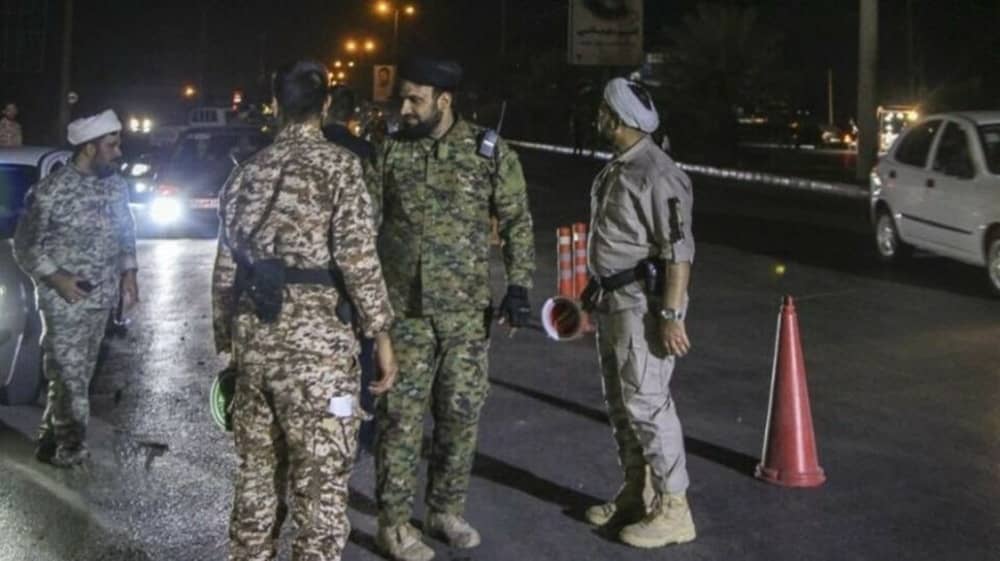
Iranian authorities are tightening control over universities as the new academic year develops into another domestic security concern. University sources reported on October 21 that Tehran University security officials have intensified summonses over the past two weeks, warning students about what they called the university’s “inflamed situation.” Some students said Intelligence Ministry personnel attended questioning sessions and used detailed personal information to discourage potential protest activity. Reports from at least six Tehran universities—Tehran, Allameh Tabataba’i, Shahid Beheshti, Kharazmi, Sharif and Iran University of Science and Technology—also describe tighter compulsory-hijab enforcement, confiscation of student cards and restrictions on campus entry.
Armed clash in Khash as security pressure persists
An armed confrontation in Khash, Sistan and Baluchestan, early October 21 added another security flashpoint. Tasnim said police became suspicious of two Peugeot vehicles near the Sarhad fuel station before their occupants allegedly opened fire. State media claimed one armed man was killed, two others escaped, and police recovered a Kalashnikov, four magazines and 77 rounds. Local reporting described security and Intelligence Ministry personnel pursuing a vehicle before sustained gunfire erupted; there is no independent confirmation of how the confrontation began or of the identities of those involved.
That distinction matters in Sistan and Baluchestan, where state outlets routinely describe armed opponents as terrorists after clashes. Today’s observable fact is that another significant firefight occurred in central Khash and that two suspects remained at large, not that authorities had eliminated the underlying security problem. The incident follows repeated armed confrontations and security operations across the province and reinforces the picture of a region where coercive deployments have not ended instability.
Armed attacks hit police and army targets in Sistan and Baluchestan in a single day—two officers killed near Zahedan and Nikshahr—as Tehran recasts the #economy as a security problem.
Ghalibaf says the priority is “economic resilience and internal security.” Pezeshkian calls it a…— NCRI-FAC (@iran_policy) October 8, 2026
Trade disruption along the same southeastern frontier added an economic dimension. The Rimdan crossing with Pakistan was closed during the day, interrupting exports and leaving traders—particularly those carrying perishable agricultural goods—exposed to losses. Tasnim reported later on October 21 that limited exchanges of perishables and produce had resumed, describing it as only an initial reopening toward normal activity. The disruption is especially consequential because overland routes have become more important amid severe restrictions on Iran’s maritime trade.
Officials acknowledge poverty, labor flight and a development plan overtaken by war
State media produced unusually blunt evidence of the economic strain. An IRGC mouthpiece reported today that workers are increasingly leaving jobs because wages have fallen too far behind living costs. A state-aligned labor representative Hamidreza Moeini described a “deep gap” between wages and inflation and said retention of workers in production increasingly depends on whether employment can provide a viable livelihood. That comes after weeks of disputes over midyear wage adjustments, unpaid salaries and pension arrears.
In Lorestan, Governor Saeed Shahrokhi explicitly acknowledged that inflation and poverty remain unresolved, with some problems accumulated over decades. More revealing was his instruction that officials publicly explain their achievements to generate “hope,” even as he acknowledged continuing hardship. He also admitted to ongoing unrest and protests at universities, characterizing them as disruptions, and urged government bodies to provide full support to military, intelligence, and security forces under wartime conditions.
"The political picture over October 9–10 therefore cuts directly against #MojtabaKhamenei’s effort to portray the security establishment in Iran as an increasingly capable pillar of the system," writes @MansoreGolestan.https://t.co/dvwDLGukXa
— NCRI-FAC (@iran_policy) October 10, 2026
Furthermore, Shahrokhi’s announcement of a 100,000-person ‘Janfada-2′ mobilization exercise in Lorestan serves as a tacit admission of eroding morale within the regime’s own loyal base. By explicitly framing the rally as necessary to combat internal fatigue and shore up psychological resilience, officials inadvertently concede that these orchestrated spectacles are a desperate attempt to patch over crumbling support among their core ranks.
At the national level, even the government’s main economic blueprint is being rewritten. Budget and Planning Organization chief Hamid Pourmohammadi said the Seventh Development Plan must be amended because current conditions differ fundamentally from those under which it was drafted. A parliamentary official said food security, production, imports, exports and livelihoods must now be redesigned around sanctions, blockade and wartime conditions. A government built around multi-year development targets is therefore formally shifting toward emergency economic management.
The same institutional anxiety is visible in academia. Tehran University’s president instructed administrators to prepare multiple contingencies for both renewed war and possible winter gas shortages, saying the university must avoid being caught unprepared. The significance is broader than campus management: war damage, energy imbalance and political uncertainty are now being incorporated into routine institutional planning.
Iran’s domestic crisis is increasingly about containment: Azadi workers protested after three months without pay, pension arrears remain unfunded, South Pars facilities are still being rebuilt, Karbaschi was found guilty in a press case, and hardliners are escalating attacks on…
— NCRI-FAC (@iran_policy) October 20, 2026
Repression continues alongside crisis management
The regime’s external military rhetoric should be read mainly against this domestic backdrop. On October 19, IRGC spokesman Hossein Mohbi threatened a much harsher response to any new US action, including an energy crisis with global consequences. Such statements do not establish operational capability; politically, however, they reinforce the same posture visible inside Iran: no signal of retreat while the system is under pressure.
Faced with a dangerous convergence of economic, political, and security crises, the regime is doubling down on state terror and warmongering to preserve its grip on power. As armed clashes erupt in Khash, university dissent deepens, and widespread poverty destabilizes the workforce, the establishment has abandoned governance in favor of wartime survival.