
THIS PAGE WILL BE UPDATED WITH THE LATEST NEWS
UPDATE: 7:00 AM CET
Iran’s Resistance Units Mark Cyrus the Great Day with Nationwide Activities Rejecting Dictatorship
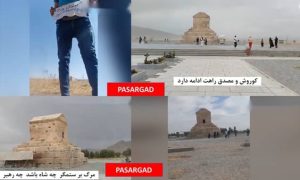
On and around October 29, 2026, Resistance Units affiliated with the People’s Mojahedin Organization of Iran (PMOI/MEK) marked Cyrus the Great Day with a wave of anti-regime activities across Iran. The Resistance Units carried out 110 activities, including displays of placards and posters, small-group actions, and anti-dictatorship graffiti in more than 20 cities and locations.
The recurring slogans—“Death to the oppressor, be it the shah or the supreme leader,” “Neither shah nor mullahs,” and “We are the children of Cyrus; we are the Resistance Units”—turned the commemoration into a rejection of both the former monarchy and the ruling theocracy.
October 29, corresponding to the seventh day of Aban in the Iranian calendar, is a commemoration of Cyrus the Great. His tomb at Pasargadae has become a gathering place for Iranians honoring the country’s ancient heritage.
The occasion also carries contemporary political significance. In October 2025, security forces blocked access to Pasargadae during Cyrus Day observances. Against this history of restrictions, the Resistance Units’ activities presented Cyrus as a symbol of justice rather than a justification for restoring monarchy.
UN Experts Join “No to Executions Tuesdays” Campaign in Iran
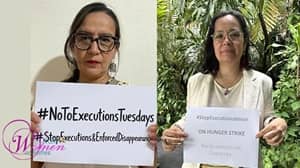
International support for the “No to Executions Tuesdays” campaign across Iranian prisons continues to swell. Two UN experts, alongside a former UN Special Rapporteur, have joined the campaign’s weekly hunger strike in solidarity with political prisoners protesting the death penalty in Iran. The move highlights growing global recognition of prisoners’ resistance against capital punishment and amplifies their voices on the international stage.
On Tuesday, October 27, 2026, marking the 144th week of the campaign, David R. Boyd, former UN Special Rapporteur, and Andrea Bolaños Vargas, UN Special Rapporteur on the situation of human rights defenders, announced they were joining the hunger strike in solidarity with political prisoners in Iran.
Additionally, Ana Lorena Delgadillo, a member of the UN Working Group on Enforced or Involuntary Disappearances, announced that she will join the action next week.
These declarations of support come as the “No to Executions Tuesdays” campaign, launched in February 2024 at Ghezel Hesar Prison, completes 144 consecutive weeks and expands to 66 prisons throughout Iran.
The participation of human rights officials and UN experts in this movement reflects deepening international concern over the surge in executions across Iran. The solidarity action carries immense weight: the voices of protesting prisoners, who have fought for nearly three years under harsh conditions to defend the right to life, are now echoing far beyond Iran’s borders.
Torricelli: Iran’s Regime Is Weakening—and a Viable Democratic Alternative Is Ready
As debates intensify over the scope and duration of U.S. military and economic pressure against Tehran, former U.S. Senator Robert Torricelli (D-NJ) is urging Washington to stay the course. Breaking ranks with voices advocating for an immediate withdrawal, the veteran lawmaker argues that while authoritarian regimes often display surface-level resilience, Tehran’s foundational security apparatus is severely compromised—paving the way for internal collapse if pressure remains unyielding.
In a recent broadcast interview on Daybreak, Torricelli—a longtime legal counsel and prominent American advocate for the National Council of Resistance of Iran (NCRI)—laid out a clear strategic roadmap: dismantle the Islamic Revolutionary Guard Corps (IRGC) from the air and sea, reject the “false dilemma” that Iran has no credible opposition, and allow the Iranian people to reclaim their nation.
A Degraded Regime Behind a Resilient Facade
Addressing public frustration that heavy bombardment and sanctions have yet to topple the clerical regime, Torricelli cautioned against mistaking suppression for strength.
“Authoritarian regimes that have the ability to clamp down on any kind of dissent always have a bit more resilience than you’d expect,” Torricelli acknowledged. “Don’t get confused because it hasn’t folded that it isn’t weakened.”
Iran’s Regime Trapped Between War and Negotiations as Mojtaba Khamenei Sends Contradictory Signals
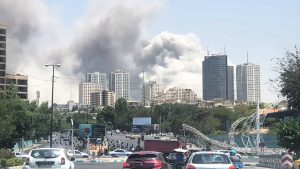
The latest contradiction emerged following a meeting between Mojtaba Khamenei and the regime’s Supreme National Security Council secretary. According to reports of the meeting, Khamenei emphasized the need to pursue the regime’s conditions for ending the current “neither war nor peace” situation.
The following day, Pezeshkian offered his interpretation during a cabinet meeting, presenting the supreme leader’s message as an indication that the current stalemate must end.
Yet his remarks also contained an important qualification: while the regime seeks to move toward that objective, it must continue preparing for war.
This combination of pursuing an agreement while maintaining military readiness is not new. What makes the latest statements significant is the increasingly visible divergence between the interpretations promoted by different factions within the regime.
Iran’s Car Market: How State-Backed Monopolies Make Iranians Pay Twice the Price
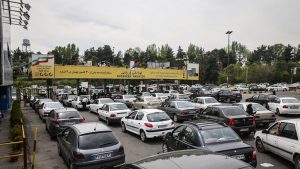
For ordinary Iranians, buying a car has become an increasingly expensive struggle. Domestic vehicles are often overpriced and difficult to obtain, while imported models reach consumers at prices far beyond their actual production or market value. Even after paying enormous sums, customers face delivery delays, prompting protests by buyers who have paid for vehicles they have yet to receive.
The case of the Khazar and Khazar Lada models, assembled in Azerbaijan under the name Khazar, illustrates how this system works.
Early Warning of Gas Shortages During Iran’s Harsh Winter Ahead

As the cold season approaches, gas consumption in Iran has increased by approximately 30% over five days. Meanwhile, the head of the National Iranian Gas Company has warned of potential “gas supply disruptions” in 11 provinces.
Damage to energy infrastructure during the war, increased demand for heating, and problems with the gas transmission network have heightened concerns about gas supplies during the coming winter. Saeed Tavakoli, CEO of the National Iranian Gas Company, announced that the country’s gas consumption had increased by approximately 70 million cubic meters in just the past five days, representing a roughly 30% rise over that period, according to him. He predicted that gas demand would increase further as temperatures fall and households make greater use of heating appliances.
Referring to the vulnerability of the gas network during cold weather, Tavakoli said that for every one-degree drop in temperature during peak consumption periods, approximately 25 million cubic meters are added to the country’s daily gas consumption. He described this volume as equivalent to the output of one phase of the South Pars gas field, Iran’s largest natural gas field.
Iran: Concern over High-Level Repressive Coordination; Secret Death Sentences, Judicial Concealment

This legal report documents concerning trends in the trajectory of judicial and security policies within the Islamic Republic of Iran. Credible reports and field accounts indicate that while receiving high-level political directives to enforce “speed, decisiveness, and deterrence,” the judiciary has embarked on a dangerous path of “judicial concealment” and “structural opacity.”
Imposing severe death sentences in mass protest cases without publishing verdicts, without individualizing specific alleged criminal acts, and in the absence of public trials constitutes a clear violation of Iran’s international obligations under the International Covenant on Civil and Political Rights (ICCPR).
On October 24, 2026 (2 Aban 1405), Chief Justice Gholamhossein Mohseni-Ejei met with Mojtaba Khamenei to present an operational report and general policies of the judiciary. According to official reports (including Tasnim and IRNA news agencies), the main focus centered on “thorough, swift, and decisive case processing,” “timely and deterrent execution of sentences,” and “combating manifestations of insecurity and corruption.”
Berlin: MEK Supporters Mark Cyrus the Great Day on 243rd Day of Sit-in Against Iran’s Executions
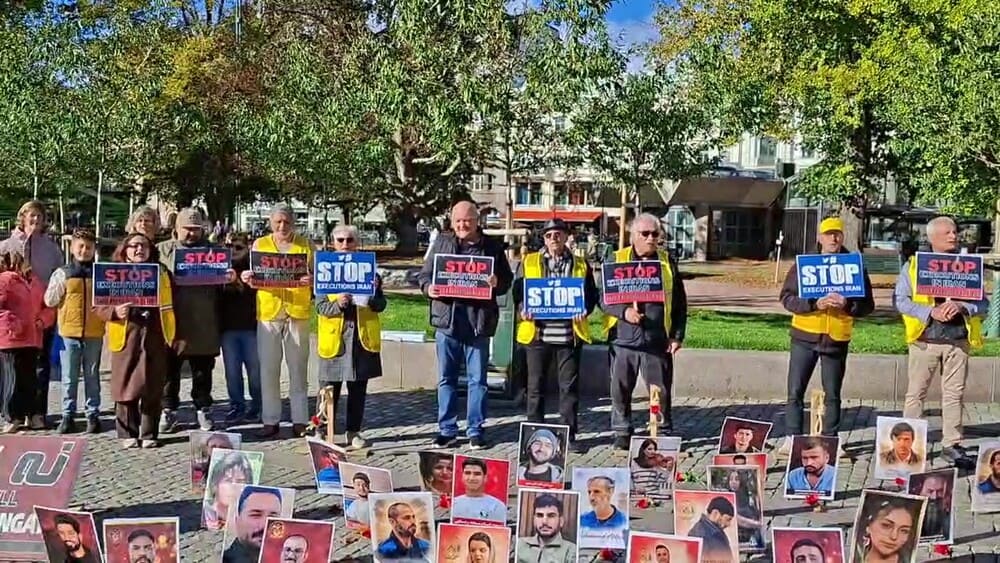
Berlin, Germany — October 28, 2026: On the 243rd consecutive day of their protest sit-in outside the Iranian regime’s embassy in Berlin, supporters of the People’s Mojahedin Organization of Iran (PMOI/MEK) commemorated Cyrus the Great Day and the first human rights charter, condemned the regime’s escalating executions, and backed the National Council of Resistance of Iran (NCRI) as the democratic alternative for establishing a democratic republic in Iran. They reaffirmed their rejection of both the Shah’s dictatorship and the clerical regime.

The protesters called for the closure of the Iranian regime’s embassy in Berlin as a center of espionage and terrorism operating on German soil. They also demanded accountability for the regime’s systematic repression, human rights violations, and continued executions in Iran.