
THIS PAGE WILL BE UPDATED WITH THE LATEST NEWS
UPDATE: 7:30 AM CET
PMOI Resistance Units Across Iran Support ‘No to Executions Tuesdays’ Campaign
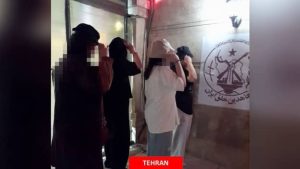
On November 3, 2026, Resistance Units affiliated with the People’s Mojahedin Organization of Iran (PMOI/MEK) carried out anti-regime activities across Iran in solidarity with the “No to Executions Tuesdays” campaign, displaying placards and photographs of political prisoners facing death sentences. The activities took place in Tehran, Isfahan, Shiraz, Rasht, Karaj, and several other cities, conveying a message of opposition to the regime’s use of executions to suppress dissent.
The activities coincided with the 145th consecutive week of the “No to Executions Tuesdays” campaign, during which prisoners across 66 prisons staged hunger strikes against capital punishment. Through their slogans, the Resistance Units demanded the abolition of executions, the immediate release of political prisoners, and an end to the regime’s policy of intimidation through death sentences.
In Isfahan, Resistance Units displayed placards declaring, “We are neither afraid of threats nor will we remain silent in the face of executions.” Other messages called for the release of political prisoners and the complete abolition of capital punishment.
The Generation of Tomorrow: How Decades of Repression Failed to Mute Iran’s Youth

On the morning of November 4, 1978, thousands of high school students walked out of their classrooms and marched toward the University of Tehran. They gathered to elevate the voice of a generation protesting against a regime that had suppressed freedom for decades.
The Pahlavi monarchical regime responded not by listening to the youth, but with tear gas and live ammunition. Dozens of teenagers and young adults were shot and killed across the University of Tehran campus and surrounding streets.
Yet, November 4 was more than just a bloody day in Iranian history. It marked the moment the generations of tomorrow entered the historical stage, a generation determined to reject the role of bystander and take ownership of its own destiny.
Nearly half a century has passed since that day, spanning two dictatorships. Yet one truth has endured: the young generation has continuously kept the flame of resistance alive against tyranny and the deprivation of freedom. By rising up against oppression, they have repeatedly proven that no amount of violence can extinguish their call for liberty. Time and again, after every brutal crackdown, this generation has risen anew to raise the flag of freedom.
Iranian Republican Coalition Urges Belgium to Cancel Reza Pahlavi’s Military Academy Invitation
Six Iranian republican organizations have renewed their appeal to Belgian authorities to cancel Reza Pahlavi’s planned appearance at the Royal Military Academy in Brussels, following the earlier decision not to grant him an official speaking platform in the Belgian Parliament.
In a letter dated October 31, 2026, the organizations addressed Belgian Defense Minister Theo Francken, requesting that he withdraw the invitation for Pahlavi to deliver a speech at the military institution on November 6. Copies of the letter were also sent to Belgian Prime Minister Bart De Wever, the New Flemish Alliance (N-VA), and the Belga news agency.
The signatories expressed serious concern about the political and symbolic consequences of a Belgian state institution providing an official platform and prestige to a political figure whose positions and political conduct, they argue, conflict with fundamental principles of democracy, human rights, and political pluralism.
The appeal follows the decision by the Belgian Parliament’s Conference of Presidents not to proceed with an official parliamentary event for Pahlavi after failing to secure political consensus. The separate invitation extended by Francken to the Royal Military Academy, however, remained in place.
Former European Leaders Urge EU Parliament to Deny Official Status to Reza Pahlavi
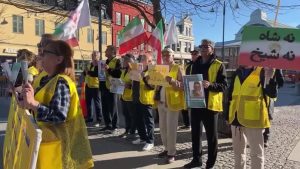
A formidable coalition of former European ministers, state officials, and diplomats has issued a stark warning to the European Parliament, urging its leadership not to grant official recognition or institutional endorsement to Reza Pahlavi, the son of Iran’s deposed Shah.
In an open letter addressed to European Parliament President Roberta Metsola dated November 3, the group of 15 prominent political figures responded to reports from Belgian media that Pahlavi is scheduled to visit the Parliament this week to seek meetings with political groups and senior officials.
The signatories argue that affording Pahlavi a high-level platform would have “serious and potentially damaging implications” for the Iranian people’s pursuit of democracy. Stressing that Pahlavi possesses no democratic mandate, the former officials describe him as a “deeply divisive figure” whose elevation by European institutions would only serve to fracture the Iranian opposition and ultimately benefit the current ruling regime in Tehran.
Iran’s Former IRGC Commanders Reveal Regime’s Role in 1979 US Embassy Takeover
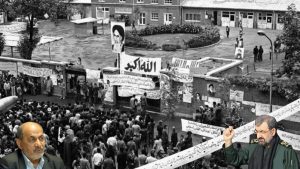
The 1979 takeover of the US Embassy in Tehran was not simply a spontaneous protest by radical students, as the regime has long attempted to portray it. Statements by former Islamic Revolutionary Guard Corps (IRGC) commanders, together with admissions by senior officials of Khomeini’s government, reveal the extent of prior planning, the IRGC’s direct involvement, and the political objectives behind the operation.
More than four decades later, these accounts shed light on how Khomeini exploited the hostage crisis to consolidate his power, dismantle the provisional government, marginalize political rivals, and suppress democratic forces, particularly the People’s Mojahedin Organization of Iran (PMOI/MEK).
On November 4, 2018, then-IRGC commander Mohammad Ali Jafari described the preparations for the November 4, 1979, takeover of the US Embassy in Tehran. His remarks contradicted the official narrative that the occupation had emerged spontaneously from a student demonstration.
Jafari explained that the operation had been planned under strict secrecy. A limited number of students and university officials had been informed that the demonstration would culminate in an attack on the US Embassy.
Iran: Impact of Economic Conditions, Social Pressures, and Governance on the Right to Form a Family
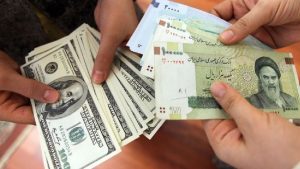
This report examines the impact of the economic, social, and governance policies of the Islamic Republic of Iran on the right to form a family—a fundamental right recognized under Article 16 of the Universal Declaration of Human Rights (UDHR), Article 23 of the International Covenant on Civil and Political Rights (ICCPR), and Article 10 of the International Covenant on Economic, Social and Cultural Rights (ICESCR). These instruments obligate states to create conditions enabling individuals to form families in practice and enjoy sustainable family life. The findings of this report indicate that in Iran, a sharp decline in marriage rates, rising age at marriage, the housing crisis, widespread poverty, chronic inflation, job insecurity, youth unemployment, and the escalating migration of young and skilled human capital have severely restricted a significant portion of the population’s ability to form families.
An examination of existing evidence demonstrates that this situation is neither merely the result of demographic shifts nor individual choices; rather, it is shaped within the context of economic, social, and governance policies that have led to exacerbated poverty, diminished purchasing power, a housing access crisis, and widespread uncertainty about the future.
Iran’s Nuclear Hardliners Intensify Push for NPT Exit as Security Leadership Holds Back
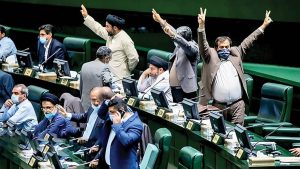
Pressure from lawmakers, powerful clerics and hardline political groups is growing, but Tehran’s top security official says no formal decision has been made to change the country’s nuclear doctrine.
Iran’s security leadership has stopped short of endorsing a change in the country’s nuclear doctrine despite mounting demands from influential clerics, lawmakers and hardline political groups to withdraw from the Nuclear Non-Proliferation Treaty (NPT) and reconsider longstanding restrictions on nuclear weapons.
Mohsen Rezaei, secretary of Iran’s Supreme National Security Council, said on October 31 that no formal decision had been taken, although the government was considering whether its existing doctrine should remain unchanged if another war broke out.
His remarks, made in an interview with state television, came as calls for withdrawal gained renewed prominence across parliament and religious institutions.
PMOI Supporters Rally in Stockholm and Gothenburg Against Executions in Iran

PMOI Supporters in Sydney Condemn Executions and Human Rights Violations in Iran
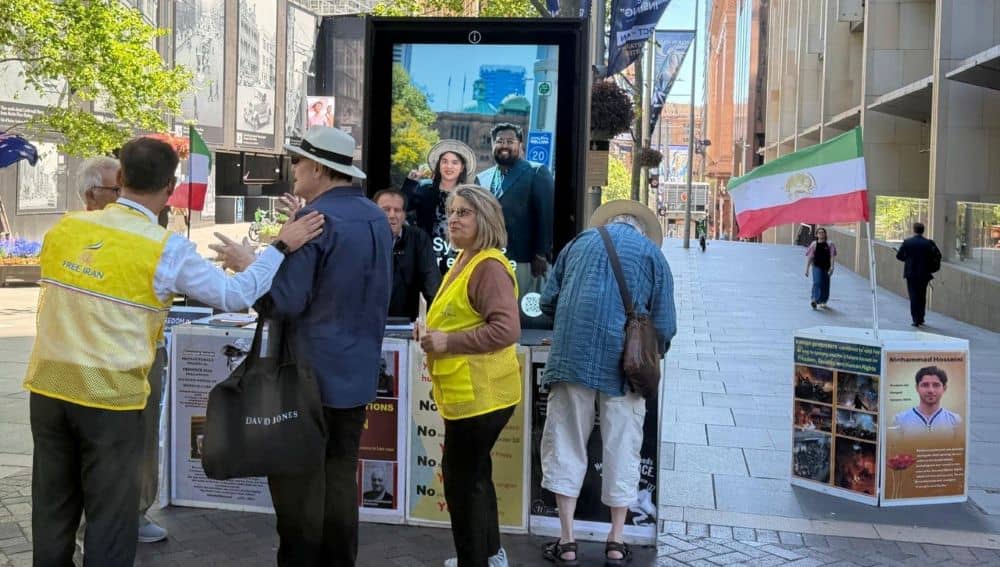
Sydney, Australia – November 1, 2026 – Supporters of the People’s Mojahedin Organization of Iran (PMOI/MEK) held a book table and photo exhibition to highlight Iran’s worsening human rights crisis, including the regime’s systematic executions of political prisoners and protesters detained during nationwide uprisings.
The event also called for the immediate and unconditional release of all political prisoners in Iran. Participants condemned the death penalty, political repression, and the regime’s impunity, demanding justice and accountability for human rights violations.

Demonstrators described the executions as blatant violations of human rights and called for regime change in Iran. They also urged the Australian government and the international community to adopt a firm policy toward the ruling clerical regime, increase pressure to halt executions, and support the Iranian people’s struggle for freedom, democracy, and human rights.
MEK Supporters Rally in Copenhagen and Aarhus, Calling for an End to Executions in Iran
Copenhagen and Aarhus, Denmark – October 31, 2026 – Supporters of the People’s Mojahedin Organization of Iran (PMOI/MEK) held rallies in Copenhagen and Aarhus, calling for an end to executions in Iran, the release of political prisoners, and the establishment of a democratic republic.

The protesters called for regime change and urged the Danish government to take a firm stance against the Iranian regime’s ongoing human rights violations. They also called for the closure of the Iranian regime’s embassy in Denmark, as a center for espionage and terrorism.