
Two-minute read
The regime’s endurance strategy rests on a simple assumption: the US has an electoral calendar; the clerical establishment does not. Tehran therefore believes it can absorb punishment, prolong the war, frustrate negotiations, and wait for American political will to weaken.
But the regime is running against a clock of its own—and it is accelerating.
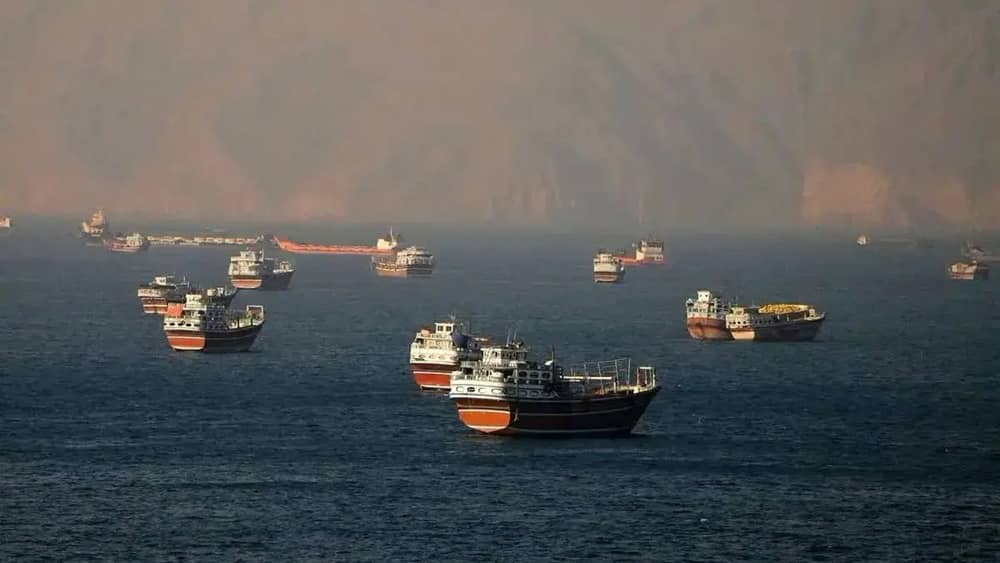
The most damaging blow has been to oil. Iran was loading roughly 2 million barrels per day in March. After Washington reimposed its naval blockade in July, August loadings collapsed to roughly 220,000–255,000 barrels per day. By September, Reuters reported that seaborne crude exports had effectively fallen to zero, remaining there into October. CENTCOM later estimated that the blockade had prevented more than $25 billion in Iranian crude exports.
That matters because oil is not merely another export. It supplies the foreign currency needed to defend the rial, finance imports and keep the state functioning. Since July, the rial has lost roughly 35 percent of its value against the dollar, while annual inflation had reached 73.6 percent by September.
The world is suffering from the clerical regime’s wars.
The only playbook that ever forced it to stop its war machine still exists — and almost no one talks about it.Watch this. It’s not history. It’s the method that worked. #IranWar pic.twitter.com/nVLt11ZQr6
— NCRI-FAC (@iran_policy) August 3, 2026
Official domestic data point in the same direction. A senior Labor Ministry official said the economy contracted by 10 percent excluding oil and 4.6 percent including oil in the spring, and warned that if contraction reaches 7–8 percent for the year, 1.2 to 1.4 million jobs could disappear by March 2027. Between March and August alone, 1.15 million people dropped from mandatory social-security insurance rolls; only about 300,000 entered unemployment insurance.
The deterioration is moving from output into consumption. Donya-e Eqtesad, using official Shaparak payment data, found that the real value of electronic transactions fell 11.2 percent in October in a single month. Nominal transaction values were almost twice their level a year earlier, but real values increased only about one percent—an unusually stark illustration of inflation eating almost the entire apparent increase in spending.
Nor can Tehran simply import its way through the problem. More than €4 billion owed to over 750 importers of essential goods has remained unsettled, with some arrears stretching close to two years. Even the IRGC-run Tasnim news agency reported that a presidential order to resolve the debt had gone unimplemented after 100 days.
Winter threatens another layer of pressure. The government warned on November 11 of a 430 million cubic meter gas shortfall, substantially worse than in previous years, after wartime damage reduced processing capacity. Eleven of Iran’s 31 provinces could face serious difficulties, while officials have already begun discussing consumption cuts and possible price increases.
"On the morning after the ceasefire, every exhausted and exasperated mind, long numbed by the #IranWar, will turn instinctively toward the search for real change and the practical means to bring this regime to an end." https://t.co/8Tmh0Sl0Kc
— NCRI-FAC (@iran_policy) April 9, 2026
This is where Tehran’s calculation becomes dangerous for itself.
A dictatorship can ignore opinion polls. It cannot indefinitely repeal arithmetic.
The regime can print money to cover lost revenue, but that feeds inflation. It can let the rial fall, but that raises the cost of food, medicines and industrial inputs. It can cut subsidies, but its own economists warn that doing so amid 80–90 percent inflation risks widening poverty and “social fractures.” It can demand “resistance,” but Jahan-e Sanat is already describing street vending as a survival strategy for workers pushed out of the formal economy and openly blaming structural corruption and mismanagement rather than war alone.
Tehran believes time is working against the US administration.
But its real adversary may be a far less manageable clock: how long an impoverished, angry and repeatedly rebellious population is prepared to finance the regime’s strategy of survival.