
THIS PAGE WILL BE UPDATED WITH THE LATEST NEWS
UPDATE: 8:00 AM CET
Iranian Boxing Champion on Death Row Makes History with Prestigious Human Rights Award

An Iranian boxer, Mohammad Javad Vafaei Sani, may never win another championship, but he made history last week by receiving a prestigious human rights award.
The 31-year-old boxer and coach was awarded the 2026 Magnitsky Award for Outstanding Human Rights Activist at a ceremony in London on November 12. The former national champion could not collect the award in person, as he has spent six years behind bars as a political prisoner in Iran.
A former national boxing silver medalist from Mashhad, Vafaei Sani was arrested in 2020 following nationwide anti-government protests the previous year. Iranian authorities accused him of supporting the opposition People’s Mojahedin Organization of Iran (PMOI/MEK). He remains on Death Row.
Only three athletes have ever won the human rights award, including the NBA’s Enes Kanter. His case can be compared to that of former American middleweight contender Rubin “Hurricane” Carter, who spent 19 years in jail.
His death sentence was overturned twice by lower courts before being imposed for a third time in September 2024. Iran’s Supreme Court upheld the sentence in October 2025. Human rights organizations have condemned the proceedings and reported that he endured torture and prolonged solitary confinement. For a fighter who once admired Muhammad Ali and Floyd Mayweather Jr., the ring is a distant memory as he fights to avoid an arbitrary execution.
Sogand Sayyadi: When a School Sent a 16-Year-Old Girl Back to Death

After warning school officials that her father would kill her, 16-year-old Sogand Sayyadi was sent home without protection. Hours later, she was dead.
The killing of Sogand Sayyadi, a 16-year-old student from western Iran, is not merely another so-called honor killing. The case once again exposes the misogynistic structures that leave girls without protection, the absence of effective safeguards for young women facing violence, and the responsibility of the clerical regime’s educational institutions when warnings of imminent danger are ignored. On November 15, 2026, Sogand Sayyadi was killed by her father, Kiumars Sayyadi, who threw her from the fifth floor of a residential building.
What makes this case particularly disturbing is that Sogand had repeatedly warned school officials that her life was in danger before she was killed.
One day before the murder, the principal of Rezvan Girls’ High School in Kermanshah contacted Sogand’s father after learning about her relationship with a young man whom he opposed.
IRGC Commander Admits Deep Infiltration Across Iran’s Regime: “There Is Nowhere to Hide”
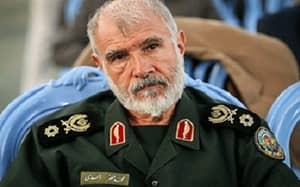
A senior Islamic Revolutionary Guard Corps (IRGC) commander has publicly acknowledged extensive intelligence penetration across Iran’s ruling establishment, including its most sensitive military and security institutions. His remarks offer an unusually candid picture of a security apparatus struggling to protect even its highest levels from infiltration.
Mohammad-Jafar Asadi, a senior IRGC figure and former deputy inspector of the Khatam al-Anbiya Central Headquarters, made the admission in an interview with the regime-affiliated Defa Press news agency, published on November 16, 2026.
“Enemy infiltration has taken place at high levels,” Asadi said. “There is infiltration even within the IRGC, the Intelligence Ministry, state broadcasting, and various government institutions. This infiltration is sometimes direct and sometimes indirect.”
His acknowledgment is particularly significant because it extends beyond individual security failures. It identifies penetration across several of the regime’s principal institutions responsible for intelligence, military operations, and information control.
Poverty in Iran Is Becoming a Crisis of Social Breakdown, Not Just Economic Survival
Economic hardship in Iran has reached far beyond empty wallets and declining purchasing power. For millions of people, securing medicine, finding affordable housing, and providing basic necessities have become daily struggles. Natural disasters such as prolonged rainfall and flooding can destroy what little families have managed to preserve, leaving them with few resources to recover. But beneath these visible hardships lies a deeper crisis: the gradual erosion of human dignity, social trust, and the moral foundations of society. This is why poverty in Iran must be examined as more than an economic problem. Its consequences are increasingly social and political. And understanding those consequences requires looking beyond the symptoms to the structures that sustain them.
A revealing discussion appeared in the November 14, 2026, edition of Setareh Sobh. Citing sociologist Amanollah Gharai-Moghaddam, the newspaper examined how prolonged poverty affects people’s psychological and moral well-being.
The sociologist explained that persistent deprivation produces humiliation and hopelessness, while the constant struggle to secure food and other necessities consumes people’s mental energy. When survival becomes the overriding concern, the capacity to consider longer-term consequences and maintain ordinary social and ethical sensitivities can gradually weaken.
Crisis in Iran’s Fruit Market: Customers Can No Longer Afford to Buy

At Tehran’s Central Fruit and Vegetable Market, a scene is unfolding that few in the fruit trade can remember seeing before. Huge quantities of produce have been left on the ground, while dozens of trucks have yet to be fully unloaded or have their cargo sold. Much of the agricultural produce brought in since the previous day remains without buyers.
Trucks remain loaded, while fruit and other produce lie on the ground. Sellers anxiously watch shipments whose value declines with every passing hour. Unlike many other goods, fruit cannot be stored for long periods. As a result, delays in selling directly translate into financial losses.
Market participants say the downturn in the fruit market has reached a point where its continuation will inflict heavy losses on producers, sellers, and merchants. Incoming produce must reach buyers across the city on the same day or the following day. If this cycle slows down, cash-flow pressures spread throughout the entire supply chain.
The Central Market’s price list for November 17 shows a significant gap between the prices of different grades. The price of third-grade Thompson oranges is about 35% of the premium-grade price. The corresponding figures are about 46% for tangerines and 20% for watermelons. These gaps may indicate pressure on sellers trying to sell lower-quality produce.
Iran Struggles with Bread-Rationing as Free-Market Prices Soar 4.5 Times Higher
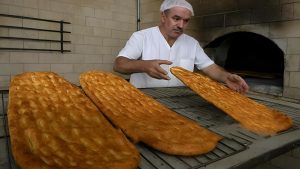
Iranian media outlets report that bread rationing has been introduced in three provinces. According to reports, the “Bread Purchase Management” plan was implemented without a public announcement in the provinces of Markazi, Khuzestan, and Zanjan. Under the plan, each person is allocated approximately eight kilograms of flour per month at the subsidized rate of 23,000 rials. If purchases exceed this limit, bread is charged at the free-market rate of 126,500 rials, and the additional amount collected will be deposited into the government’s account.
The Bread Purchase Management plan provides for a monthly allowance of 70 loaves per person at a price of 28,000 rials each. Consumption beyond this limit is charged at 126,500 rials per loaf. This bread rationing has a direct impact on the livelihoods of households for whom bread is a staple food.
According to the data provided, each person receives a monthly allowance of 70 loaves of bread at 28,000 rials each. For a family of four, this amounts to 280 loaves. Once this limit is exceeded, the bread is no longer subsidized and costs 126,500 rials at the free-market rate. The free-market price is approximately 4.5 times the subsidized price.
Iran: Capital Frozen in Half a Million Unfinished Housing Projects
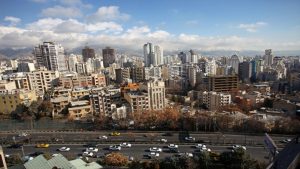
The figures for Iran’s housing sector in 2024 paint a mixed picture of the country’s construction industry. On the one hand, more than 20,340 trillion rials (approximately $7.7 billion) was invested in building construction, and permits were issued for 522,000 housing units. On the other hand, 83% of construction sites remained unfinished.
A review of the results of the survey on construction activities in Iran’s urban areas in 2024 shows that a total of 238,000 construction sites were active. However, the outcome for these sites was far from encouraging. Of the sites surveyed, 198,000, or approximately 83%, were still unfinished at the end of the reporting period, while only 40,000, or 17%, had completed their construction activities. In other words, the number of unfinished construction sites was nearly five times the number of those that had reached completion.
Rising prices of construction materials and inputs, increasing wages, builders’ difficulties in accessing bank loans, and liquidity constraints resulting from prospective buyers’ declining purchasing power have limited the ability to move projects forward quickly.
In the National Housing Movement projects, delays in applicants’ payment of their required contributions and the provision of bank financing had slowed implementation. Given the continuous rise in costs, the budgets for these projects were subject to price adjustments every three months. When implementation of the National Housing Movement began in 2021, construction costs were estimated at approximately 40 million rials per square meter. By 2024, according to estimates by some mass housing developers, this figure had risen to 180 million rials. The head of Iran’s National Housing Fund now puts the cost at 800 million rials per square meter (approximately $300).
Iran: Cameras, Police & Clerics in Schools: Securitizing Education Ahead of 2026 Protests Anniversary
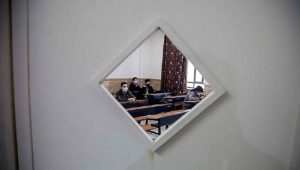
The official announcement that surveillance cameras may be installed in classrooms in schools across Iran marks the latest development in a series of government policies and measures that, in recent years, have increasingly subjected the country’s education system to security, surveillance and ideological considerations. Although the authorities of the Islamic Republic have justified this measure on grounds such as enhancing security, addressing complaints and preventing misconduct, an examination of concurrent developments in the education sector indicates that this decision cannot be assessed as an isolated or merely administrative measure.
In recent years, a range of policies—including the formal involvement of law enforcement agencies in the education sector, the organized expansion of clerics’ presence in schools, the implementation of the Amin Program, the recruitment of thousands of seminary students into the education system, extensive changes in school management, and now the authorization of video surveillance in classrooms—have collectively contributed to an increasingly pronounced process of securitization and ideologization of Iran’s education system.
This report argues that these developments, particularly in the aftermath of the nationwide protests of 2022 and ahead of the anniversary of the January 2026 nationwide protests, should be examined as part of a broader process of the “securitization and ideologization of education”. This process may affect children’s fundamental rights, including the right to education, freedom of thought, freedom of expression, the right to privacy, and the independence of educational environments.
Iran Takes Peace Proposal to Oman as Uzbekistan Joins Talks on Trade and Hormuz Shipping
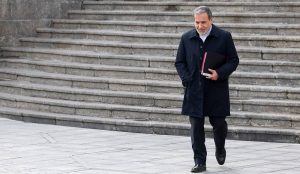
Araghchi delivers a presidential message to Oman’s Sultan as Tehran seeks a diplomatic end to the conflict, while trilateral discussions highlight Central Asia’s stake in restoring regional trade routes.
Iran has stepped up efforts to secure a negotiated end to its conflict with the United States, delivering a presidential message to Oman while expanding regional discussions on restoring maritime trade disrupted by months of hostilities. Foreign Minister Abbas Araghchi met Sultan Haitham bin Tariq at Al Alam Palace in Muscat on November 17, carrying a written message from President Masoud Pezeshkian.
According to Oman’s Foreign Ministry, the meeting addressed regional developments, efforts to reduce tensions and ways to create conditions for ending the crisis peacefully.
Iran’s Donya-e Eqtesad newspaper described the message as part of Tehran’s initiative to end the war, although Oman’s official account did not disclose its contents or specify any proposed terms.
The visit coincided with a trilateral meeting involving Iran, Oman and Uzbekistan, bringing trade connectivity and maritime security into the same diplomatic discussions as the regional confrontation.
Melbourne Rally Backs “No to Execution Tuesdays” Campaign, Calls for Freedom of Political Prisoners in Iran
Melbourne, Australia — November 17, 2026: Supporters of the People’s Mojahedin Organization of Iran (PMOI/MEK) gathered outside the Parliament of Victoria in Melbourne in solidarity with the “No to Execution Tuesdays” campaign, expressing support for prisoners participating in the movement across prisons in Iran. The rally highlighted Iran’s worsening human rights crisis, particularly the escalating executions of political prisoners and protesters arrested during nationwide uprisings.

Participants called for the immediate and unconditional release of all political prisoners in Iran and condemned the regime’s systematic use of the death penalty, political repression, and impunity for human rights violations. They stressed the urgent need to defend the lives of prisoners facing execution and called for justice and accountability.
Demonstrators denounced executions as grave violations of fundamental human rights and called for an end to the ruling regime’s repression and for democratic change in Iran. They also urged the Australian government and the international community to adopt a firm policy toward the Iranian regime, intensify pressure to halt executions, and support the Iranian people’s aspirations for freedom, democracy, and respect for human rights.
Gothenburg Rally Supports 147th Week of “No to Execution Tuesdays” in 67 Prisons Across Iran
Gothenburg, Sweden — November 17, 2026: Supporters of the People’s Mojahedin Organization of Iran (PMOI/MEK) held a rally in solidarity with the 147th consecutive week of the “No to Execution Tuesdays” campaign, a movement protesting the Iranian regime’s escalating executions and systematic repression.
Participants also highlighted the regime’s intensifying crackdown, the rising number of executions, and broader repressive measures. They chanted slogans such as “Down with the executioner regime” and called for the immediate release of all political prisoners.
They also voiced their support for awarding the 2026 Magnitsky Award to Iranian political prisoner and boxing champion Mohammad Javad Vafaei Sani, demanding the annulment of his death sentence and his immediate release.

Freedom-loving Iranians in Gothenburg expressed support for Mrs. Maryam Rajavi, President-elect of the National Council of Resistance of Iran (NCRI), and her call to expand the “No to Executions” campaign globally.
Lugano Event Supports “No to Execution Tuesdays” Campaign, Calls for End to Executions in Iran
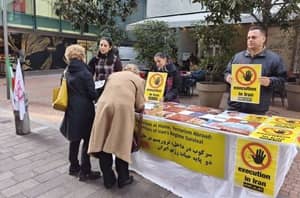
Lugano, Switzerland – November 16, 2026: Supporters of the People’s Mojahedin Organization of Iran (PMOI/MEK) held a book display and photo exhibition to condemn executions carried out by Iran’s ruling clerical regime and call for the abolition of the death penalty.
They also expressed their support for the “No to Execution Tuesdays” campaign, standing in solidarity with prisoners participating in the movement across prisons throughout Iran.
The exhibition backed the NCRI President-elect Maryam Rajavi’s “No to Executions” campaign, calling for its global expansion. It also reaffirmed the call for a secular, democratic republic—rejecting both theocracy and monarchy.
The event echoed the Iranian Resistance’s message: no to war, no to appeasement, and yes to peace and freedom through the overthrow of the regime by the Iranian people and their organized resistance, along with the establishment of a provisional democratic republic in Iran.
Swiss citizens visiting the exhibition showed solidarity by signing a petition supporting the Iranian nationwide uprising.