
Three-minute read
For months, Tehran has insisted that the American blockade and mounting economic pressure cannot force it to retreat. Last week, the regime appeared ready to prove it.
Instead, an extraordinary episode involving a supposed flotilla of Iranian oil tankers ended with state media explaining that the operation had never existed.
The affair matters because it exposed something beneath Tehran’s rhetoric of endurance. If the blockade were as ineffective as officials claim, there would have been little reason to contemplate a dangerous maritime confrontation simply to move oil out of the country.
From Economic Pressure to “Fereydoun”
The pressure is increasingly difficult to disguise. In an interview with Shargh, international-relations professor Mehdi Zakerian said the blockade was imposing clear economic pressure on Iran, forcing greater reliance on land routes for essential imports while Pakistan and Iraq were also imposing restrictions. He pointed to the contradiction at sea: Iran considers itself a power in the region, yet “when we want to dispatch our own tanker, we face restrictions and cannot get it to its destination.”
Against that background came the “Fereydoun” idea.
"On the morning after the ceasefire, every exhausted and exasperated mind, long numbed by the #IranWar, will turn instinctively toward the search for real change and the practical means to bring this regime to an end." https://t.co/8Tmh0Sl0Kc
— NCRI-FAC (@iran_policy) April 9, 2026
The IRGC-affiliated Tasnim described a proposal to send Iranian tankers together rather than attempt to slip individual vessels through the blockade. The name came from Ferdowsi’s Shahnameh: Fereydoun, confronting Zahhak, reaches the Arvand River and, denied passage, presses across rather than accepting the obstacle.
The symbolism was hardly accidental. After decades of defining political legitimacy primarily through what they try to sell as “revolutionary Islam,” regime-aligned media were suddenly reaching for pre-Islamic Persian mythology to package a confrontation with Washington as a national epic.
Fars was explicit. A tanker convoy, it argued, would transform Iran’s hidden sanctions-evasion capability into an open “display of power”: “We have swum in darkness for years; now it is time to swim in daylight with a torch.”
That nationalist imagery served another purpose. A confrontation over oil exports could be presented not simply as the regime defending its revenues, but as Iran itself defying a foreign power—an important distinction for a government desperate to claim that society stands behind it.
Then the Threats Grew
Within days, the rhetoric moved well beyond an editorial proposal.
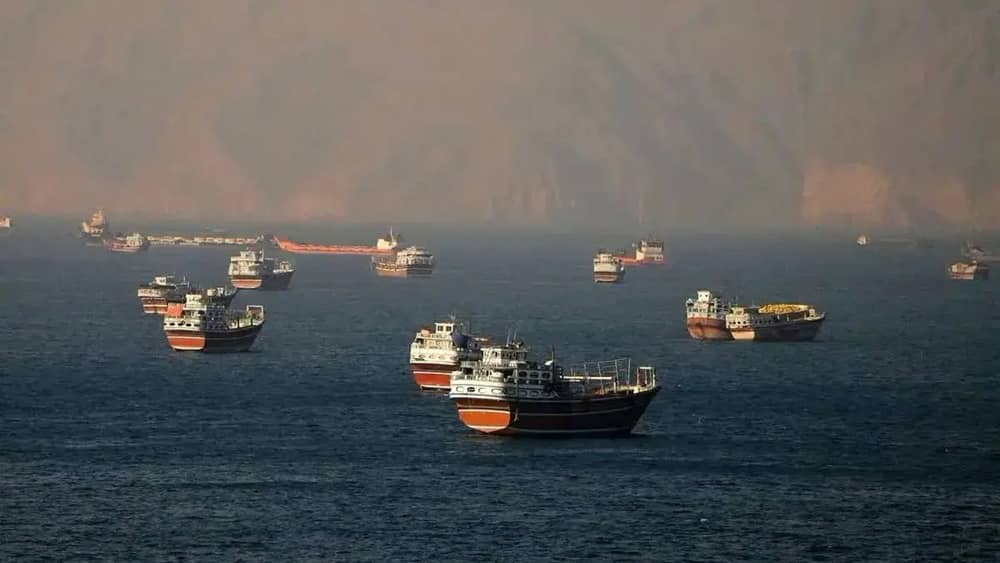
Hassan Ameli, Mojtaba Khamenei’s representative in Ardabil, told Friday prayers on November 20 that officials had made a “very important decision” to break the blockade and that Iranian oil tankers would soon leave Kharg Island for China. State broadcaster coverage carried the claim.
The world is suffering from the clerical regime’s wars.
The only playbook that ever forced it to stop its war machine still exists — and almost no one talks about it.Watch this. It’s not history. It’s the method that worked. #IranWar pic.twitter.com/nVLt11ZQr6
— NCRI-FAC (@iran_policy) August 3, 2026
Ameli added a much larger threat: if even one shot were fired at those tankers, oil installations across the Persian Gulf would become “legitimate targets.”
The same idea had already appeared in Fars’s defense of “Fereydoun”: if a tanker were hit, oil terminals in the United Arab Emirates, Saudi Arabia and Qatar would immediately enter Iran’s response equation.
For several days, the message was unmistakable: Tehran could break the blockade, Washington would face an intolerable regional cost if it intervened, and Iran was prepared to turn a confrontation over its own oil exports into a threat against the energy infrastructure of its neighbors.
Asked on November 22 what would happen if Iranian vessels tried to run the blockade, the U.S. President Donald Trump said: “I hope they do; they’ll all go down to the bottom of the sea, just like the rest of their navy.”
Suddenly the epic became much less certain.
From “We Will Break It” to “There Was No Operation”
By November 23, Shargh was writing about the “mystery of the tankers that were never dispatched.”
The newspaper stated plainly that the claimed operation had ultimately been denied and “did not reach the implementation stage.” No tanker convoy had sailed, it wrote, and there had been no actual operation called “Fereydoun.”
IRGC-affiliated Tasnim then devoted an article to explaining that no authorized military body, Supreme National Security Council official or government authority had ever announced such an operation. Reports of 14 tankers and a specific timetable, it said, had grown out of media proposals and speculation.
A highly orchestrated interview with the regime's FM Abbas Araghchi revealed more than intended: Iran's regime can only survive through #IranWar. It chose war because it saw not fighting as far costlier. A signature statement of who this regime truly fears more.…
— NCRI-FAC (@iran_policy) July 21, 2026
But that does not erase what happened.
Regime-aligned media promoted the convoy as an answer to the blockade. Fars wrapped it in the mythology of Fereydoun. A representative of the supreme leader publicly announced that a decision had been taken and threatened Gulf oil facilities. Friday-prayer platforms celebrated the prospect of breaking the siege. Then, when Washington responded with an equally explicit military threat, the official narrative became: there was never such an operation.
The retreat from the rhetoric is itself revealing.
For all Tehran’s claims of resilience, the blockade is hurting badly enough that regime circles are searching for ways, or even gambling with another major confrontation, to break it.
That leaves the clerical rule caught between two messages it wants Iranians to believe at once: that economic pressure cannot bend it, and that breaking that pressure is urgent enough to contemplate a confrontation that could reopen a regional war.
“Fereydoun” was supposed to project defiance.
Instead, the episode showed why Tehran needs such displays in the first place.