
Three-minute read
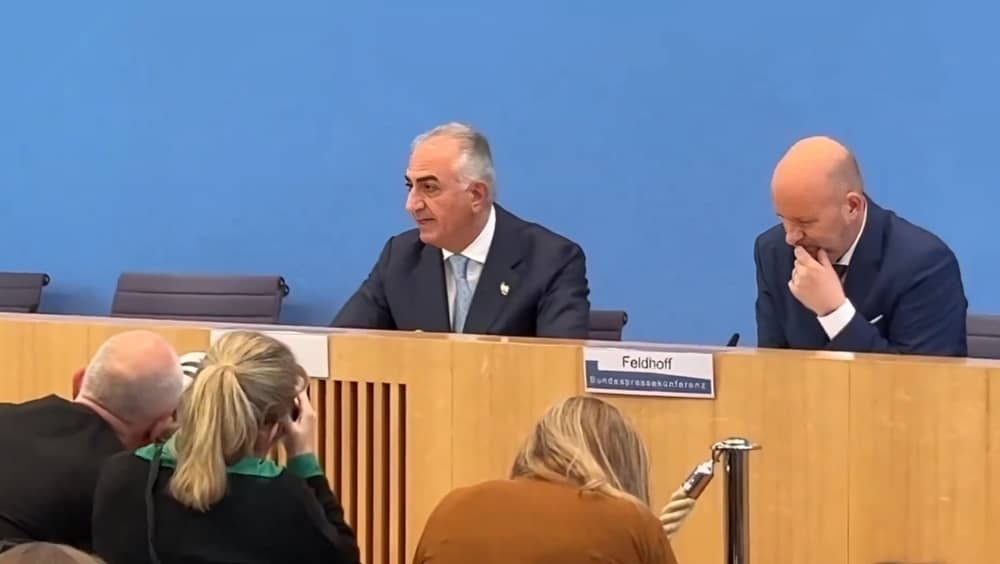
Reza Pahlavi’s planned visit to Belgium was initially presented around the kind of imagery his political operation has long sought: parliamentary access, meetings with Western officials and appearances in institutions that can later be repackaged as evidence of international relevance.
Instead, the visit has exposed the limits of that strategy.
The proposed reception at the Belgian Chamber of Representatives was cancelled. A subsequent attempt to secure a venue at the Brussels regional Parliament also failed. Belgian officials publicly stressed that Pahlavi could not be treated as representative of Iran’s opposition, while critics warned that remaining engagements risked being used for political self-promotion rather than reflecting any institutional Belgian position.
The episode matters less because of Pahlavi himself than because of the political mechanism it exposes: how carefully staged access can be converted into an image of standing that the underlying institutions themselves may not actually confer.
Madame @AmirkhizyMeliss,
Vous m’avez écrit deux fois et je vous prie de m’excuser de ne pas y avoir encore répondu autrement que dans mes declarations publiques et dans mes actes. Bien que je tienne à répondre à chaque personne qui m’écrit, je suis extrêmement sollicité.
Vous… https://t.co/lE38RDyZsh
— Maxime PREVOT (@prevotmaxime) October 23, 2026
An Invitation That Lost Its Institutional Weight
The controversy began after Georges-Louis Bouchez, leader of Belgium’s Francophone liberal MR party, proposed inviting Pahlavi to Parliament following an earlier meeting in Paris.
The proposal immediately encountered resistance.
Foreign Minister Maxime Prévot warned that Pahlavi could not be presented as the voice of Iran’s opposition, describing that opposition as “particularly diverse.” He advised that other currents should also be heard and cautioned against allowing an invitation to be interpreted as Belgian support for one faction.
But Prévot subsequently went considerably further. On October 23, responding publicly to an MR politician who urged Belgium to recognize Pahlavi as the “legitimate representative” of the Iranian people and the unifying leader of the democratic opposition, the foreign minister rejected the request. “Deciding who should lead Iran,” he wrote, “is a choice that must belong solely to the Iranians.” He stressed that other individuals and movements also claim to represent Iran’s opposition and that the Belgian government would not confer such political recognition on Pahlavi.
On October 21, parliamentary leaders failed to agree on hosting him, and the planned November 5 event was dropped.
Belgian outlet 21News summarized the outcome bluntly: “Reza Pahlavi pas le bienvenu à la Chambre”—Pahlavi would not be officially welcomed at the Chamber.
A private meeting may yield useful photographs but it does not confer the stature of a parliamentary reception.
Iranian Associations Challenge Belgian Defense Minister’s Meeting With Reza Pahlavi After Parliament Invitation Canceled #FreeIran2026 #No2ShahNo2Mullahshttps://t.co/MUji95yKil via @IranNewsUpdate1
— Iran News Update (@IranNewsUpdate1) October 26, 2026
A Second Venue Falls Through
An effort to shift the event to the Brussels Parliament also failed after opposition from political groups there.
That sequence made the pattern increasingly clear: each time the visit approached the symbolism of institutional endorsement, Belgian political actors drew a line.
Groen MP Staf Aerts warned that Pahlavi might use the encounter “to strengthen his political position.” He stressed that Belgian foreign policy does not endorse any individual or faction as the future leadership of Iran and questioned why a defense-sector platform should provide political optics that Parliament had declined to offer.
That warning is unusually direct because it addresses the central issue: not what Pahlavi says in Brussels, but how the images from Brussels may later be used.
Belgian Foreign Minister Maxime Prévot Rejects Demand to Recognize Reza Pahlavi as Iran’s Legitimate Representative #FreeIran2026 #No2ShahNo2Mullahshttps://t.co/3kel4Tnmeq via @IranNewsUpdate1
— Iran News Update (@IranNewsUpdate1) October 26, 2026
Iranian Communities Mobilized Before the Cancellation
The parliamentary reversal also followed an organized campaign by Iranian communities in Europe. Before the invitation was cancelled, 47 Iranian associations in Belgium, the Netherlands, Luxembourg and France wrote to Belgium’s prime minister, foreign minister and the presidents of both chambers of Parliament opposing the proposed reception and Pahlavi’s meeting with Defense Minister Theo Francken. The signatories included associations representing women, young people, academics, physicians, political refugees and Iranian communities across several European countries.
Many of the signatories said they or close relatives had suffered imprisonment, torture or execution under the Shah’s dictatorship, and argued that providing his son with an institutional platform disregarded both the victims of SAVAK and the long Iranian struggle against dictatorship in monarchical as well as clerical form.
Belgian Legal Scholars and Political Figures Warn Against Legitimizing Reza Pahlavi #FreeIran2026 #No2ShahNo2Mullahshttps://t.co/4ihBgFhaJw via @IranNewsUpdate1
— Iran News Update (@IranNewsUpdate1) October 25, 2026
The pushback was not confined to Iranian organizations. Sixteen Belgian political figures, jurists, academics and civil-society representatives separately urged Belgian authorities not to elevate Pahlavi as an alternative to the clerical dictatorship, stressing that Iran’s future leadership must emerge from free political choice rather than outside promotion of another authoritarian model.
Six Iranian-Belgian associations later welcomed Parliament’s decision to cancel the reception, describing it as a refusal to give institutional standing to a figure without a democratic mandate to represent Iranians. The sequence matters: opposition was organized before the cancellation, not invented afterward to explain it.