

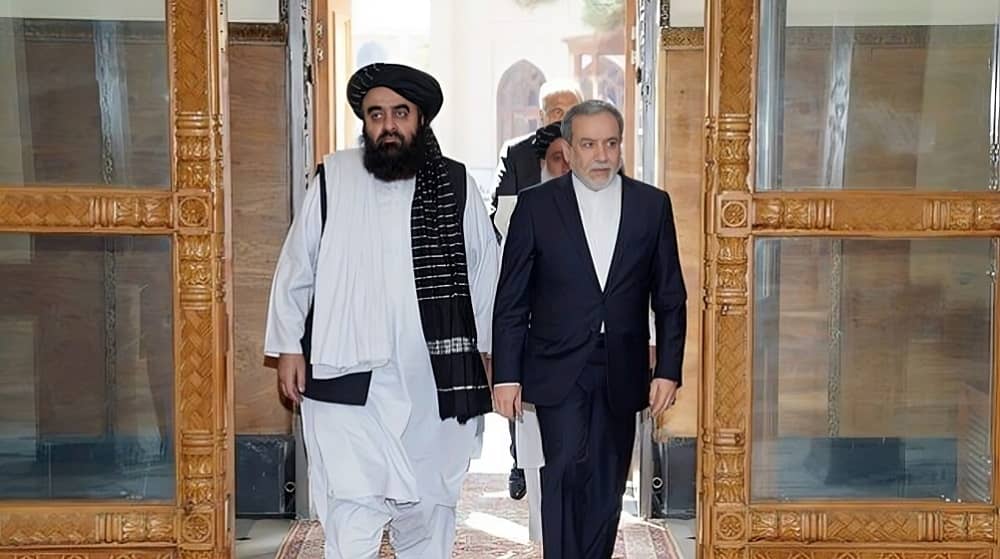
Iran’s state-controlled media has harshly criticized Foreign Minister Abbas Araghchi’s recent trip to Kabul, underscoring the regime’s deteriorating position in regional diplomacy following multiple strategic setbacks. The visit, which was meant to advance Iran’s interests in Afghanistan, was met with a cold reception, reinforcing the perception of Tehran’s declining influence.
In a scathing editorial, Jomhouri Eslami’s editor-in-chief, Masih Mohajeri, wrote: “At Kabul airport, instead of being welcomed by the Afghan Foreign Minister, a few low-ranking officials greeted you; during your meetings with Kabul authorities, the Iranian flag was nowhere to be seen.” The absence of diplomatic protocol highlighted the lack of respect the Taliban government holds for Iran’s position.
“As predicted by experts, Araghchi’s visit to Kabul was fruitless and merely served as a diplomatic concession to the Taliban without any tangible gain in return,” Jomhouri Eslami stated. The paper likened the trip to Araghchi’s past visits to Damascus in the final days of Bashar al-Assad’s government, noting, “This trip belongs to the category of his Damascus visits in the dying days of Bashar al-Assad’s rule and eating ‘shawarma’ in one of the city’s restaurants—only this time, he had tea in a Kabul market instead.”
#Iran News: Araghchi Threatens Shift Toward #NuclearWeapons Development Amid Sanctions Pressurehttps://t.co/Xp04DICIFF
— NCRI-FAC (@iran_policy) November 28, 2024
A One-Sided Relationship with the Taliban
“The self-proclaimed Taliban government has no legitimacy, no adherence to international commitments, and remains a hub for terrorism,” the article stated, questioning the wisdom of Tehran’s engagement with the militant group.
Furthermore, the daily noted that Araghchi’s post-trip comments were highly misleading, quoting him as saying, “The Afghan government has agreed that migrants must return, but in a planned and dignified manner that does not create problems on the other side of the border.” However, the editorial dismissed these assurances as empty, pointing out that the Taliban merely “made vague pledges without any real obligations.”
The timing of Araghchi’s trip is also noteworthy, occurring just days after Donald Trump’s return to the U.S. presidency. As Etemad Online pointed out on January 29, Tehran may be bracing for increased U.S. pressure and is seeking to secure regional relationships in advance. However, EcoIran questioned whether Iran’s deepening engagement with the Taliban is a sign that Tehran is moving toward officially recognizing the group, noting, “While Tehran has not yet formally recognized the Taliban, the growing economic and political interactions suggest that recognition may only be a matter of time.”
#Iranian Regime’s FM Araghchi Scrambles to Bolster Proxy Forces Amid Military Setbackshttps://t.co/E7XjSmEJsF
— NCRI-FAC (@iran_policy) October 6, 2024
Jomhouri Eslami warned, “The various ethnic and religious groups in Afghanistan categorically refuse to accept the Taliban’s rule and have intensified their resistance over the past three and a half years.” The editorial criticized the Pezeshkian government for engaging with a regime that is “not only at odds with the Afghan people but also with Iran’s national interests.”
Diplomatic Weakness and Internal Criticism
Jomhouri Eslami further questioned why a trip of this level was necessary, writing, “These matters could have been handled by a mid-level Foreign Ministry official or the Iranian Embassy in Kabul. Such visits should be reserved for governments that are both legitimate and capable of offering reciprocal benefits.” The fact that Araghchi’s trip yielded nothing concrete other than “verbal commitments” reinforced the perception that Tehran is negotiating from a position of desperation.
As the clerical regime struggles with economic crises, internal discontent, and geopolitical isolation, its reliance on ceremonial foreign trips, covert signals of readiness to negotiate with the U.S., and attempts to engage European countries in talks about talks all underscore its instability and desperation to fabricate diplomatic activity and project leverage that simply does not exist.