

Three-minute read
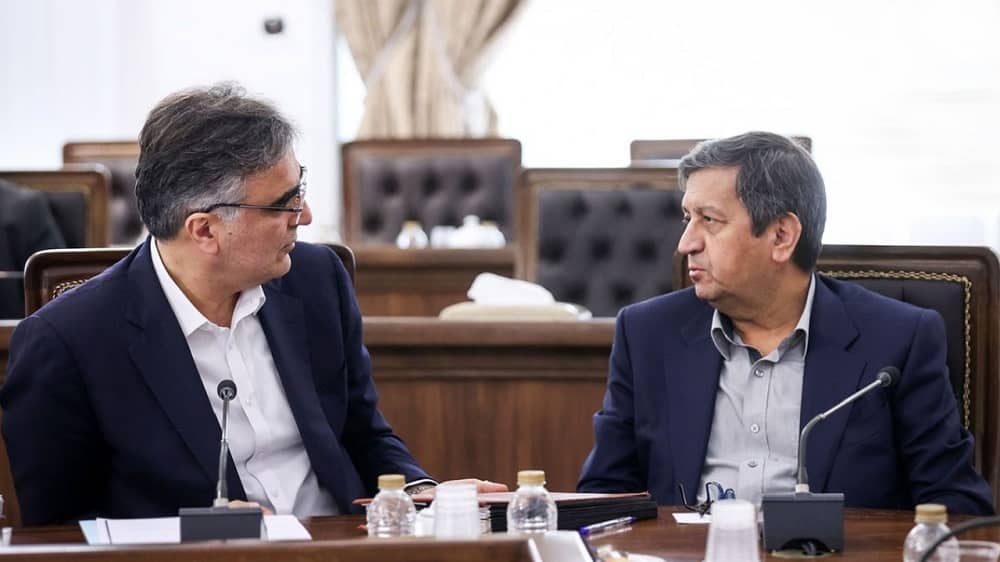
Political chaos in Iran deepened as rumors of the dismissal of Central Bank Governor Mohammad Reza Farzin clashed with official denials, while the regime’s parliament intensified efforts to impeach Economy Minister Abdolnaser Hemmati. The impeachment push, driven by MPs aligned with the Paydari Front, comes amid a worsening economic crisis and fierce factional struggles within the regime.
The rumors surrounding Farzin’s dismissal began circulating on social media on February 10, prompting an immediate response from the government. Ali Ahmadnia, head of government information services, dismissed the speculation via social media, stating, “From minutes ago, news about the dismissal of Farzin, the Governor of the Central Bank, has been spreading. This claim is false.” Despite this denial, speculation persists amid worsening economic instability and public distrust of the regime.
Meanwhile, Parliament’s Presidium has formally referred the impeachment motion against Hemmati to the Economic Commission. Calls for Hemmati’s removal have been building for weeks, with Paydari Front lawmakers spearheading the attack, which analysts view as a power grab within the ruling elite. Alireza Salimi, a member of the Presidium, explained, “Once the impeachment motion is submitted to the relevant commission, the minister and commission members have seven days to review the matter.” If the commission deems the minister’s responses unsatisfactory, the case will proceed to a full parliamentary session, where Hemmati will have ten days to defend himself.
#Iran's Currency and Gold Prices Surge Amid Escalating Tensions with the Westhttps://t.co/0REyGIQsCt
— NCRI-FAC (@iran_policy) February 9, 2025
The impeachment petition, signed by 89 lawmakers, was confirmed by Ahmad Naderi, another member of the Parliament’s Presidium. “The impeachment of Abdolnaser Hemmati, the Economy Minister, has been submitted to the Economic Commission with 89 signatures,” Naderi announced on X. This move is widely seen as an attempt by extremist factions to consolidate their grip on power while shifting blame for the regime’s economic failures.
Despite the significant number of signatories, many MPs question the timing of the impeachment. An editorial published in Iran Newspaper argued that “moving toward impeachment only months after the administration’s formation is premature” and could further destabilize an already collapsing economy. The author further noted that “in the middle of an economic war exacerbated by Trump’s policies against Iran, the removal of the economy minister would only worsen financial chaos.”
Some legislators also emphasize the separation of responsibilities between the Economy Ministry and the Central Bank. “Under the 2023 Law on Strengthening the Duties of the Central Bank, inflation control, currency stability, and exchange rate management are within the Central Bank’s domain, not the Economy Ministry’s,” a parliamentary source told Iran Newspaper. Nevertheless, critics argue that Hemmati bears responsibility for the currency crisis, which continues to cripple Iranian livelihoods.
Key Infighting Events in Iran’s Regime (2024)
July: Raisi’s death and Pezeshkian’s appointment as president ignited factional rivalries
Aug-Dec: Cabinet vetting and budget debates became battlegrounds
Dec: Mandatory hijab enforcement divided factions, with clerics demanding… pic.twitter.com/zD2czqJblP— NCRI-FAC (@iran_policy) January 1, 2025
Political analysts believe these recent moves are part of a broader power struggle within Iran’s ruling elite. According to Arman Daily, extremist factions are ramping up pressure on the administration. “With Khamenei’s recent condemnation of diplomatic overtures, the impeachment of Hemmati and rumors surrounding Farzin’s removal are tools to force the administration to backtrack on negotiations,” the publication reported.
Naderi further elaborated on the broader political maneuvers, stating, “The impeachment of the oil minister was nearly abandoned following internal negotiations. However, the issue of the Central Bank and the Economy Ministry remains unresolved.” He added that lawmakers are demanding “substantial economic reforms” as a condition to withdraw the impeachment motion, though few believe these demands are anything but a smokescreen for factional power grabs at a turbulent time.
Iranian officials have repeatedly downplayed the speculation, with the administration asserting its commitment to stability. In a recent statement, the government reiterated, “There is no plan to replace the Central Bank governor, and any such claims are baseless.” However, the growing infighting, coupled with the regime’s inability to manage economic turmoil, suggests a system in deep distress.
As economic instability deepens and factional disputes intensify, regime officials continue to use scapegoats to deflect blame and mask the failure of the entire ruling establishment. However, the Iranian people—who are the primary victims of the economic meltdown—do not fall for these tactics. Instead, their anger toward the entire regime continues to grow, further eroding the dictatorship’s grip on power.