

Two-minute read
The Iranian regime is confronting a severe crisis marked by energy deficits, collapsing living standards, and escalating public anger. According to a survey by the Ara Polling Center published by the state-run outlet Didar News on July 20, 2026, 63.6 percent of Iranians experience anger, with public trust in government institutions hovering at a dismal 25 to 30 percent. State economist Masoud Nili warned on July 20, 2026, that Iran has crossed chronic inflation into the “station before hyperinflation,” while former Central Bank Chief Abdolnasser Hemmati acknowledged that real per capita income has halved since 2011.
These official metrics—filtered through state-controlled institutions staffed by officials complicit in systemic plunder or restrained by fear—represent only a fraction of the actual economic ruin. Despite this grim reality, Judiciary Chief Gholamhossein Mohseni Ejei dismissed public hardship on July 20, 2026, declaring, “Standing against the enemy has a cost and we must accept this cost”.
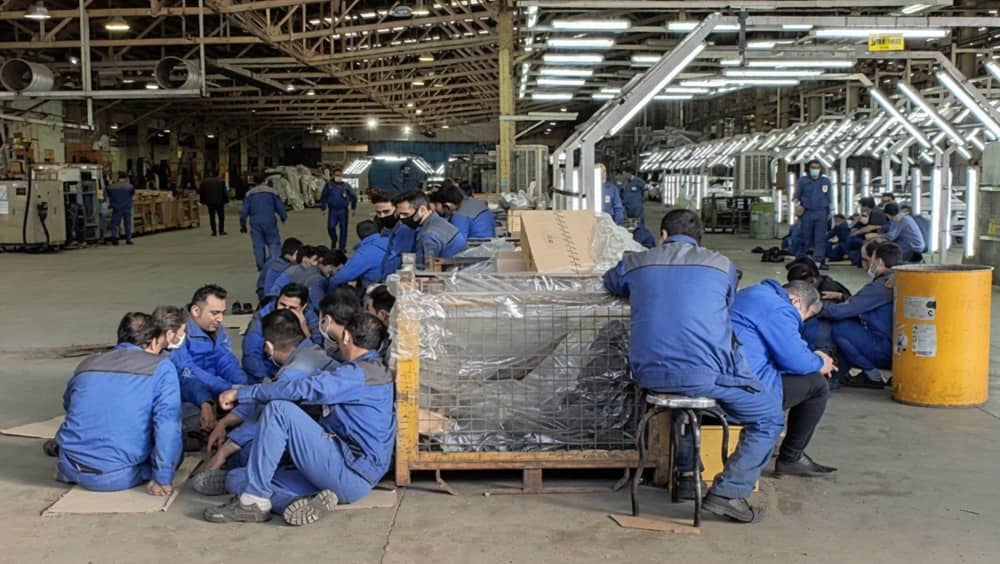
In response, citizens are flooding the streets. On July 27, 2026, telecommunications retirees protested in Kermanshah, Isfahan, Sanandaj, and Bijar, chanting, “From this high cost of living, people became crazy”. Social Security retirees marched in Ahvaz, Tehran, and Shush on July 26, shouting, “Enough with warmongering, our tables are empty”. Protests also erupted among national housing applicants in Zanjan on July 28 and striking factory workers in Tabriz.
"Iran is engulfed in a severe socio-#economic crisis, driven by geopolitical adventurism, systemic mismanagement, and hyperinflation," @MansoreGolestan writes.https://t.co/kNJLoCPPdC
— NCRI-FAC (@iran_policy) July 21, 2026
Severe Energy Shortages
Compounding the financial ruin is an acute energy crisis. Hamid Hosseini, spokesman for the Union of Oil, Gas, and Petrochemical Exporters, reported on July 27, 2026, that Iran faces a daily gasoline deficit of nearly 20 million liters. The following day, government spokesperson Fatemeh Mohajerani confirmed a reduction in the subsidized gasoline quota from 70 to 50 liters and signaled potential price hikes for non-quota fuel.
Meanwhile, rolling blackouts continue to devastate the nation’s industrial sector. Hashem Oraee, head of the Energy Union, revealed in a July 22, 2026, interview with Fararu that industrial parks are being forcibly cut off from electricity two days a week, warning that severe shortages will persist without radical reform.
Rather than addressing systemic mismanagement, state officials have used geopolitical tensions as a shield. Tehran City Council Chairman Mehdi Chamran claimed on July 26, 2026, that municipal services must be stripped to divert funds toward crisis management. However, Oraee rejected these justifications, pointing out that officials routinely weaponize war conditions to mask decades of structural failure.
"As temperatures soar, the blockade tightens, and the war escalates, Iran’s #society has crossed the threshold of fear. The country is no longer merely in crisis; it is a pressurized chamber where citizens have identified their captors and are bracing for the final, inevitable…
— NCRI-FAC (@iran_policy) July 15, 2026
Fear of Social Explosion
Inside the political establishment, plans to shift costs onto the public are stoking panic. MP Malek Shariati cited plans for a 10,000-toman gasoline tier on July 20, 2026, while parliamentary commission head Pezhmanfar announced on July 22 that smart meters would be used to disconnect high-consuming users—tactics driven less by policy coherence and more by a desperate scramble to manage an increasingly volatile public.
Alarmed by the potential fallout, MP Bayat warned in a July 28, 2026, parliamentary session that agricultural electricity bills had skyrocketed to 70 million tomans, cautioning against unannounced fuel price hikes. Crucially, these warnings from state insiders do not spring from empathy for the impoverished population; they stem entirely from terror over the uncontrollable social explosion that additional economic shocks will ignite.
This mounting pressure is simultaneously escalating within the regime’s prisons. In late July 2026, 1,500 death-row inmates in Ghezel Hesar Prison reached their fourteenth day of a hunger strike against executions, with several prisoners sewing their lips shut in desperate protest. Incapable of providing basic stability or economic relief, the clerical regime now faces an enraged and increasingly organized populace, rapidly driving the nation toward an inevitable tipping point.