

In a rare moment of candor, Javan, a mouthpiece of the Islamic Revolutionary Guards (IRGC), has acknowledged what many Iranians already know: the country’s economic and social decay is rooted not in foreign sanctions, but in decades of internal mismanagement, corruption, and structural dysfunction. In a blistering editorial titled “Negotiation’s Breeze Doesn’t Cool the Desert of Domestic Problems,” published April 10, 2025, the paper dismantles the regime’s long-standing narrative that sanctions are the primary source of national hardship.
“Sanctions have choked Iran’s economy, but the real roots of the crisis lie elsewhere,” the paper states, pointing to “chronic dependency on oil, widespread corruption, and bureaucratic inefficiency” as the true culprits. The editorial bluntly adds: “Negotiation without internal shift is nothing but a mirage that creates false hope.”
The paper laments that even after the 2015 nuclear deal (JCPOA), inflation surged, job creation stagnated, and youth unemployment remained above 23%. “Foreign currencies flowed, but domestic production withered. Imported goods flooded markets, while local industries collapsed,” it states.
#Iran News: State Media Warns of “Revolution of the #Hungry” Amid Widening Inequality in Iranhttps://t.co/hzQQJZMlsb
— NCRI-FAC (@iran_policy) November 26, 2024
According to Javan, more than half of Iran’s state budget remains tied to oil exports, making the country’s economy “highly vulnerable to global market volatility.” It warns that even if sanctions were lifted, “without diversification and institutional overhaul, the fragility will persist.”
The publication also highlights a Transparency International ranking of 147 out of 180 countries, calling it evidence of entrenched opacity and systemic failure: “Development funds are siphoned off, and infrastructure projects stall due to cronyism and mismanagement.”
On inflation, Javan cites unrestrained money printing as the core driver: “As long as monetary policy remains reckless, inflation above 35% will continue—sanctions or no sanctions.”
#Iran News: Shargh Daily Warns of Impending “Bread Uprising” Amidst Economic Collapsehttps://t.co/fxXKTuIfMC
— NCRI-FAC (@iran_policy) April 1, 2025
In a striking rejection of the regime’s diplomatic strategy, the paper concludes: “The focus on negotiation diverts attention from the real battlefield—internal revamp. Without it, no foreign agreement can rescue Iran from collapse.”
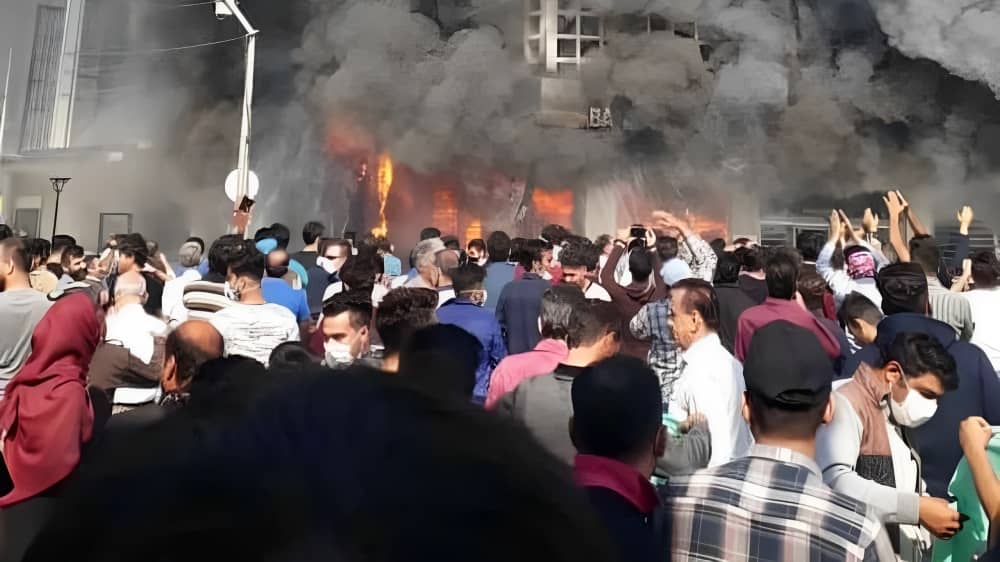
While Javan attempts to frame its critique within a loyalist narrative, the subtext is unmistakable: four decades of absolute rule have hollowed out Iran’s institutions, leaving a brittle regime vulnerable to societal unrest. The piece implicitly acknowledges a dangerous paradox for the clerical establishment—sanction relief, even if achieved through foreign negotiations, will not alleviate the regime’s crisis. On the contrary, as seen after the 2015 nuclear deal and the influx of billions into the regime’s coffers, such relief only heightens public expectations and accelerates disillusionment when no tangible improvements follow. The 2017 uprising, fueled by economic despair just two and a half years after the JCPOA, serves as a stark reminder. This is why the IRGC mouthpiece warns that negotiation is a mirage: absent structural and groundbreaking changes, even financial breathing room cannot prevent the looming threat of another nationwide uprising.