

Three-minute read
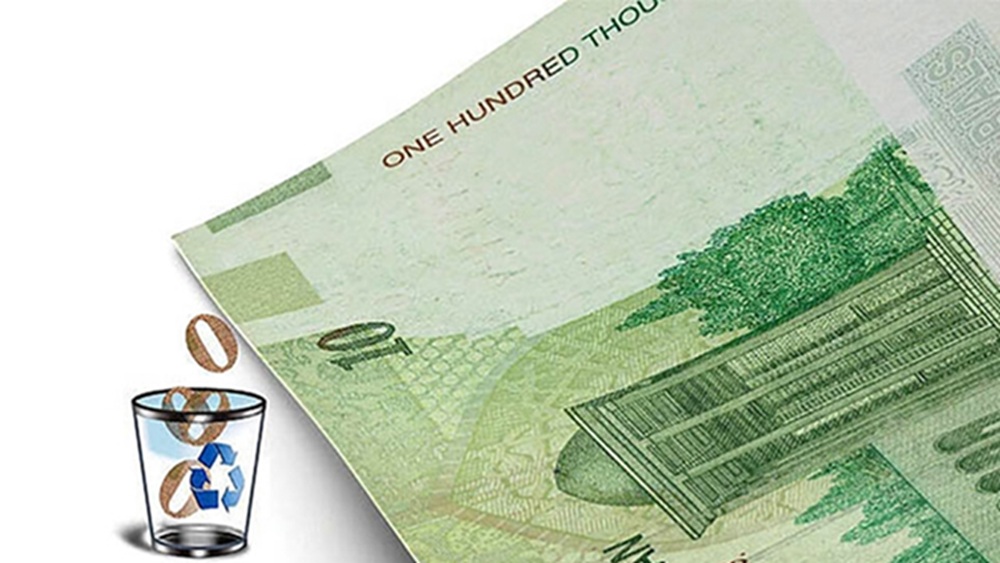
In a striking interview published on the regime-affiliated news site Shoaresal on August 13, economist Farshad Momeni acknowledged that “the people’s table is empty” and that food prices have risen by 82 percent. While millions struggle with hunger, he admitted, the ruling elite is “busy playing with the zeros of currency.”
This confession from within the Iranian regime’s intellectual establishment is more than an economic analysis—it is an acknowledgment that poverty and malnutrition have reached catastrophic levels, endangering “the material survival of a large part of the people.” Yet, as Momeni noted, the regime continues to pursue policies that fuel inflation and deepen poverty.
From Food Security to National Security Threat
Momeni warned that the food crisis is not merely an economic challenge but a national security threat, stressing that neglect of basic needs creates fertile ground for mass protests. He pointed to the destructive consequences of structural adjustment policies, unchecked privileges for mafia networks, and rampant rentierism, which he said are pushing the country “to the path of internal collapse.”
His words, though couched in cautious language, expose a deeper truth: the clerical regime is not only incapable of solving Iran’s crises—it is the primary cause of their escalation.
The Devaluation of Iran’s Rial Has Accelerated https://t.co/F1uQwxi3LY pic.twitter.com/OSEGqSbmPG
— Iran Focus (@Iran_Focus) February 10, 2025
Shocking Numbers: Hunger, Poverty, and Deprivation
The statistics Momeni cited paint a devastating picture:
- Iran’s poor population grew from 10 million in 2011 to more than 25 million by 2021.
- Three-quarters of the population now lives in deprivation.
- Between 2018 and 2023, families’ ability to afford basic education for their children dropped by 80 percent.
- Protein and dairy consumption have plummeted to dangerously low levels.
These figures, he admitted, do not even reflect the full reality, since many official reports have been classified as “confidential.”
Regime Priorities: Currency Manipulation and Import Mafias
While Iranian society suffers from food inflation exceeding 80 percent, Momeni revealed that the regime is planning a three-fold increase in the exchange rate for basic goods, a move that would devastate household budgets even further. He highlighted the collapse of domestic production and exports, which have fallen to “one-fifth of the worst period of the Iran-Iraq war.”
These revelations expose a regime that serves the interests of rentier elites, import mafias, and unproductive power networks, while ignoring the most basic needs of the people.
#Iran’s Economic Instability: A Chronological Perspectivehttps://t.co/MTqcCUM9k6
— NCRI-FAC (@iran_policy) March 7, 2025
Drawing lessons from past uprisings in the 1990s and 2011, Momeni warned that structural poverty historically leads to instability and unrest, noting that the intervals between Iranian protests have grown shorter and shorter. His statements, in effect, serve as a warning to the regime: continuing down this path risks triggering a nationwide social explosion.
But his proposed “solutions”—calls for reform and reliance on “the worthy”—reveal the limits of regime insiders. After 45 years of plunder and repression, experience has proven that this system is irreformable.
Structural Corruption as a Tool of Governance
The current crisis is not accidental. It is the direct result of deliberate policies designed to transfer wealth from the majority to a small minority connected to the centers of power. This is the essence of structural corruption.
Even Momeni’s reference to the “dissolution of the Natural Resources Organization” as a “food security alarm” is, in reality, an admission that the regime is systematically destroying Iran’s economic and environmental foundations to benefit ruling factions.
#Iran’s Economic Collapse and Social Unrest Looming in 2025https://t.co/zN1eMj0Spm
— NCRI-FAC (@iran_policy) March 18, 2025
Poverty and the shrinking of the people’s tables are not unintended consequences of mismanagement. They are tools of governance—used to weaken society, suppress bargaining power, and consolidate the regime’s parasitic networks.
Farshad Momeni’s reluctant admissions—though wrapped in conservative language—underscore a fundamental truth: the crisis of livelihood and hunger under Khamenei’s dictatorship is not temporary. It is the inevitable product of a system rooted in corruption, rent-seeking, and the plunder of national wealth.
What regime insiders describe as “warnings” are, in fact, confirmations of what the Iranian Resistance has long maintained: the clerical regime is incapable of reform. Its policies are designed to preserve power at the expense of society’s very survival.