

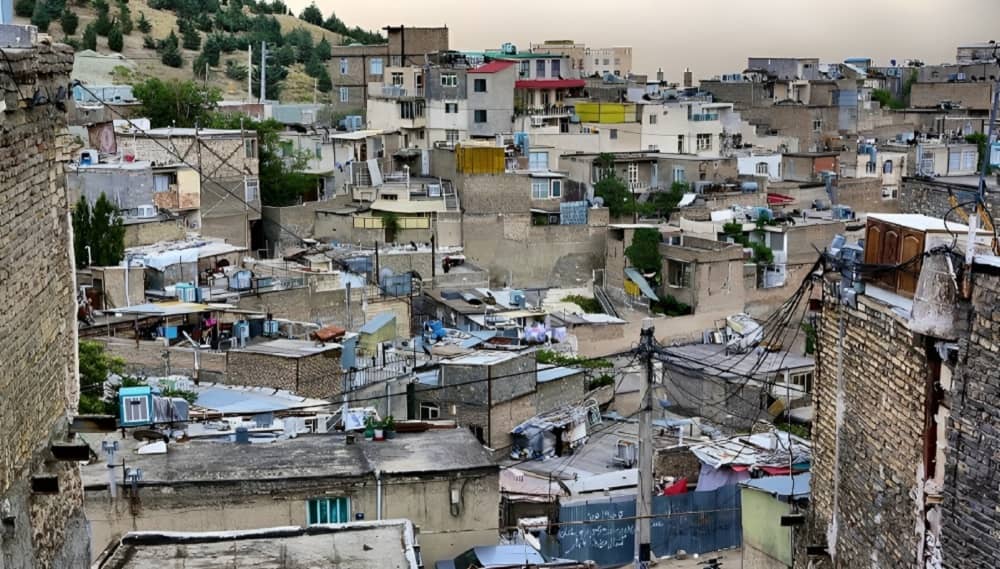
A new report from Iranian state media has unintentionally revealed the depth of the regime’s corruption and economic mismanagement in the housing sector, exposing a structural crisis that has left millions of Iranians struggling for shelter. While the government insists on building millions of new state-owned homes as a solution, the February 11 report in Donyaye Eghtesad highlights that the real crisis is not a shortage of homes but a crippling economic imbalance fueled by inflation, corruption, and failed policies.
The article exposes that 1.5 million renters now live in absolute poverty, a number that has increased by 50% since 2011, while over half of Iranian families officially suffer from “housing poverty.” Despite 5.5 million new housing units being constructed over the past decade, the number of renters has continued to grow, proving that the housing crisis is not due to lack of construction but rather the regime’s economic policies that enrich speculators and push millions deeper into poverty.
For years, the regime has pushed state-controlled housing projects like Maskan-e Mehr, yet the new revelations confirm that these efforts have failed to address affordability, access, or fairness. Instead, the housing market has been manipulated by well-connected insiders who hoard properties, keeping them off the market to inflate prices and exploit desperate buyers and renters. The report bluntly states that “real estate speculation has made some owners even wealthier while millions are forced into worse conditions.”
#Iran News in Brief
While skyrocketing housing prices have forced millions of people to live on the capital's outskirts, state-affiliated #housing expert Hamid Najaf revealed that a significant number of homes in both central and northern #Tehran remain unoccupied, with estimates… pic.twitter.com/WzXyrY3WuD— NCRI-FAC (@iran_policy) November 5, 2023
One of the most damning admissions in the report is that 80% of those eligible for state-funded housing cannot even afford the initial down payment, exposing the absurdity of the regime’s so-called housing policies. In the past three years, over 5 million families applied for government-backed housing, but only 1 million were able to afford the required upfront payment. This means that 4 out of 5 applicants are left without any path to homeownership, highlighting the scale of exclusion built into the system.
Despite the government’s claims that building more houses will fix the crisis, the report reveals that the primary factor driving this catastrophe is the regime’s own economic mismanagement. Inflation in the housing sector has skyrocketed, with real estate prices in major cities increasing by 650% in the past decade. Meanwhile, wages have failed to keep pace, and today, an average Iranian family needs 65 years of savings to buy a home in Tehran—a figure that was just 12 years in 2011.
#Iran: No Supervision Over Shabby Housing Project Which Caused Most Deaths in the Recent Quake https://t.co/386A3HTt77 pic.twitter.com/HHMsWS5RIX
— NCRI-FAC (@iran_policy) November 16, 2017
The situation is further exacerbated by high inflation, declining incomes, and a financial system rigged to benefit regime insiders. Even Iranian developers, once eager to build, now refuse to sell completed units, opting to hoard an estimated 2.6 million empty properties as a hedge against currency devaluation and market instability. In contrast, nearly 4 million families live in substandard housing, unable to afford even basic shelter.
This revelation from within state media is a rare moment of internal acknowledgment of the regime’s failure. The regime’s housing policies—like its overall economic strategy—have not only failed to provide stability but have actively deepened the suffering of ordinary Iranians while enriching those at the top.
As Iran’s rulers continue to shift blame and push ineffective solutions, millions remain trapped in worsening economic conditions, forced to choose between rent, food, and survival.