
Three-minute read
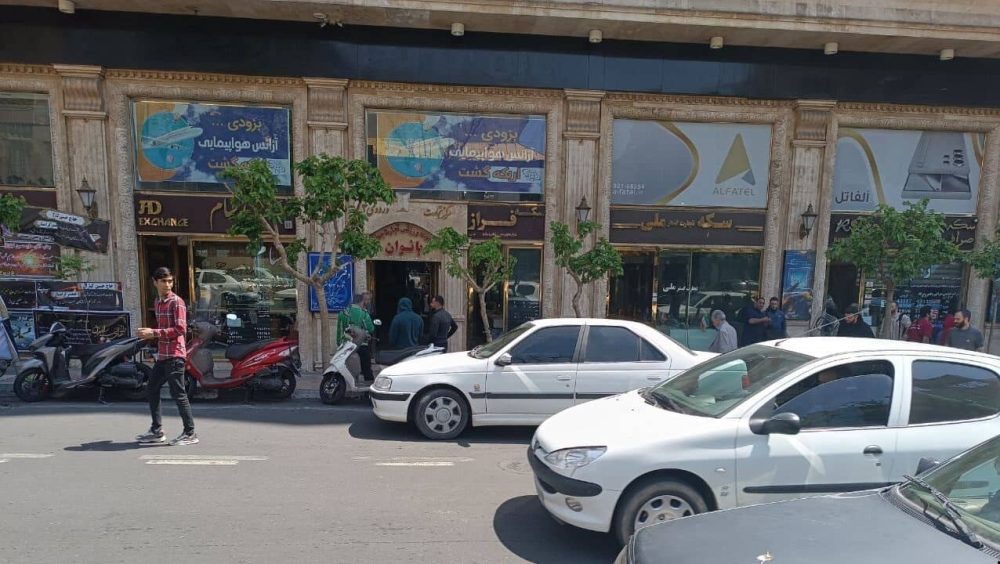
Iran’s truckers entered their seventh consecutive day of strike action on Saturday as the dollar reached 299,000 tomans, setting another reported record. The Central Bank extended restrictions on cryptocurrency exchanges, while fresh labor unrest in the oil industry and increasingly confrontational exchanges between ruling factions exposed mounting domestic pressures.
According to strike reports, truck drivers in Torbat-e Heydarieh and Dorud joined the stoppage on Saturday, bringing the reported number of participating cities to 22 across 14 provinces. Separately, employees of OICO staged a strike and protest at the Azar oilfield in Mehran, Ilam province.
The expansion of industrial action comes as the regime faces increasing pressure to maintain domestic distribution networks and revenue-generating industries amid severe financial constraints.
Financial restrictions widen as rial depreciates
The Central Bank announced on Saturday that it had restricted remote withdrawals from the bank accounts of six additional cryptocurrency exchanges, bringing the number of affected platforms to nine.
Meanwhile, Nobitex, Wallex, Bitpin, Aban Tether and Tabdeal temporarily suspended Tether trading against the toman, according to Mihan Blockchain. Tether has become an alternative means of preserving savings against currency depreciation and a reference point for dollar pricing.
Iran’s truckers extend their strike, the dollar approaches 300,000 tomans, and gas shortages threaten industrial shutdowns. Amid widening factional disputes, the regime relies on emergency price controls and Basij mobilization to contain mounting domestic pressures. By…
— NCRI-FAC (@iran_policy) November 27, 2026
The restrictions extend the authorities’ intervention into alternative financial channels, even as IRGC-linked and state-affiliated networks reportedly retain privileged access to cryptocurrency mining infrastructure.
The economic crisis is increasingly affecting agricultural inputs. On November 28, Tasnim reported that sales of phosphate and potash fertilizers had declined by 95 percent, according to an industry association official, who attributed the contraction to rising urea prices.
Meanwhile, Shargh reported increases of up to 359 percent in the per-gigabyte cost of one fixed-line internet package. The increase imposes additional costs on households and businesses already contending with filtering and connectivity disruptions.
The deteriorating healthcare situation is also becoming more visible. Schools in Sirjan moved to remote instruction on Saturday following the deaths of two students amid a growing influenza outbreak. Although the precise cause of their deaths remains under investigation, previously disclosed official figures indicate that only approximately 700,000 of the planned 2.8 million influenza vaccine doses had been imported by late September.
Iran’s Regime Expands Basij Mobilization as Labor Protests Spread and Political Tensions Intensify https://t.co/4nD1Sm0G8L
— NCRI-FAC (@iran_policy) November 26, 2026
Factional confrontation exposes decision-making deadlock
The November 28 edition of Jomhouri Eslami identified the multiplicity of power centers and the influence of groups exercising authority without accountability as central obstacles to decision-making. The newspaper warned that prolonged confrontation risks producing neither a decisive military victory nor the conditions necessary for economic reconstruction.
Conversely, Nobonyad attacked the regime’s president Masoud Pezeshkian over his negotiating position, questioning even his right to offer religiously framed advice to the supreme leader. In a separate article, the publication directly linked the government’s currency policies to the January uprising.
Meanwhile, security establishment-aligned Nour News reported that parliament would consider removing the requirement for the intelligence minister to possess advanced Islamic jurisprudential qualifications on Sunday. Lawmakers have submitted 135 proposals concerning the legislation, highlighting the extent of parliamentary debate over the intelligence apparatus.
Iran, Nov. 25: Pezeshkian warns the regime could bring about its own downfall as truckers' strike reaches a reported 16 cities and the dollar tops 290,000 tomans. Industry contracts, bread restrictions loom, and hardliners demand confrontation while new #internet controls…
— NCRI-FAC (@iran_policy) November 25, 2026
Security tensions persist in southern Iran
The governor of Sarbaz, Sistan and Baluchestan province, confirmed to state media on Saturday that a state-aligned Sunni cleric had been killed in an armed attack. Authorities said neither the perpetrators nor their motives had been established.
Separately, a local Baluch rights outlet reported that security-force gunfire had caused the deaths of two Baluch fuel carriers in Sirik, Hormozgan province, on Friday.
State broadcaster-affiliated newspaper Jam-e Jam reported on November 28 that methanol poisoning associated with illicit alcohol distribution had spread across 11 provinces, with 608 reported cases and 35 deaths or cases of brain death. The figures highlight a public health crisis aggravated by the prohibition of alcohol and the resulting absence of regulatory oversight in its underground market.
The flotilla that never was. #IranWar
The clerical regime hyped a blockade-breaking tanker convoy as a national epic, threatened Gulf oil facilities, then folded the moment the bluff was called—claiming it was all just a media hoax. By @HakamianMahmoud https://t.co/5DzToawVw8— NCRI-FAC (@iran_policy) November 25, 2026
Meanwhile, Arman-e Melli acknowledged that economic insecurity is undermining the establishment’s population-growth policies. Despite financial incentives, declining purchasing power and uncertainty over employment and housing are discouraging marriage and childbearing.
The convergence of widening labor unrest, currency depreciation and factional confrontation underscores an increasingly volatile domestic situation. As Arman-e Emrooz warned on November 28, persistent economic insecurity is eroding social trust and weakening the middle class, forcing households to focus on immediate survival rather than planning for the future. These accumulating pressures leave the regime increasingly exposed to renewed social upheaval.