
Four-minute read
The Iranian regime’s supreme leader Mojtaba Khamenei issued a message Thursday calling for the Basij to undergo a fundamental transformation and develop new organizational capabilities. Marking Basij Week, he urged the paramilitary organization to expand its reach throughout Iranian society and advance the slogan “Every Iranian a Basiji.”
He specifically referred to street mobilization, volunteer networks and individuals prepared to sacrifice themselves for the regime’s objectives.
The appeal coincides with plans to provide military training to what the regime claimed as “one million volunteers” by late December. In Sistan and Baluchestan, an IRGC commander claimed that more than 250,000 people had registered for the campaign, with approximately half already trained.
The leadership’s emphasis on strengthening loyalist networks comes amid recurring labor protests, warnings from within the establishment of another nationwide uprising, and weeks of daily clashes in southeastern Iran reportedly resulting in significant casualties among regime personnel.
Truckers’ Strike Enters Fifth Day
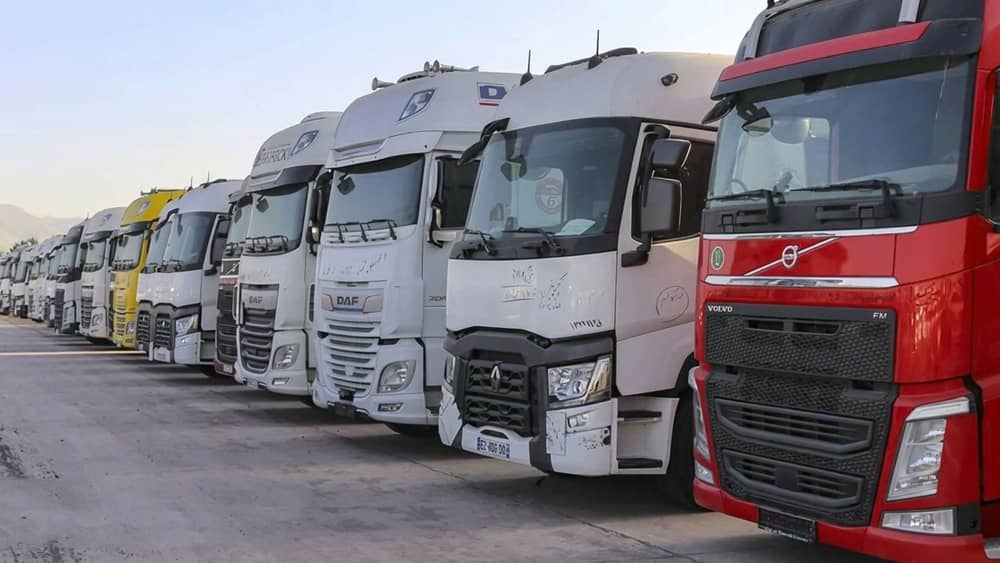
The truckers’ strike continued Thursday for a fifth consecutive day, according to reports from drivers’ organizations and labor networks.
With the reported participation of drivers in Khorramabad and Malayer, the stoppage has reached 20 cities across 14 provinces, including Tehran, Shiraz, Isfahan, Mashhad, Bandar Abbas and Kermanshah. The drivers are protesting inadequate freight payments, diesel shortages and soaring operating expenses.
The flotilla that never was. #IranWar
The clerical regime hyped a blockade-breaking tanker convoy as a national epic, threatened Gulf oil facilities, then folded the moment the bluff was called—claiming it was all just a media hoax. By @HakamianMahmoud https://t.co/5DzToawVw8— NCRI-FAC (@iran_policy) November 25, 2026
A state-affiliated transport industry representative Jalal Mousavi reported that 20 liters of engine oil now cost approximately 22 million tomans on the open market, while Chinese-made truck tires cost 200–240 million tomans per pair. European brands exceed 300 million tomans.
Although authorities have denied reports of a widespread strike, the figures supplied by transport industry representatives confirm the severe economic pressures underlying drivers’ grievances.
Emergency Workers Protest Unpaid Wages and Working Conditions
Emergency medical workers in Kermanshah and Tehran have staged protests over unpaid compensation, inadequate working conditions and the failure to implement legally mandated employment benefits.
In a report published Wednesday emergency personnel in Kermanshah protested outside the provincial governor’s office over delayed payments, unpaid performance allowances and the failure to implement regulations governing emergency medical services.
Workers also complained of punitive transfers to distant duty stations following earlier protests, raising concerns about retaliation against employees demanding their legal entitlements.
In Tehran, emergency medical personnel reportedly held a similar demonstration, chanting that their expenses were denominated in dollars while their salaries remained in increasingly worthless rials.
The protests reflect growing dissatisfaction even among personnel responsible for essential public services.
Iran, Nov. 25: Pezeshkian warns the regime could bring about its own downfall as truckers' strike reaches a reported 16 cities and the dollar tops 290,000 tomans. Industry contracts, bread restrictions loom, and hardliners demand confrontation while new #internet controls…
— NCRI-FAC (@iran_policy) November 25, 2026
Pezeshkian’s University Appearance Disrupted by Student Protest
Pezeshkian’s Wednesday appearance at Ferdowsi University in Mashhad was interrupted after a student challenged restrictions on opportunities to raise grievances. The regime’s president temporarily left the podium before returning following intervention by provincial officials. The confrontation was also documented in domestic media.
Separately, Tasnim reported that university representatives raised concerns about deteriorating livelihoods, academic independence, civil liberties and the government’s failure to fulfill expectations.
During his visit to Mashhad, Pezeshkian also reaffirmed that negotiations with Washington had always required authorization from the supreme leadership, underscoring the limits of his authority. The episode illustrates the growing difficulty the administration faces in containing public criticism, even within carefully managed official gatherings.
Parliamentary Power Struggle Threatens Cabinet
The confrontation inside parliament intensified after lawmaker Amirhossein Sabeti accused Speaker Mohammad Bagher Ghalibaf of obstructing impeachment proceedings against government ministers. Sabeti claimed that impeachment motions involving nine ministers had remained pending, despite parliamentary rules requiring their consideration.
The dispute follows Labor Minister Ahmad Meydari’s third parliamentary warning, which Tasnim reported could trigger impeachment proceedings under the legislature’s internal regulations.
Iran, Nov. 23: Truckers' strike enters day two despite official denials. Telecom retirees, workers and investors protest as producer #inflation reaches 120.9% and industrial prices jump 147.3%. State newspapers warn of deepening economic misery while regime factions clash over…
— NCRI-FAC (@iran_policy) November 23, 2026
The escalating confrontation exposes divisions extending beyond Pezeshkian’s cabinet to the parliamentary leadership itself, as competing factions seek to shift responsibility for worsening conditions.
Currency Crisis Continues as Importers Demand Billions
Iran’s dollar exchange rate remained close to 300,000 tomans Thursday, following its rapid depreciation during the preceding days. The rial’s decline has intensified pressures on producers, importers and households already struggling with inflation.
Meanwhile, ten organizations representing importers of essential goods warned in a joint letter to Pezeshkian that outstanding foreign-exchange obligations had reached approximately €4 billion.
The organizations demanded an end to repeated bureaucratic delays in settling payments, warning that the existing system was obstructing commercial operations.
In a separate development, Tasnim reported that Iranian shipping containers remained stranded at Pakistan’s Karachi port, underscoring the disruption of trade routes previously promoted as alternatives to maritime access.
Government Closes Cryptocurrency Exchanges
Iranian authorities have shut down three cryptocurrency exchanges—Nik Pardakht, Bit Meet and Rion X—following judicial intervention. According to Entekhab, prosecutors approved the closures on allegations of disrupting the country’s economic system.
The measure comes amid mounting currency pressures and efforts to control alternative financial channels, even as the IRGC and state-affiliated networks reportedly dominate cryptocurrency mining through privileged access to subsidized electricity and infrastructure.
Iran, Nov. 24: The rial hits another record low as retirees in Kermanshah chant, “We want neither war nor killing; we want lasting welfare.” State newspapers expose soaring costs, pension-fund deficits and medicine shortages. A political analyst warns another nationwide…
— NCRI-FAC (@iran_policy) November 24, 2026
Separately, tax authorities announced Thursday that roughly 75% of merchants and business owners—approximately ten million taxpayers—had been assessed no income tax for the previous year. The announcement illustrates the government’s efforts to project economic relief amid mounting financial hardship.
Higher Production Costs Threaten Another Price Shock
Iran’s household-appliance industry is facing sharply rising transportation, insurance and raw-material expenses.
According to industry figures reported Thursday, shipping a standard 20-foot container now costs between $6,200 and $9,300, compared with approximately $1,000–$2,200 before the war. Some shipments reportedly cost as much as $21,000.
Cargo insurance costs have risen by 90–100%, while certain domestic polymer materials have increased by as much as 370%.
These pressures are forcing manufacturers to operate below capacity, while declining purchasing power is pushing essential household appliances beyond the reach of many families.
"The factions are not simply arguing over appointments or electoral advantage. They are fighting over #diplomacy, economic policy, the presidency, parliament and the security apparatus—while each insists that its own course is necessary to preserve the ruling establishment,"…
— NCRI-FAC (@iran_policy) November 23, 2026
Thursday’s developments expose the widening gulf between the regime’s priorities and the hardships confronting Iranian society.
As the leadership seeks to expand its paramilitary networks, workers continue their protests, students challenge official restrictions, and rival factions fight over control of the government. Meanwhile, the currency crisis and soaring production costs further erode livelihoods.
The regime faces a crisis that cannot be contained through ideological mobilization or factional maneuvering. Its economic failures are fueling public grievances, while its response remains centered on preserving the structures of power increasingly challenged by those grievances.