
Three-minute read
Iran’s currency fell to another historic low Tuesday, with the US dollar exceeding 283,000 tomans in the unofficial market. Domestic market reporting recorded rates above 284,000 tomans later in the day, further eroding purchasing power.
The latest collapse coincides with alarming inflation figures discussed in Tuesday’s newspapers.
According to a report by Ham-Mihan, producer prices for services rose 67.5% year-on-year during the summer, the highest rate recorded for the sector since 2011. Automobile repair costs increased 103.6%, restaurant and accommodation services 104.8%, and transportation and warehousing 90.4%.
In a separate analysis, Donya-e Eqtesad warned that Iran was experiencing historically exceptional inflation despite the government’s claims of economic expertise.
The figures follow the Statistical Center’s disclosure that overall producer inflation reached 120.9% and industrial producer inflation 147.3%, suggesting further price increases may reach consumers.
Iran, Nov. 23: Truckers' strike enters day two despite official denials. Telecom retirees, workers and investors protest as producer #inflation reaches 120.9% and industrial prices jump 147.3%. State newspapers warn of deepening economic misery while regime factions clash over…
— NCRI-FAC (@iran_policy) November 23, 2026
Retirees Protest War, Poverty and Executions
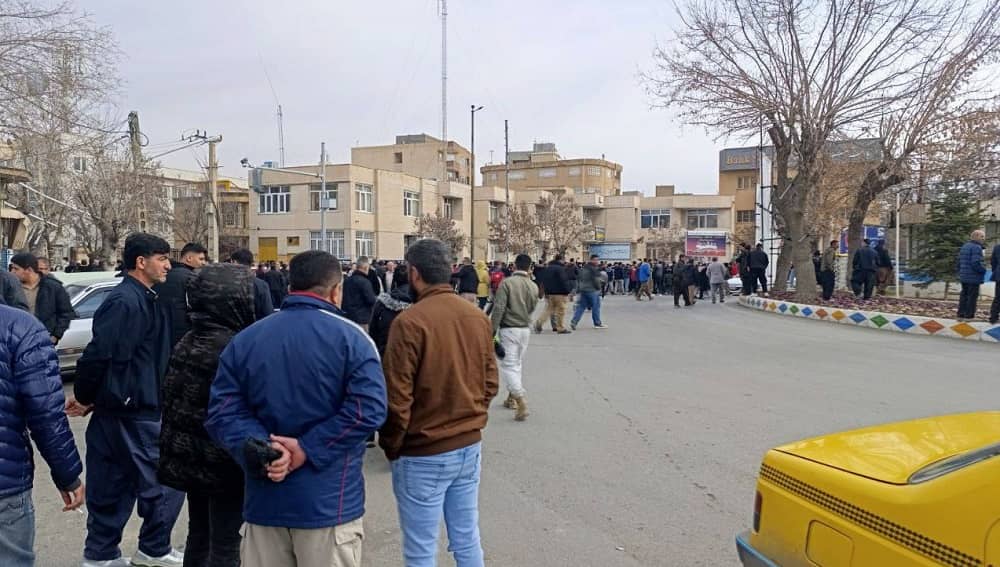
Retirees gathered outside the Labor Department in Kermanshah on Tuesday, demanding adequate pensions, healthcare coverage and the release of imprisoned teachers and workers.
Protesters chanted, “We want neither war nor killing; we want lasting welfare,” and “Unity against poverty and corruption.”
Other slogans declared, “Enough warmongering; our tables are empty,” and demanded an end to executions.
A statement issued by four local labor and teachers’ organizations condemned the diversion of public wealth toward privileged groups while ordinary workers struggle with basic necessities.
The protesters demanded pension increases reflecting actual living costs, affordable healthcare and an end to government interference in retirement funds.
Separately, emergency medical personnel in Kermanshah reportedly demonstrated outside the provincial governor’s office over unpaid wages and employment grievances.
Iran, Nov. 20: Labor representatives say wages cover barely 10 days of living costs. Reports emerge of two protesters' death sentences being upheld. #Bread queues grow, transport costs rise and officials warn of winter blackouts. Meanwhile, the regime expands Basij mobilization…
— NCRI-FAC (@iran_policy) November 20, 2026
Pension Funds Face Deepening Financial Crisis
Tuesday’s Donya-e Eqtesad examined the mounting financial difficulties behind delayed pension payments.
The newspaper reported that 16 retirement funds, serving approximately 28 million contributors and beneficiaries, were confronting structural financial imbalances.
The Civil Servants Pension Fund receives more than 86% of its resources from the government, while the Social Security Organization faces growing liquidity shortages and accumulated government debts.
Ali Dehghan-Kia, a retirees’ representative, rejected official explanations for delayed payments, arguing that pensioners cannot afford to wait while everyday expenses continue rising.
The findings expose a problem extending far beyond pension levels: institutions responsible for supporting millions of elderly Iranians are increasingly struggling to meet existing obligations.
Pezeshkian keeps publicly warning of winter energy crises, oil-sale blockages & #IranProtests. Hardliners (and Mojtaba Khamenei) want him to stop “advertising weakness.” He might be more worried about an unprepared population exploding than about signaling vulnerability abroad.…
— NCRI-FAC (@iran_policy) November 21, 2026
Regime’s Threatened Oil-Tanker Operation Fails to Materialize
A Tuesday report by Shargh revealed that widely publicized claims about sending Iranian oil tankers to challenge the US naval blockade had been denied, with no vessels departing.
The newspaper examined competing approaches within the regime, with some factions advocating direct confrontation and others seeking a diplomatic settlement to ease mounting economic pressure.
After threatening to send oil tankers through the blockade, the regime appears to have quietly backed away from its gamble as the risks of escalation became clear. Foreign Minister Abbas Araghchi subsequently emphasized diplomacy as the way forward, signaling a retreat from Tehran’s earlier confrontational rhetoric.
Agricultural Costs Threaten Another Food-Price Shock
In another report published Tuesday, Ham-Mihan quoted agricultural trade representative Peyman Alami saying prices of some fertilizers and agricultural inputs had increased 400–800%.
Alami warned that producers must purchase essential inputs immediately while waiting months to receive payments for their crops.
Iran, Nov. 21: Bread controls now operate in seven provinces as bakers protest and fuel queues persist. Workers, students and consumers demonstrate, while #Abdanan arrests rise to 12. Tehran faces renewed blackout fears, and Pezeshkian acknowledges failing enterprises and…
— NCRI-FAC (@iran_policy) November 21, 2026
He also criticized price increases between farms and consumers, saying agricultural products can become 300–400% more expensive along the distribution chain.
The disclosure comes amid continued disputes over guaranteed wheat prices and government delays in paying farmers, threatening additional pressure on domestic food production.
Establishment Newspaper Warns of Another Nationwide Uprising
In a striking interview with Shargh, political analyst Mehdi Zakerian warned that the grievances behind Iran’s previous nationwide uprisings had not diminished.
He identified inflation, unemployment, corruption, political exclusion and deteriorating living standards as accumulated causes of public anger.
Asked whether another uprising could erupt around the anniversary of the January 2026 protests, Zakerian argued that the situation had become so severe that the absence of protests would be surprising.
"The factions are not simply arguing over appointments or electoral advantage. They are fighting over #diplomacy, economic policy, the presidency, parliament and the security apparatus—while each insists that its own course is necessary to preserve the ruling establishment,"…
— NCRI-FAC (@iran_policy) November 23, 2026
He also challenged the regime’s claims of strength, arguing that its failure to secure genuine public support had left the country vulnerable to both military confrontation and coercive diplomacy.
His remarks reflect growing concern within parts of the establishment that economic pressures could ignite another nationwide political confrontation.
Regime Factions Clash Over War and Compromise
Tuesday’s newspapers exposed competing approaches to the continuing confrontation with Washington.
In Arman Melli, analyst Fereydoun Majlesi argued that renewed compromise was necessary to prevent further destruction and restore ordinary life.
Meanwhile, Kayhan defended hardline opposition to concessions, insisting that regime officials must preserve strategic red lines.
An especially revealing Shargh investigation confirmed that widely publicized claims about Iranian tankers preparing to break the US naval blockade had not materialized.
The contrast illustrates the regime’s unresolved struggle over whether to accept compromises to buy time or risk further escalation.
Iran, Nov. 18: New restrictions on subsidized bread purchases spark anger as food prices soar. Reports say 5 protesters remain detained after #Abdanan's anti-regime demonstrations. Workers protest unpaid wages, patients shoulder nearly 70% of healthcare costs, and pollution shuts…
— NCRI-FAC (@iran_policy) November 18, 2026
The growing warnings in the regime’s insiders about another nationwide uprising reveal mounting anxiety within the ruling establishment. With inflation accelerating, livelihoods collapsing and protests continuing across the country, the conditions that fueled previous uprisings have not only persisted but intensified.
Yet, the regime’s predicament goes beyond disagreements among its factions. Any meaningful retreat from its confrontational policies risks undermining the foundations of its rule, while continued repression and economic hardship deepen public resentment. Caught between the fear of another nationwide uprising and the consequences of changing course, the clerical establishment faces a crisis of its own making.