

Three-minute read
Iran, one of the world’s richest nations in oil and gas reserves, is trapped in a structural crisis imposed by the ruling regime. The reactivation of multilateral UN Security Council sanctions through the snapback sanctions threatens the regime’s lifeline — the foreign exchange revenue that fuels its systematic plundering of national resources.
This plunder extends far beyond selling crude oil at deep discounts. The real profits flow into the pockets of intermediaries within the regime, while the Iranian people are left struggling in an economy fighting for survival. The fate of Iran’s oil exports following the reactivation of sanctions is emblematic of this tragedy — sustaining export flows at the cost of deepening poverty and sacrificing the nation’s future.
Snapback Sanctions and the Collapse of Iran’s Oil Trade
The snapback sanctions, established under UN Security Council Resolution 2231, allows the automatic reinstatement of sanctions previously lifted under the nuclear deal. With this process now reactivated by Western powers, Tehran faces renewed restrictions that have forced it into unequal, clandestine trade arrangements.
The NCRI Secretariat and @Maryam_Rajavi warn: no more appeasement of the clerical regime and block all sanction-evasion routes. A timely reminder of Tehran’s sophisticated playbook to bypass global sanctions: https://t.co/s3mKfqRB9R”
— NCRI-FAC (@iran_policy) September 28, 2025
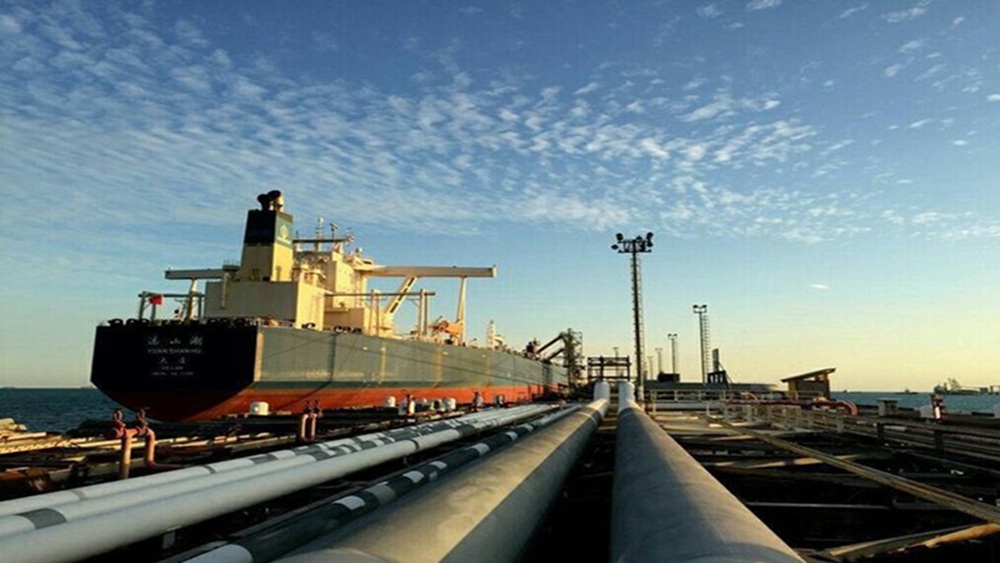
China, Iran’s largest buyer, has not officially reported its oil imports since 2022, and India recently joined the game by purchasing a $111 million shipment under opaque terms. Meanwhile, Russia profits from selling cheaper oil in global markets, undermining Iran’s remaining competitiveness.
In a desperate attempt to keep its market share, the regime now sells crude at discounts ranging from $6 to $15 per barrel, directly depleting national wealth while enriching foreign traders and regime insiders. Over 90 percent of Iranian exports go to China, creating a dangerous dependency that drastically reduces profit margins and leverage.
Hidden costs further erode Iran’s income: inflated shipping and insurance fees, and reliance on a “dark fleet” of vessels operating with their transponders off to evade sanctions. Each exported barrel carries heavy invisible costs — turning the nation’s vital industry into a daily struggle for survival.
.@EINPresswirePR | The IRGC Papers: NCRI Reveals Khamenei Enables #Iran Armed Forces with Oil and Petrochemical Funds to Export Terrorism
The IRGC is at the center of sanctions evasion, selling billions of $$$ of oil & petrochemical goods.#BlacklistIRGC,https://t.co/2iQeCSHLSV pic.twitter.com/Ti2Eygt7OZ— NCRI-U.S. Rep Office (@NCRIUS) June 2, 2023
How Mismanagement Deepens the Gap
A comparison with neighboring producers reveals the depth of Iran’s economic disaster. Regional rivals such as Saudi Arabia, Iraq, and Qatar have expanded their production capacity and attracted massive foreign investments.
In the West Karun shared fields, Iraq’s production exceeds Iran’s by more than double — 950,000 barrels per day versus 420,000 — creating an annual revenue gap of over $13.5 billion. While Iraq partners with global energy firms, Iran faces a $250 billion investment deficit.
This gap not only reduces current income but also weakens Iran’s long-term position in the global energy map. Meanwhile, Qatar continues to extract oil and gas from the shared South Pars field, reaping billions from resources that Iran fails to access due to mismanagement and lack of infrastructure.
#Iran News: Regime’s Survival Tied to #Oil Smuggling Networks, Say Reuters and Bloomberg Reportshttps://t.co/rJGdPUxIaO
— NCRI-FAC (@iran_policy) December 6, 2024
Internal Crisis: Gas Imbalance and Declining Production
Beyond external sanctions, Iran faces an internal crisis that further cripples production. The domestic gas imbalance — with household consumption exceeding 50 percent in winter — disrupts the gas injection process vital for maintaining oil reservoir pressure.
Without this injection, production drops sharply. Experts estimate annual direct losses of $5 billion and the potential destruction of 16.3 billion barrels of recoverable oil, equivalent to $815 billion at $50 per barrel.
Many of Iran’s oil fields are already in decline, with production falling between 5 and 15 percent annually. Without new investment, output is projected to decrease by 300,000 barrels per year, while neighboring countries double extraction from shared reserves.
#Iran’s Clerical Regime in Crisis Management Mode After @UN Snapback https://t.co/GjcZ1abc9p
— NCRI-FAC (@iran_policy) September 29, 2025
The Bleak Outlook: Strategic Defeat for the Regime
Future scenarios paint a grim picture. Under full sanctions enforcement, Iran’s oil revenue could fall below $18 billion, driving inflation beyond 90 percent. Even under the most “optimistic” outlook — with limited diplomatic relief — inflation remains above 60 percent, and oil income stagnates at $25 billion.
This ongoing crisis reflects a strategic failure: a regime that has mortgaged Iran’s future for short-term survival. While other nations invest oil revenues in post-oil diversification, Tehran is trapped in daily bargain sales, draining its reserves for the benefit of Khamenei’s patronage networks.
Iran’s economy is locked in a state of permanent crisis management, sacrificing the wealth of future generations while the ruling elite enrich themselves. The renewed UN sanctions have not created this disaster — they have merely exposed its root: a corrupt regime that has turned one of the world’s richest nations into a bankrupt state, exploiting its people and plundering its natural resources.