

Three-minute read
Iran’s accumulating economic pressures moved visibly into the streets on September 20, 2026, as retirees demonstrated in several cities while the rial again weakened sharply. At the same time, Parliament advanced legislation expanding state oversight of foreign contacts and requiring schools and universities to teach state-defined material on “enemy infiltration.” In another sign of pressure at the top, Parliament Speaker Mohammad-Bagher Ghalibaf publicly confirmed that Tehran is transmitting conditions for renewed negotiations through intermediaries.
Economic Pain Reaches the Street
On September 20, retired steelworkers marched through Isfahan toward the provincial governor’s office, while Social Security retirees gathered in Tehran and Shush over pensions, medical costs and inflation. Video reports showed demonstrators chanting, “A retiree’s salary is only enough for one week,” “Enough promises, our table is empty,” and “Only in the street can we get our rights.” The demonstrations were documented in video reports published Sunday and by Iranian retiree networks.
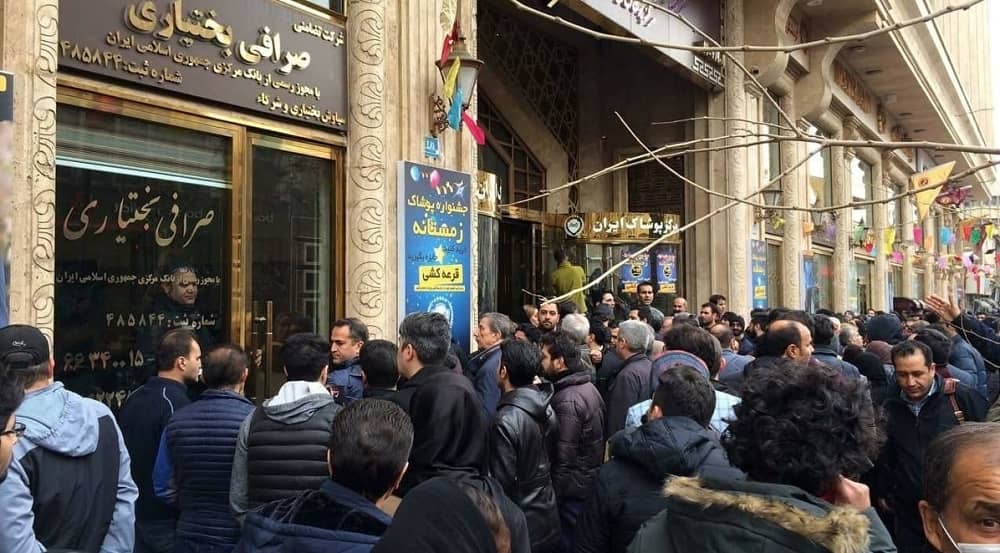
The protests came as the currency resumed its decline. Iran’s domestic currency tracker TGJU recorded the dollar at roughly 232,100 tomans on September 20, up 20.4 percent in one month and more than 119 percent over the previous year. TGJU’s September 20 dollar report Other domestic market reports placed the free-market rate at around 232,000 tomans, while the official commercial-market rate was about 166,600 tomans.
"Iran is entering the final days of September under simultaneous pressure from soaring living costs, a weakened #currency, fuel shortages and problems across industrial supply chains," @MansoreGolestan writes.https://t.co/N7NEb86C1o
— NCRI-FAC (@iran_policy) September 19, 2026
The scale of the economic breakdown is now being acknowledged from inside the government itself. First Vice President Mohammad-Reza Aref conceded on September 17 that household income no longer covered basic expenses. With wages rising only 20 percent while inflation could exceed 60 or 70 percent, he admitted: “You cannot live like this.” His remarks came after he had already warned in August that economic pressure could generate public dissatisfaction and lead toward “social collapse,” underscoring the government’s fear that deepening hardship could trigger a broader social backlash and another wave of street unrest. Meanwhile, domestic reporting found food prices had risen between 44 and 293 percent since December, forcing many households to cut purchases of meat, poultry and even dairy products.
Security Response Widens
Against that backdrop, Parliament on Sunday pushed ahead with the state’s broader security agenda. Lawmakers approved provisions of the “plan to counter infiltration by foreign intelligence services, governments or institutions.” Under the approved text, the Education, Science and Health ministries must introduce material on “enemy infiltration,” awareness and media literacy into school and university curricula, with content prepared in consultation with the Intelligence Ministry and Supreme Council of the Cultural Revolution.
Other provisions approved Sunday require the Interior Ministry to establish an online system for the registration, management and monitoring of foreign contacts. The legislation remains contested even inside the establishment: the Pezeshkian government submitted what its legal deputy called “fundamental objections” to the bill, including concerns over its compatibility with the Constitution and existing legal protections. That opposition should not be mistaken for a broader break with the state’s security approach. Coming as senior government officials repeatedly warn about mounting public dissatisfaction, economic hardship and the danger of unrest, the objections are better understood in the context of concern that still broader restrictions could intensify social pressure at an already precarious moment.
Zahedan Gunfire Shadows Basij-#IRGC Parade Amid Sanctions, Police Abuse and Division
by Amir Taghatihttps://t.co/R9vljTNE3I— NCRI-FAC (@iran_policy) September 18, 2026
The measures reinforce warnings already coming from state-aligned clerics as the academic year begins. Shiraz Frida prayer leader Ebrahim Kalantari warned on September 18 that even a single “foreign voice from the university podium” was too much and urged professors, students, officials and families to watch universities and schools. The pattern is increasingly clear: economic and social pressures are being treated alongside foreign influence, campuses and information flows as interconnected security concerns.
War, Talks and Internal Strain
The pressure is also visible in Tehran’s renewed use of intermediaries. In Parliament on September 20, Mohammad-Bagher Ghalibaf said, “The dichotomy of war or negotiation is not real; we must both fight and negotiate,” while confirming that the regime had already transmitted “messages and our conditions through intermediaries.” He reassured his peers that negotiations would not return to their previous framework and the Strait of Hormuz would not reopen until Tehran’s conditions were met.
"A growing body of admissions from senior officials, state media reports, and developments across the country suggest that Iran’s clerical establishment is grappling with more than an #economic downturn," @MansoreGolestan writes.https://t.co/oPOC4ieqhP
— NCRI-FAC (@iran_policy) September 16, 2026
Tehran had previously declared adherence to the June memorandum of understanding, but subsequent attacks on shipping around the Strait of Hormuz undermined that commitment. At home, senior figures have continued to portray major concessions as surrender. The pattern points instead to a regime seeking room to relieve mounting military and economic pressure without publicly retreating from its confrontational posture.
The developments of September 20 therefore form a connected picture. The rial is again near historic lows; retirees are demonstrating over incomes that no longer cover basic costs; Parliament is expanding mechanisms to monitor contacts and impose the state’s “infiltration” narrative on education; and senior officials are using intermediaries while insisting that fundamental concessions remain off limits. Together, the measures show a leadership under growing pressure abroad and at home, seeking breathing space while simultaneously preparing for the possibility that worsening economic hardship could feed another wave of social unrest.