
Three-minute read
Iran faced a fresh wave of protests on November 15 as retirees, teachers and transport workers challenged deteriorating living conditions, while fuel shortages triggered mounting anger in several provinces. At the same time, parliament moved to penalize cooperation with Persian-language media and advanced disputed changes to the Intelligence Ministry, exposing an establishment confronting public discontent and internal divisions simultaneously.
Fuel Shortages Spark Protests and Emergency Measures
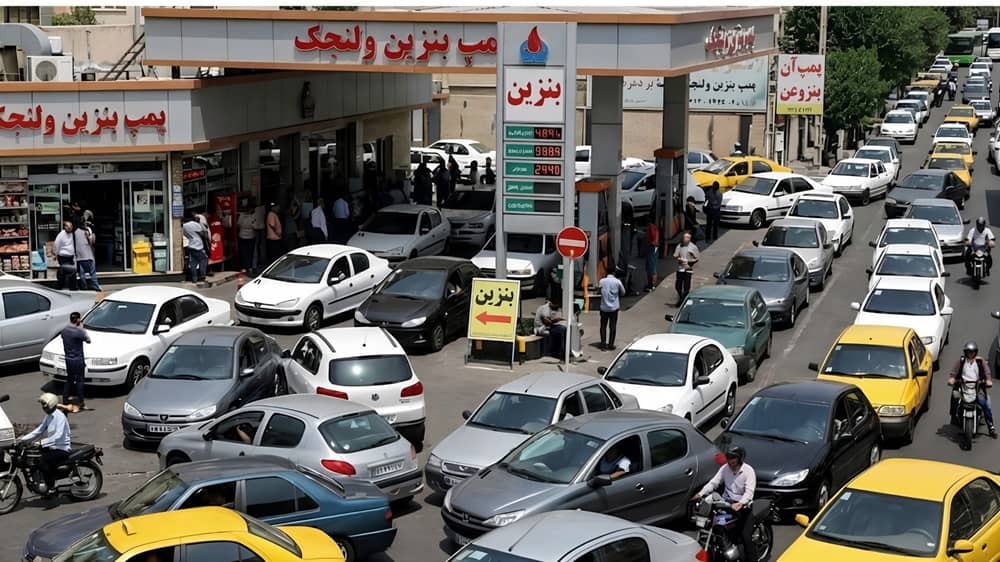
Citizen videos from November 14–15 showed fuel shortages and long queues in Bandar Abbas, Shiraz, Kerman, Darab, Kazerun and other cities. Protesters reportedly blocked a road near Bandar Abbas’s Aftab Derakhshan filling station, while taxi drivers staged a strike in Ardabil over fares and operating conditions.
On November 15, the Fars Provincial Security Council ordered emergency measures to address fuel-distribution disruptions. Even Tasnim acknowledged that the government’s three competing fuel-card schemes had increased confusion and public dissatisfaction.
The restrictions involve withdrawing ordinary access to station cards in 11 provinces and introducing an additional 50-liter allocation at 10,000 tomans per liter. Officials maintain that existing personal-card subsidies remain unchanged.
The Assembly of Experts urges reconsidering #NPT membership, stricter hijab enforcement and centralized wartime economic control. Meanwhile, a labor activist warns of soaring medicine costs, Tehran students protest poor food, and officials clash over the safety of cheaper…
— NCRI-FAC (@iran_policy) November 12, 2026
Retirees, Teachers and Truck Drivers Protest
Retirees demonstrated in Isfahan, Ahvaz, Kermanshah, Shush and Tehran, demanding adequate pensions, healthcare and action against soaring prices. Additional reports described truck-driver protests in Rafsanjan.
Demonstrators in Shush chanted, “Neither parliament nor government cares about the people,” and “Only in the streets can we win our rights.”
In Isfahan, steel-industry retirees protested inadequate medical insurance and failure to adjust pensions. Several demonstrations also featured slogans opposing executions and demanding freedom for political prisoners, extending their demands beyond economic grievances.
Parliament Expands Repression and Debates Intelligence Control
On November 15, lawmakers approved a provision penalizing cooperation with Persian-language satellite media designated as foreign-linked. The measure covers technical assistance, advertising and financial dealings, carrying fines and six months to five years’ deprivation of social rights. The broader anti-infiltration legislation has not yet completed the process required to become law.
"The Iranian regime’s internal disputes are no longer confined to familiar factional sniping. They are spreading across the institutions that matter most to the survival of the ruling system: the intelligence apparatus, state broadcasting, the #nuclear and war files, and the…
— NCRI-FAC (@iran_policy) November 12, 2026
Parliament also voted 192–49 to grant single-urgency status to legislation revising the qualifications for intelligence minister. Lawmakers rejected the faster double-urgency procedure, leaving the proposed restructuring unapproved.
The dispute follows months of confrontation over the ministry’s leadership. Hardline MP Mojtaba Zarei further demanded that any proposed minister possess a plan for retaliation against Donald Trump, Benjamin Netanyahu and the US Central Command chief, threatening to oppose confirmation otherwise.
The prolonged deadlock, despite Mojtaba Khamenei’s position as supreme leader, points to continuing difficulties in imposing a unified settlement on competing factions.
Lawmakers Warn of Economic Deterioration
MP Mostafa Pourdehghan criticized government economic policy, warning that removing preferential foreign-exchange allocations from thousands of products could push their prices up another 30–40%.
He described monthly inflation of 5–7% and accused officials of blaming economic hardship entirely on war while refusing to acknowledge damaging monetary and exchange-rate decisions.
"The regime’s endurance strategy rests on a simple assumption: the US has an electoral calendar; the clerical establishment does not. Tehran therefore believes it can absorb punishment, prolong the #IranWar, frustrate negotiations, and wait for American political will to…
— NCRI-FAC (@iran_policy) November 12, 2026
The regime is also considering removing bread-price controls and subsidies, threatening further increases in the cost of a basic food staple as inflation devastates household purchasing power. The proposal has exposed another dispute within the ruling establishment over economic policies whose consequences are being borne by an increasingly impoverished population.
Essential-goods importers also complained that approximately 1,000 companies had been waiting up to 20 months for foreign-currency payments, accusing the Planning and Budget Organization of obstructing settlement.
Twelve Oil Workers Die; Prisoners Report Abuse
A bus carrying workers from the Dehloran oil and gas project overturned on November 14, killing 12 people and injuring 18. The tragedy comes amid Iran’s relentless road-safety crisis, with more than 10,000 people killed and 224,000 injured in traffic accidents during the first six months of the Iranian year alone. Despite years of record-high casualties and repeated warnings about unsafe vehicles and deteriorating roads, the authorities have failed to address the structural problems behind the continuing loss of life.
Separately, political prisoners at Sheiban Prison in Ahvaz reportedly appealed for help over alleged beatings, solitary confinement and deprivation of food, water and medication.
"#Women make up approx. 64% of university applicants, yet barely one in seven participates in Iran’s labor market. The contradiction is not merely social discrimination. It is the destruction of human capital on a national scale," writes @SaforaSM https://t.co/fg7WBiayQ3
— NCRI-FAC (@iran_policy) November 14, 2026
The regime’s growing vulnerability lies not in any single protest or institutional dispute, but in the erosion of its ability to manage them together. Fuel restrictions have become politically sensitive, economic grievances are bringing different occupational groups into the streets, and disagreements over security appointments continue inside the ruling establishment.
The leadership’s response increasingly relies on restricting information and asserting political authority rather than resolving the conditions producing discontent. Yet repression cannot restore purchasing power or secure public cooperation, and factional struggles complicate attempts to impose discipline from above. As economic pressure spreads and public patience deteriorates, the regime risks confronting broader resistance with a leadership is already at war with itself.