

THIS PAGE WILL BE UPDATED WITH THE LATEST NEWS
UPDATE: 8:00 PM CEST
Iran’s Future Cannot Be Made in Washington

For more than four decades, the regime in Tehran has fueled terrorism, destabilized the Middle East through proxy militias, pursued nuclear weapons capability and brutally oppressed its own people. Successive American administrations tried diplomacy, sanctions and accommodation. None has fundamentally altered Tehran’s behavior.
By confronting the Islamic Revolutionary Guard Corps and refusing to accept the regime’s long-held assumption that it can threaten American interests without consequence, President Trump has changed the strategic landscape.
Still, military action alone does not guarantee lasting political victory. The recent weakening of the regime has created a historic strategic opportunity.
Continuing the maximum pressure campaign, the United States should embrace a political strategy that empowers the Iranian people, denying the regime time to regroup.
UPDATE: 4:00 PM CEST
Clip Of Japan’s 2023 Submarine Launch Misrepresented as Iran
Agence France Press (AFP) – Six months into the Mideast war, Iran and the United States remain locked in a stalemate over the Strait of Hormuz, while Washington continues to impose sanctions on Tehran. But a video purporting to show Iran unveiling a nuclear submarine despite numerous economic sanctions in fact shows Japan launching a diesel-electric submarine in 2023.
“Nuclear Sub Unveiled: ‘Iran’s First Domestically Built Nuclear Submarine,” reads the caption of a Facebook reel shared on August 16, 2026.
The clip shows a submarine draped in red and white launched into the water while several people can be seen standing on its outer hull. Superimposed text on the clip repeats the claim, adding that Iran has accomplished a feat no one else in the region has.
The video was shared in similar posts on Facebook and Instagram amid escalating tensions over the Strait of Hormuz, US President Donald Trump has repeatedly asserted that the strait is under US control, while Tehran maintains that the vital waterway remains under its sovereignty (archived link).
UPDATE: 7:00 AM CEST
Iran’s Regime Fears Its Real Enemy: Another Uprising from Within
Iran’s regime rarely misses an opportunity to blame its mounting crises on foreign enemies. But a recent statement by the Intelligence Organization of the Islamic Revolutionary Guard Corps (IRGC) reveals what the regime actually fears most: the possibility that widespread dissatisfaction inside Iran will once again spill into the streets.
In its August 27 statement, the IRGC Intelligence Organization claimed that Iran’s adversaries have revised their strategy after failing to overthrow the regime through military pressure. Among the alleged new tactics, it listed exploiting domestic shortages, promoting dissatisfaction and polarization, and, most revealingly, seeking to “incite people to extend dissatisfaction to the streets.”
The regime presents this as a foreign conspiracy. Yet the warning contains an important admission. Foreign adversaries are not the people whose grievances concern the security apparatus. Iranian citizens are. And the scenario that alarms the IRGC is not simply economic hardship or criticism of the government, but the moment when those grievances become street protests.
Iran’s Fuel Shortage Spreads as Officials Signal Gasoline Price Changes
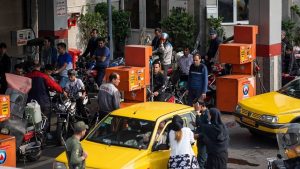
Iran’s fuel crisis showed fresh signs of worsening on August 26, 2026, as motorists reported long gasoline lines and stations running out of fuel, while senior regime officials openly discussed changing gasoline and diesel prices.
Videos from Tehran, the Tehran-Karaj highway, Karaj and Mashhad showed queues at fuel stations on August 26. The reports came a day before the state-run Shargh newspaper acknowledged that long lines could be seen across Tehran, while another state-run newspaper attributed the queues to a daily gasoline deficit of around 14 million liters.
At the same time, Mohammad Jafar Ghaempanah, executive vice president under Masoud Pezeshkian, said gasoline prices would “inevitably” have to be revised. The comments contrasted with more cautious statements only a day earlier from government spokesperson Fatemeh Mohajerani, who said no decision to raise gasoline prices had yet been made.
Survivors Remember Iran’s 1988 Massacre: Testimonies from Inside the Prisons
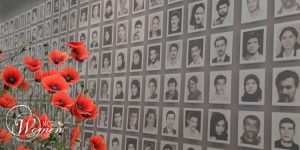
The 1988 massacre of political prisoners remains one of the darkest chapters in Iran’s modern history. Thousands of political prisoners were executed after being subjected to brief interrogations by commissions whose questions centered not on established criminal charges, but on their political beliefs, affiliations, and willingness to renounce their opposition.
Decades later, survivors continue to recount what they witnessed inside prisons such as Evin and Gohardasht. Their testimonies describe not only the executions themselves, but also the preparations that preceded them, the terror imposed on prisoners, and the determination of many victims to maintain their political convictions even when they knew that doing so could cost them their lives.
In an interview broadcast by INTV, former political prisoners and supporters of the People’s Mojahedin Organization of Iran (PMOI/MEK) described their experiences and those of their fellow prisoners. Their accounts provide a deeply personal record of a massacre that the Iranian regime attempted to conceal from the outside world.
When the Regime Reaps What It Has Sown
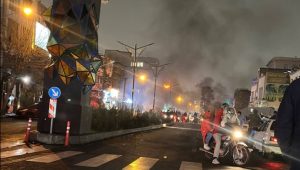
There are moments in the life of a political system when accumulated choices cease to be choices and become consequences. The Iranian regime appears to be entering precisely such a moment.
After nearly five decades of rule built around two fundamental pillars—domestic repression and external terrorism—the regime is increasingly confronting the accumulated consequences of the policies it has pursued at home, across the region, and internationally. The question before it is no longer simply how to manage one crisis or another. It is whether it can continue along the same path without confronting a much deeper political and structural rupture.
The regime faces two possibilities: continue on the same course, which is already tightening its grip around its own political and economic system, or retreat from the policies that have defined its rule. The second option, however, would require something far more fundamental than a tactical adjustment. It would mean confronting the foundations of the system itself.
Iran’s Regime Escalates Repression: 65 January Uprising Prisoners Held Under Inhumane Conditions as 23 Are Executed in Four Days

The Iranian regime is intensifying its campaign of repression against protesters and political prisoners, combining harsh prison conditions, denial of basic legal rights, and a rapidly accelerating wave of executions.
In Ghezel Hesar Prison, 65 detainees arrested in connection with the January uprising are reportedly being held under inhumane conditions in Ward 37, Unit 3. At the same time, the regime executed 23 prisoners across Iran during the first four days of Shahrivar, from August 23 to 26—an average of nearly one execution every four hours.
Taken together, these developments point to a systematic policy of intimidation and repression aimed at containing growing public anger and preventing renewed nationwide protests.
The 65 January uprising prisoners detained in Ward 37, Unit 3 of Ghezel Hesar Prison are reportedly being held in conditions far beyond the facility’s capacity.
Ship-To-Ship Oil Transfers in Gulf of Oman Reach 7.6M Barrels Per Day as Arab Nations Bypass Strait of Hormuz

DUBAI/TEHRAN — Crude oil exports from Arab Gulf nations through clandestine mechanisms, such as ship-to-ship (STS) transfers and bypass pipelines, have surged to a weekly average of 7.6 million barrels per day (bpd), while Iran remains virtually unable to export oil due to a naval blockade.
According to Hamed Melhani, a senior oil and gas production analyst speaking on Iranian state television, satellite imagery shows regional producers using shuttle tankers and bypass infrastructure to transport barrels into Omani waters, where they are loaded onto ultra-large crude carriers anchored outside the Strait of Hormuz.
Recent intelligence from international vessel-tracking providers highlights dense ship-to-ship loading activity in the Gulf of Oman. International tracking firm TankerTrackers.com reported observing at least 15 pairs of tankers conducting concurrent STS transfers, involving an estimated volume of roughly 25 million barrels of crude oil and refined products.
Manchester Exhibition Highlights Iran’s Escalating Executions and Calls for Democratic Change
Manchester, UK – August 27, 2026: Members of the Academics in Exile Association in the UK, supporters of the People’s Mojahedin Organization of Iran (PMOI/MEK) and the National Council of Resistance of Iran (NCRI), held a book table and photo exhibition in Manchester to draw public attention to the Iranian regime’s escalating wave of executions and widespread human rights violations.

The event focused in particular on the intensifying use of executions against political prisoners and protesters arrested during the January 2026 uprising. Through photographs, publications, and testimonies, the organizers sought to portray the suffering of the Iranian people and their continued determination to reject all forms of dictatorship, whether monarchical or theocratic, in favor of freedom, democracy, and a secular democratic republic.