

Three-minute read
Iran’s clerical establishment is confronting several crises at once, but the most dangerous feature is that each is feeding the others. Economic deterioration is narrowing the government’s room for maneuver just as leaders are divided over whether negotiations with Washington represent tactical necessity or political surrender. On August 25, 2026, the regime’s presidential website quoted the Masoud Pezeshkian saying enemies were targeting “social issues and economic dissatisfaction” to push Iran toward unrest, while insisting a recent agreement was “not out of fear or capitulation.”
The dispute is no longer confined to so-called reformists versus hard-liners. On August 26, the IRGC-aligned Tasnim news agency published parliament speaker Mohammad Bagher Ghalibaf’s extraordinary reply to Hossein Shariatmadari, editor of the Kayhan newspaper. “Negotiation… has neither intrinsic value nor is it a taboo,” Ghalibaf wrote, arguing that refusing responsibility for talks and waiting to denounce any result as treason was political self-preservation.
This argument matters because Tehran is negotiating from a rapidly deteriorating domestic position. While the regime retains the power to censor, coerce, and mobilize its loyalists, it is trapped between two punishing options: painful concessions abroad or economic suffocation at home. In this kind of environment, factional infighting becomes truly dangerous the moment it exposes a fatal reality—neither camp has a credible roadmap back to stability.
"State-affiliated media in Iran have recently acknowledged what ordinary Iranians have experienced for years: the country’s #economic resilience is weakening," Farid Mahoutchi writes.https://t.co/fZKKlfQMkn
— NCRI-FAC (@iran_policy) August 27, 2026
The Gasoline Fuse
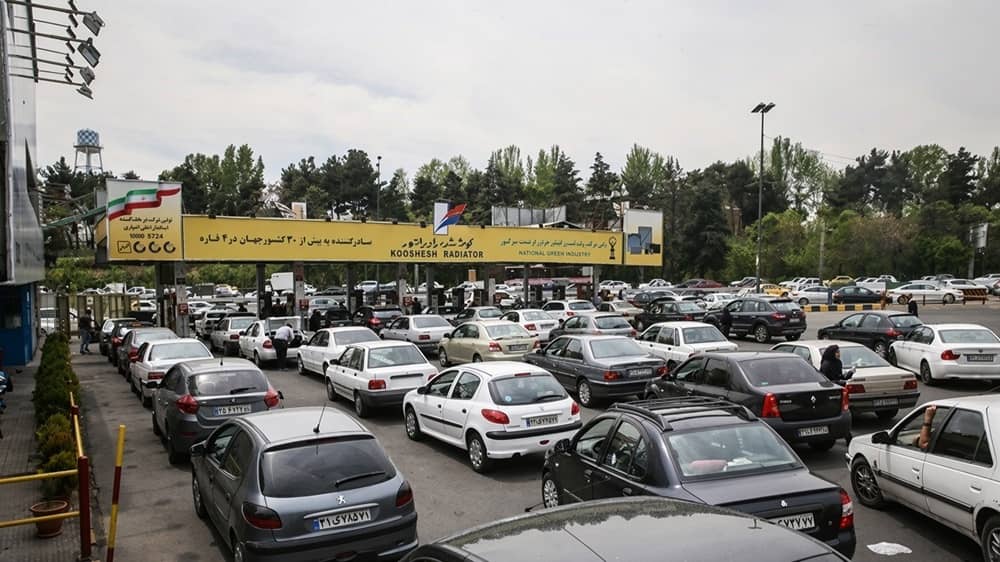
Fuel is currently the immediate pressure point. On August 26, presidential executive deputy Mohammad Jafar Ghaempanah said the existing system was unsustainable: “The current price of gasoline is not fair.” He said domestic production was insufficient and imports were constrained. On August 28, ISNA reported that the Court of Audit was examining official failures behind “unusual queues” at some filling stations, while authorities simultaneously insisted that available reserves were adequate.
The contradiction is politically explosive. Iran has lived through the precedent of November 2019, when a sudden gasoline-price increase triggered nationwide uprising. Officials know that a new shock would arrive in a far weaker social environment. The Central Bank reported on August 26 that urban point-to-point inflation had reached 84.4 percent in August. ILNA, on August 25, calculated that the statutory base wage had fallen from the equivalent of $232 a month in 2016 to about $83 today.
Even poverty statistics have acquired a security character. Government spokeswoman Fatemeh Mohajerani said she could not disclose some figures because of “security” restrictions and indicated that the Supreme National Security Council would have to authorize publication. That is revealing: the state is not merely managing poverty as an economic problem; it is treating public knowledge of poverty as a potential threat.
Empirical Data and Street Riots Expose Iran Regime’s Misplaced Priorities as the True Engine of #Economic Devastationhttps://t.co/297ujYv7EX
— NCRI-FAC (@iran_policy) August 27, 2026
Security Before Reform
The coercive response is already visible. On August 28, IRNA reported that the Intelligence Ministry had arrested 30 people in Mahallat and Nimvar over alleged involvement in the January 2026 protests; Mehr had previously reported at least 70 arrests in Central Province linked to the same unrest. The message is preventive: before undertaking painful economic adjustments, the state is expanding the machinery needed to contain the reaction.
The regime’s problem is no longer the existence of separate crises, but their convergence. Its economy is losing capacity, with non-oil exports down 28 percent year-on-year in the first five months of 2026, imports down 26 percent, and oil sales sharply reduced. At the same time, the state is treating poverty, fuel shortages and public anger increasingly as security threats—censoring sensitive economic data and expanding arrests linked to earlier protests.
That leaves the clerical establishment with fewer workable options. Economic concessions weaken its finances; price increases risk igniting an already explosive society; repression deepens public hostility; and coercive use of the Strait of Hormuz compounds the regime’s international isolation. The central danger for Tehran is that these pressures are no longer episodic. They are becoming structural, simultaneous and mutually reinforcing—shrinking the regime’s room to maneuver and making each new economic, social or security shock harder to contain than the last.