

Three-minute read
Iran’s security establishment is publicly identifying domestic discontent as a central arena of confrontation. In a statement carried by the state media on August 27, 2026, the Intelligence Organization of the Islamic Revolutionary Guard Corps said Iran’s adversaries had changed strategy after failing, in its account, to achieve “regime change through military strikes.” It listed the activation of “crisis centers,” psychological warfare, disruption of financial markets and security operations among the new threats.
Most strikingly, IRGC Intelligence warned of efforts to exploit domestic “weaknesses, shortages and limitations” and “provoke people to spread dissatisfaction to the streets.” It said its forces would concentrate on confronting actions that disturb “calm, empathy and national cohesion.” The language is unusually explicit: the security apparatus itself is describing the conversion of economic and social grievances into street protests as a threat requiring preventive action.
The regime’s president Masoud Pezeshkian echoed that concern on August 25. Speaking in remarks reported by state media, he said adversaries were targeting “social issues and economic dissatisfaction” to push Iran toward unrest, adding: “All my effort and that of the system’s officials is to preserve unity and cohesion.” Two days later, IRNA reported Pezeshkian convening economic officials and stressing the need to maintain stability and control inflationary expectations.
Iranian State Media Warns of Social Explosion Over Looming #Fuel Price Hikeshttps://t.co/NWofTQnHiW
— NCRI-FAC (@iran_policy) August 25, 2026
Gasoline Returns as a Flashpoint
Gasoline is emerging as the most immediate pressure point. On August 26, Mehr News Agency reported that Iran’s Economic Security Police was expanding surveillance of fuel stations. Police commander Hossein Rahimi said monitoring stations was already “on the agenda of the Economic Security Police” and described operational teams as active across the country.
The timing is politically sensitive. Executive Vice President Mohammad-Jafar Ghaempanah said on August 26 that the current fuel-pricing system could not continue and that “we inevitably have to reform the price of gasoline.” Meanwhile, officials sought to reassure an anxious public as long queues appeared at stations and debate over possible price increases intensified.
The economic backdrop compounds the risk. The supplied material cites domestic reporting showing that the dollar value of Iran’s basic monthly wage has fallen from approximately $232 in 2016 to $83 in 2026, reflecting the erosion of purchasing power under inflation and currency depreciation. In Iran, gasoline carries particular political weight: the sudden fuel-price increase of November 2019 became the trigger for nationwide protests.
Must-Read enlightening analysis of the impact of the MEK @ResistanceUnits inside Iran: "The Illusion of the External Enemy: How Domestic Agency is Redefining Iran's Future"https://t.co/59ZIkRUIwn@realDonaldTrump @SecRubio @mattgaetz @jaketapper
— Ali Safavi (@amsafavi) July 13, 2026
Resistance Expands the Pressure
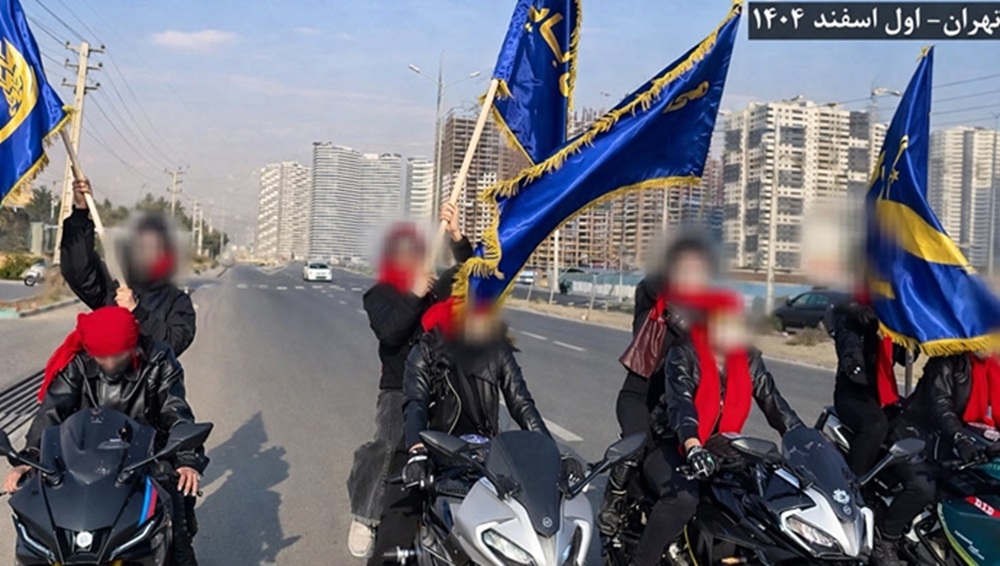
At the same moment, the Iranian Resistance is demonstrating an organized presence across the country. On August 27, Simaye Azadi broadcast footage and published details of 60 operations carried out in cities across Iran in response to moves toward higher gasoline prices. The actions targeted Basij bases, government and security facilities, and symbols of the ruling establishment.
The operations stretched across Tehran, Karaj, Mashhad, Kermanshah, Iranshahr, Chabahar, Dezful, Shiraz, Zahedan and numerous other cities. The supplied documentation records attacks on Basij and security facilities as well as the burning of state banners and symbols across this broad geography. The Resistance explicitly connected the operations to the gasoline issue and the precedent of the November 2019 uprising.
The significance lies in the convergence. The IRGC’s intelligence arm is openly warning that economic grievances could be transferred “to the streets”; police are expanding their presence around fuel distribution; senior officials are debating an economically unavoidable but politically hazardous gasoline-price reform; and the organized Resistance is simultaneously displaying nationwide operational activity around precisely that issue. Iran’s rulers are not merely managing an economic crisis. Their own words and security measures show that they are bracing for the worst.