

THIS PAGE WILL BE UPDATED WITH THE LATEST NEWS
UPDATE: 8:30 PM CEST
Any Dreams of Change in Iran Are Hollow

The rapidly deteriorating situation inside Iran — marked by mounting public unrest, deepening economic crises, and increasing acts of defiance — and the dramatic developments sweeping across the Middle East have pierced a once-durable perception: that the Islamic Republic is immovable and destined to endure.
For the first time in decades, a palpable sense of possibility has emerged — that the regime might fall. This shift in sentiment has inspired a flurry of proposals on both sides of the Atlantic aimed at accelerating the regime’s imminent collapse.
One Woman’s Harrowing Tale of Torture Under the Shah Sheds Light on Iran’s Dark History

PARIS, France – Fifty years later, anti-Iranian regime activist Aziz Rezaee still bears the scars of torture on the bottoms of her frail feet. Yet, the 96-year-old’s years of abuse and political imprisonment stemmed not from the iron fist of the Mullahs but from their predecessor, Mohammad Reza Shah Pahlavi, revealing the underbelly of an Iranian epoch often romanticized by history as a bastion of freedom and progress.
“Iran was a beautiful place – but only for the very rich, not for the vast majority of Iranians, and that was the story of the Revolution,” Aziz tells me from her small apartment on the periphery of Paris. “And there was only one party – there could be no opposition.”
Born Zahra Norowzi in 1929 in Tehran, Aziz – a better-known moniker that translates to “dear” –married and gave birth to the first of nine children at age fourteen, a son named Hassan, who succumbed to pneumonia shortly after childbirth.
UPDATE: 3:00 PM CEST
U.S. Strikes Intensify Against Iran-Backed Houthis in Yemen

In a major escalation of military action against the Iranian regime-backed Houthi militia, the United States conducted 29 airstrikes on Houthi positions in Yemen late Thursday night, according to Al Arabiya. The targeted areas included Sana’a, Ma’rib, and Al-Hudaydah—regions that have served as key operational zones for the group’s military infrastructure. U.S. warplanes reportedly bombed Houthi communication hubs, missile launch sites, weapon storage facilities, and underground tunnels. Among the targets were a command center in Jirban camp near Sana’a and military outposts in Bani Hashish district, east of the capital. In Ma’rib, 11 strikes focused on Al-Abdiyah and Majzar districts, with one strike hitting a house believed to shelter senior Houthi personnel.
The Houthis, who are armed and politically backed by the Iranian regime, resumed attacks on Red Sea shipping lanes in March, claiming to act in solidarity with Hamas. Their actions have drawn international condemnation and renewed U.S. military engagement aimed at protecting maritime routes.
While Tehran has not officially responded to the latest escalation, the Houthis’ alignment with Iran continues to raise concerns over the regime’s regional influence through proxy militias. The coordinated air campaign signals Washington’s growing impatience with Iranian-backed disruptions in key international waterways.
UPDATE: 2:00 PM CEST
Explainer: How UN Sanctions on Iran Could Be Restored
UNITED NATIONS, April 10 (Reuters) – The United States and Iran are due to hold talks on Saturday on Tehran’s nuclear program as Britain, France and Germany consider whether to trigger a restoration of sanctions on Iran at the United Nations before a 2015 nuclear deal expires in October.
WHAT WOULD THE SANCTIONS BE?
If there is a snapback, measures imposed by the Security Council on Iran in six resolutions from 2006 to 2010 would be restored.
These include:
– An arms embargo
– A ban on uranium enrichment and reprocessing
– A ban on launches and other activities with ballistic missiles capable of delivering nuclear weapons as well as ballistic missile technology transfer and technical assistance
– A targeted global asset freeze and travel ban on Iranian individuals and entities
– Authorization for countries to inspect Iran Air Cargo and Islamic Republic of Iran Shipping Line cargoes for banned goods.
UPDATE: 7:30 AM CEST
Message to the Paris Conference “1,000 French Cities Against the Death Penalty in Iran”
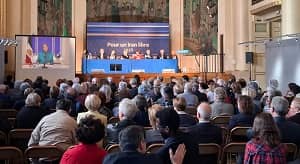
The protests of more than a thousand honorable French mayors against executions in Iran are a powerful cry—one that echoes through the hundreds of prisons under Khamenei’s rule, reaching thousands of death row inmates.
This outcry strengthens the resolve of the courageous prisoners who, for over a year, have taken part in the campaign against executions every Tuesday. It also sends a powerful message to the families waiting outside prison gates that they are not alone.
Yes, the call of a thousand French mayors is proof that the true representatives of the French people stand with the people of Iran. On March 31, the regime’s Supreme Leader openly declared that uprisings are acts of sedition, and he threatened to suppress any popular revolt, as he has in years past.
This makes it clear: the greatest existential threat to the regime is the popular resistance and uprising, which are today embodied in the continuous operations of the Resistance Units.
How Tehran’s Regional Proxies Have Become Its Own Undoing

Tehran’s proxy forces in the Middle East have become a liability for the Iranian regime.
The point is that the balance of regional and international power is tightening its grip on the regime, and the time has come for the regime to pay the price for its expansionism and crimes under the worn-out slogan of “exporting the revolution.” For the past 46 years, “exporting the Islamic revolution” has served as a license for any crime to prolong the regime’s survival. How many deafening cries were made under the banner of exporting the revolution by Friday prayer leaders (appointed by the regime’s supreme leader) and the regime’s propaganda outlets, and under the shadow of these cries, they imposed religious tyranny and political repression across Iran.
Executions in Iran Under Pezeshkian’s Presidency Exceed 1,000 Amid Escalating Repression

April 11, 2025 — The number of executions carried out in Iran since Masoud Pezeshkian took office as president in August 2024 has surpassed 1,010, marking a sharp escalation in state-led repression under Supreme Leader Ali Khamenei’s rule.
On Wednesday, April 9, Iranian authorities executed at least 15 prisoners in a coordinated wave of hangings across multiple cities, including Karaj, Shahroud, Gonabad, Gonbad-e Kavus, Kermanshah, Shiraz, Qom, and Ahvaz. The executed individuals included:
-
Qezelhessar Prison, Karaj:
-
Bahram Hadavandkhani (after 16 years in prison)
-
Salar Amirjalali
-
Abolfazl Karimi
-
Mehdi Salan
-
Sajjad Akbari
-
Iran Faces Deepening Water and Power Crises Amid Government Mismanagement
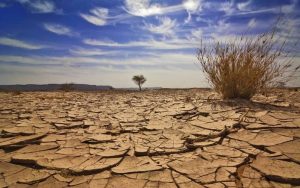
As early and widespread blackouts sweep across various regions of Iran, the Ministry of Energy has announced a plan to implement 12-hour water cuts in the coming months.
This drastic measure, introduced amidst mounting public concern, has been officially described as targeting only “high-consumption customers.” Issa Bozorgzadeh, a spokesperson for the water industry, attempted to justify the plan by insisting that it would affect only a small segment of users.
However, this narrative omits the regime’s longstanding mismanagement of water resources, a primary factor behind Iran’s current water crisis. Rather than addressing structural failures or past policy errors, officials continue to deflect responsibility by urging public cooperation and prioritizing so-called “cultural measures” to regulate consumption.
World Medical Association Reaffirms Condemnation of Corporal Punishment in Iran Amid Renewed Risk of Finger Amputation
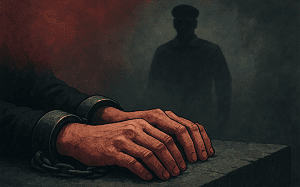
April 10, 2025 — The World Medical Association (WMA) has once again raised alarm over the use of corporal punishment in Iran, calling on authorities to immediately and unconditionally abolish all such practices. The renewed statement comes amid reports that five men—Hadi Rostami, Kasra Karami, Mehdi Shahivand, Mehdi Sharifian, and Morteza Esmaeilian—face the imminent risk of finger amputation in Urumieh Central Prison. Although the WMA’s formal statement was first published on November 1, 2024, the organization re-shared the message on April 10, 2025, via its official Facebook account to highlight the urgent need for international attention and intervention.
“Amputation purposely inflicts extreme pain, irreversible disability, and obliterates human dignity. As such, it constitutes a cruel, inhumane and degrading punishment,” — Dr. Ashok Philip, President of the World Medical Association
A Surge in Gender-Based Killings Across Iran: 13 Women and Girls Murdered in 2.5 Weeks

Between March 24 and April 9, 2025—over a span of two and a half weeks—at least 13 young women and girls were killed in cities and towns across Iran, most at the hands of male relatives — fathers, husbands, brothers, etc. These tragic incidents highlight the ongoing epidemic of gender-based killings and violence in the country, where perpetrators often act with impunity and victims are left without protection or justice.
In yet another case of domestic violence in Iran, a woman was killed by her husband in their home in Tehran. According to initial reports, the couple had previously experienced ongoing tensions over unspecified issues.
The husband initially claimed that his wife had died after falling from a stool while cleaning the house. However, a forensic investigation revealed that the cause of death was a broken neck resulting from physical trauma, injuries inconsistent with a simple fall. These findings directly contradict the husband’s account and point to intentional violence.
Iran: Unemployment Rate Among University Graduates Higher Than National Average

While the overall unemployment rate for the active population of Iran, aged 15 and above, was reported at 7.8 percent during the past winter, around 795,000 university graduates remain unemployed.
The latest report by the Iranian regime’s Statistical Center on employment in winter 2025 indicates that the unemployment rate among higher education graduates reached 10.7 percent. Although this figure reflects a 0.9 percent decrease compared to the same period last year, it still exceeds the national average unemployment rate.
Although the general unemployment rate for the active population aged 15 and above stood at 7.8 percent during the past winter, approximately 795,000 university graduates were still unemployed. Women and residents of rural areas make up a larger share of this statistic. Additionally, 38.9 percent of the total unemployed population during this period held university degrees.
Educational Disaster in Iran: 70% of Students Suffering from Learning Poverty

On April 7, the regime-affiliated newspaper Etemad published a report exposing the state of education in Iran. More than 70% of Iranian students lack adequate literacy skills compared to global standards. This figure is an alarming warning for Iran’s future.
The Etemad report cites the results of the TIMSS (Trends in International Mathematics and Science Study) and PIRLS (Progress in International Reading Literacy Study), which assess student performance worldwide every four to five years. Iran ranks among the lowest-performing countries in these assessments. In the 2023 TIMSS and 2021 PIRLS, four out of every ten Iranian students failed to meet the minimum learning standards in reading, math, and science, and more than 70% performed below the global average. These statistics reflect a focus on quantitative expansion of education without concern for quality—a policy that has led to widespread learning poverty and educational backwardness.
Case of Political Prisoner Hafez Forouhi Remains Opaque and Unjust

Hafez Forouhi is a political prisoner from Gilan Province in northern Iran. He was arrested on January 18, 2023, by security forces during the nationwide protests in Iran. After spending 23 days in solitary confinement and undergoing interrogation, he was transferred to Lakan Prison in Rasht. Despite repeated promises of release on bail, these assurances never materialized and were reportedly used as a means of psychological coercion.
In response to the harsh detention conditions, ongoing psychological pressure, and legal uncertainty, Forouhi initiated a 17-day hunger strike. His trial was finally held on September 16, 2023, at Branch 1 of the Criminal Court in Rasht, presided over by Judge Mohammadzadeh.
Over 200 Days of Uncertainty for Two Civil Activists from Izeh in Sheiban Prison, Ahvaz
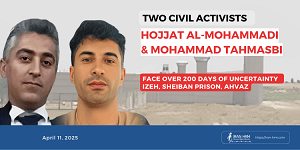
Hojjat Al-Mohammadi and Mohammad Tahmasbi, two civil activists from the city of Izeh, have been held in legal limbo for over 200 days in Sheiban Prison in Ahvaz. Despite months of detention, no formal trial has been held, and they have been denied temporary release on bail. The two political prisoners are jointly accused in the same case, facing charges such as “propaganda against the regime,” “disturbing public order,” and “collaboration with opposition groups.” After initial interrogations, their case was transferred from the Ahvaz Prosecutor’s Office to Branch 2 of the Izeh Prosecutor’s Office, yet no clear legal proceedings have followed.
Mohammad Tahmasbi was arrested in August 2024 in Urmia and transferred to Ahvaz. He suffers from chronic health issues, including intestinal adhesions, shortness of breath, and chest pain, and has been denied adequate medical care. After more than 40 days of interrogation at the Ahvaz Intelligence Detention Center, he was transferred to Sheiban Prison, where he remains in a state of uncertainty.
Kamran Rezaei-Far’s Deteriorating Health: Judicial Authorities Ignore Critical Condition of Political Prisoner

Kamran Rezaei-Far, a 59-year-old political prisoner, is currently held in Ward 4 of Evin Prison under extremely poor health conditions. Following stomach cancer surgery, he developed a pulmonary embolism and is now in critical condition. Despite this, he has been denied access to specialized medical care, essential treatment, and even basic hygiene and nutritional support. According to reports, delays caused by Evin Prison’s warden, Hedayatollah Farzadi, along with the prison’s medical staff, including the head doctor and his deputy, prevented Kamran’s timely transfer to medical facilities. These delays have worsened his condition and led to dangerous complications. It has been reported that after surgery, Kamran was returned to prison prematurely and inhumanely shackled to a hospital bed with handcuffs and leg irons, without completing his recovery.
Why Are Iranian Workers Buying U.S. Dollars?

The trembling voice of an Iranian worker is not just the story of one individual—it is the cry of millions crushed under an economy so broken that even the national currency can no longer be trusted. In a short video clip, he describes a life that no longer feels like living. He speaks of shame in front of his family, of a New Year’s bonus that became his most bitter memory, and of his desperate rush to convert his wages into U.S. dollars before their value turns to dust. His painful story exposes how Iran’s economic system has driven the working class to the brink of collapse.
“I bought dollars the moment I got paid because I know that if I leave it in rials for even an hour, it will lose value,” says the worker. This statement is a stark testament to the death of trust in Iran’s economy. Runaway inflation has driven the national currency to historic lows, leaving workers, who survive on sheer hard labor, no choice but to immediately exchange their wages for foreign currency in a desperate attempt to slow their economic freefall. This is not a life; it is a lose-lose game in a bankrupt system.
Global Protests Expand as Iranian Resistance Supporters Condemn Executions and Demand Justice

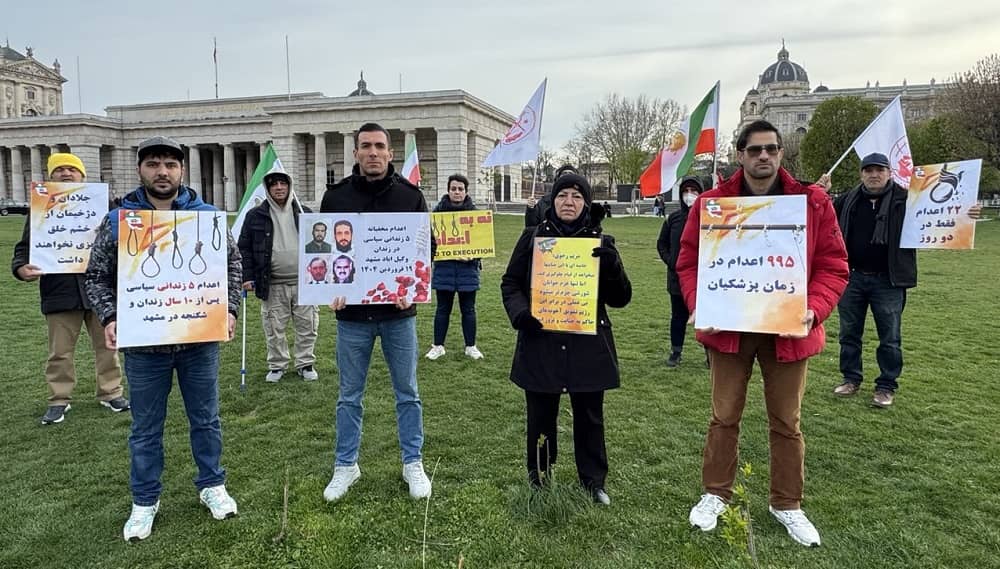
April 10, 2025 — In continuation of the protests sparked by the execution of five political prisoners in Mashhad, freedom-loving Iranians and supporters of the People’s Mojahedin Organization of Iran (PMOI/MEK) and the National Council of Resistance of Iran (NCRI) held new rounds of demonstrations across Europe and North America to denounce the clerical regime’s crimes and to demand international action.
Manchester Host Exhibition to Protest Executions of Iranian Political Prisoners

Manchester, UK – April 10, 2025: Members of the Academics in Exile Association, who support the People’s Mojahedin Organization of Iran (PMOI/MEK), organized a bookstall and photo exhibition in Manchester to protest the death sentences imposed on political prisoners affiliated with the PMOI. The event was held in solidarity with political prisoners and in response to the alarming rise in torture and systematic executions in Iran, which have intensified over the past week.