

THIS PAGE WILL BE UPDATED WITH THE LATEST NEWS
UPDATE: 7:30 AM CEST
Iran’s Regime Executes Arrested Protester Abbas Akbari Amid Nationwide Surge in Death Penalties
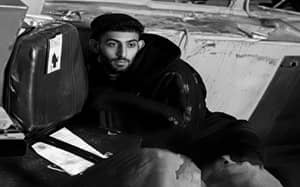
On the morning of Monday, May 25, the Iranian regime’s executioners sent another brave, rebellious youth to the gallows. Abbas Akbari Faizabadi, a courageous son of the people of Nain who actively participated in the nationwide January uprisings, was executed on heavily fabricated charges. The judiciary condemned him for “Moharebeh” (waging war against God), destroying public property, and assembly and collusion against internal security.
In a desperate bid to legitimize this state-sanctioned murder, the regime labeled Akbari as an “armed leader” of the Nain protests, alleging that he used a handgun alongside other protesters to attack the county governor’s office and fire at security guards.
Mrs. Maryam Rajavi, the President-elect of the National Council of Resistance of Iran (NCRI), praised the brave rebels who have shaken the pillars of religious fascism. She emphasized that the execution of Iran’s proud youth fails to save the moribund mullahs’ regime; rather, it only redoubles the anger of the Iranian people against their bloodthirsty rulers.
PMOI Resistance Units Honor Founders’ Legacy Through Nationwide Defiance
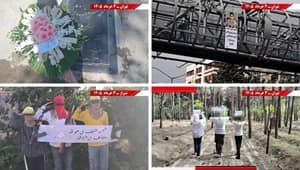
Despite the Iranian regime’s relentless reliance on executing political prisoners to instill fear in the public, the spirit of resistance across Iran remains unbroken. Across the country, PMOI Resistance Units have launched a widespread campaign of defiance to honor the 54th anniversary of the execution of the founders of the People’s Mojahedin Organization of Iran (PMOI/MEK). Against the backdrop of the regime’s brutal crackdowns, these activities demonstrate that the regime’s efforts have completely backfired, and the movement is stronger than ever.
In highly visible and coordinated efforts, Resistance Units carried out daring activities in major cities including Tehran, Tabriz, Sanandaj, Amol, Karaj, Shiraz, Rasht, Kerman, Arak, Lahijan, and Babolsar. In the capital, activists bravely laid flower wreaths directly on the graves of PMOI founders Mohammad Hanifnejad, Saeed Mohsen, and Asghar Badizadegan.
Activists are adopting increasingly bold tactics to send a clear message of defiance to the regime. In Tehran, units marched publicly with images of the founders. In Shiraz, armed PMOI Resistance Units held placards reading, “Hanif’s blood is alive as the Mojahedin roar.” This exact message was echoed by activists in Rasht and Lahijan.
Iran Arms Children in Public Weapons Drills
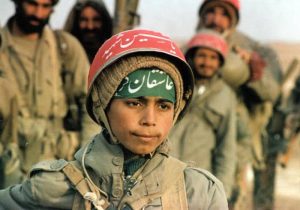
State-affiliated media outlets — including Fars News Agency (affiliated to the IRGC) and Tasnim News Agency (affiliated with the IRGC’s Qods Force) — have released multiple video clips showing children being taught to handle weapons, interviewed on camera, and made to repeat regime slogans such as “We will destroy the enemy” while praising the IRGC. In some gatherings, children have been fitted with banners reminiscent of the widespread deployment of child soldiers during the eight-year Iran-Iraq War.
On 12 April 2026, Amnesty International warned that the recruitment of children as young as 12 into the IRGC’s military campaign constitutes a war crime under international law.
One video published by Tasnim from Eslamshahr shows a military parade of three Shahed-136 drones — the same model used extensively in the war in Ukraine — alongside interviews with children repeating the regime’s talking points.
Another clip, released in mid-May by the state-run Student News Agency from Shahrekord, depicts Basij forces conducting weapons training in a public area while children are visibly present.
Subsequently, Fars News Agency aired footage from Bojnūrd in which military personnel are seen actively training children and teenagers in weapons handling.
Iran Regime Strips Five Female Political Prisoners of Phone Call Rights
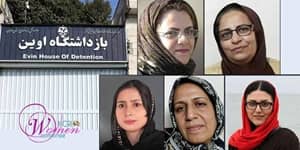
The Iranian regime has punitively barred five female political prisoners held in Evin Prison from making phone calls. Since yesterday, Golrokh Iraee, Zahra Safaei, Marzieh Farsi, Shiva Esmaili, and Sakineh Parvaneh have been denied access to prison telephones and the right to contact their families, in what appears to be a continuation of mounting pressure and restrictions imposed on the prisoners.
The five female political prisoners had previously been denied in-person visits with their families and lawyers in Evin prison, a restriction that remains in place.
Ban on phone calls was reportedly imposed after the prisoners chanted protest slogans in the yard of Evin Prison in opposition to the implementation of execution sentences in Iran.
Iran Expands Internet Control as Former State Media Chief Reveals Chinese-Style Restriction Plan
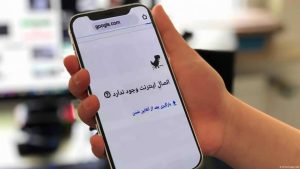
New revelations from a former senior regime official have intensified concerns over the Iranian regime’s accelerating efforts to impose sweeping internet restrictions modeled on China’s system of digital control.
Mohammad Sarafraz, the former head of the regime’s state broadcasting organization (IRIB) and a current member of the Supreme Council of Cyberspace, disclosed that parts of the regime are seeking to implement a heavily restricted internet structure in which access to the global web would be limited to select, state-approved groups.
Speaking on Sunday, May 24, in an interview with the online newspaper Faraz, Sarafraz said the regime had already purchased and imported equipment from China designed for the “permanent shutdown of the internet.”
According to Sarafraz, the model being pursued mirrors China’s tightly controlled digital infrastructure, where ordinary citizens face significant limitations in accessing the global internet while certain privileged groups are granted monitored and selective access. He stated that the primary objective of such a system is to ensure the dominance of the regime’s “official narrative” over the country’s information space.
The Return of SAVAK Symbols Exposes the Bankruptcy of Iran’s Manufactured Monarchist Project
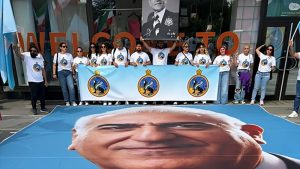
In the final years of the Weimar Republic, before Adolf Hitler formally consolidated power, it was not only the Nazis who transformed the streets into theaters of uniforms, intimidation, and organized fear. Alongside them stood remnants of nationalist militias and extremist movements born from Germany’s humiliation after World War I — forces defined less by any meaningful political vision than by nostalgia for lost authoritarian grandeur and the performance of violence.
These movements rarely spoke of democracy, freedom, or genuine solutions to social and economic crisis. Instead, they weaponized fear itself, because beneath their theatrical aggression lay something deeper: humiliation, political emptiness, and the belief that they could only matter if others feared them.
That historical pattern offers an unsettling parallel to the recent public display of SAVAK symbols in European streets by extremist supporters aligned with Reza Pahlavi.
This spectacle should not be interpreted as a sign of political confidence or even a credible threat of restored authoritarian rule. Rather, it is a naked confession of the inherent bankruptcy of a security-driven and colonial-style political project built around the “crown prince” (Reza Pahlavi) narrative. The waving of the emblem of an institution synonymous with some of the darkest torture chambers in modern Iranian history exposes the true nature of a movement that has abandoned any attempt to present itself as democratic.
Iran’s Ruling Crisis Deepens as Regime Factions Clash Over Survival Strategy
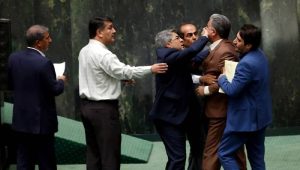
The Iranian regime’s internal fractures are widening at an unprecedented pace as competing factions openly clash over how to confront escalating domestic and international crises. Beneath the usual displays of unity and propaganda, a deeper reality is emerging: the regime is trapped in a strategic deadlock driven by fear of social explosion, economic collapse, and the growing prospect of regime overthrow. Recent statements by senior regime officials reveal not merely political disagreement, but a profound crisis at the core of the system itself. Masoud Pezeshkian, the regime’s president has increasingly framed the regime’s greatest threat not as foreign military pressure, but as internal disintegration and popular unrest.
Speaking on Monday, May 18, 2026, during an event titled “Narrators of Iran,” Pezeshkian acknowledged the severity of the regime’s crises and warned against presenting a false image of stability.
“The country — meaning the system — is facing real problems, and we should not present an unrealistic picture of conditions,” he admitted. “We must honestly share realities with the people and avoid exaggerated analyses.”
Rising Dairy Prices Send New Shock to Lives of People in Iran

The state-run Hamshahri newspaper published a report on May 23 regarding a new wave of price increases in dairy products. The report shows that rising dairy prices have once again entered an upward trend. According to the Dairy Products Association, increased production costs have reached a critical stage. This situation has made rising dairy prices an unavoidable outcome. At the same time, discussions over currency liberalization and supplying livestock feed with free-market currency have created additional pressure. This trend has turned rising dairy prices into one of the main issues in the food market.
The increase in exchange rates and changes in the method of supplying livestock feed have raised production costs. Under such conditions, according to industry activists, rising dairy prices are the direct result of pressure on the production chain. Factory owners also speak of shrinking profit margins and pressure from the consumer market. They believe that continuation of this trend could reduce production capacity in some facilities. Amid this trend of rising dairy prices, exports have been mentioned as a compensatory option. Increased transportation costs have also contributed to higher final prices.
The Ekbatan Case: Official Judicial Terror in Iran

Condemning defendants (four of them to death) in Iran in the Ekbatan Case who were previously acquitted of murder charges or sentenced to short-term imprisonment in the Criminal Court demonstrates that the law is merely a decorative shell to legitimize judicial terror. The issuance of death sentences for four defendants in the Ekbatan Case by Branch 15 of the Tehran Revolutionary Court represents the most blatant form of systematic slaughter of the law and the utilization of the death penalty as a tool for political intimidation.
One of the most critical dimensions of ambiguity in the Ekbatan Case was its engineered division into two parallel pathways: the criminal section in Branch 13 of Criminal Court One, and the security section in Branch 15 of the Revolutionary Court. This segregation of legal standards created a deliberate vacuum for the apparatus of repression to advance its political objectives:
- Retreat in the Criminal Section: After the Supreme Court overturned the six initial death sentences in September 2025 due to “serious ambiguities and defects,” Branch 13 of Criminal Court One was forced to make an admission in the Ekbatan Case. This court fully acquitted Alireza Barmarzpournak, Hossein Nemati, and Navid Najaran of the charge of premeditated murder due to a lack of sufficient material evidence, while sentencing three other defendants to five years in prison.
Iran’s Chinese Equipment for a “Permanent” Internet Shutdown
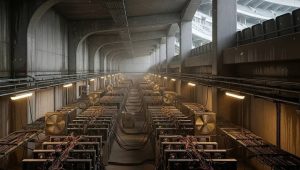
A former Iranian state media chief says Chinese equipment imported into Iran could be used to permanently restrict public access to the global internet. The claims have renewed concerns over the country’s push toward a heavily controlled, tiered online system.
For years, Iranian internet users have struggled with disruptions, filtering, and periodic shutdowns — an exhausting reality often obscured by official denials or security justifications. But new remarks by Mohammad Sarafraz, a member of Iran’s Supreme Council of Cyberspace and former head of state broadcasting, have shifted the discussion.
Speaking to the online newspaper Faraz, Sarafraz described what appeared to be more than speculation: the arrival of Chinese equipment allegedly intended to permanently cut public access to the global internet.
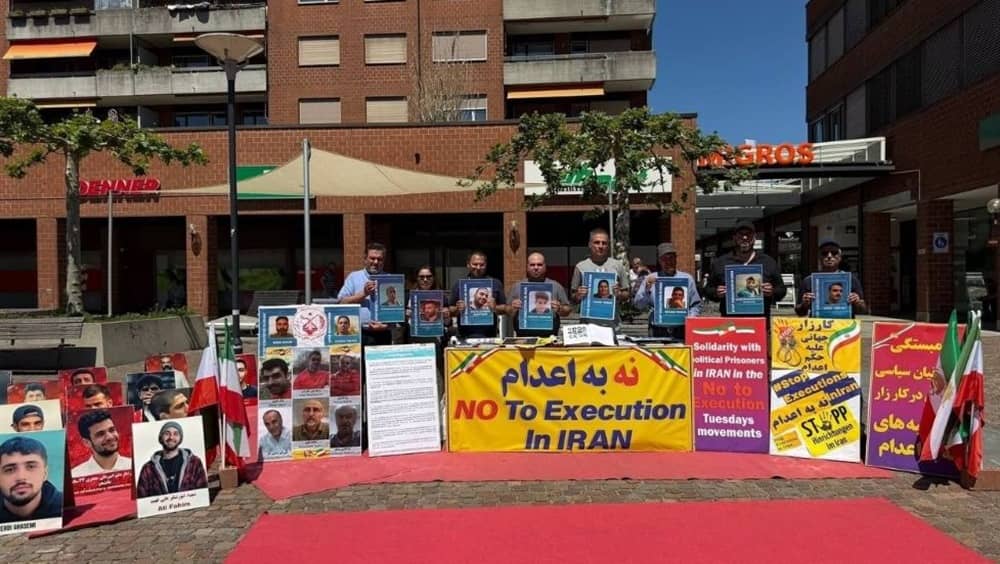
Effretikon, Switzerland — Iranian Resistance Supporters Honor PMOI Founders, Condemn Executions in Iran
Effretikon, Switzerland – May 23, 2026 – Supporters of the People’s Mojahedin Organization of Iran (PMOI/MEK) held a photo exhibition and book stall to commemorate the anniversary of the execution of the founders of the PMOI/MEK by the Shah’s regime on May 25, 1972. Demonstrators honored the sacrifice of the MEK’s founders and celebrated the movement’s enduring commitment to freedom, democracy, and a secular republic in Iran. They highlighted the MEK’s pivotal role in resisting both dictatorships and defending the Iranian people’s right to sovereignty and justice.

Freedom-loving Iranians also protested the executions of political prisoners, including PMOI members and individuals detained during the January 2026 uprising in Iran. They demanded the immediate and unconditional release of all political prisoners in the country.
Malmö Rally Honors MEK Founders, Condemns Executions, and Calls for a Democratic Republic in Iran
Malmö, Sweden – May 23, 2026: Supporters of the Iranian Resistance held a rally to commemorate the anniversary of the execution of the founders of the PMOI/MEK by the Shah’s regime on May 25, 1972. Demonstrators honored the sacrifice of the MEK’s founders and celebrated the movement’s enduring commitment to freedom, democracy, and a secular republic in Iran. They highlighted the MEK’s pivotal role in resisting both dictatorships and defending the Iranian people’s right to sovereignty and justice.

Freedom-loving Iranians also protested the executions of political prisoners, including PMOI members and individuals detained during the January 2026 uprising in Iran. They demanded the immediate and unconditional release of all political prisoners in the country.
Bonn Event Condemns Executions, Honors PMOI Founders, and Calls for June 20 Paris Rally
Bonn, Germany – May 23, 2026 – Supporters of the People’s Mojahedin Organization of Iran (PMOI/MEK) held an exhibition in Bonn, Germany, to protest the execution of PMOI political prisoners as well as protesters arrested in January 2026. The event also expressed solidarity with the “No to Execution” campaign. Organizers also commemorated the anniversary of May 25, 1972 (Khordad 4, 1351 in the Iranian calendar), when the founders of the PMOI were executed by the Shah’s regime, urging freedom-loving Iranians and international supporters to join the major rally scheduled for June 20 in Paris under the slogan “A Democratic Republic for Iran.”
Bonn Event Condemns Executions, Honors PMOI Founders, and Calls for June 20 Paris Rally #No2ShahNo2Mullahs #StopExecutionsInIran #100KFreeIranRallyhttps://t.co/4tNKfPzUX4
— Iran Freedom (@4FreedominIran) May 25, 2026
Organizers called on the German public and the international community to recognize the suffering of the Iranian people and their firm rejection of all forms of dictatorship—whether monarchical or theocratic. Through powerful images and personal testimonies, the exhibition highlighted the courage and sacrifices of Iranian protesters during the 2026 Iran protests, while strongly condemning ongoing human rights violations, including the execution of political prisoners.