


THIS PAGE WILL BE UPDATED WITH THE LATEST NEWS
UPDATE: 8:30 PM CEST
Salam to Asharq Al-Awsat: Lebanese State Has Reclaimed Decisions of War and Peace

Lebanese Prime Minister Nawaf Salam stressed that the Lebanese state has restored the decisions of war and peace. “These decisions are now being taken in Beirut, at cabinet, not anywhere else,” he told Asharq Al-Awsat in an extensive interview, the first installment of which was published on Saturday.
“No one is making dictates to us, not from Tehran or Washington,” he added.
Moreover, he underlined the right of the people to hold protests – a reference to Hezbollah supporters rallying against the government’s decision to disarm the Iran-backed group and limit the possession of weapons in the country to the state.
UPDATE: 3:30 PM CEST
“Veiled Threat of Civil War”: Salam Joins the Outcry Against Naïm Kassem’s Remarks

The fiery statements made Friday morning by Naïm Kassem, in which he insisted that Hezbollah would refuse to hand over its weapons to the Lebanese state and that his group was prepared for a confrontation if forced to disarm, sparked a wave of harsh reactions across the Lebanese political class. Prime Minister Nawaf Salam responded in a message posted on his X account, quoting an interview he gave the same day to Asharq al-Awsat.
“The remarks by Hezbollah’s deputy secretary-general, Sheikh Naïm Kassem, contain an implicit threat of civil war. Yet no one in Lebanon today wants a civil war, and any form of threat or allusion to it is completely unacceptable,” the head of government declared. “We warn against any irresponsible behavior that could fuel discord and division,” he added.
UPDATE: 9:00 AM CEST
‘Fire Answers Execution’: Iranian Youth Retaliate Against Regime’s Killing Spree
While Iran’s regime has besieged the people with water and power cuts and soaring inflation, the cycle of executions and the relentless killing of prisoners continues.

On Tuesday, August 12, 2025, Iran’s heroic rebellious youth responded to 113 executions in the first 20 days of the Persian month of Mordad (July 22 – August 10, 2025) and 1,571 executions during the tenure of the regime’s president, Masoud Pezeshkian. They set fire to images of regime founder Ruhollah Khomeini, current supreme leader Ali Khamenei, and other regime leaders, and struck at the regime’s centers of suppression and crime.
On this day, the rebellious youth, issuing a warning to the executioners and commanders responsible for the suppression of prisoners, attacked the regime’s bases and symbols of suppression and crime as follows:
Sharifeh Mohammadi: Supreme Court Upholds Death Sentence Against Labor Activist

The Iranian regime’s Supreme Court has upheld the death sentence of Sharifeh Mohammadi, a Kurdish political prisoner held in Lakan Prison, Rasht. According to her defense attorney, Amir Raisian, the ruling comes despite the fact that the same legal flaws which previously led to the annulment of her sentence remain unresolved. Raisian stated, “Branch 39 of the Supreme Court, which had earlier overturned the verdict issued by the Revolutionary Court due to numerous deficiencies, has now upheld the death sentence despite the persistence of those very flaws.”
Sharifeh Mohammadi has twice been sentenced to death by the Revolutionary Court in Rasht—first by Branch 1, and later by Branch 2. In October 2024, the Supreme Court overturned the initial ruling, citing a lack of evidence linking her to any armed operations, failure to prove membership in an “armed rebellion” group, and serious inconsistencies in the intelligence reports provided by security forces.
UK Winchester Exhibition Urges Action to Save Iranian Political Prisoners Facing Execution

Winchester, UK – August 15, 2025 – The Academics in Exile Association, supporters of the People’s Mojahedin Organization of Iran (PMOI/MEK), held an exhibition and bookstall in Winchester to denounce the executions of Iranian political prisoners carried out by the regime’s ruling mullahs.
Hezbollah Leader Rejects Lebanon Disarmament Proposal

One day after Ali Larijani, the newly appointed Secretary of Iran’s Supreme National Security Council, traveled to Beirut and met with senior Lebanese officials, Hezbollah’s deputy leader, Naim Qassem, issued a strong response to the government’s plan to disarm all militias, including Hezbollah.
In a televised speech on Friday, August 16, 2024, broadcast on Al-Manar TV, Qassem warned: “If the internal situation becomes critical because of the government’s insistence on disarmament, the government will be responsible for the consequences. If you stand with the other side, there will be no life left in Lebanon. Either Lebanon remains united, or you will be responsible for its end. Farewell to the world.”
Iran–China Cooperation in the Missile Field Is on the Rise
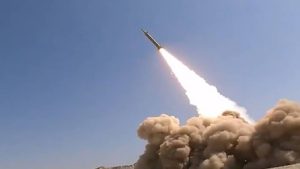
According to Western intelligence agencies, China’s military cooperation with the Iranian regime, particularly in the production of ballistic and surface-to-surface missiles, has increased. Western intelligence agencies, mainly European, have reported growing cooperation between Tehran and Beijing. On Friday, August 15, Yedioth Ahronoth published a report citing intelligence findings warning that Beijing may help Tehran rebuild its missile capabilities that were damaged during the twelve-day war with Israel. Senior Israeli officials said China’s intentions are not entirely clear, and Israel has conveyed messages to Beijing regarding this issue.
Power Outages and Extreme Heat in Iran Are Claiming Lives

The power outage and extreme heat in Kavar, a town in Fars province, led to the deaths of two young people, aged sixteen and eighteen. These two individuals, Tara Younesi and Sadegh Khoshdel, went into a running car in their home’s garage to cool off after the power went out and their air conditioner stopped working. With the car running in the enclosed space, carbon monoxide filled the vehicle, and they suffocated from inhaling the gas.
In recent weeks, frequent and widespread power outages across Iran have turned into a serious crisis affecting various aspects of people’s lives and have created problems in the healthcare sector as well.
Iran’s Diplomatic Deadlock: Foreign Minister Araqchi’s Interview Exposes Regime’s Growing Desperation

Iranian Foreign Minister Abbas Araqchi admits the looming threat of UN “snapback” sanctions and the risk of renewed Chapter VII measures, exposing the regime’s isolation and insecurity.
In a recent interview with state television, Iranian Foreign Minister Abbas Araqchi inadvertently revealed the regime’s deep insecurity and fragile standing in the international arena. While attempting to reassure viewers, Araqchi instead admitted that Tehran faces the very real threat of renewed sanctions, international isolation, and even war.
Iran Faces Environmental Collapse and Rising International Pressure
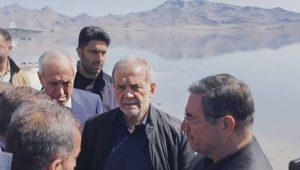
Iran is entering one of the most critical environmental periods in its history. The drying up of wetlands and lakes, accelerating land subsidence, a sharp decline in water resources, and the destruction of fertile land and forests have left a bleak image of the country’s agriculture and ecosystem. These environmental disasters are accompanied by growing poverty and malnutrition. For millions of Iranians, access to quality animal protein has become a distant dream. Yet, despite the mounting suffering of its people, the regime in Tehran remains focused solely on prolonging its own survival.
Instead of addressing the urgent crises that threaten Iran’s environment, economy, and society, the regime has chosen to invest its energy in nuclear escalation and regional confrontation. This stark contrast between the people’s needs and the regime’s ambitions highlights why Tehran faces not only domestic discontent but also growing international isolation.
Iran’s Regime Escalates Regional Warmongering Through Proxy Forces

The Iranian regime continues to demonstrate that nothing about its regional strategy has changed. Despite growing international pressure and efforts by local governments to disarm Tehran’s militias, Iranian leaders and their proxy forces have intensified their rhetoric and threats, underscoring the regime’s unyielding commitment to destabilization and conflict in the Middle East. On August 15, Abu Hussein al Hamidawi, Secretary General of the Iranian-backed Iraqi militia Kataib Hezbollah, issued a statement calling for strengthening militias aligned with Tehran. He demanded advanced weapons, greater technical capabilities, and improved “defensive and destructive capacities.” This appeal came in direct response to US efforts to weaken the so-called “Axis of Resistance,” the network of Iran’s armed proxies across the region.