

THIS PAGE WILL BE UPDATED WITH THE LATEST NEWS
UPDATE: 10:00 AM CEST
Iran Is on a Killing Spree

On a bitter winter day in early 2009, I touched the rough walls of a cell in ward 209 of Iran’s Evin Prison, where I was being held after my arrest in Tehran. My crime: daring to protest the Iranian regime’s human rights violations. I was 21. In that cell, I could almost hear the footsteps of those who, in the scorching summer of 1988, spent their final hours there before being taken to their execution.
In 2014, after five years in prison, I was released thanks to growing international attention to my case. My arrest had received widespread media coverage, and numerous Western lawmakers had publicly called for my release. Human rights organizations such as Amnesty International and the United Nations advocated on my behalf. Statements from the U.S. State Department and Senate mentioned my name alongside those of other political prisoners.
Iran at a Turning Point: Maryam Rajavi’s Struggle for a Secular Republic Resonates Worldwide

In a historic speech at the Free Iran World Summit 2025 in Italy, Maryam Rajavi, the President-elect of the National Council of Resistance of Iran (NCRI), powerfully laid out her vision for a free, secular, and democratic Iran. As the regime in Tehran staggers under internal unrest and international condemnation, her message struck like a political earthquake.
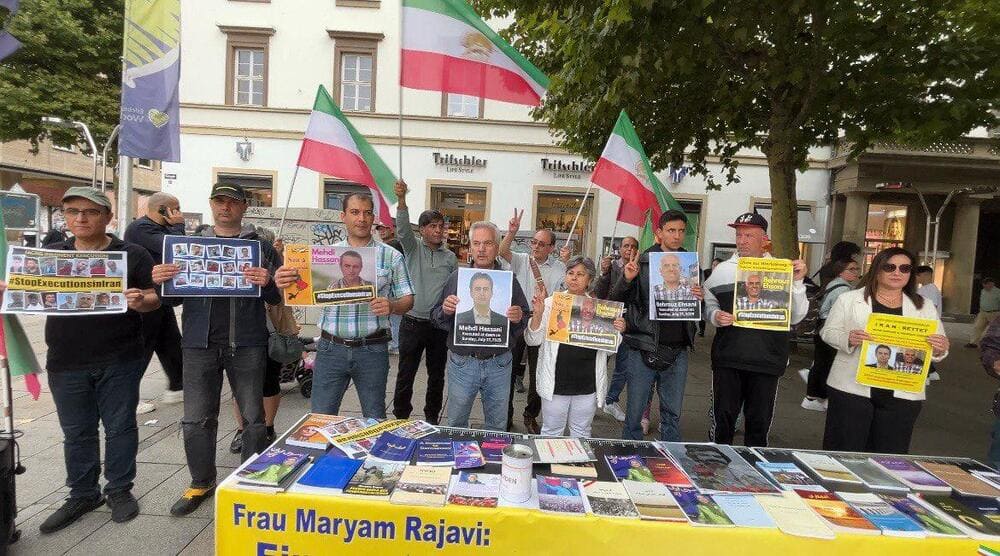
The timing was anything but coincidental: just days earlier, the regime had executed resistance members Behrouz Ehsani and Mehdi Hassani. According to Maryam Rajavi, their death sentences were not acts of justice, but signs of panic at the highest levels. Their steadfastness in captivity symbolizes the essence of the struggle—a nation that refuses to be silenced.
Rajavi emphasized that the execution of the two members of the People’s Mojahedin Organization of Iran (PMOI/MEK) is proof that the regime is losing its legitimacy. “These are not signs of strength. These are the death throes of a system that senses its end is near,” she declared in one of her most forceful and direct addresses to date.
UPDATE: 8:00 AM CEST
Meeting and Discussion with Mr. Stephen J. Rapp, U.S. Ambassador-at-Large for War Crimes (2015)
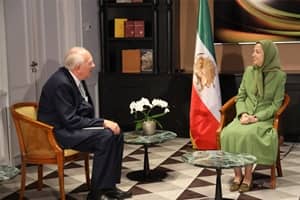
During her visit to Italy, Maryam Rajavi met and held talks with Amb. Stephen J. Rapp, former U.S. Ambassador-at-Large for War Crimes (2015) and former prosecutor at the international tribunals for Rwanda and Sierra Leone. Mrs. Rajavi outlined the countless crimes committed by the clerical regime against humanity and its horrifying record of genocide at various stages of its rule. She stated that in the fight against this regime, we rely on the power of the Iranian people and their freedom fighters. However, the impunity enjoyed by the regime’s leaders over the past 46 years, along with the international community’s inaction regarding grave human rights violations in Iran, has only encouraged the regime to continue its crimes against humanity and acts of genocide.
Mr. Stephen Rapp condemned the execution of PMOI members Behrouz Ehsani and Mehdi Hassani, offered his condolences to Mrs. Rajavi and the Iranian Resistance, and stressed the need for the international community not to leave such crimes unanswered.
Meeting and Discussion with Former U.S. Ambassador to Denmark, Carla Sands
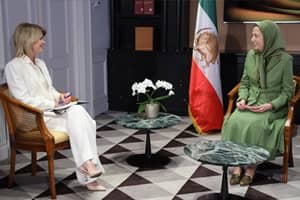
Carla Sands, former U.S. Ambassador to Denmark, met and held talks with Maryam Rajavi in Rome. During the meeting, Mrs. Rajavi presented an analysis of the current state of the Iranian regime and the Iranian people’s bloody struggle for democracy and human rights. She said that 45 years of experience have proven that neither foreign war nor appeasement has led anywhere in the case of Iran. The only path to change is through the Iranian people and Resistance. She added that the most critical missing link in the international community’s Iran policy is the failure to recognize this very factor: the role of the people and the resistance.
Ambassador Sands, expressing her pleasure at the meeting and discussions with Mrs. Rajavi, said she fully agrees that in Western countries, there has been a neglect of the role of the Iranian people and their resistance—something that has effectively benefited the regime and worked against the interests of both Europe and the United States.
Meeting with Mr. Fabio Rampelli, Deputy Speaker of the Italian Parliament, and Ms. Naike Gruppioni, Member of the Foreign Affairs Committee
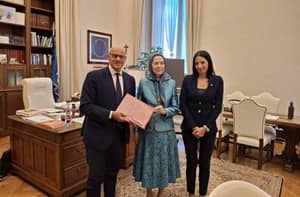
Maryam Rajavi met and held talks at the Parliament with Mr. Fabio Rampelli, Deputy Speaker of the Italian Parliament, and Ms. Naike Gruppioni, Member of the Foreign Affairs Committee. Referring to the revolutionary atmosphere and the crisis of overthrow surrounding the Iranian regime, Mrs. Rajavi stated that the regime is therefore trying to keep itself afloat by continuing uranium enrichment and nuclear activities, as well as exporting terrorism and investing in its proxies in the region. However, the fall of the religious dictatorship in Iran has never been as foreseeable as it is today.
Mr. Rampelli thanked Mrs. Rajavi for her presence at the Italian Parliament and said, “You have strong support in the Italian Parliament. The backing of figures like Senator Giulio Terzi is especially important, as he is a leading authority in Italy’s foreign policy and has known you closely for years, supporting your movement.”
Five Female Teachers in Kerman Sentenced to Prison Time

Five female teachers and three other union activists in Kerman have been sentenced to a combined 8.5 years in prison on national security and anti-state propaganda charges.
Eight teachers’ union activists in Iran’s southeastern province of Kerman — including five female teachers — have been sentenced to prison by Branch 1 of the Kerman Revolutionary Court on charges related to national security. The women sentenced are Fatemeh Yazdani, Mitra Nikpour, Zahra Azizi, Leila Afshar, and Shahnaz Rezaei Sharifabadi. According to the verdict, each has received six months in prison for “membership in a hostile group with the intent to disrupt national security” and an additional four months for “propaganda against the state.”
A Woman Executed in Khorramabad Prison

A Woman Executed in Khorramabad Prison at Dawn on August 3 – Identity and Charges Remain Unknown as Judiciary Maintains Complete Silence. In the early hours of Sunday, August 3, 2025, a woman was executed at the Central Prison of Khorramabad. As of the time of this report, neither her identity nor the charges against her have been disclosed by official sources or state-affiliated media. The judiciary remains entirely silent. With this woman executed on Sunday, the number of women executed in Iran in 2025 has risen to 27 in just seven months.
Iran holds the grim record for the highest number of women executed globally. According to data compiled by the Women’s Committee of the National Council of Resistance of Iran (NCRI), at least 290 women have been executed in Iran since 2007.
Ruling Regime Launches Coordinated Arrests Targeting Families of Political Prisoners

In the face of escalating political and economic crises, the ruling regime in Iran has launched a systematic campaign of arrests of former prisoners, and supporters of the Iranian Resistance, and—most notably—targeting their family members. This report documents an alarming and organized pattern of repression aimed at silencing dissent, intimidating the public, and preventing future uprisings. The arrests, beatings, interrogations, and solitary confinement of individuals—many of whom are elderly or have no recent political activity—constitute serious human rights violations and raise grave concerns about crimes against humanity.
Iran Human Rights Monthly Report – July 2025
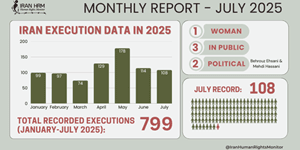
July 2025 marked a sharp escalation in the Iranian regime’s systematic violations of human rights. A staggering 108 executions were carried out, including two political prisoners and at least one woman. The month was also marred by arbitrary arrests, public hangings, torture of political prisoners, attacks on prison wards, and the forcible exile of long-term political prisoner Saeed Masouri. In addition, the regime intensified pressure on families of dissidents, aiming to silence dissent inside and outside prison walls.
Cities in Iran Shut Down Amid Energy Crisis

As Iran’s energy crisis intensifies alongside soaring temperatures, several provinces have announced closures at the end of the week or instructed employees to work remotely. According to official statements, banks, government offices, educational centers, schools, and executive institutions in provinces such as Ardabil and Golestan will be closed on Tuesday, August 5, while Isfahan will be closed on Wednesday, August 6. Closures will also take place in East and West Azerbaijan, Khuzestan, and Yazd provinces on both Tuesday and Wednesday. Rising temperatures and the need to “manage water and electricity consumption” have been cited as reasons for these shutdowns.
The Rise in Dairy Prices and Its Elimination from Iranian Households’ Tables

The Iranian regime’s inability to contain the economic crisis has led to the continued rise in the prices of essential goods, including dairy products, placing unprecedented pressure on household budgets. In recent days, dairy prices have risen sharply, and in some areas, the cost of a single pack of cheese or a container of yogurt has exceeded an entire family’s daily budget. Many people have said they can no longer afford to buy dairy products. Some have written that they haven’t purchased any dairy items for months, and families have opted to buy only “necessary and cheap” items.
Similar accounts show that dairy has become a “luxury item” for many, even though nutrition experts have always considered it a core component of a healthy diet. For some, comparing dairy with other goods reveals a broader crisis.
U.S. Offers $10 Million Reward for Intel on Iranian Cyber Group Behind Election Interference

Washington targets IRGC-linked “Shahid Shushtari” network accused of meddling in U.S. elections and operating under front companies. The U.S. State Department’s Diplomatic Security Service has announced a reward of up to $10 million for information on an Iranian cyber unit known as “Shahid Shushtari”, which is accused of attempting to interfere in the 2024 U.S. election. The reward was issued under the Rewards for Justice (RFJ) program and publicly shared on Monday, August 4, through the program’s official X-Net (formerly Twitter) account. “Shahid Shushtari has many names but only a few addresses. If you know of other addresses, please contact us,” the post read, urging the public to come forward with information.
Iran’s Regime Establishes New Wartime Defense Council Amid Leadership Shakeup and Strategic Concerns

In a significant development reflecting growing concern over Iran regime’s wartime readiness, the Iranian regime’s Supreme National Security Council (SNSC) has announced the creation of a new Defense Council to enhance decision-making during future military conflicts. The move, revealed on August 3, follows harsh internal assessments of Iran regime’s performance during the recent Israel-Iran War and underscores Tehran’s efforts to centralize and streamline its wartime command structure.
The new Defense Council will operate under the authority of the SNSC but with a more operational focus. Iranian state media described the purpose of the council as ensuring “rapid, balanced, and coordinated” responses to national security threats. Officials cited “fragmentation in decision-making” and “lack of sufficient coordination between different institutions” as key reasons for the overhaul.