

THIS PAGE WILL BE UPDATED WITH THE LATEST NEWS
UPDATE: 7:00 PM CET
‘Iranians Are Fed Up with Dictatorship’: The Exiled Female Activists Daring to Dream of a New Era

In Europe, women are running countries. Women in Iran deserve that. They have always been a leading part of the resistance,” Diana Nammi, a longtime campaigner against autocracy in Iran, says in London.
Female activists and youth campaigners are at the forefront of the fight to shape a new direction for Iran after decades of repressive rule in the Islamic Republic. In the UK, exiled Iranian activists have also mobilised.
Now, as mass protests engulf Iran, hopes are high among British Iranians that Ayatollah Ali Khamenei’s theocracy is finally about to be toppled.
Laila Jazayeri, the director of the Association of Anglo-Iranian Women in the UK, is among the exiles who took to the streets of London at the weekend.
UPDATE: 10:00 AM CET
Iran Opposition Figure Maryam Rajavi Says The ‘Resistance Is Stronger Than the Revolutionary Guards’

Maryam Rajavi, an Iranian political activist and Iranian opposition figure, said the Iranian resistance protests have “shaken the regime to its core.”
Rajavi, head of the National Council of Resistance of Iran (NCRI), noted that “resistance units” have “repeatedly liberated parts of several cities,” which she described as “practical experience for the final freedom of the entire country.”
Rajavi said the “uprising has shown that the will of the people and the resistance is stronger than the Revolutionary Guards, and dozens of the regime’s security and military institutions.”
Rajavi included a message to the international community in her video that she posted to X.
Iran On the Brink: Protests Spread Across the Nation as Citizens Defy Regime

LITTLE ROCK, Ark. (KATV) — Iran is in turmoil. Across the country, millions of people are risking their lives in a bold, unprecedented stand against a regime that has ruled for decades. The streets are filled with chants of freedom, defiance, and anger, despite deadly crackdowns, blocked internet, and grounded flights that have left families cut off from each other. Alireza Jafarzadeh, deputy director of the U.S. Office of the National Council of Resistance of Iran, has been monitoring the unrest closely. He describes a nation in motion.
“These protests have now reached over 180 cities across all 31 provinces,” he says. “What began with economic grievances quickly became political. People are demanding an end to clerical rule. They are chanting ‘Death to Khamenei.’ And even though the regime has killed dozens, it hasn’t stopped them.”
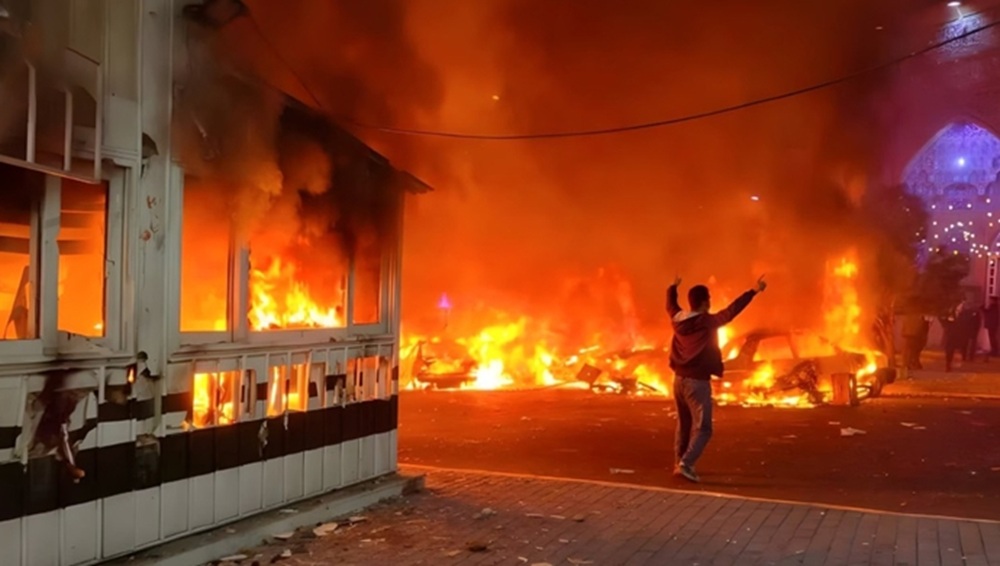
Video after video shows ordinary citizens confronting heavily armed Revolutionary Guards, burning government buildings, and standing their ground.
Teetering Ayatollah Has Nowhere to Turn

After 35 years of ruling Iran, Ali Khamenei is running out of options fast. The 86-year-old supreme leader is facing his most serious challenge yet. Protesters chant “death to Khamenei” rather than the regime’s traditional “death to America”.
Protests against him have entered their second week and spread to 340 places in all 31 provinces of Iran. At least 65 people are dead because of his response to the demonstrations, with the death toll expected to climb.
The revolt has engulfed small, economically devastated cities across Iran’s poorest provinces – places that should form the regime’s support base.
The People of Iran Are Determined to Topple Khamenei’s Criminal Regime

Today marks the end of the second week of the powerful uprising of the Iranian people. They are seeking the overthrow of religious dictatorship. So far, the uprising has spread to 190 cities and has shaken the regime to its core.
Resistance Units, together with the people, have repeatedly liberated parts of several cities.
This is practical experience for the final freedom of the entire country.
Khamenei said he would not give in to the people. But the uprising has shown that the will of the people and the resistance is stronger than the Revolutionary Guards, and dozens of the regime’s security and military institutions.
Of course, our people have paid a high price, with many young lives lost.
UPDATE: 09:00 AM CET
Live Report: Day 14 Of Iran Uprising; Protests Expand To 190 Cities, Rallies Resume in Tehran and Other Cities

The nationwide uprising against the religious dictatorship in Iran has entered its fourteenth day on Saturday, January 10, 2026. Following the thirteenth day, which saw the brave people of Iran brave live ammunition and tear gas, the flame of resistance has intensified across the country. Reports indicate that until now, the uprising has spread to 190 cities. Despite a 48-hour total internet blackout aimed at concealing the regime’s crimes, people in Tehran, Tabriz, Rasht, and Karaj have returned to the streets, chanting for the overthrow of the regime.
Iranian Resistance Supporters Rally in Front of Norwegian Parliament to Back Nationwide Uprising

Oslo, Norway — January 8, 2026 — Once again, in support of the nationwide uprising in Iran and the brave protesters, freedom-loving Iranians — supporters of the People’s Mojahedin Organization of Iran (PMOI/MEK) and the National Council of Resistance of Iran (NCRI) — held a rally in front of the Norwegian Parliament. In solidarity with the nationwide protests in Iran, participants braved snowy, 14 degrees below zero temperatures and chanted anti-regime slogans to express their support for compatriots who have risen up inside Iran.
Iranians in Gothenburg Mark 102 Weeks of “No to Execution Tuesdays” and Support the Iran Uprising

Gothenburg, Sweden – January 6, 2025 – Supporters of the People’s Mojahedin Organization of Iran (PMOI/MEK) gathered in Gothenburg to mark the 102nd consecutive week of the “No to Execution Tuesdays” campaign. The movement protests the Iranian regime’s escalating wave of executions and systematic repression.
Digital Blackout and the Order to Kill in Iran: A Legal Analysis of Khamenei’s January 9 Speech

On the twelfth day of the nationwide uprising in January 2026, the Islamic Republic regime has initiated a new phase of confrontation against the collective will of the Iranian people through a combination of “Digital Terrorism” and an “Explicit Order for Suppression.” Ali Khamenei’s speech yesterday in Qom was not a religious oration but an operational manual for the regime’s killing machine, issued amidst an atmosphere of “absolute information blackout.” On January 9, 2026, using rhetoric that directly violates Articles 19 and 20 of the Universal Declaration of Human Rights, Ali Khamenei labeled protesters as “a bunch of vandals,” “mercenaries,” and “harmful elements.” By stating, “We will not back down against the vandals,” he effectively gave the final green light to the Islamic Revolutionary Guard Corps (IRGC) and repressive forces to use combat weapons.
Iran: Fourteenth Day of Protests: Large-Scale Demonstrations Across Tehran, Mashhad, Urmia, and Rasht

The protests in Iran entered their fourteenth day on Saturday, January 10, 2026. Reports indicate large-scale demonstrations in several cities, including Tehran, Mashhad, Rasht, Urmia, and Ahvaz. Despite internet disruptions, images and videos from within the country show continued public gatherings and protests. In Tehran, large crowds gathered at Heravi Square, chanting slogans calling for national change. In Shiraz, around 8:30 p.m., reports indicate direct confrontations between protesters and security forces on Ghodousi West Street. In Kermanshah, people from Dareh Derij joined in protests, chanting against the government. In Mashhad, large crowds assembled in Vakilabad, expressing anti-government slogans. In Tabriz, protesters called for unity between different ethnic groups, chanting slogans emphasizing national solidarity. In the Punak Ashrafi Esfahani area of Tehran, demonstrators prepared for night protests, while in Chitgar, crowds gathered, chanting “Not Gaza, Not Lebanon, My Life for Iran.”
Tasnim Admits Death of Seven Basij Forces in Razavi Khorasan

The state-run Tasnim news agency, affiliated with the terrorist Quds Force of the Islamic Revolutionary Guard Corps (IRGC), reported on Friday, January 9, the death of seven forces affiliated with the Basij paramilitary organization and the intelligence apparatuses of the Iranian regime in Razavi Khorasan Province in northeastern Iran. According to Tasnim, the so-called “Martyr” Foundation, a regime-affiliated body that handles affairs related to killed regime forces, announced that these individuals were killed during what the Iranian regime calls “the recent unrest,” coinciding with the nationwide uprising of the Iranian people, in the cities of Mashhad and Joghtay. According to the report, the names of six of those killed in Mashhad are: Mohammad Hadi Sobhani-Far, Mehdi Aliabadi, Asghar Niazi, Hadi Yazdani, Farajollah Shooshtari, and Amir Sadegh Javanshiri.
When Power Loses Legitimacy: How the Iranian Regime Uses Nostalgia and Distraction to Fight the Future
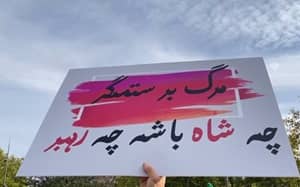
When public anger reaches a breaking point and a political system begins to lose its legitimacy, the real struggle no longer takes place only in the streets. It moves into a less visible but equally decisive arena: the battle over meaning, language, and collective perception. Italian political thinker Antonio Gramsci described this situation as a “war of position”—a moment when a ruling power, unable to rely on genuine public consent, tries to restore control by shaping how people think, speak, and imagine the future. Instead of responding to demands, it manipulates awareness and distorts alternatives. This is precisely what is happening in Iran under the rule of the velayat-e faqih regime. The repeated uprisings of recent years, culminating in the nationwide protests of January 2026, show that Iranian society has entered a new and irreversible phase. The question is no longer reform, but the end of the system itself.