

THIS PAGE WILL BE UPDATED WITH THE LATEST NEWS
UPDATE: 11:30 AM CEST
Ivanka Trump Targeted for Assassination By IRGC Terrorist

First Daughter Ivanka Trump was targeted for assassination by an Islamic Revolutionary Guard Corps (IRGC) trained terrorist in a twisted plot to avenge the president taking out his mentor, The Post has learned. Recently captured Mohammad Baqer Saad Dawood Al-Saadi, 32, made a “pledge” to kill Ivanka and even had a blueprint of her Florida home, sources claimed. The Iraqi national was allegedly targeting President Donald Trump’s family in response to the killing of Iranian military chief Qasem Soleimani in a US drone strike in Baghdad six years ago.
“After Qasem was killed, he [Al-Saadi] went around telling people ‘we need to kill Ivanka to burn down the house of Trump the way he burned down our house,’” Entifadh Qanbar, a former deputy military attaché in the Iraqi embassy in Washington told The Post.
UPDATE: 9:30 AM CEST
The Unbroken Spirit of Zahedan: How 54 Years of Sacrifice Defies the Mullahs’ Execution Machine
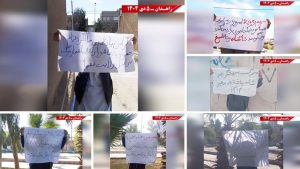
In southeast Iran, PMOI/MEK Resistance Units in Zahedan continued their weekly activities on May 22, fiercely defying the regime’s relentless wave of executions. As the regime desperately attempts to maintain its grip on power through the gallows, these activists reiterated their rejection of all forms of dictatorship and their steadfast commitment to establishing a democratic republic.
Taking to the streets in public places, they held placards with messages of defiance, such as, “Salutation to death-row prisoners, who with their steadfastness and strength inspire the youth of Iran to fight against the regime.” In a direct warning to the ruling clerics, another placard read, “The regime’s executioners must know that this ruthless bloodshed will not go unpunished.”
The Resistance Units made it clear that their struggle is a fight against any form of tyranny, blocking any attempt to hijack the Iranian revolution. In public spaces across Zahedan, activists displayed signs reading, “A dictator is a dictator, whether with a turban or a crown,” and “No to shah no to mullahs. The people of Iran desire a democratic republic.”
Iran: MP Calls for Public Floggings and Executions as Hangings Continue
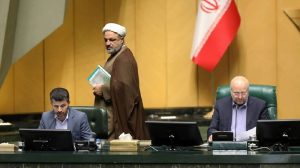 In remarks on May 21, Hamid Rasaei, a member of Iran parliament, in a state-staged rally, urged Judiciary Chief Gholam-Hossein Mohseni Eje’i to establish wartime-style courts and accelerate punishments, including public executions and floggings.
Addressing Eje’i, Rasaei said: “Mr. Mohseni-Eje’i, your launcher must fire!”
He called for what he described as “field courts” to bypass normal judicial procedures and argued that punishments should be carried out rapidly and publicly in city squares.
“Bring your courts here to the fields, here in public. Tell the people what the stage of the case is…. If the outcome is flogging, do it, if it is hanging, do it right there. Mr. Mohseni-Eje’i, your launcher must fire! It means you should do”
The comments mark one of the most explicit recent calls by a serving official for visible and accelerated punishment, but they follow months of increasingly hardline rhetoric by senior judiciary, police, and parliamentary figures.
Iran’s “6,500 Arrests” Are Not Security Measures — They Are a Blueprint for Repression

The Iranian regime is no longer attempting to hide the scale of its domestic crackdown. In recent months — particularly under the shadow of war rhetoric and heightened security tensions — authorities have intensified a policy of widespread and arbitrary arrests. What was once framed as targeted action against specific individuals has evolved into a coordinated campaign designed to spread fear, criminalize dissent, and fuse political opposition with accusations of espionage, treason, and collaboration with foreign enemies.
The clearest confirmation came from Ahmadreza Radan, the commander of the regime’s police force. Radan publicly declared that security forces had arrested more than 6,500 people since the beginning of the recent wartime climate, describing them as “traitors” and “spies.” He further claimed that 567 of those detained were linked to what he called “hypocrisy,” “thugs,” and “counter-revolutionary groups.”
The significance of these statements extends far beyond the number itself. The language used by senior regime officials reveals the real objective of the crackdown. Thousands of detainees are being branded as spies, traitors, or enemies of the state before any transparent judicial process has taken place. In practical terms, this means the regime is attempting to remove political dissent and public protest from the realm of legitimate civic activity and redefine them as national security threats.
US Prepares for Another War with the Iranian Regime
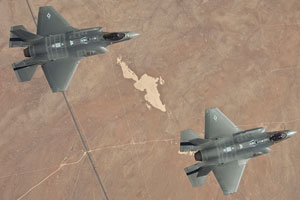
Images released from the U.S. Navy’s Carrier Strike Group 11, led by the aircraft carrier USS Nimitz, show that the strike group has been deployed in the Persian Gulf, a move that comes amid rising tensions between Washington and Tehran.
Axios news website and CBS reported that U.S. President Donald Trump held a confidential meeting on Friday, May 22, with his closest advisers in the Oval Office at the White House.
Axios, citing sources who have been in direct contact with Trump, wrote that the U.S. president is seriously considering the option of new attacks against Iran’s regime unless progress is achieved in negotiations at the last moment.
According to the report, the meeting reviewed the latest status of talks with Iran and possible scenarios in the event that negotiations fail.
CBS also reported, citing several informed sources, that a number of members of the U.S. military and intelligence agencies have canceled their vacation plans, a move that according to these sources could be related to preparations for possible new operations.
40 Million Iranians Below Poverty Line

Iran’s economy entered the year 2026 while many economists and regime-affiliated research institutions warned that the country has entered an unprecedented stage of livelihood crisis, chronic inflation, and expanding poverty. According to experts, this situation would not be easily controlled even if conflict were to stop and external pressure were to decrease.
At the “Iran Economy Outlook 2026” conference, reported by the state-run daily Donya-e-Eqtesad, economists presented a bleak picture of the country’s economic future, in which recession, inflation, unemployment, and the collapse of household purchasing power have reached a dangerous level.
Masoud Nili, a regime-affiliated economist and former government economic advisor, warned that Iran’s economy has moved beyond chronic crisis and has now entered a stage where crises are openly emerging. Citing official data from the Statistical Center of Iran, he said inflation in some sectors has exceeded 100%, and even if conflicts end and political tensions ease, Iran’s economy will not return to normal conditions any time soon.
Telecommunications Employees in Tehran Protest Four Years of Unpaid Claims
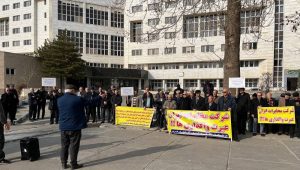
Four years of non-payment of overdue telecommunications wages have pushed employees’ livelihoods to the brink of collapse. According to a report by the state-run ILNA news agency on May 21, the Tehran Province Telecommunications Workers’ Association, in a letter addressed to the CEO of the Telecommunications Company of Iran, requested payment of the frozen monthly and annual welfare benefit differences from the past four years and their full, unconditional payment based on personnel employment regulation 89/24 from the beginning of the year. Continuing the wave of labor protests across various worker and service sectors, telecommunications employees in Tehran Province demanded payment of overdue claims and the full implementation of employment regulations.
The issue of overdue telecommunications wages has repeatedly become one of the main subjects of protests by the company’s employees in recent years. Workers say that part of their legal compensation has not been paid over the past four years, and company management has not provided a clear answer regarding when these claims will be settled.
Why the Venezuela Scenario Won’t Repeat in Iran: The Psychology of Loyalty and National Survival
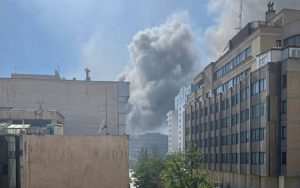
Why Iran is not Venezuela cannot be understood through conventional regime-collapse models alone. The country’s political structure, historical memory, and psychology of loyalty have created dynamics fundamentally different from those seen in Latin America.
Any major policy built without an accurate understanding of realities on the ground is ultimately doomed to fail. For years, Western analysts have viewed the Middle East through their own traditional frameworks, applying formulas that worked elsewhere directly to Iran. One of the most common analytical mistakes has been comparing the structure of the Islamic Republic to countries like Venezuela or to earlier classical authoritarian regimes. To understand why the Venezuelan model does not function in Iran — and why external pressure on a government does not automatically produce a popular uprising — the dynamics of power must be dissected through the lenses of social psychology, political sociology, and the logic of economic survival.
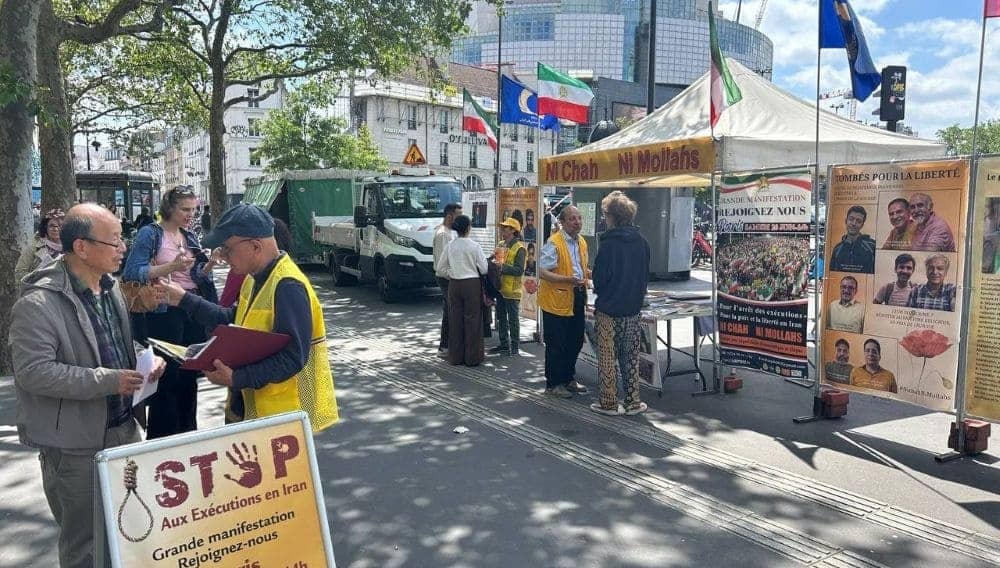
Supporters of the Iranian Resistance in Melbourne Condemn Executions and Call for Global Action
On May 22, 2026, supporters of the Iranian Resistance in Melbourne, Australia, organized a book stall and photo exhibition to protest the execution of political prisoners linked to the PMOI and demonstrators detained during the January 2026 uprising. The event voiced support for the nationwide “No to Execution” campaign, urged immediate international action against the regime’s continuing human rights abuses, and called for the unconditional release of all political prisoners.

Participants condemned the Iranian regime’s actions, denouncing the executions as blatant violations of human rights. They called for democratic change in Iran and urged the Australian government to take a firm position against the regime’s ongoing abuses.