

THIS PAGE WILL BE UPDATED WITH THE LATEST NEWS
UPDATE: 8:30 PM CEST
‘The Blood of Iran’s Martyrs Calls Out for Justice’

Edmund Burke famously said, “The only thing necessary for the triumph of evil is for good men to do nothing.”
For over fifty years, I have worked on human rights—from building cases in the former Yugoslavia to witnessing the dirty war in Argentina and apartheid in South Africa. I have learned to read the language of dying regimes. They do not announce their fear in press conferences; they write it on the gallows.
In a joint statement this week, 30 archbishops, bishops, and rabbis stressed:
“Iranian authorities have exploited the climate of war as a cover for intensifying repression and suppressing growing dissent inside the country, with dozens executed following unfair trials and coerced confessions. The head of the judiciary has publicly called for expedited rulings and, by setting aside legal safeguards and due process, has accelerated the issuance and implementation of death sentences.
A significant number of those executed have been targeted because of their affiliation with the opposition organization, the People’s Mojahedin Organization of Iran (PMOI/MEK). Many other detainees associated with this organization remain on death row. The victims were young protesters arrested during the January uprising.”
Should FIFA Allow a Terrorist-Controlled Regime to Play the World’s Game?
LOS ANGELES, Calif. – June 10, 2026 — As the world’s attention turns to the opening days of the 2026 FIFA World Cup, the U.S. Representative Office of the National Council of Resistance of Iran (NCRI-US) held a press conference and exhibition on the South Lawn of Los Angeles City Hall, calling on FIFA to expel the Iranian regime for systematic political interference by the Islamic Revolutionary Guard Corps (IRGC), widespread repression of athletes, and persistent violations of FIFA’s own statutes.
The event brought together former Iranian national team players, championship athletes, youth representatives, and members of the Iranian-American community. It featured hundreds of photographs and displays honoring Iranian athletes who were persecuted, imprisoned, and executed for supporting democratic change in Iran. Participants honored the athletes who had fallen for freedom by laying flowers and holding their pictures during a march.
The Iranian Crisis Has a Solution — What Responsibility for Europe?
The Iranian regime is not only holding its own people and freedom in the country hostage; through threats to block the Strait of Hormuz, it is also holding part of the global economy and European security hostage. But the problem extends far beyond the Strait itself. The real issue is a regime whose survival depends on domestic repression, terrorism, hostage-taking, and regional destabilization.
Tehran is making a strategic miscalculation. Its leaders believe that because they survived the war, they emerged stronger and can now use the current crisis, the threat of closing the Strait of Hormuz, and the atmosphere of war to impose their terms on Western countries and regional states. But genuine strength is different from the appearance of power. A regime that has driven its society into poverty, economic crisis, and oppression cannot become a stable regional power.
Europe is fully justified in being concerned about freedom of navigation through the Strait of Hormuz. Ursula von der Leyen has likewise stressed that any agreement must contribute to de-escalation and guarantee free navigation. Yet one fact remains: as long as this regime remains in power, the nuclear threat, regional instability, and terrorism will persist.
The fundamental problem with Western policy over the past four decades has been its fixation on two false options: appeasement, based on the hope of a “change in the regime’s behavior,” or war. Neither approach has achieved its objectives. More than twenty years of negotiations and concessions have neither moderated the regime nor stabilized the region. Meanwhile, the experiences of Iraq and Libya have demonstrated that military intervention does not automatically lead to freedom or lasting stability.
UPDATE: 7:30 AM CEST
Professor Jean Ziegler: The Awakened Conscience of Modern Humanity
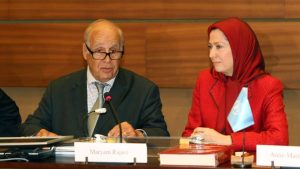
Mrs. Maryam Rajavi’s message: “I offer my deepest condolences on the sorrowful loss of Professor Jean Ziegler, the awakened conscience of modern humanity, an eminent thinker, a fierce defender of freedom and human rights, and a great friend of the Iranian Resistance. My heartfelt sympathies go out to all freedom-lovers, the people of Switzerland, his dear wife Érika, his family, and his admirers.
“Jean Ziegler is a name and face well known to the people of Iran. For 55 years, through the most complex circumstances, he stood in solidarity and empathy with the Mojahedin and the Iranian Resistance. His invaluable and impactful efforts alongside Prof. Kazem Rajavi in the 1970s to secure the freedom and save the life of Massoud [Rajavi] from execution will forever endure in the history and memory of the Iranian people.
“He was among those prominent figures who spoke out with a resounding voice to defend the Mojahedin in Camp Ashraf, Iraq, against the siege and criminal attacks by the terrorist Quds Force and the puppet government of Maleki, playing an effective and unforgettable role in their protection.”
Protesters Call on FIFA to Kick Iran Out of World Cup, Citing Regime Involvement
LOS ANGELES, June 10 (Reuters) – Instead of pride, many Iranian-Americans feel shame about the Iran team’s participation in the World Cup and are demanding that FIFA boots the country out of the competition, protesters said on Wednesday.
The team’s presence is outraging many who see the Iranian government as using the competition as a way to sportswash its killing tens of thousands of dissidents since the 1979 Islamic Revolution, with many thousands killed as recently as during widespread protests in January. Those deaths have included hundreds of athletes, protesters said.
“Bringing them here and having them play basically presents a calm face to the world, when in fact back home there is no calmness, there’s only execution and suffering that the regime has brought,” said 21-year-old American-born Ryan Salami, whose parents both fled Iran, in an interview at a protest in front of L.A. City Hall.
Many protesters backed the National Council of Resistance of Iran’s call to dump Iran out of the tournament. Photographs of dozens of Iranian athletes who died in government custody were spread in an impromptu open-air gallery in front of Los Angeles City Hall. Speakers including a number of former Iran national team players mourned athletes who they say died after crossing the government and being taken into custody.
Conference at the UK Parliament: Peace and Freedom with a Democratic Republic
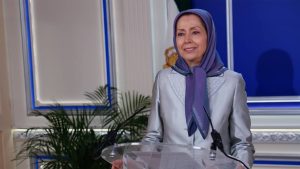
Mrs. Maryam Rajavi’s speech: “Today, Iran stands at a critical moment between fear and hope. The regime’s policies of war, repression, and plunder have brought severe hardships to the daily lives of our people.
Families cannot buy their daily food and medicine. With each passing week, job losses are increasing. Above all, women are the main victims of these combined pressures. However, the prospect of change gives people hope. The regime is trying to prevent the collapse of repression and fear through executions, detentions, street checkpoints, and internet shutdowns. Recently, the Commander of the State Security Force announced the arrest of 6,500 people including many supporters of the People’s Mojahedin Organization of Iran.
“Despite this intense repression, the Resistance Units have continued their activities against the regime’s centers of suppression in recent weeks. They are the living hope for change in Iran. Five days before the war began, Liberation Army units in Tehran launched an attack on Khamenei’s headquarters. Despite the regime’s efforts to cover up this news, their own experts have recently admitted that this event took place.”
Iran’s Regime Is Escalating Its War on Political Prisoners

While global attention often shifts, the clerical regime in Iran is waging a silent, brutal war behind the walls of its dungeons, systematically targeting political dissidents and female prisoners. Reeling from the massive nationwide uprisings of December 2025 to January 2026, the mullahs are escalating their domestic crackdown.
Far from a display of authority, the recent wave of draconian prison sentences, psychological abuse, and the systemic torture of uprising detainees is a desperate reaction by a deeply fractured regime terrified of its own people and the organized Resistance.
The regime frequently uses isolation to break the spirit of female political prisoners. In Evin Prison, authorities have recently intensified pressure by cutting off the telephone access of several prominent female detainees. This includes Shiva Esmaeili (60, sentenced to 10.5 years), Marzieh Farsi (59, sentenced to 6 years), Forough Taghipour (32, sentenced to 6 years), Zahra Safaei (63, sentenced to 5 years), Elaheh Fouladi (sentenced to 5 years), Golrokh Iraee (sentenced to 6 years), and Sakineh Parvaneh (sentenced to 6 years).
Iranian Political Prisoner Parisa Kamali Sends Defiant Message from Behind Bars

Deep inside the Iranian regime’s dungeons, the flame of freedom continues to burn bright. Parisa Kamali Ardakani, a political prisoner currently serving an eight-and-a-half-year sentence, has released a powerful, smuggled audio message from behind the bars of Yazd Central Prison. She was arrested on April 29, 2024, in Isfahan and initially held in Dowlatabad Prison before facing three separate cases brought against her in Isfahan and Ardakan. In 2025, Kamali was transferred to internal exile at Yazd Prison. Her charges include insulting Ali Khamenei, engaging in propaganda activities against the system, and membership in the People’s Mojahedin Organization of Iran (PMOI). In her message, she exposes the brutal reality of the prisons, stating: “Cardboard rulers rule here… Screams are answered with bullets and the hangman’s noose.”
As Kamali points out, the regime’s use of the death penalty is a desperate authoritarian response to the public’s demands for justice. The mullahs are currently exploiting wartime conditions to carry out a relentless wave of executions, attempting to block the path of future popular uprisings. Since the start of the war, the regime has been executing political prisoners one after another. This includes eight members of the PMOI’s Resistance Units and more than 20 young people who took part in uprisings or fought against the Revolutionary Guards (IRGC).
Religious Leaders Urge Action Against Political Executions in Iran
Thirty bishops and religious leaders from around the world have issued a joint statement calling for an end to political executions in Iran and greater protection for religious minorities, particularly Christians.
A group of 30 bishops and religious leaders from multiple countries has issued a joint statement titled “To Stop the Wave of Political Executions in Iran – In Support of the Rights of Religious Minorities,” warning of a worsening human rights situation in Iran and calling for international action to halt political executions and defend religious freedom.
Among the signatories is Rowan Williams, who wrote: “There can be no doubt that the aggressive violence of the Iranian regime towards its own people is increasing steadily at the moment. I have heard for myself the evidence sent from within Iranian jails of the cruelties and illegalities suffered by so many, and of the profound and selfless courage exhibited by these witnesses to a more hopeful future.”
Iran Escalates Crackdown on Students as Universities Face New Wave of Repression
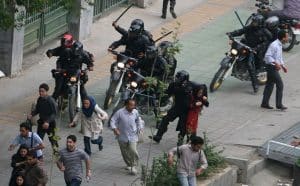
As Iran grapples with deepening political, economic, and social crises, increasing attention has focused on the regime’s treatment of university students. While public discourse is often dominated by discussions of war, regional tensions, and diplomatic negotiations, recent developments inside Iranian universities suggest that authorities remain primarily concerned about growing domestic discontent and the possibility of renewed social unrest.
Reports from multiple universities indicate a sharp increase in disciplinary actions against students, including summonses, suspensions, and expulsions. According to accounts published in the Iranian newspaper Tose’e Irani, disciplinary committees have expanded their activities across campuses, targeting students involved in protests, activism, or expressions of dissent.
Students and observers describe a growing atmosphere of intimidation inside Iran’s universities. The regime has increasingly relied on disciplinary committees as a tool to suppress student demands and limit political expression.
Iran’s Oil Exports Plunge to Six-Year Low Amid U.S. Naval Blockade
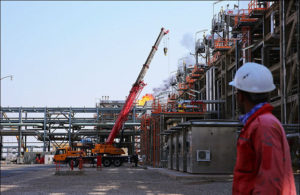
Iran’s oil exports fell to their lowest level in at least six years in May, according to shipping data and assessments by energy analysts, dealing a major blow to one of the regime’s most important sources of revenue. The sharp decline comes in the wake of a U.S.-enforced naval blockade that has significantly restricted the regime’s ability to export crude oil and condensates.
The United States began implementing the blockade on April 13, targeting vessels entering and leaving Iranian ports. The measure has dramatically curtailed Iranian oil shipments at a time when regional energy markets are already facing supply pressures caused by the closure of the Strait of Hormuz and reduced exports from Saudi Arabia, Kuwait, Iraq, and the United Arab Emirates.
According to a report by Reuters, data from energy analytics firm Vortexa shows that Iran exported an average of just 209,000 barrels of crude oil and condensates per day in May. This represents a dramatic decline from 1.34 million barrels per day in April and nearly 1.9 million barrels per day in March.
Vortexa noted that the May figure marks Iran’s lowest export level since late 2019 and early 2020, when U.S. President Donald Trump pursued his “maximum pressure” campaign against the Iranian regime during his first term in office.
The Gallows: The Real Story of Iran Behind the Oslo Ceremony
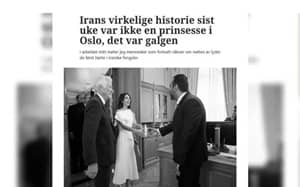
In an article published on June 8, the Norwegian newspaper Fædrelandsvennen sought to draw public attention to a different issue—one that, in its view, represents the reality of Iran today more than any other event: the “gallows.”
At the beginning of the article, the author refers to years of work and contact with Iranian refugees and activists. These are individuals who, after leaving Iran, now live in Norway but still carry memories of interrogations, imprisonment, and security pressures. According to the author, many of them continue to live with the psychological effects of years of repression, and their experiences show that Iran’s regime has not only targeted human lives but has also sought to destroy hope and the future.
In the article, the author refers to a ceremony in Oslo where Noor Pahlavi, granddaughter of the ousted shah, was welcomed by attendees. The event received media coverage and included discussion of the legacy and continuity of the Pahlavi family. However, the author argues that while these images were being highlighted, another reality was unfolding in Iran—a reality that, according to the author, was overshadowed by media attention.
Lebanese President Expresses Clear Opposition to Iran’s Regime

Recent remarks by Lebanese President Joseph Aoun regarding the role of Iran’s regime in developments in Lebanon have received widespread coverage in regional and international media. At a time when Lebanon continues to struggle with the consequences of war, economic crisis, and political tensions, he accused Tehran of using Lebanon as a tool to advance its objectives in negotiations with the United States.
According to a Reuters report published on June 6, Joseph Aoun stated that using Lebanon as a bargaining chip in foreign negotiations is unacceptable. He emphasized that the Lebanese people are paying the price for wars and conflicts that have no connection to the country’s national interests.
In his remarks, Lebanese President Joseph Aoun said that Lebanese citizens are paying the cost of war for Iran’s interests. He added that the Lebanese people are exhausted by the conflict between Israel and Hezbollah and that the continuation of this situation has placed a heavy burden on the country’s society and economy.
The Silent Collapse: Why 8 Out of 10 Iranian Medical Residents Plan to Leave
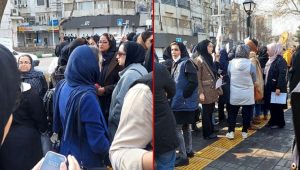
Tehran — Field reports and official statistics indicate that the country’s healthcare system is facing an unprecedented human resources crisis—a crisis shaped by a heavy combination of systematic economic exploitation, the sharp decline of the national currency, and deep structural ambiguities in the distribution of financial resources.
According to survey data previously cited by officials from Iran’s Medical Council Organization, nearly 80 percent of medical residents either have a strong desire or a serious plan to emigrate after completing their training. To understand why Iran medical brain drain has reached the point where “8 out of 10 medical residents in Iran are considering leaving,” it is necessary to take a closer look at compensation levels, tariff structures, and documents recently obtained from the capital’s healthcare sector.
Paris Exhibition Highlights Human Rights Crisis in Iran, Calls for June 20 Paris Free Iran Rally
Paris, France – June 9, 2026 – Supporters of the People’s Mojahedin Organization of Iran (PMOI/MEK) held an exhibition protesting the execution of political prisoners and demonstrators in the aftermath of the January 2026 uprising. The event highlighted growing calls for freedom, justice, and the protection of human rights in Iran.

Organizers also issued a clear call to action, urging freedom-loving Iranians and international supporters to join the Paris Free Iran Rally on June 20, which is expected to draw more than 100,000 participants. Held under the slogan “A Democratic Republic for Iran,” the rally rejects both monarchical and theocratic dictatorships, advocating a third alternative based on democracy, popular sovereignty, and the Iranian people’s right to determine their own future.