


THIS PAGE WILL BE UPDATED WITH THE LATEST NEWS
UPDATE: 06:00 PM CET
Iran’s Dead Have Been Erased and the Silence Is a Moral Disgrace

While the world’s cameras swivel obediently from one geopolitical spectacle to the next, the blood on Iran’s streets has barely dried and already it has been forgotten. Donald Trump’s fixation on Greenland, his self-appointed “Board of Peace” for Gaza, and his pledge to end the war in Ukraine have consumed the international media cycle. Meanwhile, in Iran, thousands of unarmed protesters have been slaughtered, tens of thousands dragged into prisons, and many now face imminent execution after sham trials that would shame the darkest dictatorships of the 20th century. Yet there are no rolling headlines, no mass demonstrations, no anguished moral outrage.
Iran Protest Death Toll Seen Rising to Many Thousands

The number of people reported killed in Iran’s protest crackdown has surged as rights groups continue to verify suspected fatalities, with one United Nations special rapporteur saying the total could be more than 20,000.
The US-based Human Rights Activist News Agency said it’s verified 5,002 deaths during the unrest that erupted in late December. The group is reviewing a further 9,787, while more than 26,000 people have been arrested, it said.
UPDATE: 08:00 AM CET
Day 27 Of Iran Uprising: Massacre Reported in Kermanshah; Rasht in ‘War Zone’ Conditions

The nationwide uprising against the religious dictatorship in Iran has reached its twenty-seventh day on Friday, January 23, 2026. Reports smuggled out from behind the regime’s digital iron curtain reveal harrowing atrocities. While the brave people of Zahedan faced a heavy military siege around the Makki Mosque, shocking details emerged of a massacre in Kermanshah and urban warfare in Rasht. Day 27 Roundup: Atrocities in Kermanshah stadium, siege in Zahedan, and IRGC admits to “Lightning Operation”. On Friday, January 23, 2026, the regime’s brutality reached new lows with reports of mass killings and organ harvesting, while the international community continued to isolate the mullahs.
Video Reveals Women and Girls Shot in the Head and Heart in Iran

According to shocking reports that have leaked out of Iran, the deliberate targeting of women and girls protesting in the streets, aiming directly at their heads and hearts, has emerged as one of the most horrifying dimensions of the regime’s organized crackdown on recent demonstrations. A verified video shows at least ten women and girls lying on the ground in a single scene, struck by fatal gunshots to the head, eyes, and heart. The footage captures the lifeless or critically wounded bodies of women whose only “crime” was their presence in the streets and their participation in protests. All the women visible in the video are unarmed, and there is no evidence of any armed confrontation on their part.
Iranian Resistance Supporters Rally in Strasbourg as EU Parliament Backs Nationwide Uprising

Strasbourg, France — January 22, 2026: Supporters of the People’s Mojahedin Organization of Iran (PMOI/MEK) gathered outside the European Parliament in Strasbourg to show solidarity with the nationwide uprising in Iran and call for international action against the mullahs’ regime.
Riddled with Bullets in Fardis, Karaj

During the nationwide uprising of January 2026, streets across Iran turned into scenes that will remain etched in collective memory; bodies lying on asphalt, families searching in darkness for traces of their loved ones, and an imposed silence through internet shutdowns to muffle the sound of gunfire. Among these cities, Fardis in Karaj stands out as one of the bloodiest examples of repression. There, direct live fire, execution-style shots to the wounded, and coercion of families revealed the naked face of organized violence. What follows is a field-based account of those days; drawn directly from eyewitness testimony, unfiltered and without embellishment. According to direct eyewitness accounts, as protests intensified, Fardis became fully securitized. The massive presence of people in the streets, severe clashes, and the combat deployment of security forces transformed the city into a scene resembling all-out war.
Iran at a Tipping Point Amid Protests as Europe Condemns Crackdown

The European Parliament issued a forceful resolution condemning Iran’s violent suppression of nationwide protests, signaling rising international concern as the country confronts one of its most turbulent periods in decades. Lawmakers in Strasbourg called on Tehran to end the crackdown, halt executions, and release detained protesters and journalists, underscoring widespread alarm over what they described as systematic abuses against civilians. In a resolution adopted on January 22, members of the European Parliament expressed outrage at the Iranian government’s use of force against peaceful demonstrators and arbitrary killings, describing the situation as a profound violation of human rights. The resolution passed by an overwhelming majority, with lawmakers calling for an immediate end to violence and urging expansion of EU sanctions contingent on improvements in democratic rights and rule of law.
Iran: Three Days of Life Among Piled-Up Corpses in Kahrizak
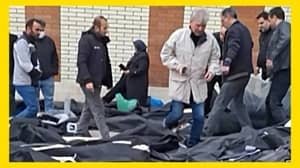
According to a report published by the Iran Human Rights Center, a family searched for their child for three consecutive days during the nationwide protests; a young man who had left home to participate in the demonstrations and never returned. In a state of complete uncertainty, the family first searched various hospitals, then went to Behesht-e Zahra, Tehran’s main cemetery, and eventually their search led them to Kahrizak, a site where horrifying images of large numbers of slain protesters’ bodies had simultaneously circulated widely on social media and in some media outlets.
Why Iran’s January 2026 Uprising Was Inevitable

What unfolded on the streets of Iran in January 2026 was neither a spontaneous incident nor an emotional outburst destined to fade quickly. It was the predictable outcome of two long-standing and deeply rooted crises—economic collapse and political repression—that have steadily eroded Iranian society for years. Together, these crises widened the gap between a ruling minority and the vast majority of the population to such an extent that a social explosion became unavoidable. Over the past decade, Iranians have been confronted with a harsh and undeniable reality: widespread poverty, the gradual elimination of lower-income and middle-class groups from any form of normal economic life, and the concentration of wealth and privilege in the hands of a small network closely tied to the ruling system. Millions have been pushed below subsistence levels, while national resources are diverted to preserve a closed, corrupt power structure centered on the doctrine of Velayat-e Faqih—the rule of the Supreme Leader.