

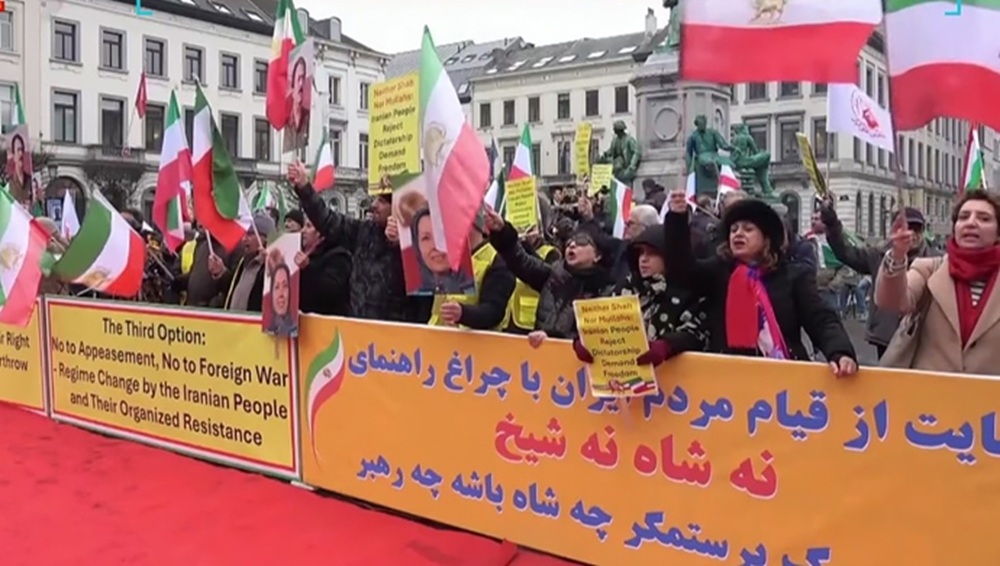
THIS PAGE WILL BE UPDATED WITH THE LATEST NEWS
UPDATE: 04:00 PM CET
Iran’s Third Option: The Strategic Significance of Organized Resistance

As a scholar of conflict resolution who has studied regime transitions across regions and political systems, I have learned to distinguish between what is visible and what is viable. In Iran today, that distinction has become decisive. The future of any democratic transition will depend less on media-recognized personalities and more on whether opposition forces can sustain organization under repression. Outcomes will be shaped by networks that can coordinate, endure, and convert public courage into strategic capacity.
Recent European diplomatic commentary increasingly describes the Islamic Republic as a system entering structural fragility, with some assessments comparing it to the Soviet Union between 1989 and 1991: strategically diminished, economically depleted, and ideologically exhausted. That assessment is difficult to dismiss. But the more consequential question is not whether the regime is weakening. It is what determines the outcome if weakening turns into rupture and collapse.
Starmer Under Pressure to Follow EU On IRGC Ban

The European Union is to proscribe the Islamic Revolutionary Guard Corps (IRGC) as a terrorist organisation, piling pressure on Britain to follow suit. EU foreign ministers are meeting in Brussels on Thursday and are expected to agree on placing the military group, which is loyal to the Iranian regime, on its list of terror groups.
The move was made possible after Emmanuel Macron, the French president, swung behind the plans on Wednesday night. Iran had warned on Tuesday of “devastating consequences” should the EU follow through with a ban.
Maryam Rajavi, the NCRI’s leader, said: “The IRGC is the regime’s central instrument of violence and repression, and the principal vehicle for the export of terrorism, fundamentalism, and regional warmongering. Its designation as a terrorist organisation is at least three decades overdue. More than four decades of appeasement and protracted debate are enough.”
UPDATE: 12:30 PM CET
The European Union Is Late

On the eve of the European Union Council of Ministers meeting on Thursday, January 29, Maryam Rajavi, President-elect of the National Council of Resistance of Iran, stated that the people and Iranian Resistance, bearing the memory of countless martyrs, are anxiously awaiting the European Union’s decision to designate the Islamic Revolutionary Guard Corps (IRGC) as a terrorist organization, with the unanimous consent of all member states and the alignment of other European countries with this decision.
The IRGC is the regime’s central instrument of violence and repression, and the principal vehicle for the export of terrorism, fundamentalism, and regional warmongering. Its designation as a terrorist organization is at least three decades overdue.
More than four decades of appeasement and protracted debate are enough. The decision to designate the IRGC, an institution synonymous with ignorance and crime must no longer be delayed.
Iranian Resistance Backs EU Plan to Label Revolutionary Guards ‘Terrorists’
The National Council of Resistance of Iran (NCRI) has backed the European Union’s move to put the Iranian Revolutionary Guards (IRGC) on the “terrorist list” after a deadly crackdown on mass protests.
Speaking ahead of a meeting of EU ministers in Brussels, the bloc’s foreign policy chief Kaja Kallas said: “If you act as a terrorist, you should also be treated as a terrorist.”
Shahin Gobadi, a member of the NCRI’s foreign affairs committee, told Brussels Signal that the decision was long overdue. “We have been pushing for this for a long time. In our view, the decision is at least three decades late,” he said.
UPDATE: 08:00 AM CET
Iran Uprising: PMOI Identifies Over 1,000 Martyrs as France and Germany Move to Blacklist IRGC

In a major development on the continuation of Iran’s nationwide uprising, the People’s Mojahedin Organization of Iran (PMOI/MEK) published the names of hundreds of additional martyrs, bringing the confirmed identities of the victims of the regime’s brutality to over 1,000. Simultaneously, diplomatic pressure on the regime is intensifying, with leaders in Germany and France signaling the imminent terrorist designation of the IRGC, acknowledging that the mullahs’ grip on power is crumbling.
Key developments from the uprising and the international front include:
- Over 1,000 Martyrs Identified: The PMOI announced the names of 224 more martyrs, bringing the total number of identified victims to 1,005. The new list includes 25 women and 21 children and adolescents.
- European Shift on IRGC: France has thrown its support behind designating the IRGC as a terrorist organization, while German Chancellor Friedrich Merz declared that the regime’s days are “counted.”
Adelabad Prison in Shiraz: Women Prisoners Face Critical Conditions after 2026 Iran Protests

In the aftermath of the violent crackdown on the nationwide protests of 2026, alarming reports have emerged regarding conditions in the women’s ward of Adelabad Prison in Shiraz. According to first-hand accounts from inside the prison, a large number of detainees arrested during the Shiraz protests have been transferred to this ward, an influx accompanied by unprecedented overcrowding, severe shortages of basic necessities, prolonged disruption of contact with families, and widespread violations of prisoners’ rights. Available evidence indicates that these conditions are a continuation of the same repression carried out against protesters on the streets, now imposed inside detention facilities with the apparent aim of breaking detainees’ morale.
The Silence-Kill Protocol

While it has become a consistent pattern for Iran’s religious dictatorship to cut off the internet to cover up widespread suppression, it must be noted that in the recent uprising—the internet has yet to return to normal. According to Fatemeh Mohajerani, the spokesperson for the Iranian government, international internet access will not be restored until at least Nowruz (late March). This prolonged internet blackout indicates that the massacre has not ended; rather, its form may have shifted from street killings to executions within prisons. This Information Blackout serves as a tool to create an isolated “darkroom,” allowing the regime to carry out the second phase of its atrocity without witnesses. In the month of Day of Persian calender of this year (from December 22, 2025, to January 20, 2026), coinciding with the nationwide uprising, at least 345 prisoners were hanged in 57 cities across Iran.
Unidentified Bodies and Mass Graves in Iran’s Two-Day Bloodbath

The findings of an extensive investigation conducted by The Guardian recount the catastrophic dimensions of the bloody crackdown on Iran’s nationwide and national uprising in January 2026. The report, presenting horrific evidence of mass killings, the collapse of the healthcare system, and mass graves, shows how the Iranian regime, under the cover of a complete internet shutdown, turned Iran into a killing ground over the course of two days. According to The Guardian’s report, the wave of violence sharply escalated starting on Thursday, January 8, reaching dimensions unprecedented in Iran and possibly in contemporary world history.
Iranian State TV Admits Regime’s Central Conflict Is With the PMOI, Linking 2026 Uprising to Early Post-Revolution Resistance
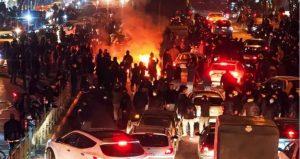
State media narratives reveal the clerical regime’s long-standing confrontation with the People’s Mojahedin Organization of Iran, drawing explicit parallels between the 1980s repression and the January 2026 nationwide uprising. In a revealing broadcast aired on January 25, 2026, Iran’s state television once again underscored what has been a central reality since the establishment of the Mullahs regime: the regime’s defining political and security confrontation is with the People’s Mojahedin Organization of Iran (PMOI/MEK). The program—presented as a documentary and produced by Javad Moghouli, a filmmaker closely associated with Iran’s intelligence and security apparatus—openly framed the January 2026 nationwide uprising as a continuation of the resistance that began shortly after the 1979 revolution, particularly during the repression of the 1980s.