

THIS PAGE WILL BE UPDATED WITH THE LATEST NEWS
UPDATE: 2:00 PM CET
250 British Politicians Demand UN Prosecutes Iran Ayatollah for Genocide of Own People

CALLS were growing today for the UN-backed international prosecution of Iran’s theocracy, and leader Ayatollah Ali Khamenei, after it was revealed Tehran was responsible for three-quarters of the world’s state-sponsored murders.
More than 250 British politicians, including Iain Duncan Smith, Bob Blackman, and Roger Gale, joined an international call for the leaders to be charged with crimes against humanity for historic and ongoing political executions running into many thousands.
Iran has been ruled by a religious dictatorship since the Islamic Revolution of 1979. In their statement, the cross-party signatories condemn the regime’s systematic use of the death penalty to target dissidents and detained demonstrators – a political weapon it has used with impunity for 45 years.
Iran ‘Carried Out A THOUSAND Executions In 2024’ – with Prisoners Also Forced to Have Fingers Amputated or EYES Gouged out – ‘In Bid to Suppress Uprising’

Iran brutally carried out at least a thousand executions in 2024 as its ruthless leader Ali Hosseini Khamenei attempts to clamp down on political dissidence, it has been claimed.
According to the National Council of Resistance of Iran, an opposition group that calls for the overthrow of the Islamic Republic, the killings carried out at the hands of the government took place across 86 prisons.
The toll of those executed in 2024 includes 34 women and seven minors and is the highest figure recorded in over three decades.
Iran Executes Over 1K Prisoners In 2024, Highest Total In 30 Years Report Says

The Islamic Republic of Iran executed over 1,000 prisoners in 86 prisons across the country in 2024, according to a report by the National Council of Resistance of Iran (NCRI). The report says the death toll is “an unprecedented figure in the past three decades,” and represents an increase of 16% from the 864 executions conducted in 2023.
Most of the regime’s executions took place in the latter half of the year. Almost 70% occurred after the July election of President Masoud Pezeshkian. About 47% took place in the fourth quarter of 2024 when the regime “faced severe defeats in the region and mounting economic and social crises,” the NCRI said.
Maryam Rajavi, the president-elect of the NCRI, said that the series of executions represent a “desperate attempt to prevent the uprising of an angry populace who will settle for nothing less than the regime’s complete overthrow. These medieval crimes, however, double the resolve of Iran’s youth to topple the religious dictatorship.”
UPDATE: 7:00 AM CET
PMOI Resistance Units Reiterate Commitment to Struggle For Freedom and Democracy
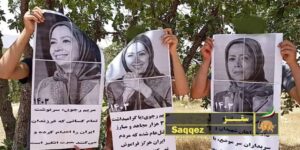
In a clear demonstration of coordinated efforts and unwavering determination, the Resistance Units affiliated with the People’s Mojahedin Organization of Iran (PMOI/MEK) have carried out a series of activities across multiple Iranian cities, underscoring their steadfast resolve to fight for freedom and democracy. These actions, spanning diverse regions, highlight the organizational capacity and the depth of dissatisfaction within the country.
The message of the Resistance Units was clear: as long as this regime remains in power, the struggle for freedom will continue. Their slogans, prominently displayed in various cities, called for change and reaffirmed their commitment to democratic principles.
In Rasht, banners with the phrase “Death to the oppressor, whether the Shah or the mullahs” were hung, expressing an unequivocal rejection of the current theocratic regime and any return to authoritarian monarchy. Similar messages were seen in Karaj, where banners carried the slogan “Women, Resistance, Freedom,” reflecting a broad-based message supporting the role of women in the fight for liberty.
Voices from the Noose: Iran’s Struggle Against Oppression

In the shadowed corridors of Iran’s so-called Revolutionary Courts, a grim tableau of injustice unfolds—a chillingly familiar yet increasingly dire scenario as Tehran escalates its suppression of dissent through the machinery of death. Recently, six political prisoners—Abolhassan Montazer, Pouya Ghobadi, Vahid Bani-Amerian, Babak Alipour, Ali Akbar Daneshvarkar, and Mohammad Taghavi—were sentenced to execution. This decision epitomizes a regime’s brutality and its paranoia-fueled desperation to crush resistance.
The international community watches, often with detached concern, as Iran perpetuates its legacy of human rights abuses. The charges against these six men—ranging from membership in prominent Iranian opposition groups to “armed rebellion against the government”—are severe and emblematic of a broader campaign to criminalize dissent and legitimize draconian punishments. These individuals, professionals in their fields and defiant in their resistance to the regime’s brutality, embody the resilience of a populace yearning for change but shackled by autocratic power.
The Crisis in Iran’s Shared Oil and Gas Fields

Due to its geographical position and massive oil and gas reserves, Iran is one of the key energy players in the world. Iran holds 10% of global oil reserves and 18% of the world’s natural gas reserves. Forty-two percent of Iran’s gas reserves are shared with Saudi Arabia, Kuwait, Azerbaijan, Turkmenistan, and Qatar, while 14% of its oil reserves are shared with Saudi Arabia, Azerbaijan, the UAE, and Iraq.
On September 1, 2022, the Iran Think Tanks website wrote, “In more detail, Iran possesses 30 shared hydrocarbon fields, including both oil and gas, with Iraq, Saudi Arabia, Kuwait, Qatar, the UAE, Oman, and Turkmenistan. These include 13 fields in the Persian Gulf, two in the Caspian Sea, and 15 on land. South Pars, the world’s largest gas field, and the giant Azadegan oil field are among the prominent fields in this list.”
The Iranian Regime’s Dual Strategy Amidst Crisis
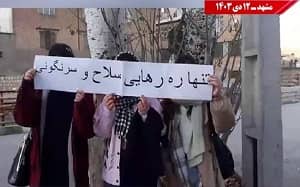
The Iranian regime faces an unprecedented crisis threatening its continued survival. In response, the government has adopted a dual strategy: attempting to mend international relations while implementing repressive domestic policies masked as reforms.
On the international stage, Tehran has been sending repeated signals to Western countries, seeking negotiations to alleviate sanctions and escape isolation. This approach is aimed at restoring the regime’s shaky legitimacy. However, these overtures are seen by many as a tactical move rather than a genuine effort to engage constructively with the global community.
Domestically, the regime has temporarily suspended the compulsory hijab law and lifted filters on platforms such as WhatsApp and Google Play. These actions are framed as steps toward reform but appear designed to pacify public anger and create a facade of change. Beneath this veneer, the regime continues its repressive policies, as evidenced by a surge in executions and the passage of restrictive legislation.
Iran Grapples with Mounting Economic and Social Crises

The Iranian regime has ushered in the new year (2025) facing a weakened regional position, an escalating economic crisis, widespread dissatisfaction across multiple sectors, and severe public anger. Ordinary Iranians are acutely feeling the impact of rising inflation, a devaluing national currency reduced purchasing power, and increased tariffs on essential utilities such as water, electricity, and gas.
After nearly two years of withholding data, the Central Bank of Iran (CBI) resumed publishing inflation statistics, claiming an annual inflation rate of 36.3% in December, with point-to-point inflation at 33.8% and monthly inflation at 1.7%. However, these figures differ significantly from those of the Iranian Statistics Center, a discrepancy that has not gone unnoticed by domestic media.
Dentist in Tehran Arrested After Beating by Security Forces
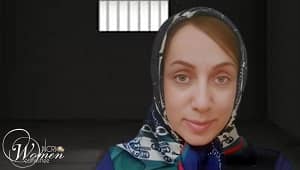
Farzaneh Mohammadi Parsa, a dentist originally from Abadan and residing in Tehran, was violently arrested by Iranian security forces on Wednesday, December 25, 2024, at her home. Without presenting any judicial warrant, the agents forcibly detained her, subjecting her to physical assault before transferring her to an undisclosed location. Nine days after her arrest, no information about her whereabouts or condition has been made available. Her family’s efforts to determine her fate have yielded no results.
Farzaneh Mohammadi Parsa had previously been detained and threatened by security forces for opposing mandatory hijab laws and sharing posts about boycotting Iran’s presidential elections. She was released then after signing a written pledge.
Denied Medical Care: Political Prisoner Maryam Jalal Hosseini in Fardis Prison
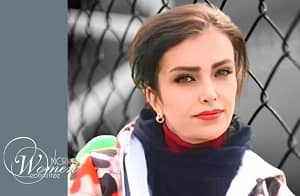
Maryam Jalal Hosseini, a political prisoner held in Fardis Prison (aka Kachouii) in Karaj, is suffering from severe gastrointestinal and dental problems. Despite repeated requests for medical attention over the past year, prison authorities have consistently denied her treatment.
A source close to her family revealed that prison doctors merely prescribe syrup for her gastrointestinal issues, which is insufficient given her condition. Her requests for dental care have also been repeatedly ignored.
Maryam Jalal Hosseini was first arrested on May 9, 2023, during widespread teachers’ protests in Tehran. Initially detained at the police security headquarters, she was transferred to Qarchak Prison in Varamin. After her release on bail on June 12, 2024, she was rearrested and sent to Fardis Prison in Karaj.
Quds Force Commander Calls For “Retribution” Against Trump for Qasem Soleimani’s Death

Iraj Masjedi, deputy coordinator of the Quds Force of the Iranian regime’s Islamic Revolutionary Guard Corps (IRGC), stated that Donald Trump, during his previous presidency, ordered the killing of Qasem Soleimani and must therefore face “retribution.”
On Wednesday, January 1, Masjedi said that Trump had officially announced his order to kill Soleimani, thereby performing the greatest service to “the terrorist movement.”
The Quds Force commander added, “We call on all governments and nations to loudly convey to the world that Soleimani was sacrificed by the hapless U.S. president.”
He described Soleimani as the “symbol and main agent in combating terrorists” and said that Trump must “face retribution and be prosecuted” for killing him.
Iran’s Gas Exports Surge Despite Unmet Domestic Demand

Statistics from Turkey’s Energy Market Regulatory Authority indicate that Iran’s gas exports to Turkey in September and October 2024 increased elevenfold compared to the same period last year.
This surge in gas exports to Turkey occurs as Iran faces a significant domestic gas shortage since the start of autumn, severely restricting fuel supply to industries, agriculture, and power plants.
Details from Turkey’s monthly energy statistics show that Iran delivered a total of 5.58 billion cubic meters of gas to Turkey in the first ten months of 2024, marking a 41% increase compared to the same period the previous year.
Financial Action Task Force (FATF): A New Wave of Disputes Among Iranian Regime Factions
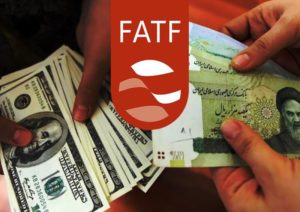
The Iranian regime is witnessing a new wave of internal divisions as the issue of Financial Action Task Force (FATF) legislation resurfaces. These laws, which have been stalled in the legislative process for years, have sparked renewed debate among the country’s political factions, reflecting the complexity of the interplay between domestic politics and international pressures.
The Iranian regime’s Minister of Economic Affairs and Finance recently announced that Supreme Leader Ali Khamenei has approved the reconsideration of FATF-related bills by the Guardian Council. Masoud Pezeshkian, the regime’s president, confirmed this during a meeting with the Iranian Chamber of Commerce on December 31, 2024, emphasizing the need for collective action by all authorities to address the country’s economic challenges.
Who Was Qasem Soleimani, and What Role Did He Play in the Region?

On Friday, January 3, 2020, around 1:00 AM, a U.S. airstrike targeted two vehicles near Baghdad International Airport, killing Qasem Soleimani, Abu Mahdi al-Muhandis, and eight of their companions. Initial reports suggested a rocket had struck the airport’s cargo area, damaging two vehicles and injuring several people. Hours later, the Iranian-backed militia group Hashd al-Shaabi confirmed the deaths of a senior official and two high-profile guests. Soon after, Iraqi state television identified one of the deceased as Qasem Soleimani, commander of the IRGC’s Quds Force.
Soleimani’s Airbus A320 flight departed Damascus at midnight (Iran time) and landed in Baghdad shortly after 1:30 AM. Known for his covert travel methods, Soleimani often booked flights at the last minute with various airlines to evade tracking. On the night of January 2, 2020, he flew aboard a delayed Sham Wings Airlines flight and was the last passenger to board. Upon arrival, Abu Mahdi al-Muhandis greeted the commander of the IRGC’s Quds Force, and the group departed in two Toyota vehicles. Reports suggest the drone strike occurred within 15 minutes of the plane landing.