


THIS PAGE WILL BE UPDATED WITH THE LATEST NEWS
UPDATE: 11:00 PM CET
Exiled Opposition: At Least 1,000 Executions in Iran in 2024

According to the exiled opposition group NCRI (National Council of Resistance of Iran), at least 1,000 executions were carried out in Iran in 2024. The NCRI office in Germany reported that among those executed were 34 women and seven juveniles. The number of executions rose by almost 16 percent compared to the 864 carried out in the previous year. Iran’s Supreme Leader Ayatollah Ali Khamenei set this grim new record, the NCRI stated in a release at the start of 2025.
Khamenei resorted to these executions to suppress the uprising of the people demanding the overthrow of the Islamist regime, according to the NCRI. “However, these atrocities only strengthen the determination of Iranian youth to topple the religious dictatorship,” the statement emphasized. The NCRI called for the regime to be ostracized by the international community and insisted that any dealings with it must be conditioned on the cessation of executions and torture. “Its leaders must be held accountable before the judiciary,” the statement concluded.
UPDATE: 7:00 AM CET
Tehran’s Defeat in Syria Spills Into Iraq
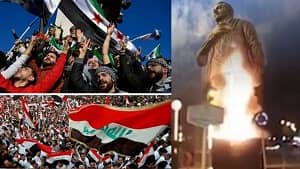
On the anniversary of the killing of Qassem Soleimani, the former chief terrorist of Iran’s regime, both his crimes in Syria and Iraq and the toppling of images of this criminal amid chants of “Curse on Soleimani” in these two countries have been highlighted. This occurs under conditions where the recent fall of the Assad regime in Syria has triggered a chain of extraordinary transformations with visible effects in the region, particularly in Iraq.
The overthrow of the Syrian dictatorship, as a severe and strategic defeat for the Iranian regime, has disrupted the balance of power in Iraq to the Iranian regime’s detriment. The Popular Mobilization Forces (Hashd al-Shaabi), the paramilitary wing of the Quds Force in Iraq, is now facing potential dissolution. Ibrahim Sumaidaie, political advisor to Iraq’s Prime Minister, stated in a televised interview: “Iraq cannot remain the sword of the resistance axis after the fall of the Assad regime and the weakening of Hezbollah in Lebanon. Now, from the perspective of our responsibilities, we must work with armed groups to consider their dissolution and integration into the country’s political structure” (Asharq Al-Awsat, December 18, 2024).
Dismissals and Oppression, The Iranian Regime’s Weapon against Labor Protests

Iran’s corrupt regime spares no group or social class in its animosity toward the people of the country. Its repressive and inhumane policies, targeting everyone from teachers and retirees to farmers and students, have left no sector unscathed by its relentless oppression. Among these, the plight of underprivileged workers, particularly those in the oil industry facing grueling labor conditions, is especially heartrending.
One of the latest examples of the anti-labor policies of Iran’s regime is the dismissal of representatives of hardworking oil industry workers. They were targeted with threats and repression simply for pursuing their and their colleagues’ legitimate and legal labor rights.
On December 26, Etemad newspaper reported, “Fifteen representatives of the oil industry’s third-party contract workers face the risk of dismissal due to their demands for colleagues’ legal and contractual rights… Over the past seven months, two of these workers have received final dismissal orders, five others await their termination verdicts, and eight are set to be summoned by the Selection Committee to determine whether they can continue their employment or face dismissal.”
The Escalating Crisis of Iran’s Manpower Migration: A Sign of Societal Despair

The ongoing crisis of manpower migration from Iran, often referred to as a “national evacuation,” has reached alarming proportions. Experts convening at a recent meeting highlighted a troubling 82% increase in emigration over the past few years. This trend, they warned, underscores the pervasive “despair of Iranian society about its future.”
According to the state-run IRNA news agency, the meeting on January 2 brought attention to various factors driving this exodus. Crises such as the intensification of security measures in university environments, financial and administrative weaknesses, and restrictions on academic freedoms have exacerbated the migration process, both directly and indirectly.
Escalating Concerns: Khamenei’s Fear of Popular Uprising in Iran

Recently, Iran’s Supreme Leader, Ali Khamenei, delivered a speech accusing the United States of instigating unrest in the country. His remarks revealed a growing apprehension about the resurgence of street protests, signaling a deeper fear of systemic instability. Khamenei’s anxieties appear to stem from two converging issues: the potential intensification of the U.S. “maximum pressure” policy under a new administration and the worsening economic crisis within Iran. These factors, combined with the regime’s inefficacy, heighten the likelihood of popular protests.
Recent demonstrations in Tehran’s Grand Bazaar, triggered by soaring exchange rates and skyrocketing prices, underscore the legitimacy of these concerns. Economists warn that Iran’s economic indicators reflect the onset of a severe collapse. Rather than addressing these challenges, the government denies their existence, opting instead to suppress dissent and ignore public grievances.
Khamenei’s Hostility Towards Syria’s New Government: A Strategic Misstep?

In less than a month, Ali Khamenei, the supreme leader of the Iranian regime, has launched his third verbal attack against Syria’s new government. Following the fall of Bashar al-Assad, Iran has emerged as the only country in the Middle East to react negatively to this significant political shift. While other nations in the region have welcomed Assad’s overthrow or expressed hope for Syria’s peaceful future, Tehran’s response has been starkly antagonistic.
Most regional powers have swiftly engaged with Damascus, dispatching diplomatic delegations and fostering relations with Syria’s new leadership. In contrast, the Iranian regime has condemned Assad’s removal outright. Khamenei has gone so far as to publicly call for the new government’s downfall, a stance underscored by repeated speeches brimming with hostility. This unyielding position appears more focused on creating adversaries than fostering regional stability.
Iran’s Central Bank Claims Reduced Inflation Rate

Amid public protests over living conditions and the soaring exchange rate, Iran’s Central Bank reported that the annual inflation rate in December reached its lowest level in four years.
The Central Bank, which has long ceased regular publication of inflation data, released a chart indicating that consumer inflation is at its lowest since fall 2020. The Central Bank likely issued this report to convey that inflation is under control and the burden of high prices on citizens has lessened. However, the reality is different.
Regardless of whether the inflation rate is 20% or 60% if people’s incomes do not increase proportionately, their purchasing power declines. This has been the case in recent years for many groups, including retirees.
At Least 22 Prisoners Executed in Iran in Recent Days

Human rights and news sources reported on Thursday, January 2, that the Iranian regime’s judiciary has executed at least 22 prisoners in various cities across the country in recent days.
According to HRANA, the Human Rights Activists News Agency, the Iranian judiciary executed three prisoners on charges related to drug offenses and murder on Tuesday, December 31, at Choobindar Prison in Qazvin. HRANA further reported that on the first day of the new year, at least 15 prisoners were executed in various prisons in Iran, including Malayer, Bandar Abbas, Yasuj, and Ghezel Hesar in Alborz Province.
The human rights organization identified two of the ten prisoners executed in Karaj as Mohammad Hossein Mohammadi-Far and an Afghan national named Pasha, stating that their executions were related to drug charges.
The Biden Administration Ignored Report on Iran’s Oil Sanctions Evasion

According to a report published by the Washington Free Beacon on Thursday, January 2, U.S. officials received intelligence about Iran’s oil smuggling scheme but the Biden administration disregarded it. The report states that in 2024, Biden administration officials reviewed intelligence indicating Iraq’s pivotal role in a billion-dollar oil smuggling operation by the Iranian regime. Free Beacon, citing informed sources, claims Biden officials ignored much of the information and allowed Iran to bypass U.S. sanctions and earn illicit money, as described by a former U.S. official.
In April, U.S. officials from the State Department, Treasury, and intelligence community reviewed a 45-page report prepared by international organizations.
This report, also reviewed by the Washington Free Beacon, identified Iraq, the world’s fifth-largest oil producer, as the central hub for Iran’s oil and fuel smuggling operations in 2022 (during Biden’s presidency).
Paris Exhibition on January 2, 2025 Supports Iranian Revolution, Condemns Regime’s Human Rights Violations

Paris, France—January 2, 2025: On the beginning of the new year of 2025, supporters of the People’s Mojahedin Organization of Iran (PMOI/MEK) hosted an exhibition showcasing photographs and books to demonstrate solidarity with the Iranian Revolution and condemn the regime’s growing use of executions.