

THIS PAGE WILL BE UPDATED WITH THE LATEST NEWS
UPDATE: 10:00 PM CET
Shocking Moment ‘Iran Forces Attack Hospital’ Just Days After Trump’s Threat to Tehran

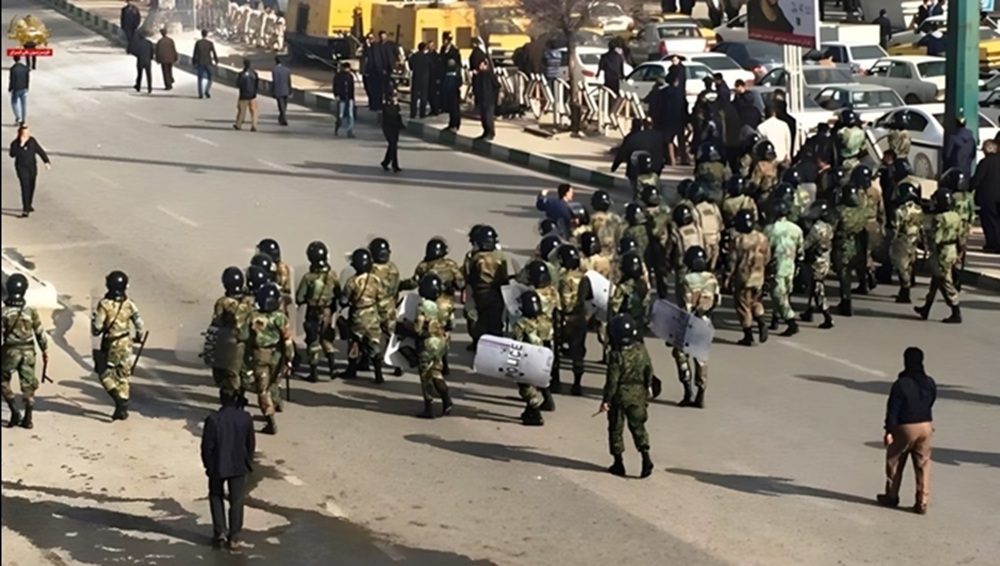
Shock footage has emerged of Ayatollah Khamenei’s brutal Revolutionary Guard launching what is claimed to be a grenade attack on a major hospital in Iran. Officers of the thuggish IRGC opened fire on Khomeini Hospital in Ilam before storming the facility to hunt down anti-regime protestors who had already been hurt in clashes with the regime’s repressive forces.
Patients screamed and fled in terror as the alleged war crime was committed. Courageous staff attempted to shield patients and face down the heavily armed IRGC but they were overpowered.
The hideous action is exactly what Donald Trump warned Iran’s ayatollah about just days ago and may ramp up tensions, even triggering a boots-on-the-ground intervention.
Maryam Rajavi, head of the opposition National Council of the Resistance of Iran, said: “Attacking the hospital and kidnapping the wounded is an unforgivable crime. The world must not remain silent in the face of crimes against humanity.”
UPDATE: 05:00 PM CET
Iran at a Crossroads: The Regime’s Fear of a Genuine Democratic Alternative

What initially appeared to be scattered social protests has evolved into a broad and complex popular mobilization that challenges the very foundations of the clerical regime’s power. When workers, merchants, students, and young women coordinate their demands, it reflects far more than economic frustration or isolated grievances. It is a clear signal that the regime has lost its political and moral legitimacy.
Those in power in Tehran respond predictably with brutal force. The number of executions has reached a level unmatched internationally, and the death penalty is used systematically as a tool to spread fear and prevent collective action. At the same time, it is evident that sheer violence is no longer sufficient to keep society under control. This is why we are witnessing a parallel strategy: attempts to divert, divide, and confuse the protest movement.
UPDATE: 08:00 AM CET
Maryam Rajavi’s Message at the Outset of the Second Week of the Nationwide Uprising
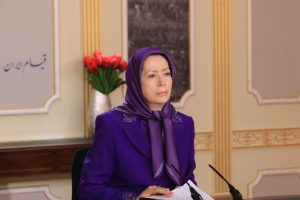
Once again, the uprising has swept across Iran. Now in its second week, it has spread to all provinces nationwide. Once again, the uprising has claimed the lives of Iran’s youth, beloved children whose sacrifice has strengthened the resolve of a nation. We salute the courageous vanguards of the uprising. Their loss brought tears to our people’s eyes, yet it also filled our hearts with pride in a generation of such remarkable bravery. A generation that has cast aside fear and taken to the streets is, without doubt, a generation destined to prevail. The young lives taken in Lorestan, in the proud cities of Kuhdasht, Delfan, and Azna, among them Mostafa Fallahi, a 15-year-old boy killed by the Revolutionary Guards, remind us of the hundreds of young men and women who were executed or hanged in these same cities under Khomeini and Khamenei.
Live report: Day 8 of Iran Uprising; Tehran Bazaar strikes as protests hit the capital’s economic heart

The nationwide uprising against the religious dictatorship in Iran entered its eighth consecutive day on Sunday, January 4, 2026. Following a volatile seventh day marked by a brutal massacre in Malekshahi and Ali Khamenei’s threats against protesters, the unrest has intensified and focused on the economic heart of the capital. On Sunday, despite a martial law-like atmosphere, shopkeepers, merchants, and business owners in Tehran’s Grand Bazaar and surrounding commercial districts launched widespread strikes. They were joined by university students and citizens in the streets, forming a united front against the regime’s plunder and repression. The protests, triggered by the collapse of the rial and the removal of preferential exchange rates, have evolved into a direct political challenge to the regime’s existence, with chants calling for the overthrow of the Supreme Leader.
Young Women at the Forefront as Iran Protests Expand Across All Provinces

On Sunday, January 4, 2026, the Iranian people’s uprising entered its second week and spread to all provinces across Iran. As Iran protests sweep across the country, young women are loud and outspoken in these demonstrations, often leading chants and slogans. Despite shutting down cities and universities and forcibly expelling students from some dormitories, the clerical regime failed to extinguish the flames of the uprising. Instead, more cities joined the protests, and a growing number of shopkeepers turned to strikes and open resistance. After a full week, Ali Khamenei, the regime’s Supreme Leader, was compelled to appear publicly and issue threats of further bloodshed. Nevertheless, the Iranian people’s uprising continues with even greater intensity and momentum.
Iranians Rally Across Northern Europe Backing Iran Protests and Demanding Freedom and Democracy
In solidarity with the nationwide #IranProtests2026, freedom-loving Iranians in several cities—including Cologne, Berlin, Oslo, Stockholm, and Copenhagen—held protests in sub-zero freezing temperatures, chanting anti-regime slogans in support of their compatriots who have risen… pic.twitter.com/Tmf4sznEb7
— SIMAY AZADI TV (@en_simayazadi) January 3, 2026
January 3, 2026 — In solidarity with the nationwide protests in Iran, freedom-loving Iranians and supporters of the People’s Mojahedin Organization of Iran (PMOI/MEK) held rallies across Cologne, Berlin, Oslo, Stockholm, and Copenhagen. Braving sub-zero temperatures, participants chanted anti-regime slogans to voice their support for their compatriots who have risen up inside Iran.
Iranians Rally Across Europe Backing Iran Protests and Calling for a Free, Democratic Republic
January 3, 2026 — Freedom-loving Iranians and supporters of the People’s Mojahedin Organization of Iran (PMOI/MEK) held rallies across Paris, Amsterdam, Malmö, and Luxembourg to express solidarity with the nationwide protests in Iran that began on December 28, 2025. In these gatherings, participants braved freezing temperatures to echo the call of their compatriots inside Iran for a free and democratic republic.
Freedom-loving Iranians echoed the call of their compatriots inside Iran for a free and democratic republic during protests in Paris, Amsterdam, Malmö, and Luxembourg, held in freezing temperatures. In Paris, @AttiasDominique also joined the demonstrators, lending her support to… https://t.co/Fjkt3Sl3gu pic.twitter.com/EBzs6OVeU1
— SIMAY AZADI TV (@en_simayazadi) January 3, 2026
MEK Supporters Hold Rally in Stockholm Backing Iran Protests and Calling for a Democratic Republic

Stockholm, Sweden – January 3, 2026 — In freezing sub-zero temperatures, supporters of the People’s Mojahedin Organization of Iran (PMOI/MEK) held their second rally in Stockholm, outside the Swedish Foreign Ministry, to express solidarity with the nationwide protests in Iran that began on Sunday, December 28, 2025. Demonstrators carried pictures of those killed in the uprising, honoring the martyrs and reaffirming their unwavering support for the Iran Revolution until the clerical regime is overthrown.
Systematic Repression and Enforced Disappearances during the January 2026 Uprising
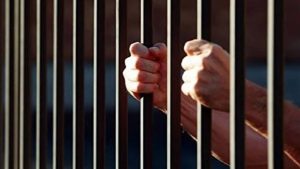
Following the start of the nationwide uprising on December 28, 2025, in protest against absolute poverty and systemic corruption, the security apparatus of the Islamic Republic (IRGC and FARAJA) initiated a wave of illegal arrests in more than 35 cities across Iran. According to reports from Iranian Resistance websites, the number of detainees has exceeded 1,100 individual. The Islamic Republic regime is currently employing a pattern of “Enforced Disappearance” to suppress the protests. Many detainees, instead of being transferred to official prisons, have been taken to secret IRGC detention centers and Ward 240 of Evin Prison (under the control of security interrogators).
Iran’s Economy in 2025: Key Trends and Structural Pressures
Economic historians note that in various historical cases, prolonged economic stress has often been preceded by identifiable indicators such as persistent inflation, declining currency value, reduced productive investment, and the expansion of informal markets. These patterns, documented in different periods and regions, are frequently used by scholars as reference points for understanding how economic systems respond to sustained structural pressures. Some economic observers suggest that examining such historical frameworks can provide context for assessing contemporary economies experiencing long-term instability, including Iran’s economic situation toward the end of 2025.
The End of The Mullahs’ Regime in Iran Is Near
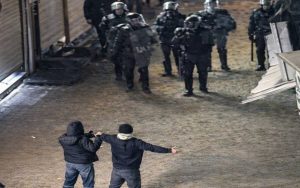
On the eighth day of nationwide protests in Iran, and despite the heavy security presence on the streets of Tehran and other cities that have witnessed demonstrations over the past week, the strike by bazaar merchants is continuing. In a video published on Sunday, January 4, from in front of Tehran’s Alaeddin Shopping Center, security agents are seen clashing with shopkeepers and firing tear gas at them. A heavy security atmosphere also prevails in Tehran’s Grand Bazaar, where agents of the Iranian regime and other repressive forces have been deployed in the cloth sellers’ section and several other parts of the bazaar, attempting through threats and intimidation to force merchants to reopen their shops. In the largest wave of anti-government protests in Iran in the past three years—sparked by worsening economic conditions and rising living costs, during which several people have been killed and hundreds arrested by the Iranian regime—U.S. President Donald Trump stated that if protesters in Iran are fired upon, the United States would intervene to save them.
Iran’s Execution Surge: The Regime’s Answer to Fear and Resistance

A sharp rise in executions in 2025 exposes the clerical regime’s deep crisis and its reliance on mass killing to suppress a defiant society. A close examination of execution statistics in Iran reveals far more than numbers. It exposes the political logic, fears, and failures of a regime that increasingly relies on killing to sustain itself. The first chart illustrates executions in Iran over four years, from 2022 through early 2026. The trajectory is unmistakable: a steep, accelerating rise under clerical rule that evokes not law enforcement, but mass killing. What emerges is not a criminal justice trend, but a pattern of state violence directed against society itself. The scale of the escalation is staggering. Executions in 2025 were more than double those recorded in 2024, two and a half times higher than in 2023, and nearly four times the number in 2022. No political, legal, or social justification can explain such a surge. It can only be understood as a deliberate policy choice.