

THIS PAGE WILL BE UPDATED WITH THE LATEST NEWS
UPDATE: 5:00 PM CEST
US Imposes Broadest Sanctions Yet on Hezbollah’s Financial Institutions

The US Treasury announced on Tuesday that it was imposing sanctions on five financial entities and 16 individuals related to Hezbollah’s financial operations in the latest escalation aimed at curbing the Iran-backed group’s sources of funding. The targets include major Hezbollah institutions Al-Qard Al-Hassan and Bayt al-Mal, as well as their senior leaders. “These coordinated actions underscore Terrorist Financing Targeting Center (TFTC) members’ shared commitment to disrupting Hezbollah’s ability to exploit the international financial system. All targets announced today were previously designated by the United States,” said a Treasury statement.
The networks designated on Tuesday “threaten regional stability, international security, mutual interests, and global trade. By restricting Hezbollah’s access to funding, TFTC members are working to protect the integrity of the international financial system, support the Lebanese people, and counter terror networks,” it added.
Germany’s 2025 Annual Intelligence Report Highlights Escalating Iranian Threat
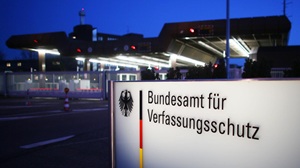
In its 2025 Annual Report on the Protection of the Constitution, published on June 30, 2026, Germany’s domestic intelligence agency (BfV) identifies the Islamic Republic of Iran as a primary source of foreign intelligence threats.
The agency warns that the security landscape in Germany has undergone a fundamental transformation, with state-level intelligence activities now increasingly intertwined with regional conflicts and geopolitical power ambitions.
Intensified Surveillance of the Diaspora
According to the report, Iranian intelligence services have significantly intensified their focus on identifying and combating opposition groups and critics of the regime. The BfV notes that Iranian intelligence continues to:
-
Target the Diaspora: There is a heightened effort to monitor and suppress Iranian opposition members, journalists, and activists living in Germany.
-
Utilize Cyber Operations: State-aligned actors employ cyber-espionage as a tactical tool to track dissidents, creating detailed movement profiles and infiltrating their private communication networks.
-
Target Security-Focused Entities: Iranian actors specifically target members of think tanks, NGOs, and government bodies that focus on security policy regarding the Middle East.
Military Procurement and Proliferation
The report underscores that the regime maintains “highly ambitious” state programs for nuclear technology, ballistic missiles, cruise missiles, and drones. Despite being under international sanctions, the regime’s efforts to acquire sensitive technologies—including high-end components from Germany—remain “persistently high.”
The BfV highlights that the need for replacement technology has grown significantly following the damage inflicted on Iranian military and nuclear infrastructure during the conflicts of 2025 and the war that began in February 2026. The regime is reportedly utilizing covert methods, including the exploitation of third-country banking and cryptocurrencies, to mask the origins of funds and evade state control mechanisms.
Hybrid Threat Landscape
The report characterizes the current security environment as one where Germany is increasingly exposed to hybrid threats. The BfV observes that the intelligence threat level for pro-Israeli and pro-Jewish individuals, as well as U.S. interests in Germany, has risen since the start of the war in February 2026.
To counter these threats, the BfV is implementing a strategy centered on:
-
Detection: Continuous monitoring of the modus operandi of foreign intelligence services.
-
Disruption: Exposing hostile operations and referring cases to law enforcement agencies, such as the Federal Prosecutor General (GBA), to halt unauthorized activities.
-
Prevention: Providing ongoing analysis and security briefings to government, economic, and scientific sectors to bolster institutional resilience.
The agency concludes that while Russia and China remain top-tier concerns, the persistent activities of the Iranian regime—spanning from digital espionage to illicit procurement of military technology—pose a significant and evolving challenge to Germany’s national security.
UPDATE: 7:30 AM CEST
From Paris to Tehran: How PMOI Resistance Units Are Manifesting the ‘Free Iran 2026’ Vision on the Streets
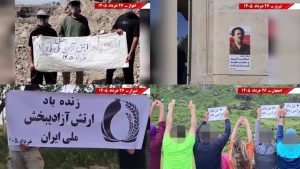
Following the historic Free Iran 2026 summit in Paris, the true momentum of the Iranian opposition is being demonstrated not just on the international stage, but inside Iran’s cities. On June 20, an esteemed gathering of international political figures and supporters convened in Paris. During the summit, Maryam Rajavi, President-elect of the National Council of Resistance of Iran (NCRI), emphasized that change must be driven solely by the Iranian people and their organized resistance. Just days later, on June 29, the PMOI/MEK Resistance Units launched a coordinated campaign across Iran to celebrate the summit and express their explicit support for Maryam Rajavi’s Ten-Point Plan.
Activists took to public spaces in major cities, including Tehran, Isfahan, and Tabas, to install posters, paint graffiti, and hold up placards with messages of resistance. These actions represent a deeply organized and unified front inside the country. Across multiple cities, Resistance Units utilized a shared rallying cry, installing posters and painting graffiti with the message: “Maryam Rajavi’s commitment is ours as well, victory is ours.” In Tehran, members bravely held up posters bearing the image of Mrs. Rajavi alongside pledges stating, “My commitment is defending the freedom and honor and independence of Iran.”
Geir Haarde: “Iran’s People Reject Both the Mullahs and the Shah”
In an interview with Simay Azadi on the sidelines of the Free Iran World Summit in Paris, former Icelandic Prime Minister Geir Haarde discussed the significance of this year’s gathering, the wave of executions in Iran, international support for the Iranian Resistance, the National Council of Resistance of Iran (NCRI), the cancellation of the Free Iran rally in Paris, and prospects for democratic change in Iran.

During the interview, Haarde argued that growing international support for the Iranian Resistance reflects a better understanding of the situation inside Iran. He said the Iranian people reject both the current religious dictatorship and a return to monarchy, endorsed the NCRI’s Ten-Point Plan, criticized the cancellation of the Paris rally, and reiterated that neither war nor appeasement offers a solution to Iran’s crisis.
Iran’s Employment Crisis Deepens as Women Bear the Brunt of Economic Decline
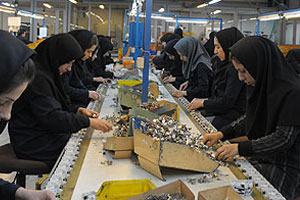
Official statistics reveal falling employment rates, widening gender inequality, and a growing number of economically inactive citizens, highlighting the structural failures of Iran’s economy and labor policies.
New official data from Iran paints an increasingly troubling picture of the country’s labor market. Despite a growing working-age population, employment has failed to expand, women are being pushed out of the workforce at an accelerating rate, and economic inactivity is rising sharply.
The figures, released by the regime itself, underscore a broader reality: years of economic mismanagement, structural stagnation, and discriminatory policies have left the labor market unable to absorb new workers. Women, in particular, have paid the highest price.
According to Iran’s Statistical Center, the population aged 15 and older increased from approximately 65.3 million in 2024 to more than 66.1 million in 2025—an increase of roughly 800,000 people.
Iran’s Power Struggle Intensifies as Nuclear Talks Expose Deepening Divisions Within the Regime
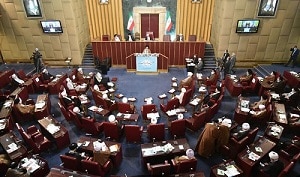
The debate over negotiations with the United States has evolved into a broader struggle for power inside Iran’s ruling establishment, revealing fractures that extend from government institutions to the clerical hierarchy.
Negotiations between Iran and the United States were intended to ease external tensions. Instead, they have exposed a growing internal crisis within the Islamic Republic. As rival factions compete for influence over the country’s political future, disputes over diplomacy have evolved into an increasingly bitter struggle for power that now reaches the highest levels of the regime.
The escalating conflict reflects more than disagreement over foreign policy. It reveals an establishment increasingly divided over how to preserve a system facing mounting domestic unrest, economic collapse, and declining public legitimacy.
One of the clearest signs of the widening rift came on June 27, when 63 members of Iran’s Assembly of Experts issued an unprecedented public statement on the negotiations.
Iran’s Workers and Retirees Defy Intimidation as Economic Despair Fuels Political Dissent
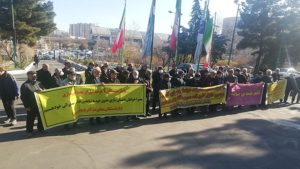
For years, the Iranian regime has relied on fear, intimidation, and manufactured security crises to suppress public dissent. Today, however, those tactics appear increasingly ineffective. As economic conditions deteriorate and public frustration reaches unprecedented levels, workers and retirees across Iran are demonstrating that neither threats of repression nor carefully orchestrated displays of force can extinguish a society demanding fundamental change.
Recent nationwide demonstrations suggest that the government’s efforts to cultivate an atmosphere of fear are not merely aimed at maintaining order. Rather, they reflect growing anxiety within the ruling establishment itself—particularly over the possibility that worsening economic conditions could ignite another nationwide uprising.
The regime’s own analysts have openly acknowledged these concerns.
According to the state-affiliated Entekhab news website, government commentator Hojat Mirzaei warned that any easing of international tensions could generate public expectations that authorities would be unable to satisfy. He cautioned that people might expect wages to recover, inflation to decline, and living standards to improve following any political agreement.
Time for West to Recognize Iran’s Democratic Alternative

Why are Major Western Governments Persist in Soft Dealings, Negotiations with a Criminal Regime on the Brink of Defeat?
Over the past eight years, the Iranian people have staged four separate uprisings against the theocratic dictatorship that has been ruling their country since 1979.
Each incident has met with ever more brutal repression than the one that preceded it, and in January of this year, thousands of protesters were killed across the country in mass shootings spearheaded by the Islamic Revolutionary Guard Corps (IRGC).
In spite of all of this, public activism and explicit calls for regime change persist in the Islamic Republic, and since the January uprising, a network of “Resistance Units” has staged hundreds of operations challenging the IRGC and demonstrating its readiness to help implement the ten-point plan authored by Resistance leader Maryam Rajavi.
Last Saturday, Mrs. Rajavi delivered the keynote address at a global summit hosted by the National Council of Resistance of Iran at its headquarters outside Paris.
In it, she described the regime as having reached its “last stop” with the appointment of Mojtaba Khamenei as its new supreme leader, following the death of his father at the start of U.S. military operations that aimed to curtail the regime’s ambitions for nuclear weapons capability.
Iran’s Negative Economic Growth: From Statistical Manipulation to the Collapse of Investment
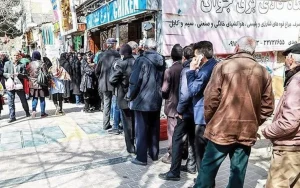
When the gap between official figures and reality becomes too wide, the economic crisis is no longer confined to production and investment—it also consumes public trust. Iran’s negative economic growth during 2025 reflects the collapse of investment, declining household consumption, and the role of the governance structure, international sanctions, and the erosion of social capital in shrinking the country’s economy.
Official data released for 2025 show that Iran’s economy has entered a new phase of structural stagnation. Although some official institutions have reported slightly positive economic growth, excluding oil revenues presents a completely different picture. Negative economic growth indicates that the core problem is not a temporary shock but the gradual erosion of the foundations of production, investment, and social trust.
Statistics from the Central Bank of Iran and the Statistical Center of Iran show that economic growth in 2025, including oil, ranged between -0.7% and 0.2%. However, excluding oil, the country’s economy entered negative territory and gross domestic product contracted.
This reality once again highlights Iran’s historical dependence on oil revenues. Negative economic growth demonstrates that the existing economic structure has failed to transform oil resources into a driver of industrial development and higher productivity. As a result, whenever oil revenues decline or their growth potential becomes limited, the weaknesses of other sectors become apparent.
Iraq Sets September 30 as Deadline for Disarmament of Iranian Regime-Backed Militia Groups

Iraqi government spokesperson Haider al-Aboudi announced on Monday, June 29, that the government has given Shiite armed groups backed by the Iranian regime until September 30 this year to surrender their weapons.
The announced deadline coincides with the end of the U.S.-led international coalition’s mission against ISIS in Iraq.
The announcement comes ahead of Iraqi Prime Minister Ali al-Zaidi’s visit to the United States, as Washington has been pressuring Baghdad to ensure the disarmament of these groups.
The deadline for the Iran-backed groups was announced one day after Iranian regime Foreign Minister Abbas Araghchi visited Baghdad.
Haider al-Aboudi, the Iraqi government spokesperson, said during his weekly press conference, “A specific date has been announced to all armed groups for resolving this issue (disarmament)… That date is September 30, which also coincides with the end of the international coalition’s presence.”
He added that after that date, any weapons outside the authority of the state would be subject to legal prosecution.
The Fight Isn’t Over Washington—It’s Over Who Controls Iran’s Foreign Policy

Iran’s negotiations with the United States, which followed months of tension and military confrontation and led to a preliminary understanding between the two countries, have triggered a new political confrontation inside Iran. A review of coverage across Iranian newspapers shows that the dispute over the talks has moved beyond criticism of the government and has become an internal power struggle over the legitimacy of diplomacy, the authority of decision-making institutions, and the role of political factions in shaping foreign policy.
One of the first signs of this confrontation was an attempt by some lawmakers to turn the reopening of parliament into a platform against the negotiating team. Arman Melli reported that a group of hardline lawmakers, in addition to pursuing the impeachment of parliament’s presiding board over the suspension of public sessions, intended to use parliamentary oversight tools to pressure the government, the foreign minister, and the negotiating team.
Citing remarks by Hamid Rasaei, the newspaper wrote that the impeachment issue “will not be dropped” and that parliament should also intervene over the performance of the government and the negotiating team.
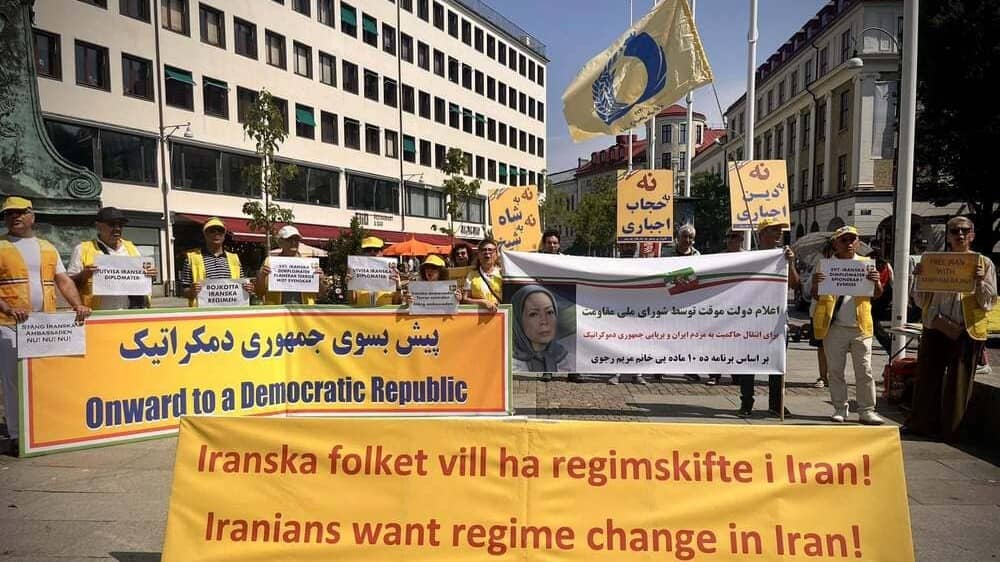
Gothenburg Rally Voices Support for NCRI, Calls for a Democratic Republic in Iran
Gothenburg, Sweden — June 27, 2026 — Supporters of the People’s Mojahedin Organization of Iran (PMOI/MEK) held a rally in Gothenburg, calling for the establishment of a free and democratic republic in Iran and expressing opposition to the ruling clerical regime. Participants chanted slogans demanding regime change and called for the closure of the Iranian regime’s embassy in Sweden, condemning it as a center for terrorism and espionage.

The protesters rejected both the former monarchy and the current religious dictatorship, emphasizing that Iran’s future should be shaped by a democratic alternative. They highlighted the importance of a political transition based on democratic principles and expressed support for the Ten-point plan of Maryam Rajavi, President-elect of the National Council of Resistance of Iran (NCRI), describing it as a roadmap for a transitional process and a democratic future.