

THIS PAGE WILL BE UPDATED WITH THE LATEST NEWS
UPDATE: 7:00 PM CEST
“Iran on the Brink of a New Uprising. Keep Targeting the Nuclear Program”

AGI – Iran is about to turn the page and break with the rule of the ayatollahs. Hossein Abedini, a member of the National Council of Resistance of Iran (NCRI), has no doubts. Speaking to AGI during a visit to Rome for a series of institutional meetings, he said: “There have already been three revolutions in Iran: in 1906, 1953, and 1979. We are on the eve of the fourth.”
“The people are taking to the streets in protest—not yet like in 2022, after the killing of Mahsa Amini—but there is a volcano ready to erupt,” he asserted. “If it hasn’t happened yet, it’s only because of the brutal repression” through which the regime has so far managed to keep Iranians under its grip.
The 12-day war had an impact, both positive and negative. On one hand, it may have slowed down an ongoing process: “Iranians did not support the conflict. Democracy cannot be imposed with bombs; it must rise from below.” On the other hand, the killing of many key figures among the powerful Revolutionary Guards “has exposed the regime’s vulnerability.”
According to Abedini, the ayatollahs are weaker than ever. “They once relied on four capitals—Damascus, Beirut, Sanaa, and Baghdad—and had a direct corridor to Syria. That power network no longer exists.”
UPDATE: 5:30 PM CEST
Russia, Iran and China Intensifying Life-Threatening Operations In UK, Police Say
LONDON, July 15 (Reuters) – Russia, Iran and China are behind a growing number of life-threatening operations in Britain including attacks and kidnappings, often deploying criminals and sometimes children as proxies, two senior British police officers said on Tuesday.
The British authorities in recent years have repeatedly voiced concern at what they said was malign activity by the three states in Britain, ranging from traditional espionage and actions to undermine the state, to sabotage and assassinations.
Those accusations have been rejected by Moscow, Beijing and Tehran, which say they are politically motivated.
UPDATE: 10:00 AM CEST
Democracy and Stability in Iran Can Come Only from Within

The solution to the Iranian crisis that has influenced the Middle East and the world for nearly half a century lies in regime change and organized resistance by the Iranian people. This is the “third option” I articulated 21 years ago in the European Parliament and have reiterated countless times since: Neither foreign war nor appeasement will win against this regime. The only thing that will do so is change by the people and the resistance.
I have repeatedly warned that if appeasement with Tehran continues, war in the region is destined, an unfortunate reality we have witnessed recently. The mullahs’ dictatorship survives by exporting terrorism, relentlessly pursuing nuclear weapons and relying on brutal repression.
Five Iranians Nabbed at US Northern Border as Terror Fears Grip Small Towns

A Customs and Border Protection (CBP) spokesman confirmed Tuesday that five Iranians were arrested while attempting to illegally cross the U.S. northern border with Canada.
“On July 1, Border Patrol Agents from the Champlain, New York Station, responded to suspicious activity near Mooers Forks, NY,” CBP’s Swanton Sector said on Facebook. “Agents located a minivan occupied by five citizens of Iran and two citizens of Uzbekistan.”
The Champlain Station is part of the Swanton Sector. Swanton is a rural town in Vermont near Highway 89 just south of the Canadian Border.
FBI Washington Field Office Releases Seeking Information Posters for Senior Iranian Intelligence Officers Involved in the Abduction of Robert A. Levinson

The FBI Washington Field Office today released seeking information posters featuring three senior Iranian intelligence officers who were involved in the abduction of retired FBI Special Agent Robert A. “Bob” Levinson from Kish Island, Iran, on March 9, 2007. The release of the posters is part of the FBI’s ongoing investigation into Iranian officials who allegedly played roles in Bob’s abduction and Iran’s attempt to obfuscate its responsibility.
Reza Amiri Moghadam, also known as Ahmad Amirinia, is the current Iranian ambassador to Pakistan. He previously led the Iranian Ministry of Intelligence and Security’s operations unit. When Moghadam held this role, MOIS agents in Europe reported to him in Tehran.
Taghi Daneshvar, also known as Sayyed Taghi Ghaemi and Sayeed Taghi Gha’emi, is a high-ranking MOIS officer involved in counterespionage activities. He oversaw the work of Sanai, also known as Mohammad Baseri, during the timeframe when Bob disappeared.
UPDATE: 8:00 AM CEST
Women’s Economic Participation in Iran Falls to 13% – Lowest in Three Years
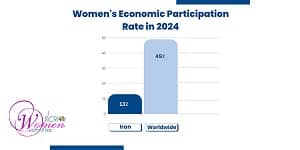
Women’s economic participation in Iran has declined to its lowest point in the past three years. According to official statistics, only 13.1% of Iranian women were economically active in winter of 2024. In contrast, 67.3% of men were part of the labor force during the same period — a sharp disparity that underscores the depth of structural inequality. (Donya-e-Eqtesad, July 12, 2025)
World Bank data shows a similar picture: in 2024, Iran had a women’s economic participation rate of just 13.4%, ranking third-lowest in the region after Afghanistan and Iraq.
There is a clear disconnect between education and employment: 48% of employed women in Iran hold a university degree (compared to 23% of employed men), yet they face severe barriers in accessing jobs that match their qualifications. This forces many women to accept positions well below their academic and professional capacity.
One Year of Pezeshkian: The Illusion of Reform and The Reality of a Failing Regime

One year after Masoud Pezeshkian took office as the Iranian regime’s president, the hollow nature of his promises for economic reform has become undeniable. His administration’s first-year report card is a stark illustration of failure, a verdict now being echoed even within the regime’s own state-run media, which acknowledges that the promises of change have been swallowed by the grim realities on the ground. Throughout his first year, Pezeshkian has tried to portray himself as a technocratic expert uniquely capable of solving Iran’s deep-seated crises. He has incessantly lectured on the country’s various “imbalances”—from the energy sector and budget deficits to taxation and failing pension funds—creating the impression that he was determined to uproot these problems. However, his endless complaints have produced no tangible solutions.
Bucharest Exhibition Honors Martyrs of Iran’s Uprisings and Condemns Regime Executions

Bucharest, Romania – July 12, 2025 – Supporters of the People’s Mojahedin Organization of Iran (PMOI/MEK) gathered in Bucharest for an impactful exhibition condemning the Iranian regime’s escalating executions and human rights abuses.
The exhibition prominently featured photographs and images of martyrs from Iran’s nationwide uprisings, especially the 2022 uprising, reminding visitors of the sacrifices made by those who fought for Iran’s freedom from dictatorship.
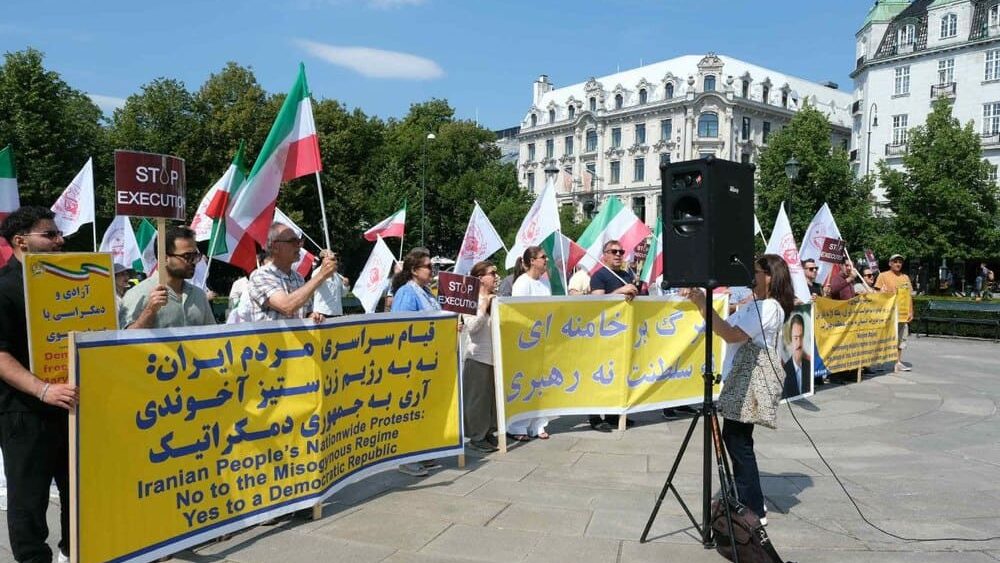
Oslo Rally Condemns Executions in Iran and Backs Maryam Rajavi’s Third Option
Oslo, Norway – July 12, 2025 – Many members of the Iranian community in Oslo, supporters of the Iranian Resistance and the People’s Mojahedin Organization of Iran (PMOI/MEK), gathered in the Norwegian capital to demand democratic change in Iran and denounce the regime’s brutal human rights violations, particularly the ongoing wave of executions.
#Oslo Rally Condemns Executions in #Iran and Backs @Maryam_Rajavi’s Third Option#StopExecutionsInIran #IranThirdOption #NCRIAlternative #FreeIran2025https://t.co/XBnU4qYPDL
— Iran Freedom (@4FreedominIran) July 15, 2025
Participants strongly condemned the mass executions carried out by the clerical regime and called for the immediate release of all political prisoners. They urged the international community to hold Iran’s leaders accountable for crimes against humanity by prosecuting them in international courts.
The Aftershocks of a 12-Day War: Iran’s Regional Strategy at a Crossroads

The recent 12-day confrontation between Iran and Israel, marked by waves of missile, drone, and cyberattacks, stands out as one of the most direct and unprecedented clashes between the two nations in over four decades. Although the hostilities concluded relatively quickly, analysts agree that the war’s broader implications are far from over. The consequences continue to reverberate across the region, challenging long-standing geopolitical alignments and exposing vulnerabilities in Iran regime’s regional posture.
While the military outcome remains a matter of debate, the conflict has clearly disrupted Iran regime’s regional influence model. The Iranian regime, which has long relied on a network of aligned forces and proxy groups to project power beyond its borders, now faces the challenge of strategic recalibration. In light of the war’s aftermath, redefining its regional approach is no longer optional—it has become an urgent imperative.
The Snapback Countdown: Renewed Sanctions Loom Over Iran Amid Rising Tensions

As the expiration date of key provisions in UN Security Council Resolution 2231 approaches on October 17, 2025, the Iranian regime faces a rapidly narrowing diplomatic window. At the heart of this critical moment lies the “trigger mechanism”—also known as “snapback”—a powerful clause within the Joint Comprehensive Plan of Action (JCPOA) and Resolution 2231 that enables the automatic reimposition of all previous UN sanctions on Iran, including six resolutions adopted between 2006 and 2010.
This mechanism was designed to deter Iranian non-compliance. It bypasses traditional Security Council veto powers through a “reverse veto” system, preventing any permanent member—including China and Russia—from blocking the reimposition of sanctions once a complaint is formally lodged.
Iran’s Political Crossroads: The Rise of a Viable Alternative to Supreme Leadership

As Iran grapples with internal unrest and external pressures, a credible political alternative to the Supreme Leader’s rule is gaining ground, challenging the regime’s decades-long monopoly on power.
Since the temporary ceasefire between Iran and the United States and Israel was established on June 24, Iran’s political landscape has entered a new and pivotal phase. Developments both inside the country and on the international stage over the past three weeks suggest that the defining feature of this new phase is the growing visibility of a political alternative to the rule of the Supreme Leader. This emerging reality now dominates the Iranian political scene.
Iranian Officials Reveal Deepening Crisis Amid Intelligence Failures and Social Fractures
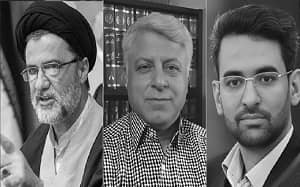
High-ranking officials in the Iranian regime offer conflicting, revealing statements that expose internal chaos, intelligence breakdowns, and increasing fears of societal division following the recent 12-day war.
In the aftermath of the recent 12-day military conflict involving Iran and Israel, a series of revealing and, at times, contradictory statements by Iranian officials have shed light on the regime’s deteriorating internal cohesion, intelligence vulnerabilities, and escalating fears of social unrest. These comments, made between July 12 and 13 (Tir 22–23), suggest a political system in deep crisis and struggling to maintain control amid external threats and internal confusion.