

THIS PAGE WILL BE UPDATED WITH THE LATEST NEWS
UPDATE: 11:00 AM CEST
Representative Shreve Introduces Bill to Counter Iran’s Regime of Terror
Washington, DC — Congressman Jefferson Shreve (R-IN) introduced legislation to thwart Iran’s and Hezbollah’s violent influence in Latin America. The Barring Adversarial Networks and Notorious Extremist Destabilizers (BANNED) in Latin America Act was introduced alongside Rep. Josh Gottheimer (D-NJ).
Mohsen Rabbani reached Latin America four decades ago to push the Islamic revolution’s global agenda. He later played a role in the bombing of the Jewish cultural center in Buenos Aires — claiming the lives of 85 and injuring 300. Iran’s terrorist proxies continue to infiltrate Latin America. Iranian state media networks Press TV, HispanTV, and Hezbollah’s AL Mayadeen broadcast antisemitic conspiracy theories, they glorify Hezbollah and Hamas, and promote Holocaust denial. Their anti-American and antisemitic influence continues to grow in Latin America.
UPDATE: 9:00 AM CEST
Echoes of 1988: The World Must Not Let Iran Repeat Its Crimes

As the 37th anniversary of Iran’s 1988 massacre approaches, the international community faces a chilling déjà vu. History threatens to repeat itself in bloodshed, as the world witnesses an escalating wave of political executions, state-sponsored incitement, and entrenched impunity in Iran. On July 7, 2025, Fars News, an outlet tied to Iran’s Revolutionary Guards (IRGC), openly praised the 1988 massacre of over 30,000 political prisoners. Under the headline “Why the 1988 Executions Should Be Repeated,” the editorial brazenly called for a similar campaign of mass killing against today’s political detainees. This is not mere rhetoric; it’s an official attempt to normalize and incite state-sponsored murder.
Foreign National Sentenced for Conspiring to Export U.S.-Made Drill Rigs to Iran in Violation of U.S. Sanctions Laws

Brian Assi, also known as Brahim Assi, 63, of Beirut, Lebanon, was sentenced to 44 months in prison for conspiring to violate the International Emergency Economic Powers Act (IEEPA) and the Iranian Transactions and Sanctions Regulations (ITSR), attempted unlawful export of goods from the United States to Iran without a license, attempted smuggling goods from the United States, submitting false or misleading export information, and conspiracy to commit money laundering.
“The defendant conspired to export millions of dollars of U.S.-made heavy machinery to Iran, a leading state sponsor of terrorism,” said John A. Eisenberg, Assistant Attorney General for National Security. “The National Security Division will find and prosecute those who illegally sell American products to our adversaries.”
UPDATE: 8:00 AM CEST
Water Crisis, A Major Problem for the People Under the Criminal Rule of the Mullahs
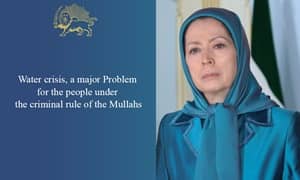
Like so many of Iran’s resources, the country’s water supplies have not been spared from the plunder and corruption of the clerical regime and its brutal IRGC enforcers. Years of mismanagement and exploitation have pushed Tehran and much of the country to the brink of a devastating water crisis. Power and water outages during the scorching summer have created unbearable conditions for deprived communities and ruined the livelihoods of countless farmers. Even regime officials and state experts are warning of an even worse crisis in the coming months.
The reckless exploitation of water resources by industries serving the IRGC, the overuse of underground water, and the construction of dams benefiting regime-affiliated and IRGC-owned complexes have pushed even Iran’s water-rich regions into crisis.
Iran’s Resistance Honors Mossadegh’s Legacy, Reaffirming “Neither Shah, Nor Mullahs”

On July 21, 2025, Iranians marked the 73rd anniversary of the historic 1952 national uprising, a day etched in the nation’s memory as a triumph of popular will against dictatorship. On that day, known in the Persian calendar as 30 Tir, the people of Iran poured into the streets with the defining chant, “Either Death or Mossadegh,” forcing the Shah to reinstate the democratically elected and independent Prime Minister, Dr. Mohammad Mossadegh.
The 30 Tir uprising was a powerful stand against both the Shah’s monarchic tyranny and the foreign exploitation of Iran’s national wealth. It symbolized a nation’s demand for a government that served its people.
Political Prisoner Raheleh Rahemipour, 72, at Imminent Risk

Raheleh Rahemipour, a 72-year-old political prisoner, remains detained in Qarchak Prison under life-threatening conditions, as medical and judicial authorities have both described her physical state as critical and urgent.
Despite suffering from multiple chronic and debilitating illnesses and requiring specialized medical care, judicial officials and prison authorities have so far refused to grant her conditional release or authorize her immediate transfer to a medical facility. Raheleh Rahemipour, who had previously endured nearly three years of imprisonment, sustained further physical harm following the destruction of parts of Evin Prison. Exposed to broken glass, falling plaster, and dust from the demolition, she has since experienced chronic headaches and intense chest pain.
Washington DC – Iranian Americans Rally to End Executions and Support Regime Change in Iran

Washington, DC — July 19, 2025: Members of the Iranian American community and supporters of the Iranian Resistance held a rally in front of the White House on July 19, 2025, to protest the Iranian regime’s rising wave of executions and repression of political prisoners. Organized by the Organization of Iranian American Communities (OIAC), the demonstration highlighted the regime’s systematic human rights abuses, including the ongoing persecution of supporters of the People’s Mojahedin Organization of Iran (PMOI/MEK). Protesters called for the immediate abolition of the death penalty and the release of all political prisoners.
Iranian Resistance Rally in Los Angeles Demands End to Executions and Freedom for Political Prisoners

On July 19, 2025, supporters of the Iranian Resistance gathered in Los Angeles to protest the escalating wave of executions and repression targeting political prisoners in Iran. Organized by the Iranian American Community of Northern California, the rally condemned the regime’s systematic human rights violations, including the alarming increase in death sentences against activists associated with the People’s Mojahedin Organization of Iran (PMOI/MEK). Protesters called for the immediate release of all political prisoners and the abolition of the death penalty in Iran.
Berlin Rally Demands Action to Stop Executions of Iranian Political Prisoners

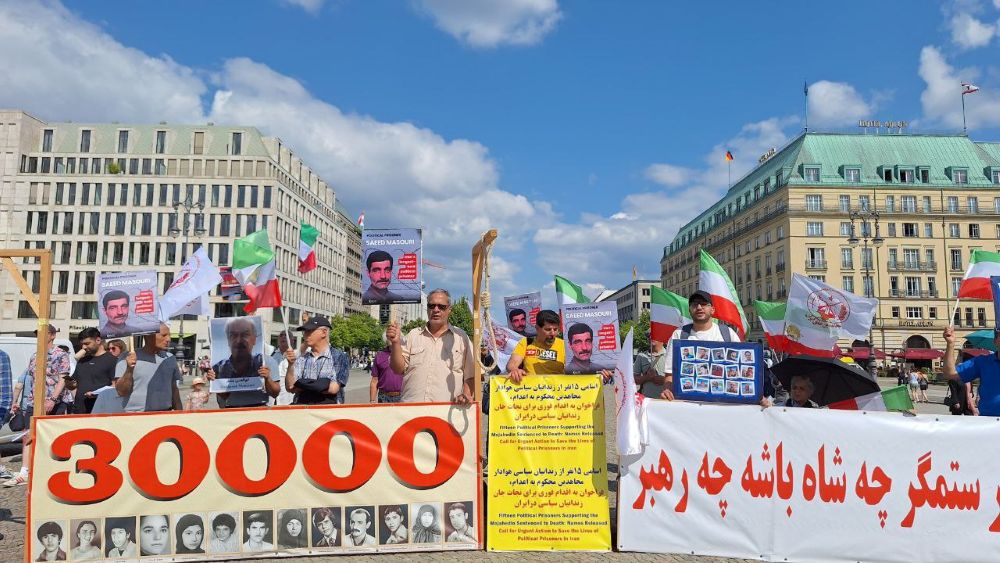
Berlin, Germany – July 19, 2025 – Supporters of the People’s Mojahedin Organization of Iran (PMOI/MEK) gathered in the Brandenburg Gate to protest the Iranian regime’s ongoing human rights abuses, particularly its use of systematic torture and the death penalty against political prisoners. The rally focused on the urgent situation of prisoners of conscience who face imminent execution for supporting the PMOI.
Malmö Rally Demands Action to Stop Executions of Iranian Political Prisoners

Malmö, Sweden– July 19, 2025 – Supporters of the People’s Mojahedin Organization of Iran (PMOI/MEK) gathered in Malmö to protest the Iranian regime’s ongoing human rights abuses, particularly its use of systematic torture and the death penalty against political prisoners. The rally focused on the urgent situation of prisoners of conscience who face imminent execution for supporting the PMOI.
Iran: Urgent Action to Stop a Repeat of the 1988 Massacre
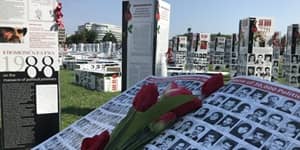
In the aftermath of the recent 12-day war between Iran and Israel, there is a growing concern that the Iranian regime may be poised to repeat the atrocities of the 1988 mass executions of political prisoners. The current environment—marked by heightened internal repression, a surge in executions, and inflammatory rhetoric from state-affiliated media—bears alarming similarities to the conditions that preceded the 1988 massacre.
In July 1988, following Iran’s acceptance of UN Security Council Resolution 598, which called for a ceasefire in the eight-year Iran–Iraq War, the Iranian government initiated a series of mass executions targeting political prisoners. Estimates suggest that up to 30,000 were hanged following summary trials. Most of them were affiliated with the opposition People’s Mojahedin Organization of Iran (PMOI or MEK).
Support from Families of Political Prisoners and Executed Individuals for Saeed Masouri
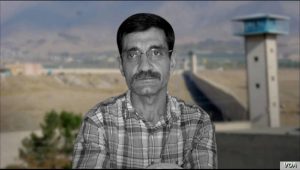
A group of families of political prisoners and executed individuals has issued a statement condemning the attempt to exile of Saeed Masouri to Zahedan Prison. Expressing their pain and anger, they reacted to the unjust and sudden transfer of Saeed Masouri—one of Iran’s longest-serving and most resilient political prisoners—calling it a blatant attempt to increase pressure on him and break his will. A part of the statement reads:
“Saeed Masouri, who has stood firm with dignity and a clear voice for 25 years in the prisons of the Islamic Republic, is now to be exiled to Zahedan Prison—a place designed not for justice but for the gradual elimination and silencing of resistance.”
IRGC Calls for ‘Psychological Preparation’ Amid Growing Fears of Snapback Sanctions
Iran’s Islamic Revolutionary Guard Corps (IRGC), fearing the possible activation of the snapback mechanism, has called for “psychological preparation of society” instead of “hope-building.” As speculation increases over the potential activation of the snapback mechanism by the three European signatories to the Joint Comprehensive Plan of Action (JCPOA), Iran’s state-run media have simultaneously warned of a severe reaction to this possible Western move and also pointed to its internal consequences. Tasnim News Agency, affiliated with the IRGC, on Sunday, July 20, recalled the position of Iran’s regime Foreign Minister Abbas Araghchi, expressed in an interview with a French publication conducted on July 10.
Iran’s Regime Threatens to Cause Insecurity in the Region If Snapback Sanctions Are Enacted

With the confirmation of the upcoming talks between the European Troika and the Iranian regime in Istanbul, the state-run daily Farhikhtegan wrote that Europe intends to suspend the snapback mechanism in exchange for the return of International Atomic Energy Agency (IAEA) inspectors. The deputy chairman of the Iranian regime’s parliament’s National Security Commission also referred to keeping the Strait of Hormuz open as Tehran’s bargaining chip in the negotiations.
Abbas Moqtadaei, deputy chairman of the regime’s parliamentary commission on national security and foreign policy, told the state-run Borna News Agency that if Europe activates the snapback mechanism, Tehran’s response would be to target the “security of a vast network of waterways.”
Iranian Regime Holds Retrial for Imprisoned Elite Student Amid Mounting Legal Irregularities
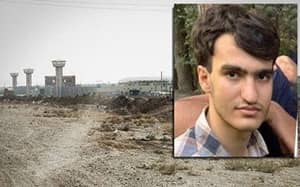
On Sunday, July 20, the Iranian regime brought Amir Hossein Moradi—an imprisoned elite student from Sharif University of Technology—to court for a retrial under harsh conditions, including handcuffs and leg shackles. Moradi is currently held in the Greater Tehran Penitentiary. The retrial was held at Branch 23 of the Tehran Revolutionary Court, presided over by Judge Seyyed Ali Mazloum. During the session, the judge informed Moradi of a new charge: “propaganda against the regime,” citing statements he had published from inside prison.
The court also attempted to conduct the retrial of Moradi’s co-defendant, Ali Younesi, in absentia. However, the Ministry of Intelligence refused to allow Younesi to appear in person, despite a formal request from his legal team. The court proceeded with the session without his presence.
Post-War Fallout and the Fractured State: Iran’s Deepening Internal Crisis

In the wake of the recent war, the Iranian regime finds itself entangled in a tightening web of post-conflict consequences. While state-controlled media aggressively promote narratives of “national unity” and social cohesion, the reality behind these orchestrated headlines is starkly different. Far from healing the country’s wounds, the aftermath of war has only exacerbated longstanding fissures—both within the ruling elite and between the regime and a deeply disillusioned population.
Inside the media machine, daily appeals for solidarity are juxtaposed with increasingly bitter internal disputes. The regime’s own factions, once seemingly restrained by the external crisis, have resumed their infighting with a vengeance. Observers now see clearly that the war did little to bridge ideological divides or shore up the regime’s legitimacy. Instead, it merely offered a temporary distraction—a fragile truce that quickly unraveled.
The Iranian People Remain Best Hope for Regime Change | Opinion

Forty-six years after Iran’s 1979 revolution, the Iranian regime’s true Achilles’ heel remains not foreign pressure or external war, but the growing power of its own people and their organized resistance. The mullahs’ rulers—unelected and unaccountable—face a citizenry that is increasingly emboldened and defiant. With every new wave of protest, every strike, and every act of civil disobedience, the regime’s response is not reform, but repression.
In recent years, the world has witnessed a dramatic upsurge in state violence. The regime executed 975 people last year—making Iran the world’s top per capita executioner. Many of these victims are political prisoners, dissidents, or members of marginalized communities. In 2022, a new nationwide uprising erupted in response to the murder of Mahsa Amini. Since then, tens of thousands have been arrested and tortured, and hundreds have been murdered, executed, or disappeared.