


THIS PAGE WILL BE UPDATED WITH THE LATEST NEWS
UPDATE: 08:00 PM CET
Iranian Missiles Strike Haifa Refinery and Gulf Energy Sites in Retaliation for Israeli Gas Field Attack
Inside Iran, the war entered the Persian New Year under conditions of severe disruption. A near-total internet blackout entered its 21st day on Friday, while U.N. Special Rapporteur Mai Sato warned of a deepening human-rights crisis, urging Iranian authorities to release detainees, restore internet access and halt excessive force against civilians.
On the regime side, the losses now extend across Iran’s political, paramilitary, media and security structures. Friday, Iranian state media confirmed the death of IRGC spokesman and deputy public-relations chief Ali Mohammad Naini.
Israeli and other media have also reported the killing of Esmail Ahmadi, identified as the Basij intelligence chief, while Iranian and opposition-linked outlets separately reported the deaths of Mehdi Qureishi, described as a commander in the IRGC Aerospace Force in Isfahan, and Mohammad Mehdi Farhadi Ramin, an Iranian cyber operative killed in Hamadan. Taken together, the losses point to sustained attrition not only in the regime’s field command, but also in the institutions that enforce domestic control, manage strategic messaging and support cyber operations.
The spokesman for Iran's paramilitary Revolutionary Guard says that Tehran is still building missiles, seeking to counter a claim by Israeli Prime Minister Benjamin Netanyahu that it no longer could. https://t.co/gsjoH5X1z8
— The Associated Press (@AP) March 20, 2026
In the northwest, Iranian state media said 13 Basij members were killed and 18 wounded in a checkpoint attack in Tabriz’s Qaramalek district. Basij checkpoints and internal-security positions remain active across Iran and are increasingly part of the battlefield.
Beyond Iran’s borders, the most consequential escalation in the added material is the widening energy war. Reuters confirmed that an Iranian strike damaged essential infrastructure at the Haifa refinery complex in northern Israel, though most production remained operational and no casualties were reported there. The strike followed Israel’s attack on Iran’s South Pars gas field and the nearby Asaluyeh processing hub on March 18, a move that sharply expanded the conflict into the region’s energy system.
Any prolongation of the Iran war risks creating an unprecedented crisis in energy supplies that sooner or later will hit every corner of the global economy. But it's already clear that some countries are either more exposed to that impact or less able to deal with it pic.twitter.com/J9S5MsvXZ4
— Reuters (@Reuters) March 20, 2026
That retaliatory cycle has now spread well beyond Israel and Iran. Reuters reported that Iranian attacks hit or disrupted energy infrastructure in Qatar, the UAE, Saudi Arabia, Kuwait and Bahrain, with Qatar saying the damage at Ras Laffan cut about one-sixth of its LNG capacity. Bahrain declared force majeure after a strike on its Sitra refinery, and Iraq cut oil output because of security risks.
The economic fallout is already global. Oil Price reported European gas prices jumping roughly 35% in a day, while oil markets remained highly volatile and the International Energy Agency moved to release 400 million barrels from reserves. Energy prices have surged sharply, and the market shock is being driven by damage to Gulf infrastructure and fears over flows through Hormuz.
How are Iranians getting online despite an internet blackout in the country? AFP interviews an expert on VPNs https://t.co/NydiaRXSiI pic.twitter.com/h3GdyGpr7i
— AFP News Agency (@AFP) March 20, 2026
On the strategic side, U.S. intelligence officials have framed Iran as weakened but not broken. Reuters reported that Director of National Intelligence Tulsi Gabbard told Congress that Iran’s government appears intact, if degraded, and that U.S. and Israeli war aims are not the same: Israel is focused on disabling Iran’s leadership, while U.S. President Donald Trump’s stated objective is to destroy Iran’s ballistic-missile capability and navy.
The broader death toll continues to rise across multiple theaters. The latest compiled casualty accounting says the war has killed thousands across the Middle East since February 28, including more than 1,300 people in Iran by local-authority counts, over 1,000 in Lebanon by Lebanese official counts, and smaller but still significant tolls in Israel, Iraq, the Gulf and among U.S. forces.
UPDATE: 02:00 PM CET
Iran: “the External War Is Masking Another Battle — That of the People Against the Regime”

After several weeks of conflict, the hypothesis of a rapid collapse of the Iranian regime has not materialized. Despite nearly 8,000 targets reportedly struck according to CENTCOM, and the elimination of Ali Khamenei in the early hours of the conflict, followed by that of numerous senior military and security officials, the ruling power remains in place.
On March 12, Reuters, citing three sources close to U.S. intelligence assessments, reported that the Islamic Republic was not facing an imminent risk of collapse. This situation highlights the limits of a strictly military approach to what is, above all, a political crisis.
UPDATE: 12:30 PM CET
Iranian Opposition Warns Diplomacy Does Not Work with the Khameneis’ “Clerical Monarchy” and Calls on the EU for Support to Overthrow It

The Iranian opposition is calling for a complete transformation in the country — the fall of the regime and support from the European Union — and warns that diplomacy is ineffective, amid the ongoing conflict in the Middle East. This was stated at a press conference held in Brussels on Wednesday by Mohammad Mohaddessin, chairman of the Foreign Affairs Committee of the National Council of Resistance of Iran (NCRI), who issued a stark warning to the international community.
On the eve of the European Council summit taking place this Thursday in the EU capital, Mohaddessin denounced that the policy of “appeasement” pursued over four decades has allowed the regime to reach an unprecedented level of danger.
The representative of the resistance emphasized that this diplomatic strategy, based on concessions and negotiations, has acted as a “lifeline” for a dictatorship that they consider incapable of reform. According to Mohaddessin, sustaining the Iranian regime is comparable to “nurturing a snake” — a practice that, he argued, inevitably leads to armed conflict, which Europe is still trying to avoid through what the NCRI describes as failed tactics.
While EU leaders have recently insisted on pursuing negotiations, the NCRI maintains that this is not the path to confronting the ayatollahs.
Justice Department Disrupts Iranian Cyber Enabled Psychological Operations

The Justice Department announced the seizure of four domains as part of an ongoing effort to disrupt hacking and transnational repression schemes conducted by the Islamic Republic of Iran’s Ministry of Intelligence and Security (MOIS). The affidavit supporting the seizure warrant can be found here. The seized domains – Justicehomeland[.]org, Handala-Hack[.]to, Karmabelow80[.]org, and Handala-Redwanted[.]to – were used by the MOIS in furtherance of attempted psychological operations targeting adversaries of the regime by claiming credit for hacking activity, posting sensitive data stolen during such hacks, and calling for the killing of journalists, regime dissidents, and Israeli persons. For example, the MOIS used the Handala-hack[.]to domain to claim credit for a March 2026 destructive malware attack against a U.S.-based multinational medical technologies firm.
UPDATE: 09:30 AM CET
How The Iranian Resistance Views the EU’s Role in the Middle East

This Thursday, March 19, with the summit of the European Council as a backdrop, the National Council of Resistance of Iran (NCRI) has called for a demonstration to urge the European Union to support its president, Maryam Rajavi, as the future leader of Iran. They also expect new gestures from the Twenty-Seven, such as closing Iranian embassies in their territories, expelling their diplomatic corps, and recognizing the Iranian people’s right to resist against the Revolutionary Guard.
The chairman of the Foreign Affairs Committee of the NCRI, Mohammad Mohaddessin, explained to the media in Brussels this past Wednesday morning that “the European Union’s policy of peace has been the most important external factor in sustaining the regime and preventing its downfall.” In his view, “a foreign war” will not cause the fall of the ayatollahs’ regime, and he maintains that “the only solution to this crisis is regime change by the Iranian people and their organized resistance.”
UPDATE: 08:30 AM CET
Maryam Rajavi’s Message to the Iranians’ Rally in Brussels Concurrent with the EU Leaders’ Summit
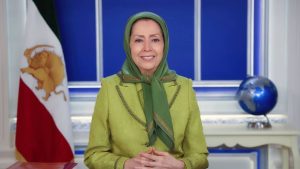
Mrs. Maryam Rajavi’s message: “In these urgent and turbulent times that have engulfed our beloved Iran, your voices are a cry for peace and freedom, echoing the will of a people who have never desired the rule of the clerical regime, nor its bombs and missiles. Salute to you, who seize every moment to stand in defense of the people and their Resistance. Today, you have come to tell the European Union to recognize the will and the right of the Iranian people to bring down religious fascism. Today, Khamenei’s son struggles to preserve a decaying dictatorship, while the Shah’s son seeks to restore one long dead.
But the people of Iran say: peace and freedom. The people of Iran declare: a democratic republic, sovereignty vested in the people, and an end to all forms of dictatorship, whether of the Shah or the mullahs.”
The Failure of Appeasement and the Unstoppable Rise of Iran’s Organized Resistance

Following the massive nationwide uprisings of December 2025 and January 2026, the Iranian regime finds itself at a historic impasse. The ruling clerics only managed to maintain their fragile grip on power through the massacre of thousands of protesters.
However, recent developments inside the country demonstrate a profound shift in the dynamics of the Iranian street: the homegrown resistance movement has not been stifled. Instead, it is rapidly evolving, moving beyond unorganized protests into a capable, organized force systematically dismantling the regime’s machinery of repression.
For years, Western policymakers have harbored the illusion that the Iranian regime would either moderate itself, collapse spontaneously, or be overthrown through social media campaigns alone. This miscalculation has only fueled a destructive policy of appeasement.
Fatemeh Abbasi, Shot While Sheltering Protesters, Dies from Her Injuries

Fatemeh Abbasi, a resident of Isfahan, has died after weeks of suffering from severe injuries sustained during January 2026 protests in the city. She had been shot by security forces while attempting to shelter protesters.
On January 8, Fatemeh was standing on Keshavarz Boulevard in Isfahan when she attempted to provide refuge to protesters and close the door of her home. During the incident, she was shot in the neck by security forces. The gunshot wound resulted in spinal cord severance, leaving her critically injured.
After nearly two months of hospitalization and enduring the devastating consequences of her injuries, Abbasi passed away on Thursday, March 11.
Iran’s Way Forward: Beyond War and Dictatorship
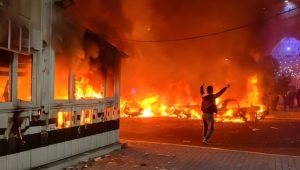
Iran stands at a decisive moment in its modern history—but its path forward will not be carved by missiles, bombs, or drones. The country’s passage through this critical juncture depends instead on the formation of a national front grounded in a clear political program and a unified national will capable of responding to today’s complex realities. The stakes are shaped by decades of struggle. From June 20, 1981, to January 2026, successive waves of uprisings have defined the Iranian people’s demand for change. Preserving the aspirations and achievements of these movements requires more than resistance—it demands organization, clarity of purpose, and a coherent political alternative.
At its core, this moment is a call for vigilance. Iran’s current exceptional conditions underscore the necessity of a front that categorically rejects all forms of dictatorship and foreign dependency. Such a front must not only articulate national interests but also embody them through a viable and actionable alternative.
Mohammad Mossadegh and the Struggle for Sovereignty: Oil Nationalization and the Fight Against Structural Dependency
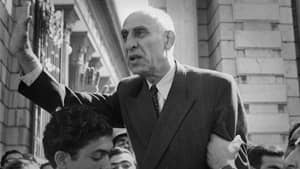
The nationalization of the Iranian oil industry was the result of a historic movement within Iran’s parliament (Majlis) to take control of the country’s vast oil resources, which had long been managed by private companies under dominant foreign influence. Legislation to nationalize the industry was passed on March 15, 1951, and ratified two days later. This decision led to the nationalization of the Anglo-Iranian Oil Company and the establishment of the National Iranian Oil Company. At the forefront of this movement was Dr. Mohammad Mossadegh, a leading figure of the National Front who would soon become Iran’s prime minister.
Dr. Mossadegh possessed a sophisticated understanding of global power dynamics. He recognized that Iran’s chronic underdevelopment did not stem from a lack of natural resources, but from what can be described as structural dependency—a system in which national wealth remained subject to foreign control and influence.
His political struggle began during the 14th Majles (Parliament), when he introduced legislation to prohibit negotiations over oil concessions. This was not merely a procedural move; it represented a strategic attempt to sever Iran’s economic subordination to foreign powers.
Public Executions in Qom: Iranian Regime Hangs Three Young Protesters Ahead of Nowruz
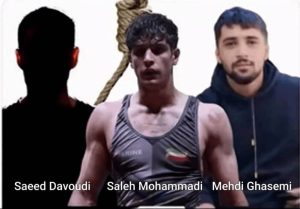
In a shocking act of repression, the Iranian regime carried out the public execution of three young detainees linked to the January 2026 uprising, intensifying fears of a new wave of state violence aimed at suppressing growing dissent.
On Thursday, March 19, authorities executed three prisoners—19-year-old wrestling champion Saleh Mohammadi, along with Mehdi Ghasemi and Saeed Davoudi—in the city of Qom. The executions took place just days before major national and religious occasions, including Nowruz and Eid al-Fitr, underscoring what observers describe as a deliberate attempt to instill fear in society.
According to statements published by the regime’s judiciary, the three men were convicted on charges including “enmity against God” (moharebeh), allegedly for using cold weapons during protests and inciting violence against state security forces. Authorities claimed the executions were carried out after the completion of legal procedures and in the presence of local residents.
Exclusive Report on Political Prisoners on Death Row and Recent Victims in Iran
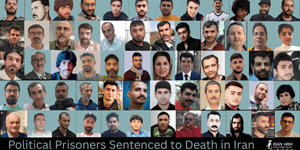
While the world moves toward the abolition of the death penalty, the Islamic Republic of Iran continues to use “execution” as its most extreme and irreversible tool of repression against political opponents. This report contains a documented list of political prisoners on the verge of execution. Beyond their ethnic or ideological affiliations, these individuals are victims of a system that sacrifices the “Right to Life” for its own political survival.
Warning: All sentences in this list were issued through judicial processes that lack the minimum standards of a “Fair Trial” as mandated by Article 14 of the International Covenant on Civil and Political Rights (ICCPR).
The Iranian judiciary has disregarded age limits and its international obligations in issuing death sentences. The age range of the condemned indicates a “blind repression.”
From Khamenei to IRGC Commanders: 16 Iranian Leaders Killed in the 2026 War
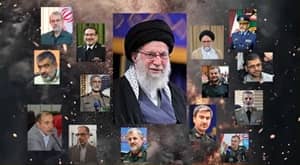
A targeted campaign against Iran’s power structure eliminated top political, military, and intelligence figures—here’s who they were and why their deaths matter.
The 2026 Iran war did more than escalate regional tensions—it dismantled key layers of Iran’s leadership in a coordinated wave of targeted strikes. From Supreme Leader Ali Khamenei to senior military planners and intelligence officials, at least 16 high-ranking figures were killed, signaling what analysts describe as a “decapitation strategy” aimed at disrupting Iran’s command structure.
This article breaks down who they were, their roles, and why their deaths matter—listed in order of political and institutional weight.
MEK Supporters in Gothenburg Mark 112 Weeks of “No to Execution Tuesdays”

Gothenburg, Sweden — March 17, 2025 — Supporters of the People’s Mojahedin Organization of Iran (PMOI/MEK) held a rally to mark the 112th consecutive week of the “No to Execution Tuesdays” campaign, a movement protesting the Iranian regime’s escalating wave of executions and ongoing systematic repression.
Brussels Rally Calls on EU to Recognize NCRI Provisional Government and Support Democratic Change in Iran

Brussels, Belgium — March 19, 2026 — A large rally of freedom-loving Iranians and supporters of the Iranian Resistance took place in Brussels on Thursday, coinciding with the European Union summit and the Iranian New Year. Participants from diverse backgrounds—including Kurdish, Baluchi, and other Iranian nationalities—gathered in front of EU institutions to voice their unified demand for a free and democratic republic in Iran.
Chaharshanbe Suri Rally in Oslo Calls for a Free Iran, Rejecting Both Shah and Mullah Dictatorships

Oslo, Norway – March 17, 2026 — Supporters of the People’s Mojahedin Organization of Iran (PMOI/MEK) marked Chaharshanbe Suri by lighting fires of resistance, rejecting both the Shah and the ruling clerics. They chanted in support of overthrowing tyranny and establishing a democratic republic in Iran. Freedom-loving Iranians called for the overthrow of the clerical regime and expressed support for the MEK’s Resistance Units inside Iran.