

THIS PAGE WILL BE UPDATED WITH THE LATEST NEWS
UPDATE: 11:00 PM CET
Inside Iran, South Pars Aftermath Sets the Tone as War Spreads Across Gulf Energy and Shipping
Inside Iran, the dominant development on Thursday remained the fallout from Wednesday’s strike on the South Pars gas field and the adjoining Asaluyeh hub, the core of Iran’s domestic gas system. Reuters reports that South Pars supplies roughly 70% to 75% of Iran’s gas, and Iranian officials described the attack as the start of “a new stage in the war.” Foreign Minister Abbas Araqchi used calls with Turkey, Egypt and Pakistan to seek regional coordination after the hit on South Pars and Asaluyeh. At the same time, Israel’s claim that it killed Iranian Intelligence Minister Esmail Khatib remained unconfirmed by Tehran, and NetBlocks said Iran’s nationwide internet blackout had entered its 20th day and exceeded 456 hours, making it the longest recorded shutdown in the country’s history.
Iran’s leadership signaled that the strike on its energy backbone would not be treated as a routine military hit. Reuters quoted an Iranian military spokesman as saying the attacks on South Pars and Asaluyeh had opened a new phase in which Tehran would target energy assets linked to the United States and American investors in the region. That threat carried weight because the South Pars strike moved the war beyond missile sites, military bases and command targets into infrastructure that underpins Iranian household fuel supply, electricity generation and petrochemical feedstock.
An Israeli strike on Iranian facilities in the South Pars gas field marked a significant escalation in the war with Iran, prompting a furious Iran to attack major energy facilities of its Gulf neighbors, sending oil prices surging, and leading President Trump to threaten to "blow… pic.twitter.com/H4a3GHBcVZ
— CNN (@CNN) March 19, 2026
The Israeli military says it has struck Iranian targets in the Caspian Sea for the first time. https://t.co/OzElrzGX5P
— The Associated Press (@AP) March 19, 2026
The regional response was immediate and severe. Iranian regime’s strikes hit Gulf energy infrastructure after the South Pars attack, with Reuters reporting damage to Qatar’s Ras Laffan LNG complex, refinery disruptions in Saudi Arabia and fires at Kuwaiti refineries, while the UAE shut gas facilities after intercepting missiles. QatarEnergy’s chief executive said the damage knocked out two of Qatar’s 14 LNG trains and one of its two gas-to-liquids plants, cutting 12.8 million tons per year of LNG capacity, or about 17% of exports, for an estimated three to five years. That made the latest cycle of strikes the most damaging single blow yet to Gulf gas supply and one of the clearest signs that the war has entered an energy-for-energy phase.
Diplomatic reaction hardened quickly. In Riyadh, 12 Arab and Islamic foreign ministers — from Azerbaijan, Bahrain, Egypt, Jordan, Kuwait, Lebanon, Pakistan, Qatar, Saudi Arabia, Syria, Türkiye and the UAE — issued a joint statement condemning Iranian ballistic missile and drone attacks on residential areas and civilian infrastructure, including oil facilities, desalination plants, airports and diplomatic premises, and demanded that Iran halt its attacks immediately.
Exclusive: Iran attacks wipe out 17% of Qatar’s LNG capacity for up to five years, QatarEnergy CEO says https://t.co/YbVV5V0C6B https://t.co/YbVV5V0C6B
— Reuters (@Reuters) March 19, 2026
The same statement also condemned Israel’s attacks on Lebanon and reaffirmed support for Lebanese sovereignty. U.N. Secretary-General António Guterres separately said the war in the Middle East “must stop,” that diplomacy must prevail, and that Resolution 2817 must be respected as Gulf countries continue to be targeted. Gulf states also asked for an urgent debate at the U.N. Human Rights Council over Iranian strikes on civilians, infrastructure and commercial vessels.
On the U.S. side, the public message remained mixed between deterrence and escalation. U.S. President Donald Trump said Israel struck South Pars without U.S. or Qatari involvement and warned that any renewed Iranian strike on Qatar could trigger overwhelming U.S. retaliation against the entire field.
🇮🇷 Iran has executed three men who were accused of killing police officers during protests in January, with activists warning of the risk of a new surge in hangings as war rages with Israel and the United States.
➡️ https://t.co/zREG9fLKW8 pic.twitter.com/Jtuiz89cyf— AFP News Agency (@AFP) March 19, 2026
At the Pentagon, Pete Hegseth said U.S. war aims had not changed, while Gen. Dan Caine said U.S. forces were flying farther east and deeper into Iranian airspace to hunt one-way attack systems. Official Pentagon-linked coverage of the briefing said A-10 aircraft are now operating on the southern flank against fast-attack craft in the Strait of Hormuz, while CENTCOM separately said U.S. forces recently used multiple 5,000-pound deep-penetrator munitions against hardened Iranian missile sites near the strait. Reuters also reported that the administration is weighing additional troop deployments, including options tied to tanker protection in Hormuz and potential missions around Kharg Island.
Markets treated the latest strikes as a structural shock, not just another war-day spike. Reuters said Brent crude reached $119.13 before settling at $108.65, while European gas prices surged and the European Central Bank warned the Iran war could materially affect near-term inflation. The governments of Britain, France, Germany, Italy, Japan and the Netherlands called for an immediate moratorium on attacks against oil and gas infrastructure.
CRACKDOWN: Iran's intelligence ministry arrests 97 people accused of being 'soldiers of Israel' in latest security sweep following the assassination of intelligence minister Esmaeil Khatib. https://t.co/ZowNK90PWq
— Fox News (@FoxNews) March 19, 2026
The core market judgment now is that direct attacks on South Pars and Ras Laffan have turned the conflict into a wider struggle over energy production, maritime security and inflation, with consequences well beyond the battlefield.
Taken together, the day’s developments showed a clear pattern: the center of gravity is still inside Iran, where attacks on South Pars and related facilities have changed the character of the war, but the effects are now radiating outward through Gulf infrastructure, Hormuz security, allied diplomacy and global energy pricing.
UPDATE: 09:30 AM CET
PMOI Resistance Units Light Up Iran in Daring Charshanbe Suri Campaign
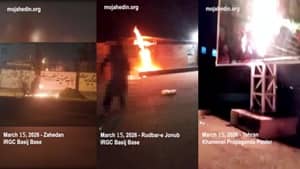
On March 15, PMOI Resistance Units carried out 15 daring operations across the country. Timed to coincide with the traditional Charshanbe Suri (Fire Festival) campaign against the regime, the activists successfully targeted centers of state repression, corruption, and terrorism. These coordinated operations were executed despite a massive security crackdown, the shadow of war, and the regime’s increasing threats to shoot and kill anyone engaging in protest activities.
Spanning multiple major cities and provinces, the Resistance Units systematically targeted the symbols and infrastructure of the ruling apparatus. In Tehran, a member of the Resistance Units set fire to a poster of supreme leader Ali Khamenei while shouting, “Salute to Rajavi.” Activists also torched Islamic Revolutionary Guard Corps (IRGC) Basij bases in Mashhad, Rudbar-e Jonubi, Takestan, and Zahedan. In Piranshahr, activists targeted an IRGC Basij base while chanting, “Salute to the National Liberation Army and the Resistance Units.” In Tabriz, two separate operations saw the signposts of IRGC Basij bases set ablaze.
Report by Sara Hossain, Warns of Escalating Repression and Human Rights Violations in Iran
At the sixty-first session of the United Nations Human Rights Council, Sara Hossain, Chair of the Independent International Fact-Finding Mission on Iran, presented a comprehensive report outlining a deeply troubling human rights situation in the country. Drawing on extensive documentation and first-hand testimony, she warned of the continued systematic repression and the intensification of fundamental rights violations, particularly targeting women.
In her statement, Sara Hossain explained that the Mission’s work follows a mandate renewed in April 2025 by the Human Rights Council to investigate “serious and ongoing violations of human rights” in Iran. The findings are based on hundreds of pieces of evidence, including in-depth interviews with 164 victims and witnesses, conducted both inside and outside the country. The Mission also reviewed dozens of official reports published by the Iranian government.
Beyond Shah and Supreme Leader: A Viable Alternative Emerges for Iran
A recent analysis by John Bercow, published in Daily Express on March 16, 2026, raises a critical question about Iran’s future: if neither the ruling clerical establishment nor a return to monarchy offers a solution, what viable alternative exists?
Bercow’s central argument is clear: Iran today is not witnessing renewal, but entrenchment. Following the death of Ali Khamenei, the rapid elevation of his son, Mojtaba Khamenei, underscores a system struggling to preserve itself rather than reform.
According to Bercow, this transfer of power—effectively a hereditary succession within a system that once rejected monarchy—reveals a regime at a dead end. Rather than projecting authority, the move signals fragility, driven by internal fears of instability and the possibility of renewed nationwide uprisings, particularly in the wake of protests earlier in 2026.
The Future of Iran: Organized Resistance as the Only Path to Democratic Change
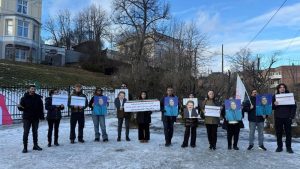
As the current war and waves of retributive military strikes transform the regional atmosphere and Iran’s internal scene, the debate over the political future of Iran has taken on unprecedented urgency. Alongside external pressures, Iran is confronting deep domestic challenges: the echoes of recent years of nationwide protests, widening social divides, and intensifying debates over the structure of power and succession within the regime. These overlapping crises have revived an old but fundamental question — what forces will shape Iran’s political destiny after the dust of conflict settles?
While the regime seeks to exploit regional turmoil as a means of survival, its internal decay and the persistence of rebellion across the country signal that its downfall is inevitable. Yet removing a dictatorship is only part of the struggle. The real challenge is ensuring that the transition leads to democracy — not another cycle of tyranny, chaos, or foreign domination. That is the dividing line between genuine national transformation and the illusions being peddled by remnants of the past.
Iran at the Crossroads: Why Only a Genuine Alternative Can Navigate the Nation Through Crisis
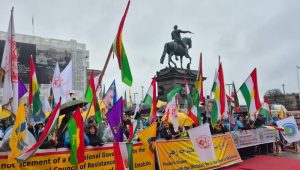
As Iran reaches the end of the Persian year 1404, it finds itself at a decisive and perilous turning point—caught in the vortex of war and historical repetition. This is not merely another crisis; it is a defining moment that will determine whether the country continues its descent into conflict and authoritarianism or charts a new course toward freedom and sovereignty.
Iran will not emerge from this sharp historical turn through missiles, bombs, or drones. Military tools have never resolved the nation’s fundamental crises. Instead, the path forward lies in the formation of a cohesive national front—one that is anchored in a clear program and driven by a unified national will. Only such a framework can respond effectively to the complexities of the present moment.
The stakes are not abstract. The demands and achievements of seven major uprisings—from June 20, 1981, to January 2026—must be safeguarded. These movements represent decades of resistance, sacrifice, and political maturation. Preserving their legacy requires more than remembrance; it demands organization, clarity, and decisive action. It also requires vigilance against opportunistic forces—those “bandits at the pass” who seek to exploit crises for their own gain.
The Death of Ali Larijani Deals a Heavy Blow to the Iranian Regime’s Security Apparatus
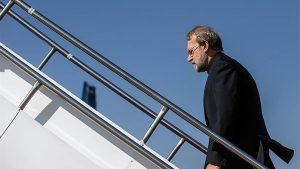
The Secretariat of the Supreme National Security Council of Iran’s regime announced on the evening of Tuesday, March 17, after about 12 hours of delay, the killing of Ali Larijani, the council’s secretary. This comes after the Israeli military had earlier reported targeting him, and speculation about his fate had increased in recent hours. According to the official statement, Larijani was killed in the attack along with his son Morteza, Alireza Bayat, the deputy for security affairs at the Secretariat of the Supreme National Security Council, and several of his bodyguards. The exact location of the attack has not yet been fully disclosed, but some regime-affiliated sources have stated that the operation took place at a residential location in the Pardis area near Tehran.
Iran in News Quarantine: Organized State Crimes and the Danger of Execution in Darkness
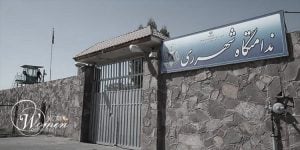
The sudden and suspicious halt in reporting executions on human rights reference websites since March 8, coinciding with military conflicts and a nationwide internet shutdown, is a serious alarm for a human rights catastrophe in absolute silence. This blackout occurs while the regime had already executed 648 people in only the first two months of 2026. By exploiting the state of armed conflict, the Islamic Republic has now stripped prisoners of their media protection and moved the process of deprivation of life to dark backrooms. Dr. Mai Sato, the UN Special Rapporteur, warned at the recent Human Rights Council session that the Islamic Republic is using war as a tool for an unprecedented escalation of domestic repression. She announced the death toll of the January protests at over seven thousand, but new visual evidence, including a shocking image from mortuaries showing the number 11780 on the body of one of the victims of the extrajudicial killings during the January 2026 uprising, proves that the scale of the massacre is far broader than initial international estimates.
Iran’s Political Prisoners Are in the Firing Line
Vida Mehrannia last spoke to her husband, Ahmadreza Djalali, on March 3, when he called from inside Iran’s notorious Evin Prison, as bombs rained down on Tehran.
“The connection was very bad, and it kept disconnecting, but he called me back, and we talked for maybe two minutes,” she told Foreign Policy.
It was the first time they’d been able to speak since the United States and Israel launched attacks on Iran on Feb. 28.
Djalali, a Swedish Iranian scientist, was arrested by the regime in 2016 during a visit to an Iranian university for an academic workshop. He was later convicted of espionage and sentenced to death, a charge refuted by international investigations. His family has been appealing for his release for almost a decade. Today, he’s just one of thousands of political prisoners at risk in Iran, both from U.S. and Israeli airstrikes and from a vengeful Iranian regime.
Ali Larijani’s Death: Will It Deepen Power Fractures in Iran?

Reports of Ali Larijani’s death—long regarded as one of the Islamic Republic’s key political intermediaries—have raised urgent questions about the future balance of power in Iran. The significance of this development goes beyond the loss of a veteran official; it touches on a role he quietly played for years: managing internal fractures within the system. His absence may now carry broader consequences.
Larijani was widely seen as a figure capable of navigating between competing factions—particularly between those pushed to the margins and those firmly in power. This ability made him one of the few officials who retained influence within the formal structure while remaining acceptable, or at least tolerable, to multiple political camps.
Supporters of the Iranian Resistance Rally in Geneva, Call for a Democratic Republic in Iran

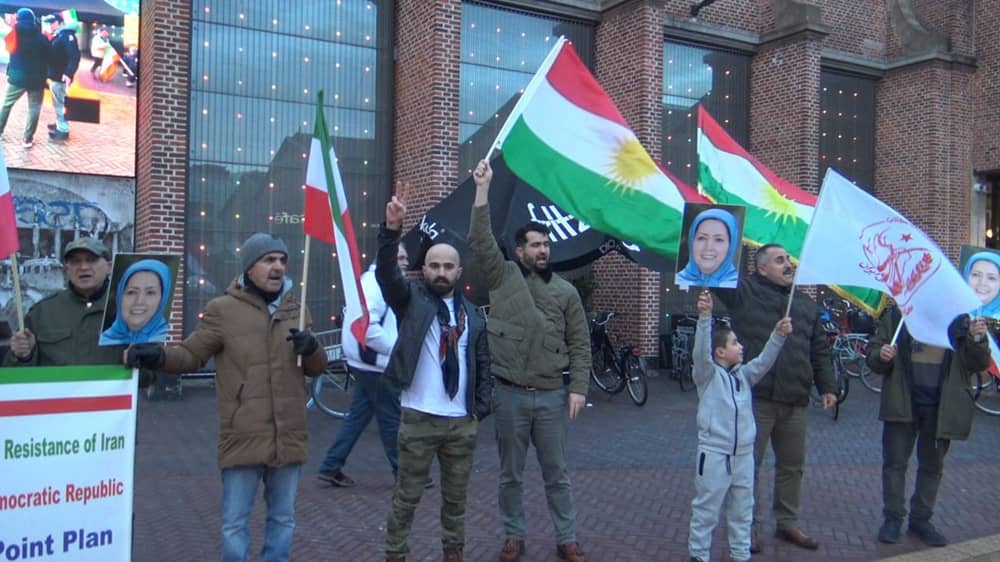
Geneva, Switzerland — March 16, 2026: Supporters of the Iranian Resistance, joined by Kurdish, Baluch, and Arab compatriots, as well as representatives of other ethnic minorities, gathered outside the United Nations headquarters in Geneva. They called for the overthrow of the clerical dictatorship and expressed support for the National Council of Resistance of Iran’s (NCRI) announcement of a provisional government.