


THIS PAGE WILL BE UPDATED WITH THE LATEST NEWS
UPDATE: 03:00 PM CEST
The Real War in Iran

While the world follows the fragile ceasefire between the United States, Israel, and Iran, another and far less reported war is unfolding inside Iran. In recent weeks, the clerical regime has executed political prisoners almost daily. At the same time, massive forces have been mobilized to control the population. This says a great deal about the regime’s real priorities. Among those executed are primarily young men who took part in protests. Many of them had links to the People’s Mojahedin Organization of Iran, a member organization of Iran’s democratic opposition coalition, the National Council of Resistance of Iran, which is led by women—headed by Maryam Rajavi.
The former UN Special Rapporteur on human rights in Iran, Javaid Rehman, has documented that the regime’s mass killing of political prisoners in 1988 constitutes both crimes against humanity and genocide. He notes that a large majority of the victims were members and supporters of the People’s Mojahedin.
The NCRI has presented a political alternative to clerical rule. Rajavi’s Ten-Point Plan outlines a secular and democratic Iran based on gender equality, respect for minorities, the abolition of the death penalty, and a country free of nuclear weapons.
UPDATE: 12:30 PM CEST
Iran Has Executed at Least 21 People Since Start of War: UN Human Rights Chief

The Iranian government has executed at least 21 people since the U.S. and Israel launched strikes against the country, United Nations High Commissioner for Human Rights Volker Türk said Wednesday.
In a press release, Türk’s office said that since the conflict began on Feb. 28, the Islamic Republic regime has executed at least nine people in connection with anti-government protests in January. The regime has also executed 10 people for alleged membership in opposition groups and two on espionage charges.
“I am appalled that — on top of the already severe impacts of the conflict — the rights of the Iranian people continue to be stripped from them by the authorities, in harsh and brutal ways,” Türk said in the release.
Bessent Warns Kharg Island Nearing Capacity as US Tightens Iran Oil Squeeze
 Treasury Secretary Bessent is sending an admin approved message that the US economic squeeze on Iran is tightening, with Kharg Island’s storage crisis threatening to force production cuts and inflict lasting damage on Tehran’s oil sector. Not fresh news this.
US Treasury Secretary Bessent says Kharg Island is nearing storage capacity, costing Iran around $170mn per day in lost revenue and risking permanent damage to its oil infrastructure.
Summary:
- Treasury Secretary Scott Bessent said Kharg Island, Iran’s primary oil export terminal, is approaching storage capacity
- He warned this will force Iran to reduce oil production, resulting in roughly $170 million per day in lost revenue
- Bessent said the situation risks causing permanent damage to Iran’s oil infrastructure
- The Treasury has further sanctioned much of Iran’s shadow fleet of tankers used to circumvent existing restrictions
- Washington has threatened to cut off from the US banking system any country or company that continues to buy Iranian oil
- The remarks appear to be deliberate public messaging rather than breaking developments, designed to reinforce economic pressure on Tehran amid ongoing nuclear negotiations
UPDATE: 07:30 AM CEST
‘No To Shah, No to Mullahs’: The Defiant Message of PMOI Martyr Abolhassan Montazer

On April 4, 2026, the Iranian regime’s killing machine claimed the lives of PMOI members Vahid Bani Amerian and Abolhassan Montazer. Their hangings followed the executions of four other members of the People’s Mojahedin Organization of Iran (PMOI/MEK) over a bloody 48-hour period just days prior. Montazer, a 66-year-old architect and veteran freedom fighter, had endured severe physical and psychological torture, sham trials, and suffered from multiple illnesses, including heart, lung, and kidney diseases. Yet, until his final moments, his spirit remained unbroken.
Recently, a powerful message recorded by Abolhassan Montazer surfaced, delivered directly to both the ruling clerics and the remnants of the ousted Pahlavi dictatorship. His defiant words serve as a living testament to the true nature of the Iranian people’s resistance. They shatter the illusions propagated by monarchists that Iranians wish for a return to the past, proving instead that the ongoing revolution is a forward-looking, democratic movement fighting for a free republic.
Iranian Regime Executes 24-Year-Old Woman Victim of Forced Marriage

A 24-year-old woman and victim of forced marriage has been executed in Tabriz Central Prison. Hanifeh Avandi, a 24-year-old Turk woman from Tabriz, was executed on Sunday, April 19, at the city’s central prison.
Hanifeh Avandi had been forced into marriage at the age of 17 under pressure from her family. Her husband was reportedly disabled. She was accused of killing him five years ago, after approximately eleven months of marriage. During her imprisonment, Avandi was said to suffer from severe psychological distress and remained under medical supervision. At the time of writing, her execution has not officially announced by state media or by news agencies affiliated with the regime’s judiciary.
With the execution of Hanifeh Avandi in the Central Prison of Tabriz, the number of women executed in the 2026 calendar year has risen to eleven.
Iran’s Post-War Economy: When Food Becomes a Luxury

Twenty-one days after the end of military confrontations between the Iranian regime, the United States, and Israel, the reality on the ground in Iran tells a starkly different story from any official narrative of stabilization. Far from easing, economic pressure on ordinary citizens has intensified to unprecedented levels—levels many now describe as “unbearable” and “explosive.”
At the center of this crisis lies a simple but devastating truth: for a growing share of Iranian society, even the most basic food items are no longer affordable.
The numbers are not merely alarming—they are structurally catastrophic. In 2026, the official minimum wage hovers around 16 million tomans, with even experienced workers earning, at best, approximately 22 million tomans. Yet when housing, healthcare, education, and transportation costs are accounted for, virtually nothing remains for food consumption. This is not a case of tightening belts; it is a case of systemic deprivation.
Negotiations, Naval Brinkmanship, and the Iran Regime’s Deepening Internal Fractures

Failed talks with the United States expose a regime trapped between external pressure and escalating factional conflict—where strategic miscalculations and fear of domestic uprising drive increasingly desperate behavior.
The latest round of inconclusive negotiations between the Iran regime and the United States has once again underscored a fundamental reality: the gap between the two sides remains profound, while the regime itself is trapped in a deep and potentially irreversible political deadlock. Beneath the surface of diplomatic engagement lies a system increasingly unable to produce coherent strategic outcomes.
Available signals from within the governing structure point to an intensifying rift—what insiders describe as a “power split”—between the Islamic Revolutionary Guard Corps (IRGC) and hardline security factions on one side, and the negotiating camp on the other. This fragmentation is not merely tactical; it reflects a deeper crisis of legitimacy and competing visions for regime survival.
Transfer Of a Death-Row Political Prisoner to Solitary Confinement in Urmia, Iran

Punitive transfer of death-row political prisoner Mehrab Abdollahzadeh to solitary confinement in Urmia Prison
Mehrab Abdollahzadeh, a political prisoner sentenced to death, was transferred to solitary confinement by order of the head of Urmia Central Prison. According to the Kurdistan Human Rights Network, on Tuesday, April 28, 2026, after about three months of suspension, political and ideological prisoners in Urmia Central Prison were able to have in-person visits with their families. During this meeting, one of the soldiers behaved insultingly toward the prisoners’ families during inspection, which drew protest from Abdollahzadeh.
According to the same source, after the meeting ended and while returning to his ward, this political prisoner was punitively transferred in handcuffs and shackles to solitary confinement by order of Peyman Khanzadeh, the head of Urmia Central Prison.
US Preparing for a Long-Term Blockade of Iran’s Ports

The Wall Street Journal, citing US officials, reported that US President Donald Trump has ordered preparations for a long-term blockade of the Iranian regime.
Citing statements from these officials, the newspaper wrote that Trump’s objective with this move is to undermine the Iranian regime’s financial resources in order to force Tehran to yield to US demands regarding its nuclear program.
According to the Wall Street Journal, citing informed sources, Trump has concluded that other options—such as resuming attacks and bombing Iran or withdrawing from the conflict—carry higher risks compared to maintaining and continuing the blockade.
According to the report, the US president told his aides that the Iranian regime’s three-stage proposal—reopening the Strait of Hormuz and postponing nuclear negotiations to the final phase—demonstrates Tehran’s lack of good faith in negotiations. The Wall Street Journal wrote that Trump intends to increase pressure on the Iranian regime until it yields to his main demands, namely the complete dismantlement of its nuclear program.
If Hormuz Cables Break, Your Internet—and Money—Could Stall
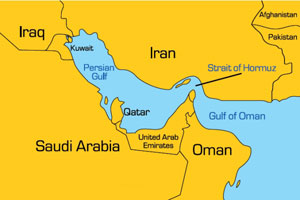
A Reuters-backed warning: rising tensions around the Strait of Hormuz could disrupt the hidden cables powering your internet, payments, and daily digital life.
The Hormuz cables threat doesn’t arrive with a loud warning. It creeps in quietly. A payment that takes longer than it should. A page that refuses to load. A video call that freezes at the worst possible moment.
Most of us shrug these things off. Bad connection, we think. But a recent report by Reuters suggests something bigger may be at play. Beneath the waters of the Strait of Hormuz, a network of subsea cables carries enormous volumes of the world’s data—and right now, that network is under growing pressure.
Take a completely normal day. You wake up, check the news, send a few messages, maybe move some money or upload a file for work. Nothing unusual—until things start lagging.