

THIS PAGE WILL BE UPDATED WITH THE LATEST NEWS
UPDATE: 7:30 PM CEST
Iran: They Knew They Were Going to Die

They knew. They knew the trial was no trial. They knew the verdict had already been written. They knew the noose awaited them. And yet, they spoke. And yet, they sang.
In a cell, there were six of them. In the courtyard, they sang together, in hushed tones, without trembling. Not to forget. But to endure. A few days later, they were hanged. They were not famous. They were not leaders. They were ordinary men. One of them had grown up in poverty. Another had studied. Yet another had long sought another path — before realizing there was none.
They had all made the same decision. Not to look away. Not to accept. Not to live as if nothing were happening. One of them wrote that he could not close his eyes to the suffering of his people.
Another said he would not bargain away his life. Yet another said he could have lived differently, but that would have been to betray something essential.
They did not speak of dying. They spoke of remaining true to themselves. That is what catches the eye. Not death. But consistency. They belonged to a democratic resistance organisation, the People’s Mujahedin of Iran. But, at the moment of their deaths, all six shared a simple idea: that freedom has a price and that someone must pay it.
Iran, Terzi (FdI): Nazi-Fundamentalist Regime Prospers

“This morning, I attended the press conference hosted by the Hon. Naike Gruppioni at the Chamber of Deputies, titled ‘Iran: The Right to Life in Peril.’ The event was attended by the Vice President of the Chamber, Hon. Fabio Rampelli, Senator Marco Scurria, and the President of FIDU, Prof. Antonio Stango, with the online participation of the President-elect of the National Council of Resistance of Iran (NCRI), Mrs. Maryam Rajavi, and was moderated by journalist Mauro Bazzucchi.”
“With her authoritative address,” Terzi emphasizes, “President Rajavi confirms herself, today more than ever, as the most compelling voice to stir honest consciences and reveal the profound impact of the ayatollahs’ regime—not only on the dire conditions under which the Iranian people are forced to live, but also on the current landscapes of ongoing international crises.”
Terzi continues, “We must have the courage to call things by their true names: for decades, we have witnessed a ‘great deception.’ A veil of falsehood and appeasement has allowed a Nazi-fundamentalist regime to prosper, relying on systematic violence against its own people, racism, antisemitism, and the exportation of terrorism across the Middle East and beyond.”
UPDATE: 2:00 PM CEST
FDI’s Gruppioni: Defending Freedom and Dignity of the Iranian People Means Safeguarding Peace

Defending the right to life, freedom, and dignity of the Iranian people also means defending the democratic character of our own institutions. With this message, Naike Gruppioni, a lawmaker from Brothers of Italy (FDI), took part in a press conference at the Italian Chamber of Deputies titled “Iran: The Right to Life in Danger,” reaffirming support for the Iranian people and for the freedom of all nations. The event was also attended by Senator Giulio Terzi di Sant’Agata and, via video link, Maryam Rajavi, the President-elect of the National Council of Resistance of Iran.
During her remarks, Gruppioni highlighted the critical conditions inside prisons run by the Iranian regime, where men and women are arrested, tortured, and sentenced to death simply for expressing their views and demanding the fundamental rights of freedom and democracy.
Iran: FDI’s Gruppioni Says Rajavi Is the “Only Democratic Alternative” to the Ayatollah Regime
Rome, May 21 – “We do not want geopolitical problems to overshadow the repression that the Iranian regime has carried out over all these years.” This was stated by Naike Gruppioni, a lawmaker from Brothers of Italy (FdI), on the sidelines of a press conference on the situation in Iran that featured a video address by Maryam Rajavi.
According to Gruppioni, the leader of the National Council of Resistance of Iran represents “the only democratic alternative” to Iran’s current political system.

“Mrs. Rajavi is the only alternative to the current regime, the only democratic alternative, let me say, that represents dignity, freedom, and a secular proposal in contrast to the regime of the ayatollahs,” the FDI parliamentarian declared.
During the event, Gruppioni also emphasized the central role of women in the struggle against the Iranian regime.
“A woman, and not by chance. Women have always been the symbol of this struggle, not only today but throughout history, and she embodies the strength of all those people who want change,” she said, referring to Rajavi.
UPDATE: 9:00 AM CEST
Iran: Neither Bombs nor Compromise Will Be Enough
The Iranian crisis now lies at the center of several major international concerns. For the United States, it is tied to security and strategic stability. For Europe, it raises issues related to energy, terrorism, and human rights. As for countries in the Middle East, Tehran’s regional policies are widely seen as a permanent source of destabilization.
Yet beyond these differing perspectives, one reality is gradually becoming clear: the Iranian crisis cannot be resolved either through war or through diplomatic pressure alone. The key lies within Iranian society itself.
On June 20, hundreds of European and North American lawmakers and political figures are expected to join a major gathering in Paris alongside one hundred thousand members of the Iranian diaspora. Beyond its symbolic significance, the rally reflects an important shift: the growing belief that Western policies toward Tehran over recent decades have reached their limits.
UPDATE: 7:30 AM CEST
Flames Of Defiance: Resistance Units Target Regime Symbols Across Iran
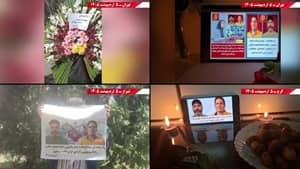
Across Iran, the PMOI/MEK Resistance Units have executed a series of daring operations targeting the clerical regime’s centers of repression and propaganda. These operations serve as a defiant rejection of religious tyranny and monarchical dictatorship alike. Under the unifying slogan, “Down with the oppressor, be it the shah or the supreme leader,” the coordinated actions directly targeted the apparatus of the Revolutionary Guards (IRGC) and the Ministry of Intelligence (MOIS). This defiance comes in response to recent threats by regime officials and attempts by monarchist remnants to promote the legacy of the Shah’s brutal SAVAK police.
The operations spanned multiple provinces and cities, directly challenging the regime’s security environment. In Tehran, Zahedan, and Iranshahr, Resistance Units targeted and set fire to the entrances of bases belonging to the repressive IRGC Basij forces. In Chabahar, the units targeted an IRGC Basij base and torched a propaganda billboard of the MOIS that promoted espionage against ordinary citizens.
Iran MP Defends Harsh Punishment as Executions Rise
In an interview published on May 20 by judiciary-linked Mizan News Agency, Majid Doustali, a member of the regime’s parliament, defended harsh punishment against alleged spies and praised the judiciary’s current approach as executions and security-related prosecutions continue to rise in Iran.
Doustali told Mizan: “The judiciary today is acting correctly and according to the law, and our demand is that this path continue seriously because this is a public and popular demand.”
🚨 Iran Judiciary Calls for Rapid "Enforcement of Sentences"
In recent remarks, Iran’s judiciary chief Gholamhossein Mohseni-Eje’i called for accelerating judicial proceedings and enforcement of sentences.“I emphasize again: these cases must be handled quickly, accurately, and… pic.twitter.com/M6yd7Un1eW
— SIMAY AZADI TV (@en_simayazadi) April 30, 2026
The remarks come as Iranian authorities continue expanding security-related prosecutions following months of unrest and conflict.
On April 28, 2026, Judiciary Chief Gholam-Hossein Mohseni Eje’i called on courts to accelerate rulings and implementation of punishments in security-related cases, arguing that delays weaken the deterrent effect of sentences. Earlier, during the post-uprising crackdown, Eje’i had instructed judges to show “no mercy” in protest-related cases, according to international reporting.
Iran: Female Political Prisoner Denied Access to Medical Treatment in Prison

Reports from Yazd Prison indicate that political prisoner Zeinab Jalalian, who is currently serving the twentieth year of her life sentence, is in critical physical condition after security authorities blocked her access to specialized medical care. Prison officials have reportedly refused to transfer her to a hospital, citing security concerns and regional conditions as justification.
Last autumn, after sustaining international pressure, Zeinab Jalalian was finally allowed to undergo uterine fibroid embolization surgery. However, she was forcibly returned to Yazd Prison only 24 hours after the procedure, before completing the necessary recovery period.
According to reports, months of interrupted and inadequate medical follow-up have resulted in serious complications, including continuous bleeding, acute abdominal pain, and severe anemia. Sources say that last week the severity of her condition temporarily left her unable to move.
PMOI Confirms Deaths of Resistance Unit Members During 2025–2026 Iran Uprising
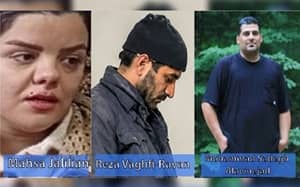
As further details emerge from the nationwide uprising that swept across Iran from late 2025 into early 2026, the People’s Mojahedin Organization of Iran (PMOI/MEK) has confirmed the deaths of three additional Resistance Unit members who had previously been reported missing during the crackdown.
The announcement sheds more light on the scale of the confrontation between anti-government protesters and the Iranian regime’s security apparatus during what opposition groups describe as one of the most extensive uprisings in recent years.
According to the PMOI, the three members were killed in January 2026 during direct clashes with security forces in Tehran, Eslamabad-e Gharb, and Shahr-e Rey.
Thirty-five-year-old Mohammad-Sadegh Alavinezhad, who held a master’s degree in electrical engineering, was killed on January 8 during clashes on Enghelab Street in Tehran. A day later, 30-year-old Mahsa Jalilian was reportedly shot directly by security forces in Eslamabad-e Gharb. On January 10, 44-year-old Reza Vaghfiravan lost his life during confrontations in Shahr-e Rey.
Gasoline Price Hikes in Iran Trigger a New Battle Over People’s Livelihoods
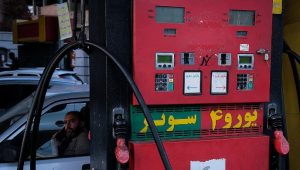
As Iran’s economic crisis, inflation, and declining purchasing power continue, recent remarks by Hamid Rasai, a member of the Iranian regime’s parliament, regarding the possibility of a sharp increase in gasoline prices have once again heightened concerns about growing pressure on people’s livelihoods. These remarks come at a time when a large portion of society is already struggling under the burden of inflation and rising prices, and any new economic decision could trigger a fresh wave of public discontent.
Rasai wrote in a post on X that there is a faction within the government which, according to him, sees the solution to economic problems in deregulating prices and increasing costs. He claimed that this faction intends to reduce subsidized gasoline quotas and raise the price of non-subsidized gasoline.
These remarks come as gasoline price hikes have consistently been one of the most sensitive economic and social issues in Iran in recent years. The experience of the sudden gasoline price increase in November 2019 remains fresh in the public memory, and many citizens view any change in fuel prices as the beginning of a new wave of rising costs for goods and services.
City Council Member in Zanjan Runs Over Protesting Worker with Car
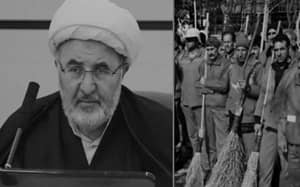
The state-run Rouydad24 news website wrote on May 19 regarding the protests by Zanjan municipality workers: “Disregard for workers’ rights in Iran is reaching new extremes every day. The top-down attitude of some officials, who have reached their current positions through the votes and money of the people, has caused hatred and dissatisfaction in society. Especially under the current conditions, where war has left many workers unemployed and society has become more sensitive than ever to the violation of its basic rights. Under such circumstances, a strange incident has occurred in the city of Zanjan.”
The protests by Zanjan municipality workers entered a new phase in recent days. Repeated gatherings by workers in front of the city council building were this time accompanied by a controversial incident. The protesting workers, who were objecting to cuts in overtime pay, salary conditions, and the huge disparity between managers’ bonuses and the wages of service workers, are now speaking of a violent and humiliating confrontation. According to witnesses, the incident involved a city council member’s car running over a worker’s leg.
Urban Poverty in Iran: The Collapse of the Economy of Life in Major Cities

Urban poverty in Iran has now reached a stage where it can no longer be explained merely through income indicators. What is now visible in Tehran, Mashhad, Ahvaz, Karaj, and other major cities is a combination of a housing crisis, the collapse of job security, forced migration, marginalization, and the erosion of social identity. Tens of thousands of people are now forced to choose between remaining in the city and preserving a minimum level of human dignity.
For years, the economic structure of the Iranian regime has turned cities into commodities for speculation. In this structure, housing is viewed not as a social right but as a tool for capital accumulation by groups close to power. The result has been exploding rental prices, the gradual elimination of the middle class, and the displacement of millions to the outskirts of cities. Today, even salaried employees and professionals can no longer afford to maintain independent lives.
The current crisis is not merely the result of inflation or mismanagement. Recent wars and political tensions have also multiplied the speed of urban poverty’s expansion. Many businesses have shut down, economic projects have stalled, and thousands have lost their jobs. Official unemployment insurance statistics show only a small part of the reality. Millions of people who worked in the informal, online, or project-based economy have effectively been abandoned without any support.
Iran Sieged by Human Rights Violations: A War Beyond Foreign Conflict
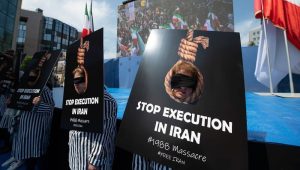
The Islamic Republic is not only executing political dissidents and protesters under the guise of “war” and behind the curtain of a “global internet blackout,” but by continuously expanding the scope of its atrocities, it has effectively placed the entire nation in a horrific chokehold. This deep crisis demonstrates that today, more than ever, Iran is sieged by human rights violations.
Since March 19, 2026, at least 31 political executions have been carried out in Iran under the rule of the Islamic Republic. The victims include protesters from the 2025 uprising, members of the People’s Mojahedin Organization of Iran (PMOI/MEK), and individuals falsely accused of espionage under the shadow of war. However, the scope of this human rights siege has extended far into the broader society and deep within prison walls, where it continues to intensify.
Over three consecutive days, from May 7 to May 9, 2026, Gholam-Hossein Mohseni-Eje’i, the Chief Justice of the Islamic Republic, personally intervened to accelerate the machinery of suppression by issuing severe directives. His remarks, broadcast by the state’s official news agency (IRNA), illustrate the depths to which Iran has sunk under this human rights siege:
Iran Wants to Tax the Internet Flowing Through the Strait of Hormuz While Restricting Its Own Citizens Online

As Tehran searches for new revenue streams amid deepening economic pressure, officials are considering fees on global internet infrastructure crossing the Strait of Hormuz — even as millions of Iranians face censorship, throttling and digital isolation at home.
Iran’s emerging plan to “tax the internet” through the Strait of Hormuz is opening a new and largely unseen economic front in the Persian Gulf. Iranian officials, facing severe liquidity shortages and growing isolation, are seeking a new invisible source of revenue: the global internet infrastructure passing through their territorial waters.
According to policy proposals recently discussed in circles close to the Islamic Revolutionary Guard Corps (IRGC) — and first highlighted in analytical reports by the Tehran Chamber of Commerce and domestic economic outlets such as Donya-e-Eqtesad — Tehran is considering a plan to demand “licensing fees” and transit charges from major global technology companies including Meta, Alphabet (Google), and Microsoft, whose submarine fiber-optic cables lie beneath the Strait of Hormuz.
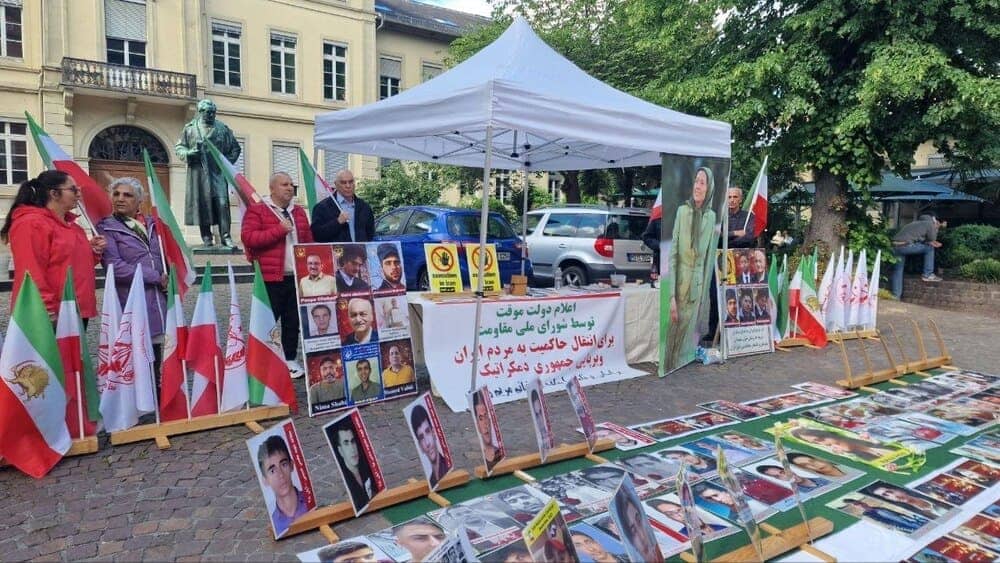
Heidelberg Rally Condemns Executions by the Iranian Regime and Backs Democratic Alternative
Heidelberg, Germany – May 16, 2026 – Supporters of the People’s Mojahedin Organization of Iran (PMOI/MEK) held a rally and exhibition to protest the execution of PMOI political prisoners, as well as protesters arrested in January 2026. The event also expressed solidarity with the “No to Execution” campaign.
The event emphasized the Iranian people’s demand for a democratic republic led by the Iranian Resistance as a path toward peace and freedom.
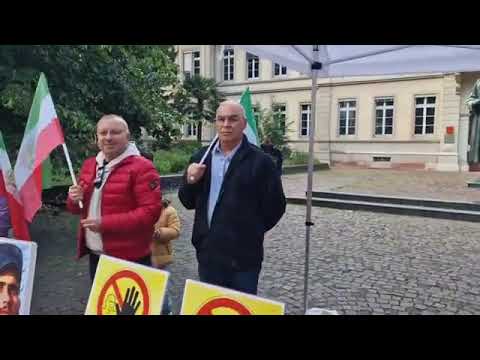
Organizers called on the German public and the international community to recognize the suffering of the Iranian people and their firm rejection of all forms of dictatorship—whether monarchical or theocratic. Through powerful images and personal testimonies, the exhibition showcased the courage and sacrifices of Iranian protesters during the 2026 Iran protests, while strongly condemning ongoing human rights violations, including the execution of political prisoners.