

THIS PAGE WILL BE UPDATED WITH THE LATEST NEWS
UPDATE: 10:00 PM CEST
Iran Accelerates Execution Campaign Against Anti-Regime Activists Amid Internet Censorship

The Islamic Republic of Iran has accelerated its executions of dissidents and activists, with the true number of victims likely obscured by the regime’s internet censorship and blackout.
Ever since the January uprisings against the regime, Tehran has enforced a bloody clampdown against its opponents.
The Iran Human Rights Society has documented 784 executions so far in 2026. A representative from the organization told Fox News Digital that “these figures indicate a rapidly accelerating trend in executions since March,” and explained that “in particular, the execution of political prisoners has reached a level not seen in the past 37 years.”
According to information provided to Fox News Digital by the Secretariat of the National Council of Resistance of Iran (NCRI) on June 4, the Islamic Republic of Iran executed at least 18 prisoners between May 31 and June 1. These included 12 prisoners hanged on May 31, and an additional six prisoners executed on June 1, one of whom was said to be “hanged in public with utmost brutality.”
UPDATE: 7:30 PM CEST
EU Sanctions Iranians Over Restricting Naval Traffic in Hormuz
NICOSIA, June 8 (Reuters) – The European Union said on Monday it had imposed sanctions on two Iranian individuals and a unit of the Islamic Revolutionary Guard Corps for threatening the freedom of maritime traffic in the Strait of Hormuz, through which around a fifth of the world’s oil flows.
The move marked the first time the bloc has used new powers to sanction Iran for restricting freedom of navigation.
The EU said in a written statement that it had added the Hormozgan Provincial Command of the Islamic Revolutionary Guard Corps (IRGC) Navy to its sanctions list, as well as Mohammad Akbarzadeh and Hamid Hosseini.
It said Akbarzadeh is Deputy Commander for Political Affairs of the IRGC Navy and Hosseini is a representative of Iran’s Oil, Gas and Petrochemical Products Exporters’ Union.
Appeal to Iran by 75 Nobel Laureates: “Stop the Executions”

AGI – Seventy-five Nobel Prize laureates have appealed to Iran to respect human rights and put an end to executions.
“With deep respect for the history, civilization, and rich culture of the Iranian people, we wish to express our profound and urgent concern regarding the widespread, systematic, and ongoing violations of human rights in Iran,” reads a joint statement addressed to United Nations Secretary-General António Guterres.
“We are deeply alarmed by reports that the ruling theocracy in Iran has launched a new wave of executions targeting dozens of political prisoners,” the statement continues. Among the signatories are Italian-American Mario Capecchi, recipient of the 2007 Nobel Prize in Physiology or Medicine, as well as Patrick Modiano and Kazuo Ishiguro.
The 75 laureates therefore call for “the immediate suspension of executions, particularly in cases of a political nature; the release of political prisoners and detained protesters; unrestricted access for international monitoring mechanisms to detention centers; and independent oversight of detainees’ conditions.”
“It is time to speak out,” the Nobel laureates warn. “International silence serves as a green light for repression, and with every day that this silence endures, another noose tightens around another life,” they explain.
UPDATE: 4:00 PM CEST
Jaume Bartumeu Backs Maryam Rajavi’s 10-Point Plan for a Democratic Iran

Jaume Bartumeu, former head of government of Andorra and president of Progressistes-SDP, has expressed his support for the 10-point plan proposed by Iranian opposition leader Maryam Rajavi for a “free and democratic” Iran.
In a post published through the party’s account on X, Bartumeu also voiced his opposition to executions and to all forms of dictatorship, “whether crowned or wearing a turban.”
He further announced his support, from Andorra, for the Free Iran gathering scheduled to take place in Paris on June 20, 2026—a mobilization advocating democratic change in Iran.
When Students Rise, Tyrants Tremble
 Throughout modern history, student uprisings have served as one of the clearest indicators that a regime has entered its final and most dangerous phase. Young people possess a unique capacity to sense political decay long before many others. They see through propaganda, reject hollow promises, and refuse to accept a future stolen by corruption, repression, and incompetence. When students pour onto the streets in large numbers, authoritarian rulers have every reason to fear the consequences.
The latest wave of protests sweeping Tehran, Mashhad, and Hamedan should therefore ring alarm bells throughout Iran’s ruling establishment. Thousands of students have risen in defiance of discriminatory educational policies, arbitrary changes to university entrance regulations, and mounting pressures imposed by a regime increasingly detached from the realities facing ordinary citizens. Their demands concern far more than examinations and academic records. These demonstrations reflect a generation’s growing anger at a system that has systematically robbed them of opportunity, freedom and hope.
Outside Iran’s Ministry of Education in Tehran, students gathered before marching toward the Supreme Council of the Cultural Revolution. Faced with official indifference, they staged a sit-in and delivered a powerful message: “We are waiting for results, we won’t go anywhere, and we’ll stay right here.” Such words carry enormous significance. They reveal a generation determined to pursue justice rather than accept endless delays, excuses, and deception.
UPDATE: 7:30 AM CEST
June 20 Rally in Paris: A Historic Turning Point and the Only Path to a Free Iran

More than 100,000 supporters of the Iranian Resistance and freedom-loving Iranians are set to gather at Place Vauban in Paris on June 20, 2026. One of the largest Iranian rallies ever held in Europe, the monumental gathering has two key messages: condemning the escalating wave of political executions in Iran and demanding a democratic, secular republic.
The demonstration coincides with the 45th anniversary of the beginning of Iran’s nationwide resistance against the ruling theocracy. Inside Iran, this day is remembered as the Day of Martyrs and Political Prisoners, marking a profound historical milestone that continues to shape the trajectory of the Iranian people’s ongoing struggle for freedom.
The history of a nation is defined by decisive moments that alter its future. June 20, 1981, is one of these irreversible turning points in Iran’s contemporary history. On that day, the despotic clerical regime fully unmasked itself by opening fire on a peaceful, massive demonstration in Tehran. Hundreds were killed in the streets, and thousands more were arrested and swiftly sent to the firing squads. This initiated an era of absolute repression that destroyed the democratic achievements gained following the 1979 revolution.
23 International Athletes Call on the UN and Governments to Act Over Executions in Iran

Twenty-three International Athletes Champions from various disciplines have issued a statement in condemnation of the inhumane wave of executions in Iran, and in support of the June 20 demonstration in Paris, where Iranians converge from around the world to protest the wave executions and support a democratic republic in Iran. Among the signatories to the statement are 9 women athletes from a variety of sporting disciplines, including:
• Martina Navratilova (Czech Republic/United States) – Former world No. 1 women’s tennis player.
• Sharron Davies MBE (United Kingdom) – Swimmer, Olympic Medalist.
• Solmaz Abouali (United States) – 16-time U.S. champion and three-time world champion in traditional karate.
• Tracy Edwards MBE (United Kingdom) – 1990 Yachtsman of the Year; Skipper of the First All-Female Crew in the Whitbread Round the World Yacht Race.
• Inga Thompson (United States) – Cyclist; Olympian; 10-time U.S. National Champion; three-time World Medalist.
The Internet Blackout Did More Than Disconnect Iran—It Exposed the Regime’s War on the Future
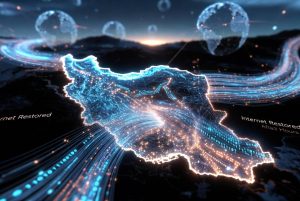
When Iran regime’s rulers imposed sweeping internet restrictions during and after the recent conflict, they were not merely interrupting communications. They were striking at one of the few sectors of the economy that had continued to generate innovation, employment, and opportunity despite decades of economic mismanagement.
Today, weeks after regime authorities declared that internet access is gradually returning to normal, the damage remains visible across the country’s digital economy. Businesses have lost customers, startups have laid off employees, investment has stalled, and public confidence in online services has been severely weakened.
The consequences are not accidental. They are the predictable result of a system that consistently prioritizes political control over economic development.
For years, the regime has promoted slogans about technological progress and digital transformation. Yet whenever political stability appears threatened, those promises are abandoned in favor of censorship, surveillance, and restrictions. The latest internet crisis revealed once again that, in the eyes of the ruling establishment, control of information matters more than the prosperity of the Iranian people.
After the Ceasefire, the Regime’s Execution Machine Accelerates
The clearest image of post-war Iran is not one of reconstruction or recovery. It is the image of prison cells filling up, execution orders multiplying, and security forces expanding their dragnet across the country.
Before the dust of war had even settled, the Iranian regime launched what can only be described as a new wave of state repression. More than 40 political and security-related executions, over 6,000 arrests, and dozens of prisoners facing imminent execution reveal a government that views fear—not reform—as its primary instrument of survival.
For months, the world’s attention has been directed toward military developments, nuclear negotiations, the Strait of Hormuz, and shifting regional alliances. Meanwhile, inside Iran, another crisis has been unfolding largely away from international headlines: the systematic expansion of the regime’s machinery of repression.
The clerical dictatorship has relied on executions for nearly five decades as a tool for eliminating opposition and preserving power. From the massacre of political prisoners in the 1980s to the bloody suppression of nationwide uprisings, the regime has consistently treated human life as expendable whenever its rule is challenged.
Iran Regime Faces Post-War Crisis as Economic Collapse and Social Unrest Deepen
As Iran enters a fragile post-war period, the ruling clerical regime is confronting a convergence of economic, social, and political crises that threaten to deepen instability across the country. Analysts warn that the factors that fueled previous nationwide uprisings—including poverty, inflation, unemployment, and public anger toward the regime—have not only remained unresolved but have intensified in the aftermath of war. The Iranian regime now faces the challenge of navigating what many observers describe as a tense and uncertain peace, while struggling with severe economic damage, growing social dissatisfaction, and increasing pressure from a population that has repeatedly demonstrated its willingness to protest against dictatorship and corruption.
The conflict has significantly worsened an economy that was already suffering from years of mismanagement, corruption, sanctions, and the regime’s costly regional interventions.
Experts estimate that the damage inflicted on Iran’s economy and infrastructure has reached hundreds of billions of dollars. Critical sectors, including industry, energy production, housing, education, and manufacturing, have sustained substantial losses. Even if sanctions are eased and foreign investment becomes available, many economists believe the scale of destruction will prevent any rapid recovery.
Food Basket Share Reaches 71% of Iranian Workers’ Minimum Wage

Studies show that the cost of providing essential food items for a family of four in May 2026 exceeded 210 million rials (approximately $117), accounting for 71.5% of the minimum wage. The figure was 53.9% in May 2025, indicating increasing pressure on the living standards of low-income households.
The state-run Donya-e-Eqtesad newspaper reported on Sunday, June 7, that if inflation continues to rise and the minimum wage remains unchanged in 2026, the entire monthly income of minimum-wage earners could be consumed by food expenses in the coming months. According to the report, if the government food voucher program is eliminated, the share of food expenses in the minimum wage of a four-person household would rise to 82.7%.
Donya-e-Eqtesad, citing data from the Statistical Center of Iran, reported that inflation for food and beverages in May was approximately 130% compared to the same period a year earlier.
However, calculations based on the basket of 11 essential goods used in the food voucher program show that inflation for these items reached 144.8%.
By comparison, the minimum wage of the head of a four-person household increased by only about 60% compared to last year.
Iran Regime and Israel Resume Intense Reciprocal Attacks
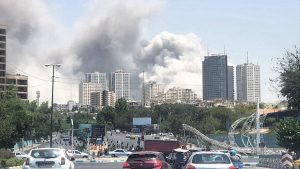
Early Monday morning, as the Israeli military announced the launch of airstrikes against military targets in western and central Iran, multiple reports emerged of explosions in several provinces across the country.
In a statement, the Israeli military said that its air force had targeted military sites belonging to the Iranian regime in various areas of western and central Iran. Israeli media outlets also reported the continuation of air operations against targets inside Iranian territory. Following the strikes, various sources reported hearing explosions in Tehran, Isfahan, Tabriz, Karaj, Urmia, Kurdistan Province, and several other cities. State-run news agencies also confirmed multiple explosions. The state-run Fars News Agency, citing local sources, reported explosions in Tehran, East Azerbaijan, and Isfahan provinces, adding that blasts were heard in western areas of Tehran Province as well as in the city of Fardis near Karaj.
The state-run IRNA news agency also reported at least two powerful explosions in Tehran and three explosions in Isfahan. Akbar Salehi, the security deputy to the governor of Isfahan Province, said that a location in Najafabad had been targeted but that the incident caused no casualties.
Escalating Repression in Iran in the Form of a Multi-Dimensional Campaign of Intimidation
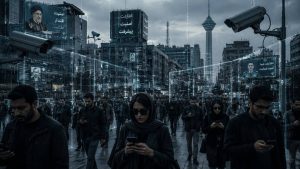
Simultaneously with the heightening of geopolitical challenges and internal legitimacy crises, the Islamic Republic has launched an extensive campaign aimed at escalating repression in Iran across the entire country. This survival strategy relies, on one hand, on the issuance and hasty execution of political death sentences to maintain an atmosphere of dread. On the other hand, it has led to the initiation of a new wave of arbitrary arrests and mass detentions of thousands of citizens under the pretext of wartime conditions. In its third dimension, it targets the capillary layers of society to completely destroy social trust among the people by establishing a system of public espionage. An analysis of recent events demonstrates how the regime’s judicial and security apparatus utilizes the context of wartime conditions as a catalyst to advance the project of escalating repression in Iran.
The official unveiling of the project known as the “Social Soldiers Network” by Ali-Asghar Jahangir, the spokesperson for the Judiciary, is a clear manifestation of the novel mechanisms employed for escalating repression in Iran and atomizing society. When the ruling establishment structurally encourages citizens to report on the behavior of others, monitor cyberspace, and transfer information to security agencies, the coefficient of distrust in social relations rises to an extreme degree. Consequently, every individual perceives the other as a potential government spy, forcing society to contract and withdraw further.
Lugano Exhibition Condemns Iran Executions, Calls for June 20 Paris Free Iran Rally
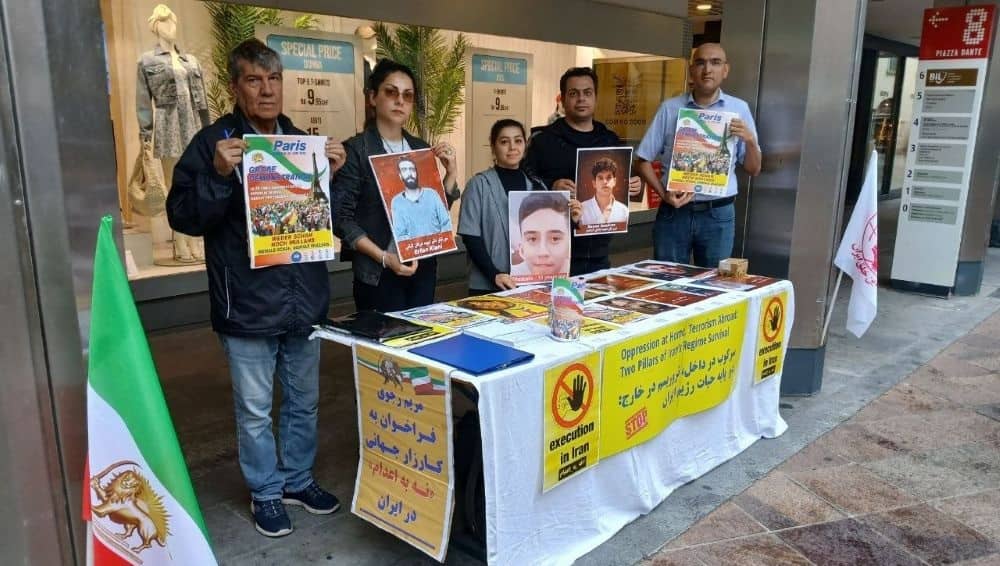
Lugano, Switzerland – June 6, 2026: Supporters of the People’s Mojahedin Organization of Iran (PMOI/MEK) held a book stall and photo exhibition to protest the execution of PMOI political prisoners, as well as protesters arrested in January 2026. The event also expressed solidarity with the “No to Execution” campaign.

Organizers issued a clear call to action, urging freedom-loving Iranians and international supporters to join the major rally scheduled for June 20 in Paris, known as the Paris Free Iran Rally, under the slogan “A Democratic Republic for Iran.” The rally rejects both monarchical and theocratic dictatorships, emphasizing a third alternative rooted in democracy and popular sovereignty.
Hamburg: MEK Supporters Condemn Executions, Urge Participation in Paris Free Iran Rally on June 20
Hamburg, Germany – June 6, 2026: Supporters of the People’s Mojahedin Organization of Iran (PMOI/MEK) held a rally to protest the execution of political prisoners and demonstrators following the January 2026 uprising.

Organizers issued a clear call to action, urging freedom-loving Iranians and international supporters to join the major rally scheduled for June 20 in Paris under the slogan “A Democratic Republic for Iran.” The rally rejects both monarchical and theocratic dictatorships, emphasizing a third alternative rooted in democracy and popular sovereignty.