

THIS PAGE WILL BE UPDATED WITH THE LATEST NEWS
UPDATE: 11:00 PM CET
Explosions Rock East and West Tehran as Strikes Hit at Least 27 Iranian Cities on Day 23 of the War
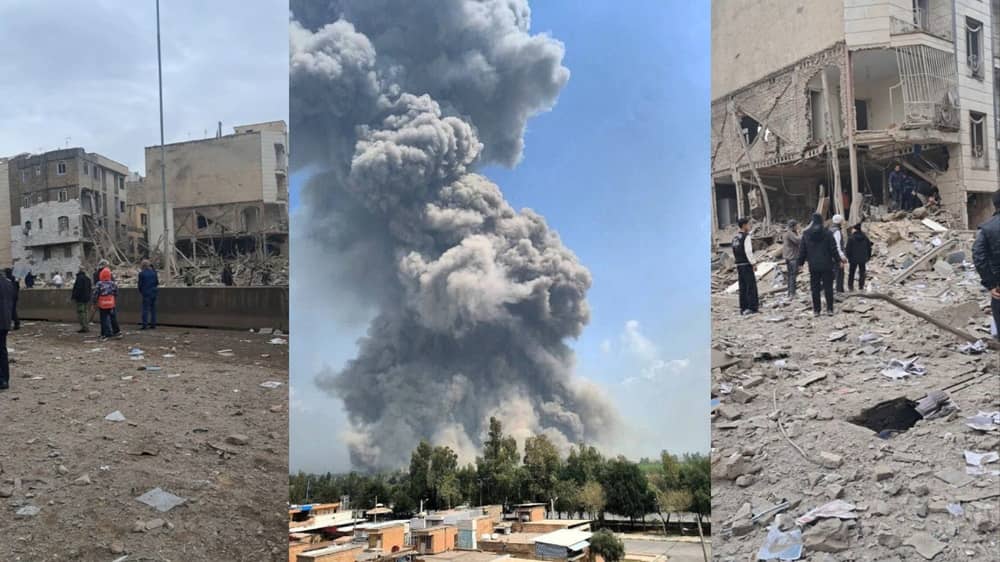
Iran entered the 23rd day of the U.S.-Israeli campaign under a new wave of losses, with reported strikes across at least 27 cities, some of the heaviest explosions of the night and early morning hitting western and eastern Tehran, and missile, naval and security sites coming under renewed pressure from the capital to the Gulf coast. The day also opened under a sharper U.S. warning over the Strait of Hormuz, as U.S. President Donald Trump set a 48-hour deadline for Tehran to fully reopen the waterway or face attacks on Iranian power plants, pushing the war into a still more dangerous phase even as the broader conflict moved into its fourth week.
The immediate picture inside Iran was one of dispersed but sustained strikes. Overnight and into Sunday morning, explosions were reported from Varamin, Shahr-e Rey, Shahriar, Karaj, Damavand, Ramsar, Safadasht, Shiraz, Isfahan, Rudir in Hormozgan, Bandar Anzali, Khorramshahr, Chabahar, Larak Island, Qeshm, Bandar Abbas, Fardis, Yazd, Najafabad, Farahan, Tafresh, Garmdareh, Rasht, Bushehr and Ahvaz. Reported targets included the Yazd missile base, a security base in Najafabad and military positions around Shahid Rajaee port in Bandar Abbas, while in Rasht multiple blasts were followed by a brief power outage in parts of the city. In Tehran, residents described several very heavy explosions in the west on Saturday night, followed by more powerful blasts in the east, including around Pardis and Damavand. Reuters separately reported that Israel struck ballistic-missile production sites around Tehran, underscoring that the capital remained one of the main focal points of the day’s attacks.
The Iranian regime built close, short, and medium-range ballistic missiles at the Kuh-E Barjamali Ballistic Missile Assembly Facility. The first photo shows what the location looked like on March 1, 2026. The photo dated March 7, 2026 is what the buildings look like now. Out of… pic.twitter.com/uS5IKMNbWq
— U.S. Central Command (@CENTCOM) March 22, 2026
Tehran’s military-industrial infrastructure appeared to be a central target. Israeli reporting said attacks hit centers used for ballistic-missile production in the capital, including a central IRGC complex, a storage site for missile-production components, a Defense Ministry-linked complex involved in missile fuel, and another site producing ballistic-missile parts. Separate Israeli reporting said the Malek Ashtar University site in Tehran was also struck; the Israeli military described it as a strategic research and development center used to develop components for nuclear weapons.
Local and social-media reporting described the capital’s geography of impact in unusually broad terms. Air defenses were reported active in eastern, western and central districts including Shariati, Pirouzi, Yousefabad, Mirdamad, Sattarkhan, Marzdaran and Mehrabad, while residents in areas such as Ekbatan, Sadeghiyeh, Shahran, Ferdows-e Gharb and Pardis described blast waves strong enough to shake buildings. Reports from Damavand spoke of repeated detonations and a strike on an underground missile base in the area. Elsewhere, residents in Isfahan described multiple explosions during the day and again in the evening, including around Sepahan Shahr and areas they said were tied to IRGC infrastructure.
⚠️ Update: After 528 hours, #Iran is entering a 23rd day isolated from the world as the regime-imposed internet blackout continues in its fourth week.
The measure adds to the wartime distress of millions of civilians who lack independent sources of information and alerts. pic.twitter.com/WsiQvgbrLP
— NetBlocks (@netblocks) March 22, 2026
Iran did retaliate, with missile strikes hitting various targets in Israel. Israeli media put the toll from Iranian missile fire into Arad and Dimona at more than 100 wounded, with some victims reported in serious condition, after air defenses failed to stop at least two ballistic missiles. Reuters confirmed that scores of civilians were injured and that Arad and Dimona, both near Israel’s nuclear research and military complex in the Negev, suffered some of the worst damage seen on Israeli soil in the war so far. AP likewise reported fresh Iranian strikes near Israel’s nuclear research center, deepening the nuclear dimension of the conflict.
The day’s most consequential escalation, however, may have come not from the exchanges over Tehran and the Negev, but from the Strait of Hormuz. Trump warned that if Iran did not reopen the strait within 48 hours, the United States would strike Iranian power plants, “starting with the biggest one first.” Tehran answered by threatening regional energy, information-technology and desalination infrastructure if Iranian fuel and energy facilities were hit, while Revolutionary Guards statements said Hormuz would be completely closed if U.S. strikes on Iranian energy infrastructure went ahead. AP and Reuters both reported that the near-closure of Hormuz, through which roughly one-fifth of global oil and LNG normally passes, had already become the central strategic and economic pressure point of the war.
Exclusive: Saudi Aramco boss pulls out of major international energy conference due to Iran conflict, source says https://t.co/DbNgkM3ghK https://t.co/DbNgkM3ghK
— Reuters (@Reuters) March 22, 2026
Regional diplomacy hardened alongside the military escalation. Saudi Arabia ordered Iran’s military attaché, his assistant and three more embassy staff to leave the kingdom within 24 hours after declaring them persona non grata, citing continued Iranian attacks on Saudi territory. At the same time, regional states continued to signal that they did not want to be dragged directly into the war even as their risk calculations worsened. That tension — Gulf governments trying to avoid direct entry while steadily shifting toward a more defensive and punitive posture against Tehran — was one of the clearest political developments of the day.
Another measure of the widening regional strain came in Qatar, where seven people were killed after a military helicopter crashed in territorial waters during what the Qatari authorities said was a routine mission disrupted by technical malfunction. Reuters reported that the dead included Qatari personnel, a member of the Qatar-Turkey joint forces and technicians, making the incident a notable security shock for a Gulf state already operating under the pressure of a wider war.
More than 1,500 people have been killed in Iran during the war, Iran’s state broadcaster said late Saturday, citing the health ministry. https://t.co/cVTnFYk7kA
— The Associated Press (@AP) March 21, 2026
Inside Iran, the domestic front remained under severe state control. NetBlocks said the wartime internet blackout had reached 528 hours, putting the country into its 23rd day of near-isolation from the global internet and its fourth consecutive week of digitally enforced separation from the outside world. The broader significance of the blackout is not just informational. It has sharply reduced access to outside news, warnings and communications while compounding economic stress for businesses that depend on global connectivity and reinforcing what critics describe as a system of digital discrimination in which ordinary users are cut off while selected regime-linked actors retain access.
As cumulative background rather than same-day loss accounting, U.S. officials also continued to argue that Iran’s military capacity had already been substantially degraded before Sunday’s new strikes. Reuters reported that the United States and Israel say weeks of attacks have seriously reduced Tehran’s ability to project force, and CENTCOM said Iran’s Kuh-e Barjamali ballistic-missile assembly facility had been rendered inoperable.
🇬🇧 🇺🇸 🇮🇷 UK minister Steve Reed on Sunday said one missile launched by Iran targeting a joint UK-US military base in the Indian Ocean “fell short” while another missile was "intercepted" ➡️ https://t.co/HxW0Hks5DN pic.twitter.com/72sV5OJnM3
— AFP News Agency (@AFP) March 22, 2026
The wider economic fallout also kept building. The Financial Times reported that the world’s 20 largest listed airlines have lost about $53 billion in market value since the war began, while jet-fuel prices have surged and Gulf aviation hubs have been disrupted. Combined with the pressure on Hormuz and repeated attacks on regional energy infrastructure, that points to the same conclusion suggested by the battlefield map: this is no longer a contained exchange between Iran and its immediate enemies, but a war steadily transmitting military, political and economic shock across the region and beyond.
The economy has a Strait of Hormuz deadline for Trump: Two weeks https://t.co/3XKS6zktbO
— CNBC (@CNBC) March 22, 2026
UPDATE: 10:00 AM CET
Evin Prison, a Deadly Trap for Inmates

“Cell doors welded shut.” Activists’ warning spreads on social media: “Detainees trapped in case of collapses from attacks”
Cell doors welded shut, detainees trapped, guards fleeing. Whoever enters Evin can neither leave nor is meant to leave. And if a missile were to strike the notorious prison where the ayatollahs detain opponents, they would die like rats along with the prison, buried beneath its rubble.
This warning of a new horror linked to the most infamous prison of Tehran’s theocracy comes from the National Council of Resistance of Iran (NCRI), which closely monitors the situation of prisoners, particularly the 200 women held there.
For some time now, writes the NCRI’s Women’s Committee, “detainees have been deprived of access to many basic necessities,” with a “drastic decline in hygiene, medical, and pharmaceutical services,” in a context of severe overcrowding.
UPDATE: 08:00 AM CET
PMOI Resistance Units: Sovereignty Belongs to the Iranian People
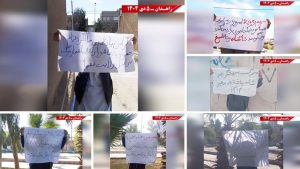
On March 20, as Iranians marked Nowruz, brave activists of the PMOI Resistance Units in the southeastern city of Zahedan launched a defiant anti-regime campaign. Despite the regime’s threats of severe crackdowns under wartime conditions, these activists took to the streets to project a message of readiness and resilience. Through placards and posters, the Resistance Units explicitly reiterated their support for the National Council of Resistance of Iran (NCRI) and its Provisional Government. Their core message was unwavering: the Iranian people demand a democratic republic and vehemently reject all forms of dictatorship, whether past or present.
The slogans displayed across Zahedan highlighted a century-long struggle for democratic governance. Placards read, “For a hundred years, the main war in Iran is between freedom and the tyranny of the shah and mullahs’ regimes.”
Medical Crisis in Evin Prison; Shiva Esmaeli and Elaheh Fouladi in Critical Condition

New reports from Evin Prison indicate a deepening crisis in the provision of medical services within the women’s ward, intensifying concerns over the health and safety of female political prisoners, including Shiva Esmaeli and Elaheh Fouladi.
Female political prisoners in Evin Prison are facing severe restrictions in access to physicians, medication, and specialized medical treatment. Many prisoners suffering from serious medical conditions have been systematically deprived of essential care, with necessary treatments repeatedly and indefinitely delayed.
Shiva Esmaeli, a political prisoner, is reportedly enduring acute pain caused by spinal canal stenosis and lumbar vertebral complications. Despite the urgent need for specialist examinations and transfer to external medical facilities, her treatment has been postponed for months, leaving her without adequate medical attention.
Provisional Government for Iran: NCRI’s Democratic Roadmap

As the clerical regime in Tehran staggers through one of the most fragile and crisis-ridden phases of its existence, the question of Iran’s political future has moved from seminar rooms and opposition circles into the heart of society. It is no longer a theoretical debate. It is an urgent, existential question for a nation wounded by repression, war, and economic collapse. The scars of the brutal massacre of January 2026 still weigh heavily on a mourning society, layered atop years of political and military failures, unprecedented international isolation, and a collapsing economy. These are not separate crises; together, they have eroded the regime’s foundations to the point where its authority is neither socially accepted nor internally stable. Even within the ruling apparatus, visible signs of paralysis, factional rupture, and structural disintegration are on open display.
In this context, the elevation of Mojtaba Khamenei as the new Supreme Leader is less a demonstration of strength than a confession of weakness.
Why Reza Pahlavi’s Closest Allies Are Abandoning the Crown
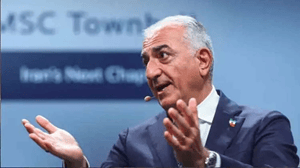
While the Iranian clerical dictatorship faces unprecedented internal erosion and external pressure, the exiled son of the ousted Shah, Reza Pahlavi, has been thrust into the spotlight through a highly curated media and cyber campaign. Despite this manufactured visibility, the political infrastructure supporting him is facing a crisis of legitimacy. Former aides suggest that the Pahlavi circle is replicating the very authoritarian dynamics it claims to oppose, ultimately undermining the broader objective of a democratic transition.
The most damning evidence of this decline comes from within the Pahlavi camp itself. Figures who were once central to Pahlavi’s operations, such as former collaborator Alireza Nader and longtime adviser Shahriar Ahi, have distanced themselves from his orbit. Nader’s 2026 assessment describes a movement that has traded collective action for a narrow, personality-driven agenda. He argues that Pahlavi’s decision to abandon the Georgetown coalition was not a strategic pivot but an attempt to assert himself as the sole arbiter of the opposition.
Esmail Khatib; The Central Role of the Ministry of Intelligence in the Suppression of Uprisings in Iran
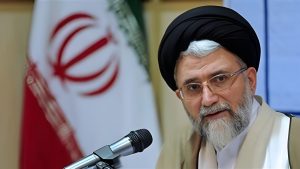
In recent years, the Ministry of Intelligence has evolved into one of the central pillars of structural repression in Iran; an institution that has transformed from a conventional intelligence body into an executive arm for the violent suppression of public protests. This transformation reached its peak during the tenure of Esmail Khatib (2021–2025), a period in which the Ministry, in close coordination with the Islamic Revolutionary Guard Corps (IRGC) and other security institutions, played an active role in controlling society and suppressing dissent.
This report, focusing on the performance of the Ministry of Intelligence during this period, demonstrates how this institution, using security, cyber, judicial, and psychological tools, established an integrated structure aimed at suppressing protests and preventing the formation of organized resistance.
Chabahar Prison Turns Deadly: How Protests Over Food Shortages Escalated into Gunfire
A protest over deteriorating conditions in Iran’s Chabahar prison reportedly ended in live fire, raising fresh concerns over the treatment of inmates.
Reports from southeastern Iran indicate that unrest inside Chabahar prison spiraled into a deadly crackdown after inmates protested food shortages and poor conditions. The incident underscores a broader pattern: when grievances surface inside closed systems, they are often met with force rather than resolution.
According to human rights reports, tensions began when inmates refused to return to their cells in protest of worsening living conditions. Many of those involved are believed to be from Iran’s Baluch minority, a group that has long faced structural disadvantages.