

THIS PAGE WILL BE UPDATED WITH THE LATEST NEWS
UPDATE: 10:30 PM CET
Fresh Strikes Across Iran, Wider Regional Fire and a Diplomatic Freeze Push the Conflict Deeper into Attrition
The past 24 hours brought another broadening of the Iran conflict rather than any sign of arrest: Israeli and U.S. strikes were reported across a wide arc of Iranian territory from Tehran to Isfahan, Shiraz, Bandar Abbas and Mashhad, allied sites in Lebanon also came under attack, Iranian missiles again triggered alarms in Israel and reportedly reached the vicinity of Dimona, Gulf states intercepted new projectiles, Iraq moved further into the danger zone, and diplomacy remained suspended between public threats and indirect contacts. By the end of the day, the military picture pointed to continued pressure on the Iranian regime command, naval and weapons infrastructure, while the political picture pointed to stalemate rather than settlement.
The Israeli military said it had carried out two large waves of strikes against state-linked targets in Tehran and had also hit a research-and-development center in Isfahan tied to naval systems, describing the site as significantly damaged. Through the night and into the early morning, residents and local reports described explosions or air-defense activity in Tehran, Karaj, Shahriyar, Mashhad, Qom, Tabriz, Shiraz, Isfahan, Shahin Shahr, Bandar Abbas and a long list of other cities, underscoring the breadth of the campaign rather than a single concentrated raid.
BREAKING Emirati air defences are responding to an Iranian missile and drone attack, the UAE's defence ministry says. pic.twitter.com/6okWPMwZ2n
— AFP News Agency (@AFP) March 26, 2026
Some of the most consequential reported damage centered on Iran’s southern military and naval infrastructure. In Bandar Abbas, strikes were reported around the marine brigade deployment area, the vicinity of Shahid Rajaee port, military guesthouses, helicopter facilities and warehouses linked to naval forces, including structures in the Chamran complex. Reuters, citing Israeli media and other sources, reported that Alireza Tangsiri, the commander of the Islamic Revolutionary Guard Corps navy, was killed in a strike there. Iranian authorities had not officially confirmed the claim by the time of the reporting, but if sustained it would mark one of the most important command losses of the day. Separate reports also circulated that Shahram Irani, commander of the regime’s regular navy, may have been killed; that claim remained unconfirmed.
Elsewhere, the pattern was one of repeated strikes on military-industrial and logistics nodes. In Isfahan, in addition to the naval-linked R&D site, local reporting described a targeted hit around Bahonar Street and repeated attacks around industrial zones including the Je industrial area and the Sepahan Shahr vicinity, with some power outages reported afterward. In and around Shiraz, footage and witness accounts pointed to strikes near the airport, the fighter base area and the Darvazeh Quran district, while earlier attacks were also reported around Lamerd airport in southern Fars province. In Ahvaz, a weapons production and storage site in Industrial Town No. 5 was reported hit. Around Mashhad, witnesses described prolonged drone and air-defense activity, and attacks were also reported near the airport area. In Tehran, explosions were heard in eastern districts such as Narmak and Tehranpars and in northern areas including Lavasan, with further air-defense activity reported near Mehrabad.
USS Abraham Lincoln continues flight operations against military targets in Iran while sailing in regional waters. pic.twitter.com/GsLQKNaTbN
— U.S. Central Command (@CENTCOM) March 26, 2026
Taken together, those strikes suggested another day focused less on symbolic targets than on the machinery of war: naval facilities, missile and drone infrastructure, logistics compounds, industrial zones and command-linked urban sites. That impression was reinforced by a new statement from U.S. Central Command. Adm. Brad Cooper said the campaign had now entered its fourth week and was progressing on or ahead of schedule, with more than 10,000 military targets struck by U.S. forces and thousands more by Israel. He said more than 10,000 combat sorties had been flown over Iran, that U.S. aircraft retained air superiority, and that more than two-thirds of Iran’s missile, drone, naval-equipment and shipbuilding capacity had been damaged or destroyed. He also said 92 percent of Iran’s largest warships had been eliminated.
Washington sharpened that pressure rhetorically as well. In a direct warning to IRGC personnel, Cooper called on members of the Guard to leave their positions and go home to avoid what he called further needless death and injury. He tied that warning to the reported killing of Tangsiri and argued that the IRGC navy had lost its ability to project power in the region. The White House, meanwhile, kept up the threat of escalation. Press secretary Karoline Leavitt said that if Tehran refused to accept the situation and move toward an agreement, President Donald Trump was prepared to hit Iran harder than ever and was ready to “raise hell,” even as she also said contacts remained under way and described them as constructive.
Iran war complicates WHO's emergency medical supply routes https://t.co/gPMGPOgYFm https://t.co/gPMGPOgYFm
— Reuters (@Reuters) March 26, 2026
The Iranian regime’s answer on the battlefield remained real but more limited than in the opening phase of the war. Israeli military reporting said a new morning salvo from Iran triggered sirens in central Israel, Jerusalem and the West Bank, with air defenses activated again. One report in the day’s summary said an Iranian missile penetrated defenses and struck near Dimona, the highly sensitive area associated with Israel’s nuclear infrastructure. At the same time, Israeli officials said the interval between salvos had widened and U.S. military officials said missile and drone launches had fallen by more than 90 percent from earlier in the war, suggesting a diminished rate of fire even if the threat had not been extinguished.
The conflict’s regional spillover widened further on Thursday. In Lebanon, Israeli airstrikes reportedly continued against Hezbollah-linked sites, including targets in Beirut. In Iraq, the U.S. embassy in Baghdad urged American citizens to leave the country immediately and warned of the risk posed by missile launches and drones, while advising people to avoid the U.S. embassy in Baghdad and the consulate in Erbil. A group calling itself the Islamic Resistance in Iraq claimed 23 operations against U.S.-linked bases and facilities over the past two days. Kurdish media also reported that an attacking drone was intercepted over Erbil. In background to that worsening picture, at least six members of Iraq’s Popular Mobilization Forces, including the Anbar operations commander, were reported killed in an airstrike earlier this week.
⚠️ Update: #Iran's digital blackout has entered its 27th day after 624 hours of isolation from the global internet with connectivity levels at ~1%.
Rights monitors, independent media and the public are sidelined as access is granted only to those on a state-approved whitelist. pic.twitter.com/MU4XFn4AH1
— NetBlocks (@netblocks) March 26, 2026
The Gulf was again drawn directly into the line of fire. The United Arab Emirates said it intercepted Iranian missiles and drones on Thursday morning, but debris from an intercepted missile fell on the Sweihan road in Abu Dhabi, killing two people and wounding three others while damaging vehicles. Kuwait said its air defenses destroyed hostile objects, Bahrain sounded air-raid sirens and directed people to shelters, and Saudi Arabia reported intercepting three Iranian drones.
Alongside the military incidents came further political fallout. Kuwait announced the arrest of six people linked to Hezbollah on accusations that they had plotted to assassinate state leaders, the latest in a series of roll-ups against suspected Hezbollah cells in recent weeks.
Shipping, nuclear and energy anxieties also remained central to the day. Russia’s state nuclear corporation reportedly evacuated 163 personnel from the Bushehr nuclear power plant, an extraordinary precaution even though no formal reason was given. CNN, citing sources, reported that Iran was strengthening defenses on Kharg Island against a possible U.S. ground assault, highlighting the nervous focus on energy infrastructure and export routes. Those fears were compounded by the continuing standoff over Hormuz. U.S. President Donald Trump said he was suspending the “destruction of power plants” for 10 days, until Monday, April 6, 2026, at 8 p.m. Eastern time, after what he said was a request from the Iranian government, while making clear that military operations against other targets would continue. That announcement followed his earlier threat to hit Iranian power stations if Tehran did not fully reopen the Strait of Hormuz, and it left the region in a state of suspended risk rather than relief.
President Trump casts doubt on the prospect of an Iran peace deal, warning it's up to the country's leadership to convince him to halt the war. Follow live updates. https://t.co/mwZYgzk8mv pic.twitter.com/WQn42iwz7P
— CNN (@CNN) March 26, 2026
Diplomatically, the day was defined not by a breakthrough but by contradictory signals wrapped inside an obvious impasse. Trump said talks were continuing and insisted Iranian officials were eager for a deal, even if they were afraid to say so publicly. He later warned Iranian negotiators to get serious before it was too late and said there would be no way back if they did not. Leavitt said press reports about a 15-point U.S. plan contained elements of truth but stopped short of formally confirming such a proposal. Iranian reporting described the U.S. terms as maximalist and unrealistic in light of battlefield conditions, while Iranian officials maintained that no direct talks would take place under wartime pressure. Yet mediation channels appeared active.
Pakistani sources said fresh efforts were under way to organize talks involving Abbas Araghchi and Mohammad Bagher Ghalibaf, and one source said the United States had asked Israel not to target them so that negotiations could remain possible. Rafael Grossi, head of the International Atomic Energy Agency, said possible U.S.-Iran talks in Islamabad by the end of the week could extend beyond the nuclear file. At the same time, Grossi renewed his warning that Iran still possessed more than 400 kilograms of uranium enriched to 60 percent, saying no non-nuclear-weapons state enriches at that level and arguing that the crisis could not be solved by military means alone because Iran’s technical capacity and material stockpile remain in place.
BREAKING: Israel says it killed the head of Iran’s Revolutionary Guard navy, Commodore Alireza Tangsiri. https://t.co/F5oQj3oBRo
— The Associated Press (@AP) March 26, 2026
In Tehran’s media sphere, Tasnim responded by urging Iran to quit the Nuclear Non-Proliferation Treaty altogether, a sign that even as negotiations are discussed, hardline pressure is moving in the opposite direction. The opening of a two-day G7 foreign ministers’ meeting outside Paris with Iran at the top of the agenda underscored how fully the war has become the West’s central diplomatic crisis.
Inside Iran, the war’s domestic face was one of blackout and repression. NetBlocks said the near-total internet shutdown had entered its twenty-seventh day, with access still hovering around roughly 1 percent and limited largely to state-approved users. That digital blackout has made independent verification harder while also isolating the public during sustained military operations.
Meanwhile the security apparatus continued arrest sweeps across the country. Intelligence authorities said 14 people had been detained in four provinces on accusations ranging from contact with foreign networks to gathering imagery or coordinates of sensitive sites; rights reporting also pointed to new arrests in Tehran and the detention of activists in Saqqez. In a parallel move, prosecutors in Golestan said they were identifying and moving to seize the assets of 16 Iranians living abroad, including two well-known figures, on accusations of supporting Israel and the United States.
NEW: President Trump says he will hold on strikes against Iranian energy infrastructure at the request of the Iranian government. He says the pause is in effect until April 6. pic.twitter.com/KKyVWuqMT2
— Fox News (@FoxNews) March 26, 2026
The strategic meaning of the day is that the conflict has moved further into a grinding middle phase in which neither battlefield momentum nor diplomacy has yet become decisive. The strikes inside Iran continued to hollow out command, naval and industrial capacity; the regime still demonstrated enough residual capability to keep Israel under missile alert and to endanger Gulf states; proxy and partner theaters from Lebanon to Iraq remained active; and negotiations stayed alive only in the form of warnings, intermediaries and partial pauses rather than any real de-escalation. That combination — sustained military erosion, incomplete retaliatory capacity, widening regional exposure and stalled direct diplomacy — is what makes the war look less like a short campaign nearing resolution and more like an entrenched, multi-front contest whose duration and endpoint remain unsettled.
UPDATE: 5:00 PM CET
Kuwait Says It Foiled ‘Hezbollah-linked’ Plot Targeting State Leaders

Kuwait said Wednesday it had foiled what it described as a plot targeting state leaders and uncovered a network allegedly linked to Lebanon’s Hezbollah group.
In a statement, the Interior Ministry said the state security apparatus thwarted the plan after extensive surveillance and security monitoring operations.
Authorities arrested six suspects inside Kuwait, including five Kuwaiti nationals and one non-Kuwaiti whose citizenship had been revoked, while 14 other suspects remain abroad, according to the ministry.
The ministry said the suspects include five Kuwaiti nationals, five individuals whose Kuwaiti citizenship had been revoked, two Iranian nationals and two Lebanese nationals.
UPDATE: 7:00 AM CET
Message to the Conference Featuring Members of the Australian Parliament and Senate

Mrs. Maryam Rajavi’s message: “Honorable lawmakers of the Parliament, the Federal Senate, and the state assemblies of Australia, I greet you and appreciate your attention to a sound and principled solution to the question of Iran. At a time when Iran and the entire region are engulfed in a major conflict, in the name of peace and in the name of freedom, I call upon the world to recognize the only viable solution to Iran’s grave crisis. This solution is the overthrow of the regime by the Iranian Resistance, an organized uprising, and the Army of Freedom.
“The question is: how did the situation reach this critical point? And what solution can bring this crisis to an end? The regime ruling Iran, from the very beginning, knew that if it pursued a democratic path, it would swiftly lose its grip on power. It therefore adopted a sinister strategy built on the torture and execution of the Iranian people, the pursuit of nuclear weapons, and the export of war and terrorism across the region.”
A Dying Regime’s Desperate Strategy: How Iran’s Regime Used Executions to Cling to Power in Persian Year 1404

While some Western observers spent the past year debating the so-called “moderation” of the Iranian regime’s president, Masoud Pezeshkian, the mullahs’ gallows were telling the true story of his tenure.
A damning new statistical report by the Iran Human Rights Society (Iran HRS) covering the Persian year 1404 (March 2025 to March 2026) reveals that the regime carried out an unprecedented campaign of state murder to maintain its fragile grip on power.
The staggering statistics from the Iran HRS report prove that the ruling theocracy has entirely abandoned any pretense of justice. At least 2,657 people were executed in 1404, more than double the 1,159 executions recorded in the previous year. This marks the highest number of executions in Iran over the past three decades. A total of 2,552 men were executed behind prison walls alone.
Security Forces Raid Mourning Ceremony: Mother and Sister of Behnam Darvishi Arrested

In a continued escalation of pressure against families seeking justice, Iranian security forces arrested Afshaneh Roozbehani and Behnoosh Darvishi, the mother and sister of Behnam Darvishi, who was killed during the nationwide protests in January 2026, during a raid on a cemetery in the city of Nahavand on the eve of the Persian New Year.
The arrests took place on Thursday, March 19, 2026, as the family gathered at Behnam Darvishi’s gravesite to hold a memorial ceremony. According to reports, security agents used force while detaining the two women. Following their arrest, they were transferred to Noshijan Prison in Malayer.
Maryam Rajavi’s Ten-Point Plan: A Credible Blueprint for Iran’s Democratic Transition
The Ten-Point Plan presented by Maryam Rajavi on March 15, 2026, during a major online conference has emerged as more than a political proposal—it is increasingly viewed as a constitutional framework for Iran’s democratic transition. The unprecedented endorsement by over a thousand lawmakers and international figures underscores a growing consensus: Iran’s future requires not vague aspirations, but a structured, operational roadmap.
At its core, the plan establishes a foundational principle often absent in Iran’s modern political history—sovereignty belongs exclusively to the people. Rajavi emphasized that only the Iranian people possess the legitimacy to determine their political future. This position decisively rejects both imposed governance models and hereditary rule, drawing a clear line between democratic self-determination and authoritarian continuity in new forms.
Neither Appeasement nor War: Why Democratic Change in Iran Is the Only Viable Path

For nearly three decades, the international approach to Iran has oscillated between two flawed poles: accommodation of the ruling system and the looming threat of military confrontation. Neither has delivered stability, accountability, or meaningful change. Against this backdrop, the democratic alternative articulated by Maryam Rajavi stands out not as an abstract slogan, but as a grounded and actionable strategy.
This approach begins with a fundamental premise: the current ruling system lacks legitimacy. Its record—both domestically and beyond Iran’s borders—has been marked by systemic repression and actions widely condemned as violations of basic human rights. From this perspective, the question is no longer whether change is justified, but how it should be realized.
After Khamenei: Between Illusion and Reality in Iran’s Political Future

In the turbulent aftermath of Ali Khamenei’s death, Iran’s ruling system appears more fragile than at any point in its recent history. The clerical establishment is no longer projecting confidence—it is struggling for survival. At the same time, a parallel dynamic is unfolding: a surge of competing narratives and attempts to manufacture or appropriate alternatives to shape Iran’s political future.
Amid this noise, some international figures are drawing a critical distinction between political theater and structural reality. Among them is John Bercow, who, in an article published in the Express, offers a blunt assessment of the current moment. He argues that Khamenei’s death did not trigger the immediate collapse of the regime, but instead exposed a deeper truth—an entrenched system trapped in a strategic deadlock, incapable of meaningful reform or regeneration.
A Review of the Military and Political Record of Mohammad Bagher Ghalibaf

This report provides a comprehensive and multi-dimensional examination of the political, military, and economic career of Mohammad Bagher Ghalibaf, one of the most influential and controversial figures within the ruling regime in Iran. Drawing on documented evidence, investigative reports, and historical records, it analyzes the process through which a Revolutionary Guards operational commander evolved into a key actor in Iran’s political and economic power structure, ultimately becoming Speaker of Parliament.
The report focuses in particular on the evident gap between official narratives of “jihadi management” and the documented realities of structural corruption, human rights violations, and the emergence of an elite political class—patterns that have become defining features of his public record over the past decades.
Mohammad Bagher Zolghadr’s Appointment Signals Iran’s Strategy: Control, Not Reform
Following the deadly January 2026 protests, the appointment of a long-time security insider underscores a system that is not changing course—but reinforcing it.
The appointment of Mohammad Bagher Zolghadr as secretary of Iran’s Supreme National Security Council is not a shift in direction—it is a confirmation of an established pattern. Just months after the mass killings during the January 2026 protests, the decision signals that Iran’s leadership remains committed to a security-first approach to governance, prioritizing control over reform.
Mohammad Bagher Zolghadr is not a conventional political figure. His rise has been rooted in Iran’s security and military institutions, particularly within the Islamic Revolutionary Guard Corps (IRGC), where he built a career focused on internal security and crisis management.
Paris Exhibition Expresses Support for Iran’s Uprising and Denounces Human Rights Abuses

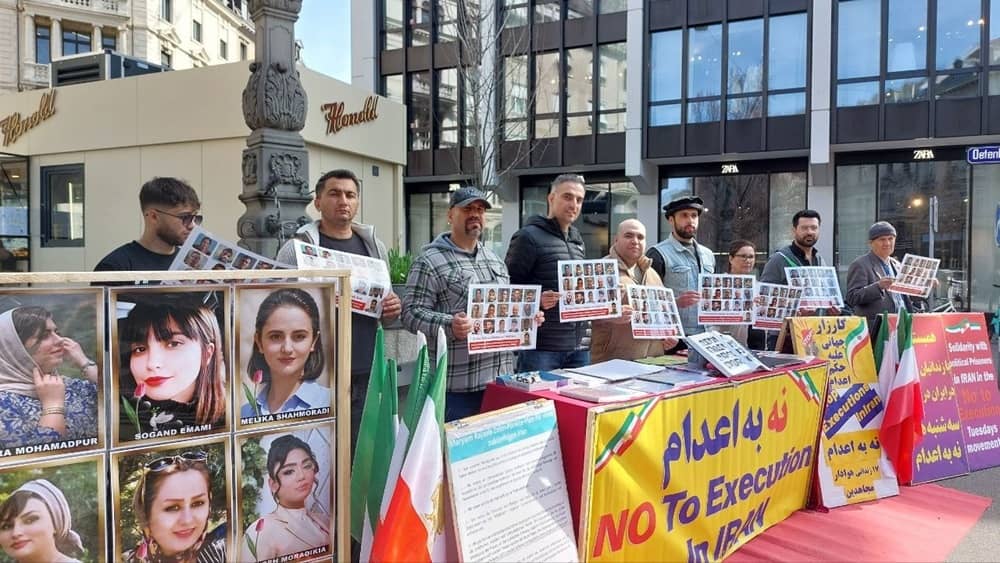
Paris, France – March 24, 2026 – A book fair and photo exhibition took place in Paris to show support for the nationwide uprising in Iran and to pay tribute to its victims and fallen heroes. The event also denounced the ongoing human rights abuses and the harsh executions carried out by Iran’s ruling clerical regime. Organizers highlighted the serious risks faced by political prisoners amid conditions of war and bombardment, urging their immediate release.
Iranian Resistance Supporters Rally in Oslo on Nowruz, Call for Democratic Republic in Iran

Oslo, Norway – March 21, 2026 — Supporters of the People’s Mojahedin Organization of Iran (PMOI/MEK) gathered outside the Iranian regime’s embassy on the first day of the Iranian New Year, Nowruz, expressing support for the National Council of Resistance of Iran’s (NCRI) Provisional Government and calling for the establishment of a democratic republic in Iran.