

THIS PAGE WILL BE UPDATED WITH THE LATEST NEWS
UPDATE: 8:00 PM CEST
Suspected Missile Cargo Ship Arrives in Iran from China

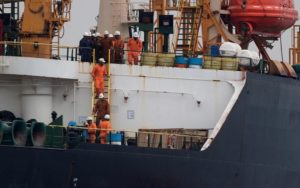
The Jairan, an Iranian cargo ship linked to the transport of missile components, has been spotted in Bandar Abbas port after departing China. According to The Maritime Executive, the vessel, under U.S. sanctions, has arrived in Iran despite ongoing concerns over Iran’s missile capabilities and its ties to the Islamic Republic of Iran Shipping Lines (IRISL).
The Jairan has been linked to Iran’s procurement of sodium perchlorate, a chemical used in solid rocket fuel, according to The Financial Times. Iran’s reported transfer of missile propellant chemicals to its armed forces signals a possible military buildup. If China is assisting Tehran in acquiring these materials, tensions could escalate with the U.S. and its regional allies.
UPDATE: 6:30 PM CEST
Former CENTCOM Commander: “All Paths Lead Back to Tehran”

In an interview with CBS’s Face the Nation on March 30, 2025, General Frank McKenzie, the former commander of U.S. Central Command (CENTCOM), warned that the Iranian regime remains the primary supplier of arms and support to Yemen’s Houthi rebels.
McKenzie stated, “All paths in this matter lead back to Tehran, and we need to know and understand that. They’re the principal supplier for the Houthis.” He added that the Iranian regime has been “backpedaling” from its relationship with the Houthis while continuing to provide material support.
The retired general also emphasized that the U.S. should leave “all options on the table,” including direct actions against Tehran. “When you take things off the table, it tends to give aid and comfort to the enemy. We’ve done too much of that. I think we should leave everything on the table, and I would also leave on the table actions against Tehran itself,” he said.
McKenzie’s remarks highlight ongoing U.S. concerns over Tehran’s destabilizing influence in the Middle East, particularly through its backing of militant groups like the Houthis. According to McKenzie, the Houthis “exist because of Iranian support” and, to a lesser extent, Russian support.
His comments come amid escalating tensions between Washington and Tehran over Iran’s nuclear program and regional activities. The general’s remarks also follow U.S. military operations targeting the Houthis in Yemen, which he characterized as demonstrating new political will and military capability under the current administration.
UPDATE: 12:30 PM CEST
US Airstrikes Pound Yemen’s Capital Overnight, Killing at Least 1, Houthi Rebels Say
DUBAI, United Arab Emirates (AP) — Suspected U.S. airstrikes struck around Yemen’s rebel-held capital overnight into Monday morning, and the Iranian-backed Houthis said at least one person was killed.
The full extent of the damage and possible casualties wasn’t immediately clear. The attacks followed a night of airstrikes early Friday that appeared particularly intense compared to other days in the campaign that began March 15.
The strikes around Sanaa, Yemen’s capital held by the Houthis since 2014, also wounded four others, the rebels said. Their al-Masirah satellite news channel aired footage of broken glass littering homes after the concussive blast of the bombs, but continued not to show the targets of the attacks — suggesting the sites had a military or intelligence function.
Time to Stand Up to Iran’s Policy of Hostage Taking

The Iranian regime has often borrowed heavily from the Nazi Propaganda Minister Joseph Goebbels’ playbook, using propaganda and the tactics of demonization to traduce the Mujahedin-e Khalq (MEK) – the main democratic opposition movement to the mullahs’ tyranny. However, it is sad when such tactics are mirrored almost word-for-word in the lazy, poorly researched, and absurdly distorted article in Le Canard Enchaîné, which relies on worn-out smears pumped out by Iran’s sinister Ministry of Intelligence (MOIS).
I have to ask the question: why now? Is it simply a happy coincidence that two French hostages have just been released by the Iranian authorities, who have weaponized hostage-taking to put pressure on Western appeasers? Could the egregious media coverage in France be part of the agreed ransom?
UPDATE: 8:00 AM CEST
From Life Sentence to Cemetery Tirade: How Appeasement Empowers Genocide Perpetrators in Iran
On March 24, 2025, Hamid Noury, one of the perpetrators in the massacre of more than 30,000 Iranian political prisoners in the summer of 1988, undertook a despicable act by going to Behesht-e Zahra, Tehran’s main cemetery, and engaging in boasting and ranting in Section 92.
Hamid Noury, one of the perpetrators of the 1988 massacre of political prisoners in Iran, threatens dissidents and former political prisoners by visiting Behesht-e Zahra cemetery: "You should have all been here but you escaped and went abroad."
Credit: @HanifJazayeri… pic.twitter.com/C6Rgbe5JoP— People's Mojahedin Organization of Iran (PMOI/MEK) (@Mojahedineng) March 30, 2025
Section 92 of Behesht-e Zahra cemetery, which this ranting henchman chose for his display, is a place where some of the unnamed executed members of the People’s Mojahedin Organization of Iran (PMOI/MEK) and freedom fighters, including victims of the 1988 massacre, are buried. The choice of this location is not accidental. Noury and his accomplices in the regime’s founder Ruhollah Khomeini’s “Death Commission” in 1988 hastily sent many of these heroes to the gallows. The presence of this henchman at that site and his insolence towards the massacred victims has only been made possible by the policy of appeasement from Western countries, which rewards criminals instead of delivering justice.
Escalating Tensions and Economic Struggles: The Growing Internal Criticism of Iran’s Regime
Verbal tensions between U.S. and Iranian regime officials have sharply escalated, with President Donald Trump warning that “very bad things are going to happen to Iran” if Tehran does not reach an agreement with Washington. Meanwhile, within Iran’s regime, growing dissent among officials and analysts signals increasing frustration with Supreme Leader Ali Khamenei’s policies.
Although few within the regime dare to criticize Khamenei directly, many officials have begun issuing veiled warnings about the consequences of the current trajectory. They argue that unless significant policy changes are made, the system is headed toward collapse.
Masoud Roghani Zanjani, a former head of the Planning and Budget Organization, recently made a striking remark in an interview, stating that Khamenei is opposed to the welfare of the Iranian people—a rare and bold statement from within the regime. Similarly, Mohammad Hossein Adeli, former governor of the Central Bank of Iran under President Akbar Hashemi Rafsanjani, has highlighted the severe economic toll of Iran’s tensions with the U.S.
US Sanctions Push Iran Regime’s Trade Relations to the Brink
The former Iranian ambassador to Germany, Japan, and Brazil has acknowledged that U.S. sanctions have not only severely constrained the Iranian regime’s economic interactions with Europe but have also nearly halted its trade relations with East Asia.
Ali Majedi, speaking to the ILNA news agency on Saturday, March 29, highlighted the rupture in cooperation between major Asian economies and the regime. He stated, “Currently, East Asia is not working with us at all, except for China and perhaps a few countries to which we have very limited exports.”
According to Majedi, developed nations such as Japan, South Korea, and, more recently, India—the world’s fifth-largest economy—have reduced their trade engagements with the regime to a minimum. In discussions with members of the regime’s Chamber of Commerce, he specifically noted that both economic and political interactions with Japan have been “suspended.”
Surging Inflation in the New Iranian Year

In the early days of the new Iranian year (which began on March 21), Iran’s economy is grappling with crises such as the rapid depreciation of the national currency, a lack of investment, inflation of at least 35%, a noticeable decline in people’s purchasing power, and issues arising from energy imbalances.
The Research Center of the Iranian Parliament previously reported that in the year 1404 (starting March 21, 2025), Iran’s economy will face serious challenges, including declining economic growth, rising inflation, and increasing poverty.
These economic issues, combined with sanctions and the regime’s diplomatic crises, have led many experts—and even some government officials in Iran—to warn about the country’s economic situation in 1404 (2025).
Cancer Surge in Iran; Cases Expected to Double in 15 Years

Jafar Jandaghi, the director of the Center for Non-Communicable Disease Management at Iran’s Ministry of Health, stated that the number of cancer-related deaths in the country will double within the next 15 years.
According to him, 79,000 people die from cancer in Iran each year. This statistic comes at a time when rising drug prices have made the treatment of chronic illnesses, such as cancer, accessible only to a privileged economic class.
In 2024, the World Health Organization (WHO) warned that the number of new cancer cases worldwide will exceed 35 million by 2050.
MEK Supporters Hold Exhibition in Schwerin to Highlight Human Rights Violations in Iran and Support Political Prisoners

Schwerin, Germany – March 29, 2025 – Supporters of the People’s Mojahedin Organization of Iran (PMOI/MEK) held an exhibition to highlight human rights violations in Iran. The event focused on the country’s dire human rights situation, with particular attention to the plight of political prisoners facing death sentences.
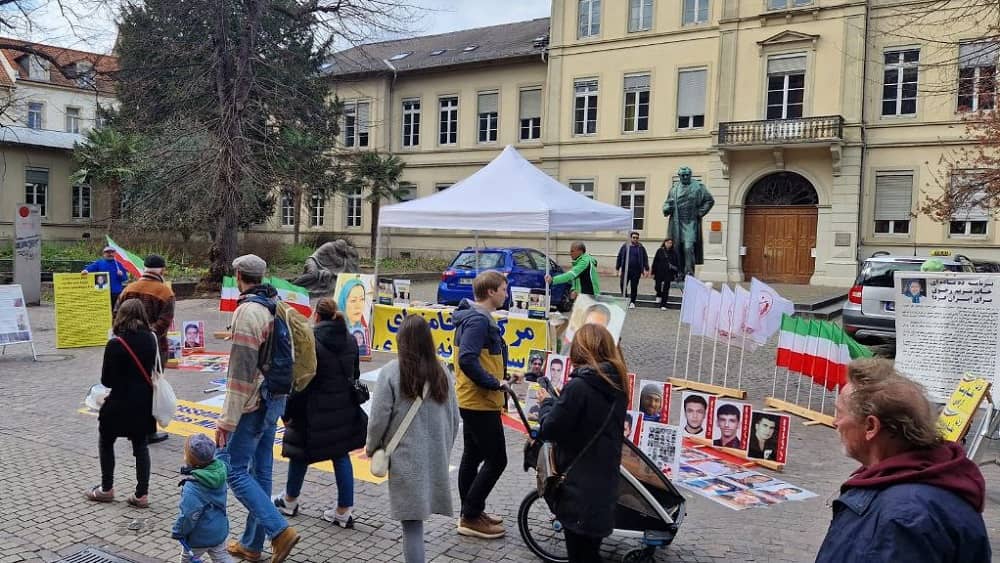
Heidelberg, March 29, 2025: MEK Supporters Host Exhibition to Denounce Human Rights Abuses in Iran

Heidelberg, Germany – March 29, 2025 – Supporters of the People’s Mojahedin Organization of Iran (PMOI/MEK) organized an exhibition to highlight the Iranian regime’s worsening human rights violations and to show solidarity with the ongoing Iranian Revolution.