


THIS PAGE WILL BE UPDATED WITH THE LATEST NEWS
UPDATE: 9:00 PM CET
US Implements Designation of Yemen’s Houthis as ‘Terrorist Organization’
WASHINGTON, March 4 (Reuters) – The U.S. State Department on Tuesday said it was implementing the designation of Yemen’s Iran-aligned Houthi movement as a “foreign terrorist organization” after President Donald Trump’s call for the move earlier this year.
“The Houthis’ activities threaten the security of American civilians and personnel in the Middle East, the safety of our closest regional partners, and the stability of global maritime trade,” Secretary of State Marco Rubio said in a statement.
“The United States will not tolerate any country engaging with terrorist organizations like the Houthis in the name of practicing legitimate international business,” he added.
The move, however, triggered concerns it could impact regional security and worsen Yemen’s humanitarian crisis because importers fear being hit with U.S. sanctions if supplies fall into Houthi hands.
Treasury Sanctions Head of Online Darknet Marketplace Tied to Fentanyl Sales

WASHINGTON — Today, the U.S. Department of the Treasury’s Office of Foreign Assets Control (OFAC) sanctioned Iran-based Behrouz Parsarad (Parsarad), the sole administrator of Nemesis, an online darknet marketplace, which was the subject of an international law enforcement operation and was taken down in 2024. Prior to its takedown by law enforcement, narcotics traffickers and cybercriminals openly traded illegal drugs and services on Nemesis, which was designed with built-in money laundering features. Nemesis had over 30,000 active users and 1,000 vendors and facilitated the sale of nearly $30 million worth of drugs around the world between 2021 and 2024, including in the United States. Today’s sanctions designation is OFAC’s first action as a member of the Federal Bureau of Investigation (FBI)-led interagency Joint Criminal Opioid and Darknet Enforcement (JCODE) Team.
UPDATE: 5:00 PM CET
Time to Hold Iran Accountable for Human Rights Violations

The Iranian regime’s blatant disregard for human rights and its deliberate use of executions to silence political dissent demand urgent international attention. The case of Mehdi Hassani (not to be confused with MSNBC’s Mehdi Hassan), a political prisoner facing imminent execution in Qezel-Hesar Prison, serves as a glaring example of Iran’s oppressive judicial practices and the latest illustration of the Islamic Republic’s systemic use of violence as a tool to stamp out dissent.
Despite the Supreme Court of Iran’s previous decision to accept Hassani’s retrial request, recent reports indicate that this request has now been rejected, putting his life in immediate danger. This case is not an isolated incident but, rather, a continuation of Tehran’s long-standing pattern of executing political prisoners under fabricated charges. It is imperative that the international community intervenes immediately to halt this injustice and hold Iran accountable for its egregious human rights violations.
Iran Approaches Change: Resistance, Internal Crisis, and Global Reaction

At the same time, the Iranian opposition, particularly the National Council of Resistance of Iran (NCRI), has intensified its efforts to overthrow the regime in Tehran. During a significant congressional hearing in the United States, opposition leader Maryam Rajavi emphasized the need for international support for the Iranian people’s struggle for freedom and democracy.
Maryam Rajavi, the President-elect of the NCRI, describes the current situation as “explosive” and highlights the role of youth and the resistance movement in the fight against the regime. Furthermore, she stresses that the authorities rely on widespread executions and fear-mongering to maintain control.
UPDATE: 8:00 AM CET
Economy Minister Ousted in Latest Bout of Infighting within Iran’s Regime
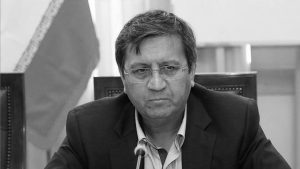
Despite all of the efforts by the Iranian regime’s president, Masoud Pezeshkian, to prevent the impeachment of his Minister of Economy, on Sunday, March 2, Abdolnaser Hemmati was ousted with 182 votes in favor. Hemmati was removed while Pezeshkian, from the moment the issue began to the very last day, spared no effort in groveling, pleading, and flattering to keep him in the position of Minister of Economy.
As soon as the impeachment was proposed on Tuesday, February 18, without prior coordination or notice, he rushed himself to the Ministry of Economy building and said: “All banking, currency, and monetary policies have been decided in the meeting of the heads of the three branches, and it has nothing to do with the Minister of Economy. If we are at fault, then we are at fault; come and arrest us” (ISNA, February 19). This turned into a new scandal in the parliament, and MP Hamid Rasaee played it on the parliament’s loudspeakers, lashing out at him.
The Escalation of Protests in Iran Against Looting and Corruption Amidst A Severe Economic Crisis

Iran is witnessing a growing wave of popular protests reflecting public outrage against the regime’s oppressive policies and the plundering of the nation’s wealth to benefit its corrupt institutions and fund its foreign projects. In recent days, retirees, telecommunications employees, steel workers, and education ministry applicants have taken to the streets to voice their opposition to the worsening economic situation and widespread corruption within the regime.
In Shiraz, retirees staged a protest in front of the governor’s office, demanding their living rights and rejecting the regime’s policies that have led to their economic hardship.
In Zanjan, telecommunications retirees gathered in front of the company’s central office, chanting slogans against the organization for the Execution of Imam Khomeini’s Order (EIKO) and the Cooperation Foundation of the IRGC, which systematically loot their funds through organized plundering schemes.
Helene Carreiras to Simay Azadi: Iranian Women Empower the Global Fight for Justice

In an interview with Simay Azadi, Helene Carreiras, Portugal’s first female Minister of Defense (2022-2024), shared her powerful reflections on the “Women, Force for Change – Free Iran 2025” conference, held by the National Council of Resistance of Iran (NCRI) in Paris on February 22, 2025. The event, a prelude to International Women’s Day 2025, brought global leaders together to honor Iranian women’s resistance against Tehran’s regime and rally support for their democratic vision.
Sarvnaz Chitsaz at IWD2025: Women’s Hegemony, Breaking the Spell of Inequality

On Saturday, February 22, 2025, the Women’s Committee of the National Council of Resistance of Iran hosted a conference to commemorate International Women’s Day (IWD2025). The event gathered distinguished political leaders, human rights advocates, and supporters of the Iranian Resistance from over 80 countries. Opening the conference, Ms. Sarvnaz Chitsaz, Chair of the Women’s Committee of the National Council of Resistance of Iran, delivered a speech, the text of which is presented below:
On behalf of the Iranian women’s resistance, especially the NCRI Women’s Committee and the organizers of this conference, I welcome all of you and thank you for joining us to celebrate International Women’s Day.
Young Mother Dies After Childbirth—A Preventable Tragedy of Medical Negligence

The Iranian regime falsely boasts of providing medical facilities to rural areas. However, the tragic death of a young mother in a remote region of Iran exposes the grim reality: a severe lack of medical equipment and professional care continues to claim innocent lives. This case highlights systemic negligence, putting countless lives at risk due to insufficient resources and mismanaged healthcare infrastructure. Mina Hooti, a 25-year-old woman from the village of Kenar-Kamban in Nikshahr County, died in Imam Ali Hospital in Zahedan, the capital of Sistan and Baluchestan Province, after undergoing a cesarean section. She suffered from severe bleeding, received inadequate medical attention, and faced a critical shortage of necessary medical equipment.
Fuel Smuggling Mafia and the Policy of Concealment in Iran

Fuel smuggling has become one of the most pressing economic crises in Iran today. Official reports indicate that 20 to 30 million liters of fuel “disappear” daily. However, the reality is that this fuel is not lost but systematically smuggled. The true beneficiaries of this illicit trade are powerful institutions and influential groups within the ruling system. The existence of a complex and deeply rooted fuel smuggling mafia is no longer a secret—even high-ranking officials of the regime openly acknowledge it.
Masoud Pezeshkian openly questioned this phenomenon, stating, “How can nearly 20 million liters of fuel disappear daily when the state itself is both the producer and distributor? These thieves should be executed.”
Iran Executes at Least 48 Prisoners in One Week Amid Ongoing Wave of Executions

In the days leading up to the holy month of Ramadan, Iranian authorities carried out a series of mass executions across multiple prisons, putting at least 48 prisoners to death between February 20 and March 1. Among those executed were a woman, a father and son, and seven Baluch prisoners, highlighting concerns over the high number of executions targeting ethnic minorities in Iran.
Fariborz Sebghatollahi Detained for 229 Days Without Trial in Lakan Prison, Rasht

Political detainee Fariborz Sebghatollahi has been held in detention for over 229 days without trial in Lakan Prison, Rasht. He was arrested on July 17, 2024, by intelligence agents in the city of Astara and later transferred to the detention center of the Intelligence Department in Rasht, where he has reportedly been subjected to severe physical and psychological torture. According to reports, security agents have threatened Sebghatollahi, stating that his family’s lives would be in danger if he refused to cooperate and provide forced confessions. In an effort to increase pressure on him, authorities also detained his daughter, daughter-in-law, ex-wife, and several of his friends for a short period before releasing them.
Peyman Farahavar: Uncertainty in Lakan Prison, Rasht

The Gilani poet Peyman Farahavar has been in detention and legal limbo for more than six months. He is currently imprisoned in Lakan Prison, Rasht. Farahavar was arrested by security forces in August 2024 and was transferred to Lakan Prison after completing his interrogation period. At present, the exact charges against him remain unclear. However, reports suggest that he is facing accusations such as “propaganda against the regime” and “enmity against God (Moharebeh).” Judicial authorities have not yet set a date for his trial but have extended his detention until April 2025.
MEK Supporters in Heidelberg Protest Executions and Call for Political Prisoners’ Release

Heidelberg, Germany – March 1, 2025: Supporters of the People’s Mojahedin Organization of Iran (PMOI/MEK) held a rally and exhibition to condemn the death sentences of political prisoners affiliated with the PMOI, particularly Behrouz Ehsani and Mehdi Hassani, who are at risk of imminent execution. Organizers also demanded the immediate release of all political prisoners.
MEK Supporters in Leipzig Protest Executions and Call for Political Prisoners’ Release

Leipzig, Germany – March 1, 2025: Supporters of the People’s Mojahedin Organization of Iran (PMOI/MEK) held a rally and exhibition to condemn the death sentences of political prisoners affiliated with the PMOI, particularly Behrouz Ehsani and Mehdi Hassani, who are at risk of imminent execution. Organizers also demanded the immediate release of all political prisoners.
Supporters of the Iranian Resistance in Oslo Protest Executions and Call for the Release of Political Prisoners

Oslo, Norway – March 1, 2025: Supporters of the Iranian Resistance (NCRI and PMOI) held a rally in front of the Norwegian Parliament to protest the death sentences of political prisoners affiliated with the PMOI, particularly Behrouz Ehsani and Mehdi Hassani, who face imminent execution. Participants also demanded the immediate release of all political prisoners.