

THIS PAGE WILL BE UPDATED WITH THE LATEST NEWS
UPDATE: 10:00 PM CET
Tehran Hit as U.S. Sinks Iranian Warship; Hormuz Disruption Deepens
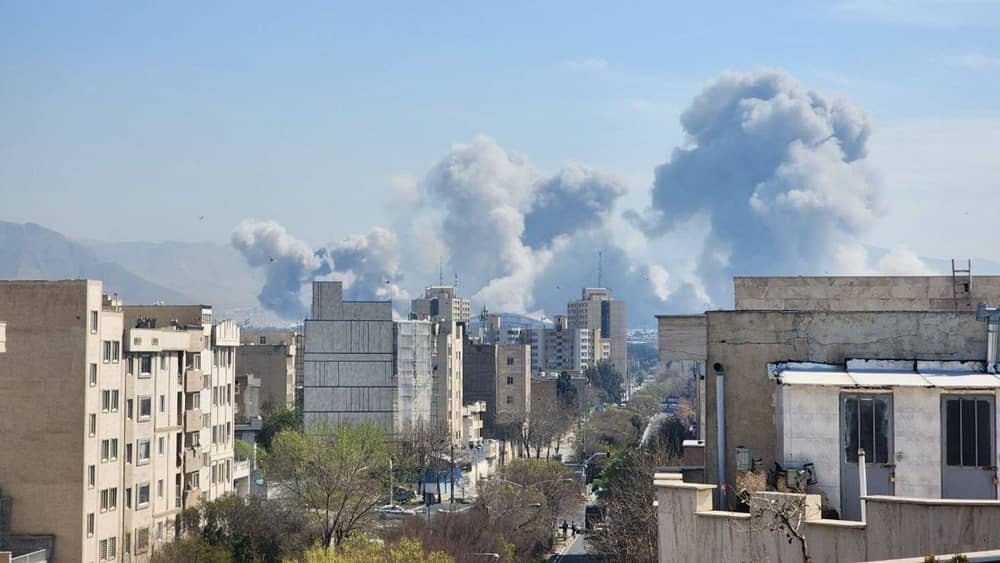
The U.S.-Israeli campaign and the Iranian regime’s reported retaliation continued into a fifth day, with U.S. commanders describing a sharp reduction in the volume of Iranian missile fire and indicating U.S. strikes would push deeper inland as the operation evolves.
Israel’s military said it carried out wide-scale strikes on a military compound in eastern Tehran that it said hosted multiple security and command entities, including IRGC- and Basij-linked elements, alongside other internal security and intelligence units.
Separately, the Israeli military reported that an Israeli F-35 shot down an Iranian Yak-130 over Tehran, a claim that has not been independently verified in the open.
NATO shoots down Iranian missile headed toward Turkey’s airspacehttps://t.co/LtMGwTNsM4
— The Hill (@thehill) March 4, 2026
Sea lanes
A major escalation outside the Gulf was reported off Sri Lanka, where a U.S. submarine torpedoed and sank the Iranian warship IRIS Dena, prompting a search-and-rescue operation. Sri Lankan authorities said 87 bodies were recovered and 32 people rescued, while Reuters reported roughly 60 remained unaccounted for from a crew of about 180.
Shipping disruption around the Strait of Hormuz persisted into a fifth day, with Reuters reporting more than 200 vessels stranded or delayed as risks to commercial traffic rise and energy logistics tighten across the region.
Maritime security agencies also reported a fresh incident near Hormuz: the Malta-flagged container ship Safeen Prestige was struck by an unidentified projectile north of Oman, triggering an engine-room fire and forcing the crew to abandon ship; no injuries were reported. Separately, Turkey said NATO air defenses intercepted and destroyed an Iranian ballistic missile after it entered Turkish airspace, with debris falling in Hatay province and no casualties reported.
Hegseth says U.S. ‘can’t stop everything’ that Iran fires even as he asserts air dominancehttps://t.co/YwZIhu0inB pic.twitter.com/Wi0dW7wFlK
— The Washington Times (@WashTimes) March 4, 2026
Human toll
The Iranian regime’s Foundation of Martyrs and Veterans Affairs said 1,045 people have been killed since Saturday, a figure presented by state-affiliated reporting as encompassing both civilians and military personnel. Independent tallies vary: Human Rights Activists in Iran, cited by the Wall Street Journal, put civilian deaths above 1,000.
On nuclear safety, the International Atomic Energy Agency said it saw no damage to buildings containing nuclear material and therefore no radiological release risk at this time, while noting damage visible at two buildings near the Isfahan nuclear site.
UPDATE: 08:30 PM CET
Protest at Iranian Embassy: “We Want a Secular Republic”

Activists gathered at the Iranian embassy on Tuesday in response to the recent escalation in Iran. Central to their message is a call for a fundamental change to Iran’s regime. “This is the moment for a real transition.”
Mehdi Nobari, supporter of the National Council of Resistance of Iran in Belgium, pointed to what he described as a decisive moment. “After the elimination of Ayatollah Ali Khamenei and other religious powerholders and members of the Revolutionary Guard, this is an important turning point,” he said. “This is the moment for a real transition.”
The protesters explicitly voiced their support for Maryam Rajavi, who from exile is putting forward an alternative model of governance. “We support Mrs. Rajavi’s initiative to steer the transition period in the right direction,” Nobari said. “She has had the courage, from exile, to prepare a government that is ready for the day after change.”
UPDATE: 07:30 PM CET
A Democratic Transition Government for Iran Already Exists. It’s Time to End 47 Years of Tyranny

The killings of Supreme Leader Ayatollah Ali Khamenei and key figures in the Iranian regime’s leadership have sent shockwaves through a system that has, for more than four decades, appeared immovable. The deaths of senior commanders of the Islamic Revolutionary Guard Corps (IRGC) and high-ranking officials close to the Supreme Leader have left a visible fracture at the apex of power. The world is now asking if the Islamic Republic can survive such a decapitation strike?
To answer that, we must first understand the regime. Since 1979, power has rested on three pillars: the Supreme Leader, the IRGC, and an intricate web of intelligence services and proxy militias. The theocratic architecture was deliberately designed to prevent internal collapse.
UPDATE: 03:00 PM CET
A Free Iran Starts with Women in Charge
The death of Ayatollah Ali Khamenei, who ruled Iran with brutality for nearly four decades, has thrown the Persian Gulf country into a historic moment of uncertainty — and possibility. His welcome passing shattered the familiar, oppressive order and forces a question Iran can no longer postpone: What comes next?
That question arises as Iran sits at the center of a deeper shift that may prove historic and generational. Much remains uncertain: how change will unfold, how long it will take, and what form it will assume. One principle, however, should guide every serious observer: Lasting change in Iran must come from within, driven by Iranians themselves and their organized resistance. Anything imposed from abroad or engineered through outside force will fail.
UPDATE: 01:00 PM CET
Overnight Strikes Hit Tehran and Provinces as IRGC Claims New Missile Wave and Qatar Arrests Alleged Guard-Linked Cells
On Wednesday, March 4, the U.S.–Israeli air campaign and Iran’s retaliatory fire continued on multiple fronts, with Iranian state outlets reporting repeated explosions in and around Tehran and fresh damage in several provinces as the leadership succession process remains unresolved after Ali Khamenei’s death.
Iranian state media close to the authorities reported new impacts in eastern Tehran on Wednesday morning, with Tabnak saying “columns of smoke” were visible and describing the area as struck by Israeli missiles. Separate Iranian reports carried by Entekhab said Mehr published images of strikes near residential areas adjacent to Ba’ath Hospital in the east of the capital, underscoring the heightened risk to civilians as attacks move across dense urban zones.
Provincial officials also reported incidents and casualties. In Qazvin province, Tasnim quoted the deputy security governor as saying three sites were hit, including two production units in the Caspian industrial town and Alborz industrial city, plus a telecommunications site, while ILNA separately cited provincial officials reporting multiple injuries in industrial strikes.
🔴 Tehran has warned that any vessel passing through the waterway, a vital shipping route for the world’s oil and gas trade, would be “set on fire”, bringing traffic to a halt
Read the latest ↓https://t.co/HvZQpoGXKO pic.twitter.com/eecxHbI71n
— The Telegraph (@Telegraph) March 4, 2026
In East Azerbaijan, ISNA—quoted by another Iranian outlet—cited the provincial crisis-management chief as saying an explosion was heard around 02:00 in an industrial area west of Tabriz, and a second incident at 10:49 near Tabriz airport struck a warehouse-like structure. In Isfahan province, semi-official and local reporting cited the deputy security governor saying areas including parts of Isfahan city and surrounding counties were hit and that civilian deaths were reported, though figures varied across outlets.
The IRGC used state-aligned platforms to frame its response as escalating. Tabnak and other Iranian outlets published IRGC statements claiming the Ground Force had entered the fighting with three simultaneous operations and “230” attack drones aimed at U.S.-linked targets in the region, and that the 17th wave of “True Promise 4” involved “more than 40” missiles fired at U.S. and Israeli targets; independent verification of these numbers and effects remains limited amid wartime information controls. Iran’s domestic messaging also hardened politically: ILNA reported Mohammad Mokhber saying Iran has “no intention” of negotiating with the United States and portraying the war as sustainable over time.
Breaking: House intel chairman says U.S. inflicting mass damage on Iran, and that the mullahs are ‘circling the drain’ https://t.co/4Ly2Y1frO6
— Just the News (@JustTheNews) March 4, 2026
Across the Gulf, Qatar added a major internal-security development that Iranian state media have not meaningfully addressed: Qatar News Agency reported State Security had apprehended two cells “linked to” Iran’s Revolutionary Guard, arresting 10 suspects on accusations ranging from espionage against critical and military sites to drone-related sabotage preparation; QNA said the suspects confessed to the links during questioning. Separately, Qatari local reporting said the country intercepted multiple drones and cruise missiles and reiterated an earlier Ministry of Defense statement that one Iranian ballistic missile was intercepted while another struck Al Udeid Air Base without reported casualties.
Internationally, U.S. officials continued to emphasize the scale of their campaign. Reuters cited the U.S. Middle East commander saying the assault is ahead of schedule, that Iran’s navy has no operational vessels in key waterways after 17 were sunk, and that more than 2,000 targets have been hit. The U.N. human rights office, meanwhile, renewed calls for a transparent investigation into the deadly strike on a girls’ school in Minab—an incident that has become a focal point for accusations of unlawful targeting as civilian harm rises.
Inside Iran, the regime’s leadership crisis is now central to the war narrative—and to the state’s effort to project continuity. International outlets reporting from Iranian and regional sources said the Assembly of Experts is moving toward choosing a successor, with Reuters citing Iranian sources who described Khamenei’s son Mojtaba as alive and eyed as the regime’s next supreme leader. Israeli Defense Minister Israel Katz publicly warned that any new supreme leader would be a future target—language likely to harden Tehran’s security posture during a transition already dominated by opaque, security-led decision-making.
On energy security, Reuters reported Trump ordered support for war-risk insurance and said the U.S. Navy could escort tankers through the Strait of Hormuz, as disruptions and attacks push up shipping risk and costs. Markets reacted sharply in Asia: Reuters described South Korea’s KOSPI plunging about 12% in its worst day on record, while reports also showed Japan’s Nikkei down roughly 3.9%.
UPDATE: 09:00 AM CET
Iran’s Political Prisoners Champion the NCRI’s Democratic Transition
On February 28, 2026, as the Middle East plunged into a renewed military confrontation and foreign strikes targeted the Iranian regime’s military infrastructure, the National Council of Resistance of Iran (NCRI) initiated a major political offensive by announcing a Provisional Government. This transitional body is designed to transfer sovereignty back to the Iranian people and establish a democratic republic. The political foundation of this Provisional Government is NCRI President-elect Maryam Rajavi’s Ten-Point Plan, which mandates the dissolution of the regime’s suppressive apparatus, including the Islamic Revolutionary Guard Corps (IRGC), the complete rejection of absolute clerical rule (velayat-e faqih), the abolition of the death penalty, and the establishment of a non-nuclear Iran dedicated to gender equality.
Iran After Khamenei: Historic Rupture or Democratic Transition

Iran stands at a historic turning point. The national uprising of January was not a temporary protest but a direct challenge to the system of power based on velayat-e faqih, the absolute guardianship of the clergy over popular sovereignty. The regime’s response was massive violence: executions in the streets, the deployment of the Revolutionary Guard and the Basij militia, snipers on rooftops and indiscriminate repression.
The repressive apparatus managed to contain the mobilisation temporarily, but it did not restore legitimacy. Fear does not equal stability.
On 23 February 2026, a surprise attack by 250 members of the resistance units of the People’s Mojahedin Organization of Iran (PMOI or MEK) against Khamenei’s compound in Tehran left the regime in shock. More than one hundred members of the resistance are believed to have been killed or detained in clashes with the Revolutionary Guard. Although it is difficult to independently verify every detail, the political fact is undeniable: the heart of power has ceased to be untouchable.
Iranian Opposition Leader Wants Free Elections in 6 Months

As bombs continue to fall on Iran and fallen leaders have been replaced by successors, the leader of the largest opposition group outside the country told Newsmax on Tuesday that the Islamic regime is “obligated to hold elections for [a] Constituent Assembly within no more than six months.”
From her headquarters in Paris, Maryam Rajavi, president-elect of the National Council of Resistance of Iran, told Newsmax via email that a new Iran should move quickly on this process.
“The objective is a rapid, transparent process based on the people’s vote, not a prolonged transitional process,” Rajavi said.
Once a Constituent Assembly is elected, she explained, “the provisional government will resign and all authority will be transferred to the elected representatives of the people.”
When Crisis Breeds Extremism: Understanding the Rise of Authoritarian Narratives in Iran
Totalitarian systems are built on rigid ideological narratives. They claim absolute truth, demand absolute obedience, and reject pluralism. Over time, these systems do not solve problems—they generate them.
For nearly half a century, Iran has lived under a system centered on the doctrine of velayat-e faqih, or absolute clerical rule. This interpretation of religion and politics concentrates power in the hands of one unelected authority. The result has been a chain reaction of crises: political repression, economic collapse, social fragmentation, corruption, environmental destruction, and widespread poverty.
These overlapping crises are not accidents. They are the natural outcome of a system that suppresses criticism and blocks reform. When citizens cannot vote freely, speak openly, or hold leaders accountable, problems accumulate instead of being solved.
The Third Path: Uprising, Sovereignty, and the Rejection of Both Shah and Mullah
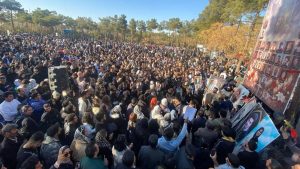
The ruling system in Iran is not a political structure amenable to reform. It is a coercive apparatus that communicates primarily through repression. Its governing logic is not dialogue but deterrence; not participation but punishment. When every channel of civic breathing is sealed—when parties are banned, dissent criminalized, and protest met with bullets—resistance ceases to be a tactical option. It becomes a moral imperative.
In such a landscape, uprising is first and foremost a revolt against imposed humiliation. It is the assertion that the will of the Iranian people transcends the walls of censorship, surveillance, and fear. The recurring protests since June 20, 1981, and especially in recent years, are not spontaneous outbursts detached from history. They are expressions of accumulated grievance against a system structurally incapable of reform.
Human Rights Violations in Iran Under the Leadership of Ali Khamenei (1989–2026)
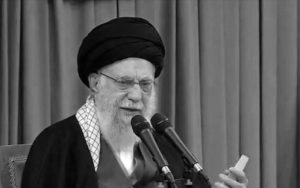
From June 1989 to 2026, Ali Khamenei has occupied a position that, under the Constitution of the Islamic Republic of Iran, grants him ultimate authority over the armed forces, the Islamic Revolutionary Guard Corps (IRGC), the Basij, the judiciary, state broadcasting, and key supervisory institutions. This unparalleled concentration of power places him at the apex of the country’s political, security, and judicial chain of command.
Within such a structure, decisions concerning the use of lethal force, responses to nationwide protests, judicial policies including the implementation of capital punishment, and large-scale security mechanisms cannot reasonably be conceived without the awareness and will of the highest authority of the state.
Paris Rally Backs NCRI Provisional Government as Iran’s Democratic Alternative After Khamenei’s Death

Paris, France – March 1, 2026 — Supporters of the Iranian Resistance (NCRI and PMOI) gathered in Paris to endorse the official announcement of a Provisional Government by the National Council of Resistance of Iran (NCRI), a coalition of democratic Iranian opposition forces. The rally highlighted support for the NCRI’s initiative as a viable democratic alternative for Iran following the death of Ali Khamenei.
MEK Supporters in Oslo Rally Behind NCRI Provisional Government Following Khamenei’s Death

Oslo, Norway – March 1, 2026 — Supporters of the People’s Mojahedin Organization of Iran (PMOI/MEK) gathered outside the Iranian regime’s embassy, calling for the overthrow of the clerical establishment and expressing support for the MEK’s Resistance Units inside Iran. They described the moment as a turning point in the country’s political future.