


THIS PAGE WILL BE UPDATED WITH THE LATEST NEWS
UPDATE: 11:00 PM CET
Iranian Officials Split Over Regional Strikes as Trump Demands “Unconditional Surrender”
As the U.S.-Israeli campaign against Iran entered its eighth day on Saturday, the Iranian regime’s leadership sent sharply conflicting signals over whether it would continue striking neighboring countries, even as U.S. President Donald Trump escalated pressure on Tehran by insisting any end to the war would require Iran’s “unconditional surrender.”
The clearest split came from within Iran’s interim leadership. President Masoud Pezeshkian said he was apologizing to neighboring states affected by recent Iranian attacks and that the temporary leadership council had agreed to suspend strikes on nearby countries unless attacks on Iran originated from their territory. Hours later, Judiciary Chief Gholamhossein Mohseni-Ejei publicly undercut that message, saying some regional states had allowed their territory to be used against Iran and that “heavy strikes” on those targets would continue.
Iranian state media tried to narrow that contradiction rather than fully resolve it. Mehr News Agency, citing Khatam al-Anbiya Central Headquarters, said Iran’s armed forces “respect the national interests and sovereignty of neighboring countries” and had not attacked them, while also warning that U.S. and Israeli bases and interests across the region would remain “primary targets.”
Breaking News: Israel unleashed a major bombardment on a Hezbollah stronghold in the southern suburbs of Beirut. It was another sign that Lebanon is fast becoming a new front in the widening conflict involving the U.S., Israel and Iran. Follow updates. https://t.co/gj5vTwenEC
— The New York Times (@nytimes) March 5, 2026
In separate reports, Mehr said Pezeshkian rejected surrender and that the IRGC claimed new operations, including a drone attack on Al Dhafra Air Base in the UAE and another wave of “True Promise 4” strikes toward Tel Aviv. Those battlefield claims were presented by Iranian state-linked media and could not be independently verified in full.
Trump, meanwhile, hardened Washington’s position. Reuters reported on Friday that he demanded Iran’s “unconditional surrender,” and on Saturday he said Iran would be “hit very hard,” casting Pezeshkian’s apology as evidence that U.S. and Israeli pressure was working. Pezeshkian rejected that demand as “a dream.”
On the battlefield, fighting intensified in and around Tehran. AP reported late Saturday that fresh airstrikes hit neighborhoods in eastern and southwestern Tehran and that an oil storage facility south of the capital was struck, with Iranian state media also acknowledging the hit. AP said the attack appeared to be the first known strike on a civilian industrial site in the war. Reuters separately reported that the conflict had entered a second week amid continuing exchanges between Iran and Israel.
All eyes will be on developments in the Middle East after the U.S. and Israel launched attacks on Iran and the conflict spread to various countries across the region. https://t.co/bM0QZQ2ulA
— The Wall Street Journal (@WSJ) March 7, 2026
The human toll continues to rise, though figures differ by source and methodology. Reuters reported that Iran’s U.N. ambassador said at least 1,332 Iranian civilians had been killed so far in the war. AP, in its Saturday roundup, cited at least 1,230 deaths in Iran overall, alongside more than 290 in Lebanon, 11 in Israel, and six U.S. troops killed. AP and Reuters both reported that the six American fatalities were killed in a drone strike on a U.S. command center in Kuwait; Trump attended the transfer of their remains at Dover Air Force Base on Saturday.
The war has also spread across the Gulf. Reuters reported that Saudi Arabia warned Iran it would retaliate if attacks on Saudi territory or energy infrastructure continued, and that Gulf states including the UAE, Kuwait, Qatar, Bahrain and Saudi Arabia had all come under drone or missile fire over the past week. AP reported that one person was killed in the UAE on Saturday when debris from an aerial interception struck a vehicle.
The U.S. launched Operation Epic Fury, the joint attack with Israel on Iran, citing various reasons like imminent threats, nuclear weapon prevention and regional peace.
Here’s a closer look at each rationale the Trump administration has given: https://t.co/a7KaZCxnoN
— The Washington Post (@washingtonpost) March 7, 2026
Inside Iran, the war is feeding a succession crisis as well as a military one. According to state media, several senior clerics are pushing for the rapid selection of a new supreme leader following Ali Khamenei’s death. Ali Larijani, speaking via state media, said arrangements were being made to convene the Assembly of Experts, the body tasked with choosing the next leader. Mehr News Agency also reported that Pezeshkian held a call with Russian President Vladimir Putin, who urged an immediate halt to the war and a return to political and diplomatic channels.
A strike on Tehran’s main police headquarters hit one of the regime’s core coercive institutions. AP, citing Planet Labs satellite imagery, reported that multiple buildings at the site were flattened; the national police, commanded by a Revolutionary Guard general, have long been central to Iran’s internal security apparatus and to the suppression of anti-government protests.
Azerbaijan Says It Foils Iranian Plots Including Plan to Attack Major Pipeline

Azerbaijan said it had prevented several acts of “terrorist” sabotage planned by Iran’s Revolutionary Guard Corps (IRGC), including a plot to attack a major oil pipeline running through the South Caucasus to Türkiye.
The targets included the Baku-Tbilisi-Ceyhan (BTC) oil pipeline, the Israeli embassy in Azerbaijan, an Ashkenazi synagogue, and a leader an ancient Jewish community in Azerbaijan called the Mountain Jews, according to a State Security Service statement cited by the Azertag state news agency late on Friday.
Iran has not commented on the statement. The BTC pipeline travels via Georgia and Türkiye and sends oil to Europe, and also accounts for roughly a third of Israeli oil imports. Any damage to its infrastructure could drive global energy prices even higher as the war in the Middle East enters its second week, Reuters said.
Four People Arrested Under National Security Act

Four people have been arrested as part of a Counter Terrorism Policing investigation into suspected National Security Act offences. The men [A-D] were arrested on Friday, 6 March on suspicion of assisting a foreign intelligence service, contrary to section 3 of the National Security Act, 2023. The country to which the investigation relates is Iran.
Detectives from CTP London, which is leading the investigation, arrested the men, one Iranian and three dual British/Iranian nationals, shortly after 01.00hrs at addresses in Barnet, Harrow and Watford, as part of a pre-planned operation.
The investigation relates to suspected surveillance of locations and individuals linked to the Jewish community in the London area.
UPDATE: 08:00 PM CET
United States Files Civil Forfeiture Complaints Against $15M in Funds Allegedly Linked to Iranian Oil Shipping Network

The Department of Justice filed two civil forfeiture complaints today in the U.S. District Court for the District of Columbia against more than $15.3 million allegedly used to fund an illicit Iranian oil distribution network. According to the complaints, the funds are subject to forfeiture because they afford a person a source of influence over the National Iranian Oil Company (NIOC), the Islamic Revolutionary Guard Corps (IRGC) and the IRGC Quds Force (IRGC-QF), and are intended to promote ongoing violations of U.S. sanctions imposed under the International Economic Emergency Powers Act (IEEPA). The IRGC and the IRGC-QF are designated Foreign Terrorist Organizations (FTOs).
The complaints allege that Mohammad Hossein Shamkhani (Shamkhani) has operated a network consisting of companies and individuals (the Shamkhani Network) engaged in selling and shipping Iranian oil and other commodities in violation of U.S. sanctions and obfuscating the source of the oil and role of Iranian persons and entities in the transactions. According to the complaints, the funds in question were being used to operate multiple distribution companies in the Shamkhani Network.
UPDATE: 12:00 PM CET
Escalating Strikes Batter Tehran as Regime Tries to Recast Regional Blowback
Overnight U.S.-Israeli airstrikes hit Tehran again as the war entered its second week, with major explosions reported around the capital and damage near Mehrabad Airport, while Iran responded with fresh missile and drone attacks on Israel and across the Gulf. International coverage described the latest phase as a deepening military escalation with widening regional fallout, while Iranian state media continued to frame it as justified retaliation under “Operation True Promise-4.”
Iranian state outlets on Saturday emphasized defiance, not restraint. Press TV quoted the regime’s president Masoud Pezeshkian saying Iran’s enemies would take the “dream” of surrender “to the grave,” and Mehr reported the 23rd and 24th waves of “True Promise-4,” presenting new strikes on Israeli targets and U.S.-linked positions as proof that Tehran retains offensive capacity.
At the same time, Tehran tried to contain the diplomatic cost of those attacks by presenting a limited pullback toward neighboring Arab states. Reuters and AP reported that Pezeshkian said Iran would suspend strikes on neighboring countries unless those countries were used against Iran. But this should not be mistaken for a genuine apology. It was a conditional, self-serving message issued only after Iranian attacks had already alarmed Gulf governments and disrupted civilian aviation and energy infrastructure. In practice, the de-escalatory language was undercut almost immediately by continued strikes, regional alerts and interceptions.
Iran's president apologized for the attacks on regional countries. His statement aired after repeated attacks Saturday on Bahrain, Saudi Arabia and the United Arab Emirates.
Follow AP's live updates. https://t.co/wfODFYTBrp
— The Associated Press (@AP) March 7, 2026
AP reported disruptions at Dubai International Airport, sirens in Bahrain, and Saudi statements that drones aimed at the Shaybah oil field and a ballistic missile headed toward Prince Sultan Air Base were intercepted. Reuters said fresh Iranian strikes were also announced against U.S. positions in Abu Dhabi and Kuwait, and against targets in Iraq’s Kurdistan region.
Washington’s rhetoric also hardened. Reuters reported that President Donald Trump said there would be no deal with Iran except “unconditional surrender.” AP said U.S. officials were warning that a heavier bombing campaign could still follow.
The human toll continues to rise, though figures vary by source and timing. Reuters, citing the regime’s U.N. ambassador, said at least 1,332 Iranian civilians have been killed so far. AP’s latest tally put the toll at at least 1,230 in Iran, more than 200 in Lebanon, and 11 in Israel, with six U.S. service members also killed.
Flight tracker over the Middle East as Iran war continues. https://t.co/0GHLj8cRVK
— Reuters (@Reuters) March 7, 2026
The economic shock widened alongside the military escalation. Reuters reported that the war has effectively shut the Strait of Hormuz, with Goldman Sachs warning oil could move above $100 a barrel if flows do not recover soon, and Barclays saying Brent could test $120 if the conflict continues for weeks. Reuters also reported that India raised household cooking-gas prices for the first time in about a year because the war is disrupting Middle Eastern LPG supplies.
The clearest picture from the last 12 hours is not of meaningful de-escalation, but of a regime trying to manage the consequences of its own regional escalation while continuing to strike. Iranian state media are presenting resolve and retaliation; international outlets are documenting the broader reality: expanding regional spillover, rising civilian costs and no credible off-ramp.
UPDATE: 09:00 AM CET
March 8: International Women’s Day and the Leading Role of Iranian Women in the Struggle for Freedom

March 8 is celebrated worldwide as International Women’s Day, a day that honors over a century of women’s fight for equality, justice, and human rights.
This day traces back to the early 20th century, when women workers in New York and Europe protested discrimination, unequal pay, and harsh working conditions. In 1977, the United Nations officially recognized March 8 as International Women’s Day, turning it into a global symbol for women’s struggle for equality.
Today, International Women’s Day is more than a date on the calendar; it represents the resilience and determination of women who fight for a freer, fairer, and more just world.
Iranian-Americans from North Texas Head to Washington D.C. For Peace Rally

DALLAS – After a week of international conflict, several Iranian-Americans from North Texas will head to Washington D.C. to participate in a unity rally for their home country, hoping for democracy in their homeland. Homeira Hesami, Reza Hesami and Hannah Jam are three Iranian-Americans who call North Texas home. This weekend, they’ll head to the nation’s capital for a Free Iran unity rally. They believe the end to the current regime is a long time coming, and hope Iran transitions to peaceful democracy. All three have their own experiences with the country’s regime.
“So we have to have a plan in place to prevent chaos.”
Homeira Hesami showed FOX 4’s David Sentendrey a book that’s banned in Iran. It highlighted 20,000 Iranians who were killed resisting the current regime.
Iran’s Future After Khamenei: Democracy, Dictatorship, or Foreign Dependency?
As the clerical regime faces an unprecedented crisis, the struggle over Iran’s future is increasingly defined by a stark choice between a democratic republic and the revival of authoritarian rule.
As the external war involving Iran enters a critical phase and the death of Ali Khamenei removes the central pillar of the doctrine of velayat-e faqih, a pressing question dominates political discussions: what political system will replace the current dictatorship?
At this historical moment, Iran faces several possible futures, but in essence only three paths are conceivable.
One path reflects the aspirations of the Iranian people themselves—a democratic republic grounded in popular sovereignty. The other two represent variations of authoritarianism: the continuation or restoration of dictatorship, or the emergence of a government dependent on foreign powers.
Repression and Human Rights Violations in Iran – February 2026

What distinguishes the page of Iran’s history at the beginning of 2026 more than ever before is the emergence of an uprising that reflects the public’s anger toward Iran’s regime.
Images of the piled-up bodies of those killed in the uprising in warehouses and morgues have recorded a bitter yet telling picture in Iran’s history.
Something that until a day earlier was unimaginable for the people and the majority of society suddenly occurred, not as an isolated incident in one corner of the country but in an organized manner across most cities in Iran.
Trump Assassination Plot Suspect Says Iran’s Regime Planned It, Threatened His Family

A suspect in the plot to assassinate U.S. President Donald Trump said the assassination had been planned by Iran’s regime and that his family had been threatened.
Asif Raza Merchant, a Pakistani man accused of planning the assassination of U.S. President Donald Trump and several other senior American politicians, told the court that the plot had been imposed on him under pressure from the Islamic Revolutionary Guard Corps (IRGC).
Merchant, who was charged in September 2024 with attempting to hire a hitman to assassinate American politicians, said during his trial that he was forced to participate in the plot in order to protect his family, who live in Tehran.
Iran Human Rights Monthly Report – February 2026

Iran HRM Monthly Report – February 2026 has been marked by an unprecedented surge in executions, a brutal crackdown on dissent, and the continued systematic use of torture and arbitrary detentions by the clerical regime. The regime’s persistent reliance on capital punishment as a tool for political repression and the instigation of terror has reached alarming levels.
The execution machinery of the Iranian regime, intensified its operations during February, claiming the lives of at least 307 individuals across 31 provinces and 65 cities. This horrifying figure includes 5 women who were sent to the gallows. The scale of executions during this period represents a drastic increase compared to previous years, amounting to more than 4 times the total recorded in the Persian month of Bahman 1403 (76 executions—roughly February 2025), nearly 8.5 times Bahman 1402 (36 executions—roughly February 2024), and about 7 times Bahman 1401 (44 executions—roughly February 2023). This alarming trend underscores the regime’s desperate attempt to maintain its grip on power through sheer brutality and intimidation.
“Don’t Worry, Mom… I’ll Be Back Soon”: The Disappearances That Leave Families Without Answers
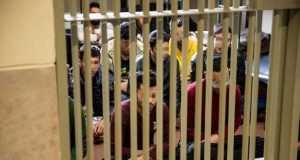
In some detention cases in Iran, authorities refuse to confirm where detainees are being held or even acknowledge the arrest—situations that human rights organizations describe as enforced disappearance.
“Don’t worry, Mom… I’ll be back soon.”
Those were the last words Amir, a 22-year-old university student, said to his mother before he was taken away by security forces. Hours later, when his family went to government offices to find him, they heard the same response everywhere: “No one by that name is being held here.”
From that moment on, the family’s search began—a search that stretched on for weeks without any authority admitting where he had been taken.
Bern Rally Backs NCRI Provisional Government as Iran’s Democratic Alternative

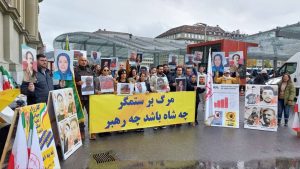
Bern, Switzerland — March 3, 2026 — Supporters of the Iranian Resistance, along with Kurdish compatriots, demonstrated outside the Iranian regime’s embassy, calling for the overthrow of the clerical establishment and endorsing the official announcement of a Provisional Government by the National Council of Resistance of Iran (NCRI), a coalition of democratic Iranian opposition forces. The rally highlighted support for the NCRI’s initiative as a viable democratic alternative for Iran following the death of Ali Khamenei.