

THIS PAGE WILL BE UPDATED WITH THE LATEST NEWS
UPDATE: 09:00 PM CET
Israeli Strikes on Tehran Fuel Depots and Iranian Attacks on Gulf Infrastructure Mark the Last 24 Hours of War
The past 24 hours brought a sharp widening of the Iran war, with Israeli strikes setting major fuel sites ablaze in and around Tehran while Iran pushed its retaliation deeper into Gulf infrastructure, hitting fuel tanks at Kuwait’s international airport and, according to Bahraini authorities, damaging a desalination plant. Saudi Arabia also reported its first fatalities of the war after a projectile hit a residential area.
On the Iranian side, state media presented the latest phase as continued retaliation under what the regime termed “Operation True Promise 4.” Press TV said Iranian forces and allied groups were still carrying out operations against U.S. and Israeli targets and reported new waves of missile and drone strikes, while Mehr quoted President Masoud Pezeshkian as saying Iran does not seek conflict with neighboring states but will respond “decisively” if attacks originate from their territory.
The most visible military development inside Iran was the attack on fuel infrastructure around the capital. Reuters reported thick black smoke over Tehran after strikes on oil storage facilities, while AP said Iranian authorities blamed overnight attacks on four oil storage tankers and a petroleum transfer terminal, reporting four deaths. Press TV quoted Foreign Ministry spokesman Esmaeil Baghaei calling the strikes “intentional chemical warfare,” and international reporting said Iranian officials warned of toxic air, acid rain risk and temporary fuel disruption in the capital.

AP reported that Bahrain accused the regime in Iran of hitting a desalination plant, with supplies still online, while Kuwait said drones targeted critical infrastructure including fuel tanks at Kuwait International Airport. Reuters said Iranian drone attacks were also reported by Saudi Arabia, Kuwait, the UAE and Bahrain, underscoring that Tehran’s campaign has continued despite earlier efforts to soften its messaging toward neighboring states.
That softer messaging did not last. Pezeshkian had said a day earlier that Iran would suspend attacks on neighbors unless attacked from their territory, but by Sunday both he and other Iranian officials had shifted back to a harder line. Mehr quoted him saying stronger pressure would bring a stronger response, AP said he had effectively backtracked from conciliatory comments, and Reuters reported that Saudi Arabia had warned Tehran that further attacks on its territory or energy sites could trigger retaliation and even open Saudi bases to U.S. operations.

A major parallel development was political. Reuters reported that Hosseinali Eshkouri, a member of the Assembly of Experts, indicated that a vote had already been cast to choose Mojtaba Khamenei as Iran’s next supreme leader, though no formal announcement had yet been made. That makes the succession question one of the most consequential non-battlefield developments of the last day.
The war also kept spreading beyond Iran and the Gulf. Reuters reported that an Israeli strike in central Beirut killed four people and pushed Lebanon’s death toll close to 400, while AP said Israel announced its first soldier deaths of the war in southern Lebanon.
The human and economic toll kept climbing. AP’s latest tally put deaths at at least 1,230 in Iran, 397 in Lebanon and 11 in Israel, with six U.S. troops killed. Reuters reported that Kuwait had declared force majeure and cut crude production, with the Strait of Hormuz still largely blocked and around 20% of global oil and LNG supply exposed to disruption.
UPDATE: 06:30 PM CET
Ali Safavi to Newsmax: Iranian Regime ‘On Its Last Legs’

The Islamic Republic is nearing collapse following the death of longtime Supreme Leader Ayatollah Ali Khamenei, Ali Safavi, a member of Iran’s parliament in exile and the National Council of Resistance of Iran, said Sunday on Newsmax.
“To be frank, irrespective of who they choose, this regime is on its last legs,” Safavi said on Newsmax’s “Wake Up America Weekend.” “Whoever replaces Khamenei will not be able to hold this regime together. Khamenei was in power for 39 years, and he was the linchpin of the regime.”
Safavi pointed to growing unrest inside Iran and activity by opposition groups as signs that the government is weakening.
UPDATE: 09:30 AM CET
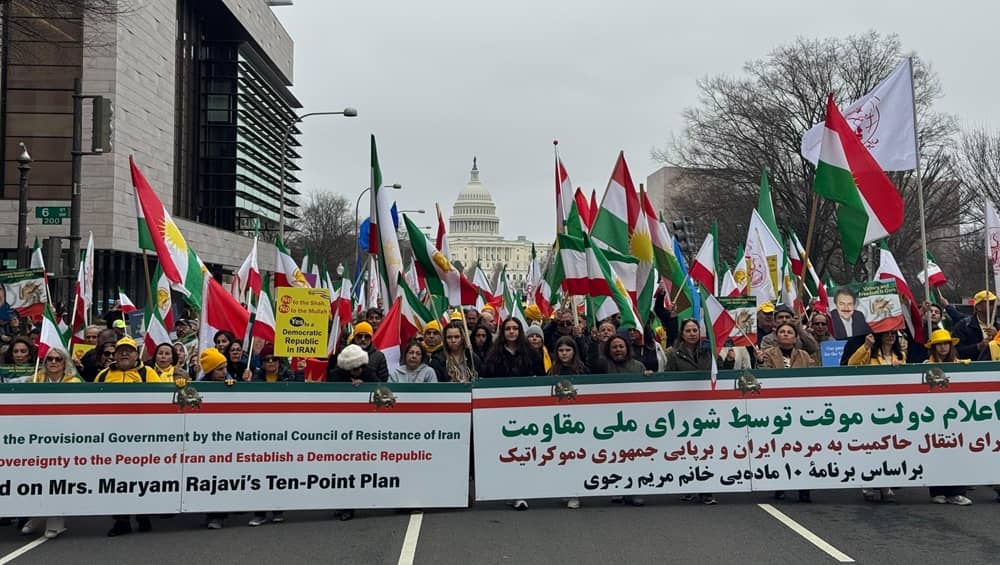
Iranians Rally in DC For Democracy and Iranian Leadership Back Home

WASHINGTON (7News) — 7News was there on Saturday as hundreds of Iranian Americans rallied for their freedom, democracy, and sovereignty after Iran’s supreme leader was killed in late February.
Reporter Phylicia Ashley spoke to some of those who came to the event, who gave a glimpse of life back home and their hopes for the future. Azadeh Sami’s family left Iran right before the revolution in 1979. “We’re all here for one reason,” said Sami. “We’re all here to support the Iranian people. And that purely energizes me.”
The Organization of Iranian American Communities organized the rally. Telling 7News that back home, the Islamic Republic fostered decades of conflict across the Middle East, and forced thousands of families like Nasser Sharif’s to flee the country.

Iranian Americans Send Message to White House: ‘Regime Change in Iran by the People of Iran’

Iranian Americans gathered on Capitol Hill to chant “regime change in Iran by the people of Iran” — a chorus echoing blocks away, accompanied by dozens of drums — on Saturday, marking the first week of the U.S. military operation in Iran.
Hundreds gathered to support the provisional government for Iran’s transition announced this week by Maryam Rajavi, the president-elect of the National Council of Resistance of Iran, to facilitate a transition to establish a secular and democratic republic in Iran.
The U.S. and Israel launched massive strikes against Iran, followed by President Trump calling on the Iranian people to “help take back your country.”
War and Repression: Another Chapter of Human Rights Violations Against the Iranian People
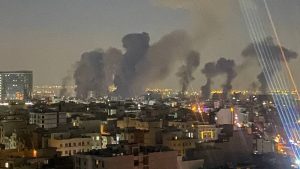
The opening months of 2026 have marked one of the most turbulent periods in Iran’s contemporary history. What distinguishes this moment is the emergence of a nationwide uprising—an explosive expression of public anger against an authoritarian system that has ruled the country for decades. As unprecedented as the uprising itself has been, the scale of human rights violations carried out against the Iranian people in response has been equally extraordinary.
Images emerging from inside the country have captured scenes that many Iranians once believed impossible. Photographs and reports describing warehouses and morgues overflowing with the bodies of those killed during the uprising have left a painful but unmistakable record in the nation’s historical memory. What occurred was not an isolated incident in one corner of the country; rather, the violence appeared coordinated and widespread, affecting cities across Iran.
35 IRGC Centers Targeted in Western Iran; Tehran Targets Iraq with Drones
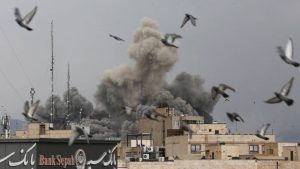
On the seventh day of the joint U.S.–Israel military campaign against Iran’s regime, a wave of heavy airstrikes was carried out against 35 centers belonging to the Islamic Revolutionary Guard Corps (IRGC) and the regime’s security forces in the western belt of Iran. At the same time, Iran’s regime carried out drone attacks against targets in Iraq, particularly in the Kurdistan Region.
In the recent attacks, 35 bases affiliated with the IRGC in western Iran were targeted, leaving heavy human casualties.
According to these sources, among the targets were the IRGC headquarters and the Basij command center in Ilam, Basij facilities in the cities of Sarab-Bagh (in Abdanan County), Badreh, Dareh-Shahr, Dehloran, Delgosha (in Malekshahi County), Lumar and several surrounding villages, as well as the headquarters of the Imam Hossein Battalion in the city of Ilam.
Women’s Rights in Iran: 47 Years of Structural Discrimination

International Women’s Day, rooted in the struggles of women workers in the early twentieth century, is today recognized as a global benchmark for measuring equality, political participation, judicial justice, and women’s human dignity. It is not merely a symbolic occasion; it serves as a reminder of states’ obligations to eliminate structural discrimination and to guarantee the fundamental rights of half of the world’s population.
In many countries, 8 March provides an opportunity to assess progress in women’s participation in political leadership, the judiciary, the economy, and public life. In Iran, however, this day reflects a profound gap between international human rights standards and the prevailing legal and political structures; structures that, over the past 47 years, have institutionalized misogyny within official laws and institutions.
Is Iran at Risk of Fragmentation? What History and Sociology Reveal
Does ethnic diversity inevitably lead to the breakup of a country? Why did states such as Syria and Iraq move toward territorial fragmentation during periods of crisis, while Iran—despite its own political turmoil and ethnic diversity—did not experience a similar outcome? And is the key issue really ethnicity, or the deeper historical structure of the state itself?
Answering these questions requires looking beyond current political debates and examining Iran through the lenses of history, sociology, and political science. What emerges is a picture of a country whose more than two thousand years of civilizational continuity, state formation, and layered national identity have produced a political structure fundamentally different from many modern states in the Middle East.
London Rally: MEK Supporters Back NCRI Provisional Government as Iran’s Democratic Alternative

London, UK — March 6, 2026 — Supporters of the People’s Mojahedin Organization of Iran (PMOI/MEK) rallied outside the British Prime Minister’s Office at 10 Downing Street, calling for the overthrow of the clerical establishment and endorsing the National Council of Resistance of Iran’s (NCRI) announcement of a Provisional Government. The rally highlighted support for the NCRI’s initiative as a viable democratic alternative for Iran following the death of Ali Khamenei.
Gothenburg Rally: MEK Supporters Back NCRI Provisional Government as Iran’s Democratic Alternative

Gothenburg, Sweden — March 5, 2026 — Supporters of the People’s Mojahedin Organization of Iran (PMOI/MEK) gathered in Gothenburg for the third consecutive rally to endorse the National Council of Resistance of Iran’s (NCRI) announcement of a Provisional Government. The NCRI, a coalition of democratic Iranian opposition forces, has presented the initiative as a roadmap for a democratic transition in Iran. The rally underscored support for the NCRI’s initiative as a viable democratic alternative for Iran following the death of Ali Khamenei.