

THIS PAGE WILL BE UPDATED WITH THE LATEST NEWS
UPDATE: 08:30 PM CEST
New Round of Economic Fury Sanctions Targets IRGC Oil Operations

Today, the United States is sanctioning a network involved in selling and shipping Iranian oil to overseas buyers on behalf of the IRGC and three senior officials from the IRGC’s Shahid Purja’fari Oil Headquarters who coordinate these illicit transactions. These actions disrupt illicit funding streams that finance Iran’s support for terrorist proxies and regional aggression. These oil revenues belong to the Iranian people, who face daily economic hardship due to the Iranian regime’s corruption, mismanagement, and prioritization of funding terrorist militias and weapons programs over addressing the basic needs of its citizens.
This action represents an additional round of sanctions under Economic Fury, part of the Administration’s maximum pressure campaign against Iran. The United States will continue denying the Iranian regime access to revenue that funds terrorism, threatens regional stability, and enables attacks on U.S. forces and allies.
Additionally, the U.S. Department of State’s Rewards for Justice program is offering a reward of up to $15 million for information leading to the disruption of the financial mechanisms of Iran’s Islamic Revolutionary Guard Corps (IRGC) and its various branches. More information is available on the RFJ website.
UPDATE: 02:00 PM CEST
Iranian Prisoner Moradi Rejects “Pardon” Offer: “I Will Not Beg You to Get Free”

The “FreeAliAmirhossein” Initiative has released to the public a letter dated May 12 from Amir Hossein Moradi, who is being held in Evin Prison. Moradi, who has repeatedly refused requests by prison authorities to meet with him as part of a “pardon” process, wrote the following in his letter:
“As I stated clearly in September 2024, I repeat the same thing today: I have neither requested nor accepted your shameful pardon. After the bloody massacres of January and the recent executions, it is clear that we are the ones in a position to forgive. We neither forgive nor forget. Until the people of Iran are freed from your evil, I will not think about my own freedom, nor will I beg you for it.”
In his letter, Moradi also referred to his cellmates who were transferred to Ghezel Hesar Prison, stating: “Until their final breath, they did not accept the disgrace of bowing down and surrendering before your vile rule.”
Reps. Sherman, Tenney, Lawler Lead Bipartisan Push for UK to Designate IRGC as a Terrorist Organization
WASHINGTON DC – Today, Middle East North Africa Subcommittee Ranking Member Brad Sherman (CA-32), Congresswoman Claudia Tenney (NY-24) and Middle East North Africa Subcommittee Chairman Michael Lawler (NY-17) led a bipartisan letter urging the government of the United Kingdom (UK) to fast-track long overdue legislation proscribing the Iranian Islamic Revolutionary Guard Corps (IRGC) as a terrorist organization.
The letter was signed by a total of 20 bipartisan Members, including Representatives Don Bacon (NE-02), Gus Bilirakis (FL-12), Mike Carey (OH-15), Earl “Buddy” Carter (GA-01), Jim Costa (CA-21), Lois Frankel (FL-22), Josh Gottheimer (NJ-05), Thomas Kean, Jr. (NJ-07), Mike Levin (CA-49), Grace Meng (NY-06), Dave Min (CA-47), Jared Moskowitz (FL-23), Maria Elvira Salazar (FL-27), Christopher Smith (NJ-04), Elise Stefanik (NY-21), Shri Thanedar (MI-13), (Debbie Wasserman Schultz (FL-25).
“Every day the British Parliament fails to vote on this legislation is another day that the IRGC evades the full impact of our nations’ combined sanctions,” said Congressman Sherman. “The IRGC has waged terrorism around the world for decades, and earlier this year murdered some 30,000 Iranian protesters. The UK must stand with the Iranian people and join the United States in designating the IRGC as a terrorist organization.”
UPDATE: 08:00 AM CEST
Babak Alipour’s Defiance from Prison: Resistance Beyond the Gallows
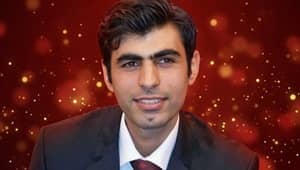
For committed political dissidents in Iran, prison has never represented surrender. For those who remain steadfast in their beliefs, incarceration becomes a space where conviction is tested, refined, and strengthened. The recent prison message delivered by Iranian political prisoner Babak Alipour stands as a striking example of that reality. Recorded behind prison walls in December 2025, Alipour’s statement reflects the convergence of legal awareness and revolutionary commitment. A law graduate facing execution, he speaks not with hesitation or fear, but with unwavering certainty about what he considers the only viable path for Iran’s future: organized resistance against clerical dictatorship.
Throughout his remarks, there is no trace of retreat or remorse. Instead, his words amount to a renewed oath to continue resisting until the overthrow of the ruling system.
Born in 1991 in Amol, Babak Alipour entered political activism with an academic background in law, a discipline rooted in justice and legal legitimacy. Yet his experience inside Iran’s judicial system led him to reject the very institutions claiming legal authority over his life.
Internal Rifts Deepen in Tehran as Regime Factions Clash Over U.S. Negotiations
Internal divisions within Iran’s regime have escalated sharply as competing factions intensify their conflict over possible negotiations with the United States. The dispute has now moved beyond political criticism into open threats, accusations of betrayal, and warnings of unrest from figures closely tied to the regime’s power structure.
The latest exchanges reveal growing tensions inside the Iranian regime at a time when economic pressure, regional instability, and political uncertainty continue to deepen the system’s internal crisis.
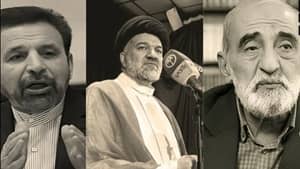
Mahmoud Vaezi, former chief of staff and spokesman for former regime President Hassan Rouhani’s administration, publicly attacked opponents of negotiations, including hardline parliamentarian Amir Hossein Sabeti and former nuclear negotiator Saeed Jalili.
Vaezi accused anti-negotiation factions of exploiting the authority of the Supreme Leader for political purposes, arguing that if the leadership opposed talks with Washington, such opposition would be explicitly declared.
From “Minor Despotism” to Modern Iran: The Long Struggle Between Society and Absolute Power
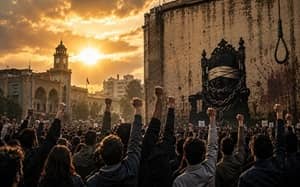
In Iranian political memory, the phrase “Minor Despotism” is not merely a historical reference to a short period during the Qajar dynasty. It has become a political metaphor — a symbol of those moments when power responds to popular demands for participation, accountability, and freedom with repression and violence.
The term originally referred to the period following Iran’s Constitutional Revolution in the early twentieth century, when hopes for representative government and the rule of law were abruptly crushed by authoritarian backlash. Yet the concept survived because the pattern itself never disappeared. Throughout modern Iranian history, whenever society has moved toward greater political awareness and public participation, entrenched centers of power have often treated those demands as existential threats.
That historical cycle remains deeply visible in Iran today.
Iran’s Constitutional Revolution of 1905–1911 marked the first major attempt to limit absolute monarchy and establish a parliament capable of representing the people. For the first time, Iranians experienced the possibility of constitutional governance and restrictions on unchecked authority.
SAVAK Symbols Return to Europe: What Reza Pahlavi’s Silence Reveals About His Political Vision

The recent appearance of SAVAK symbols at rallies organized by supporters of Reza Pahlavi in Europe has once again exposed a central question surrounding his political project: does his movement genuinely seek a democratic future for Iran, or does it aim to rehabilitate the authoritarian legacy of the Pahlavi monarchy?
That question became even more urgent after Pahlavi recently refused to explicitly condemn torture and executions carried out by SAVAK, the Shah’s notorious secret police.
Now, the issue has moved beyond silence.
At a rally held by Pahlavi supporters in Regensburg on May 10, organizers reportedly distributed T-shirts bearing the emblem of SAVAK — the intelligence and security organization of Mohammad Reza Shah that became synonymous with torture, surveillance, political imprisonment, and the violent suppression of dissent.
Food Inflation and the Erosion of the Middle Class in Iran’s Economy
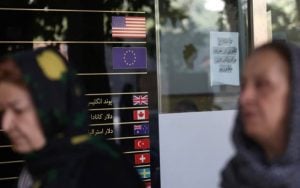
Iran’s market no longer experiences stability. Prices are rising at a pace that wages cannot even begin to match. Food inflation has surpassed 110%, and many essential goods have multiplied in price in less than a year. Under such conditions, a collapsed economy is not merely a media expression; it is an accurate description of a reality that millions of Iranians experience every day.
For years, the Iranian regime concealed the economic crisis through manipulated statistics, repetitive promises, and staged meetings, but now the gap between the official narrative and the reality of people’s lives has become too deep to deny. Even media outlets close to the power structure have been forced to speak about record-high inflation and the collapse of living standards. When essential food items rise in price by 148% within a single year, the issue is no longer merely “high prices”; the issue is the collapse of the ability to live.
Identity Melting Factory: From School Desks to Fundamentalist Barracks – Part 2

The Safe Schools Declaration is an international political commitment aimed at protecting students, teachers, and educational institutions from attacks and military use during conflicts.
- Safety and Dignity: Students must study in an environment free from fear and violence. The presence of police and security forces within the educational structure targets the child’s psychological security.
- Iran’s Status: To date, the Islamic Republic of Iran is not a signatory to this declaration. This is a significant legal fact; why does the regime refuse to commit to keeping schools safe from militarization?
Oslo Rally Condemns Execution of Political Prisoners by Iranian Regime, Urges Firm Action by Norway
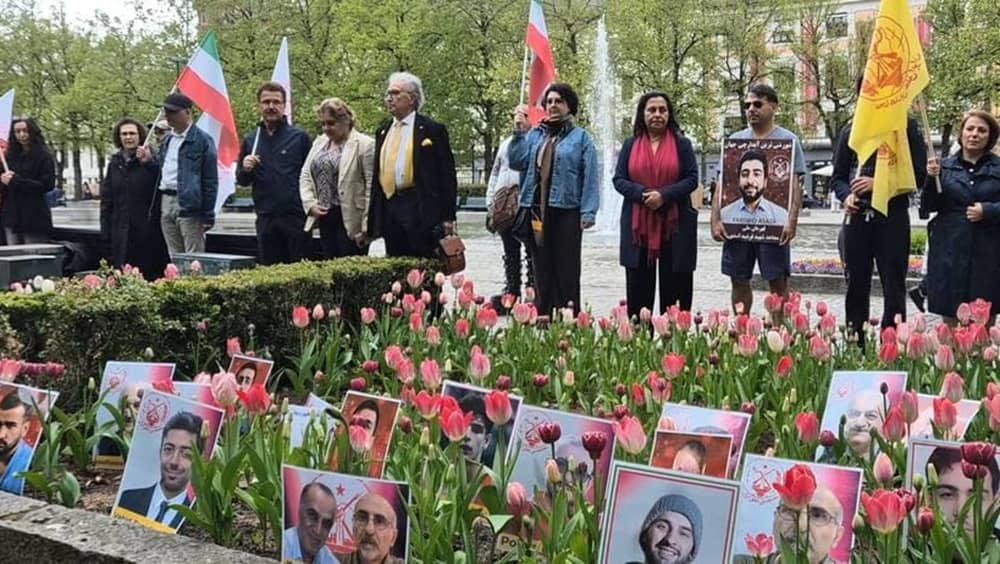
Oslo, Norway – May 9, 2026: Supporters of the Iranian Resistance rallied outside Norway’s Parliament in Oslo to protest the execution of political prisoners in Iran, including PMOI members and protesters arrested during the January 2026 uprising.

Demonstrators highlighted the ongoing struggle of the Iranian people against the ruling regime. They called on the Norwegian government to take immediate action to halt executions in Iran and strongly condemned the mullahs’ regime, describing the executions as a blatant violation of human rights.
Exhibition in Lugano Condemns Executions in Iran, Urges Action Against Iranian Regime
Lugano, Switzerland – May 9, 2026: Supporters of the People’s Mojahedin Organization of Iran (PMOI/MEK) held a book stall and photo exhibition to protest the execution of PMOI political prisoners, along with protesters arrested in January 2026. The event also expressed solidarity with the “No to Execution” campaign.

The exhibition backed the NCRI President-elect Maryam Rajavi’s “No to Executions” campaign, calling for its global expansion. It also reaffirmed the call for a secular, democratic republic—rejecting both theocracy and monarchy.